Industrial furniture manufacturing is the process of designing and producing furniture intended for workplaces, factories, warehouses, laboratories, educational facilities, healthcare environments, and other professional settings. Unlike furniture made mainly for residential use, industrial and commercial furniture often needs to withstand frequent use, heavier loads, repeated movement, and demanding environmental conditions.
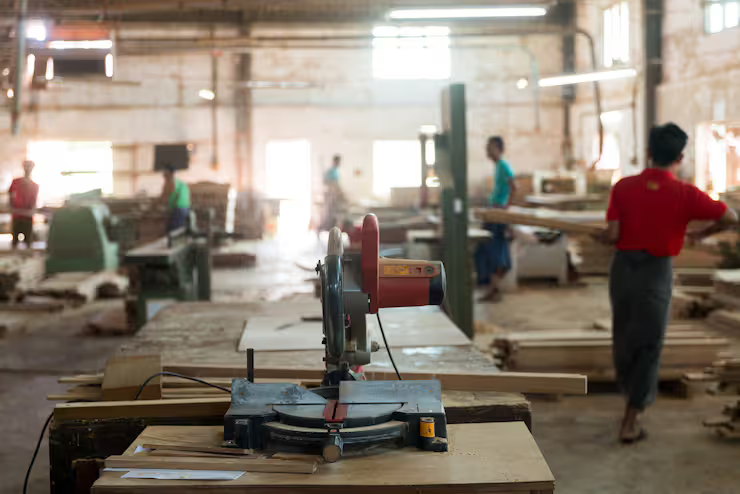
The manufacturing process can involve materials such as steel, aluminum, engineered wood, laminates, plastics, textiles, and composite materials. Depending on the product, manufacturers may use cutting, bending, welding, machining, molding, coating, upholstery, and automated assembly.
Modern office furniture manufacturing also considers ergonomics, workplace flexibility, durability, indoor air quality, and environmental performance. These factors have become increasingly important as organizations rethink how people use offices, shared spaces, production areas, and specialized facilities.
Common examples include:
- Industrial workbenches and workstations
- Office desks and ergonomic chairs
- Storage cabinets and shelving
- Laboratory and technical furniture
- Reception and meeting furniture
- Modular workplace systems
- Warehouse furniture and equipment stands
- Educational and institutional furniture
Why Industrial Furniture Matters Today
Furniture directly influences how people interact with a workplace. A poorly designed workstation can create uncomfortable working positions, while unsuitable storage can make work areas less organized and harder to navigate.
For manufacturers and facility planners, ergonomic office furniture has become an important consideration because modern workplaces often involve prolonged computer use and repetitive activities. Furniture dimensions, adjustability, seating support, and workstation layout can all affect usability.
Industrial furniture also helps address practical facility requirements.
| Requirement | Furniture Consideration | Potential Benefit |
|---|---|---|
| Durability | Strong frames and tested components | Longer functional use |
| Ergonomics | Adjustable desks and supportive seating | Improved user comfort |
| Organization | Storage cabinets and modular systems | Better workspace arrangement |
| Flexibility | Modular furniture components | Easier space reconfiguration |
| Hygiene | Cleanable and durable surfaces | Easier routine maintenance |
| Sustainability | Recycled or responsibly sourced materials | Reduced environmental impact |
The topic affects manufacturers, architects, interior designers, facility managers, employees, educational institutions, healthcare facilities, and organizations planning new workspaces.
The broader commercial furniture manufacturing sector therefore connects product engineering with workplace planning, occupational ergonomics, material science, and sustainability.
Materials and Manufacturing Processes
Industrial furniture can be produced using different materials depending on the intended application.
Metal Furniture Manufacturing
Steel and aluminum are commonly used where structural strength and durability are important. Typical processes include sheet-metal cutting, punching, bending, welding, grinding, surface preparation, and finishing.
Powder coating and other protective finishes may be used to improve surface durability and resistance to environmental exposure.
Wood and Engineered Panels
Engineered wood products, laminates, veneers, and other panel materials are widely used for desks, cabinets, tables, and storage systems.
Computer-controlled cutting equipment can help produce consistent dimensions and repeatable components. Edge treatment and surface finishing are also important parts of the furniture manufacturing process.
Upholstery and Seating
Office and institutional seating may combine metal or polymer frames with foam, textiles, mesh, leather alternatives, or other covering materials.
Seating design must consider dimensions, structural strength, adjustment mechanisms, and repeated use. BIFMA maintains several standards covering commercial seating, including ANSI/BIFMA X5.1 for general-purpose office chairs.
Recent Developments in Industrial Furniture
Furniture manufacturing has continued to evolve during 2025 and 2026, particularly around sustainability, ergonomics, materials, and workplace flexibility.
One important development was the approval of revisions to the ANSI/BIFMA e3-2024 Furniture Sustainability Standard on April 21, 2025. The revised framework introduced a four-level structure, including a new Level 4 focused on areas such as climate-positive criteria and chemical optimization.
BIFMA also reported developments in 2026 involving furniture sustainability and alignment with the LEED and WELL frameworks. Its standards activity has expanded beyond basic durability to include environmental, health, wellness, and social considerations.
Another recent development is the continued focus on furniture ergonomics. BIFMA lists X10.1-2024, which addresses ergonomic requirements for furniture designed for computer use and connects furniture dimensions with measurable ergonomic principles.
These developments reflect several broader trends:
- Greater attention to sustainable materials
- Increased interest in ergonomic workstation design
- More flexible and modular workplace layouts
- Greater focus on chemical and emissions considerations
- Increased use of lifecycle assessment concepts
- Continued development of furniture testing standards
Sustainability in Furniture Manufacturing
Sustainability has become an important part of modern sustainable furniture manufacturing. Environmental considerations can begin with material selection and continue through manufacturing, transportation, use, maintenance, and eventual disposal or recycling.
The ANSI/BIFMA e3 standard evaluates environmental, health and wellness, and social impacts associated with furniture. BIFMA also provides resources related to lifecycle assessment and environmental product declarations.
Manufacturers may evaluate factors such as:
- Recycled material content
- Responsible material sourcing
- Product durability
- Chemical composition
- Energy and resource consumption
- Packaging materials
- Product disassembly
- Recyclability
- Indoor emissions
Sustainable design does not simply mean selecting a particular material. A product that lasts longer, can be maintained, and can be separated into recyclable components may have different environmental characteristics from a product that is difficult to repair or process at the end of its useful life.
Laws, Standards, and Workplace Policies
Furniture manufacturers must consider the laws and technical requirements applicable to the country where products are manufactured or used. Requirements can cover workplace safety, chemical substances, fire performance, product labeling, environmental protection, and building-related requirements.
In the United States, OSHA addresses workplace ergonomics through programs designed to identify and control ergonomic risk factors such as awkward postures, repetitive motion, vibration, and significant physical forces.
Furniture standards themselves may be voluntary rather than government regulations. For example, ANSI/BIFMA standards provide recognized testing and performance frameworks for areas including seating, storage, desks, tables, ergonomics, emissions, and sustainability.
For manufacturers operating in India, applicable Bureau of Indian Standards requirements, environmental rules, workplace regulations, and product-specific requirements should be checked through the relevant Indian authorities. Requirements can change according to the furniture type, material, manufacturing activity, and intended market.
Organizations should distinguish between:
- Mandatory government regulations
- Voluntary technical standards
- Certification programs
- Building and workplace requirements
- Customer or institutional specifications
Checking the current requirements with the appropriate national authority is important because regulatory frameworks can change.
Tools and Resources for Furniture Manufacturing
Several technical resources can help professionals understand furniture design, manufacturing, testing, and sustainability.
| Resource | Main Purpose |
| BIFMA Standards | Furniture performance, safety, ergonomics, and sustainability information |
| ANSI/BIFMA e3 | Sustainability assessment framework |
| OSHA Ergonomics Resources | Workplace ergonomic risk information |
| ISO Furniture Standards | International testing and measurement frameworks |
| CAD Software | Furniture design and engineering drawings |
| CNC Programming Tools | Automated cutting and machining |
| Material Databases | Comparing material characteristics |
| Lifecycle Assessment Tools | Evaluating environmental impacts |
| Ergonomic Assessment Tools | Reviewing workstation dimensions and user interaction |
BIFMA's standards database includes guidance covering seating, storage, desks and tables, furniture surfaces, emissions, ergonomics, and other categories.
For engineering teams, CAD and manufacturing software can help create detailed drawings, assemblies, dimensional specifications, and production documentation. Ergonomic assessment tools can then be used to evaluate whether workstation dimensions are appropriate for intended users.
Frequently Asked Questions
What is industrial furniture manufacturing?
Industrial furniture manufacturing involves designing and producing furniture for workplaces, factories, laboratories, warehouses, healthcare facilities, educational environments, and other professional settings. Products are generally designed around durability, functionality, safety, ergonomics, and specific environmental requirements.
What materials are commonly used in industrial furniture?
Common materials include steel, aluminum, engineered wood, laminates, plastics, textiles, composites, and various surface finishes. Material selection depends on structural requirements, intended environment, cleaning requirements, appearance, durability, and sustainability considerations.
Why is ergonomics important in office furniture?
Ergonomic design helps furniture accommodate the physical interaction between users and their workstations. Desk height, seating dimensions, adjustment ranges, monitor positioning, and workspace layout can influence comfort and working posture.
What are BIFMA standards?
BIFMA standards are industry standards covering different aspects of commercial and institutional furniture, including durability, seating, storage, ergonomics, emissions, and sustainability. They provide testing methods and performance criteria for relevant furniture categories.
How is sustainability considered in furniture manufacturing?
Sustainability can involve material sourcing, product durability, chemical selection, manufacturing impacts, emissions, lifecycle assessment, recyclability, and product design. The ANSI/BIFMA e3 standard provides a framework for evaluating several environmental, health, wellness, and social factors.
Conclusion
Industrial furniture manufacturing has developed from basic furniture production into a field combining engineering, ergonomics, material science, workplace planning, and sustainability. Modern workspaces require furniture that can support different activities while remaining durable, functional, and appropriate for its intended environment.
Recent developments in furniture standards, particularly the revised ANSI/BIFMA e3 sustainability framework and newer ergonomic guidance, show how the industry is placing greater emphasis on environmental performance and human-centered design.
For manufacturers and facility planners, understanding materials, production methods, ergonomic principles, testing standards, and applicable regulations provides a useful foundation for developing practical workplace furniture. As workplaces continue to change, industrial furniture manufacturing is likely to remain closely connected with flexible design, sustainability, digital manufacturing, and workplace ergonomics.