Agriculture has always evolved alongside advances in technology.
From manual tools to mechanized equipment and now intelligent automation, farming continues to adapt to changing environmental conditions, labor demands, and food production needs. One of the most significant developments in modern agriculture is the growing use of agricultural robotics. These systems combine robotics, artificial intelligence, sensors, and data analytics to support farming activities with greater precision and efficiency.
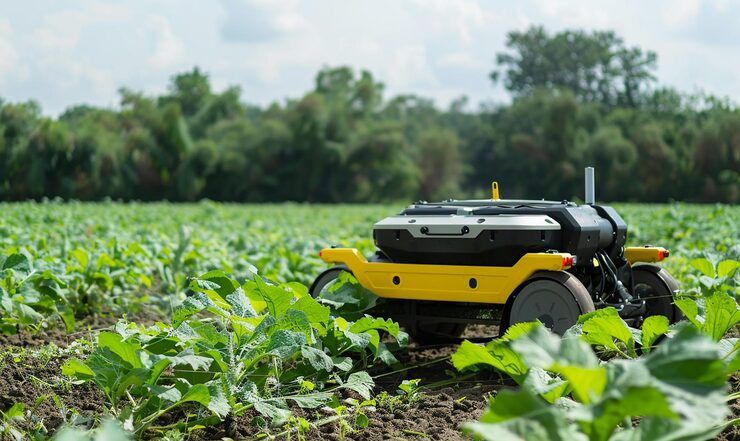
Agricultural robotics is not intended to replace traditional farming knowledge. Instead, it complements the experience of farmers by helping perform repetitive tasks, collect valuable field data, and improve decision-making. Whether used for planting, monitoring crops, harvesting, or managing livestock, robotic technologies are becoming an important part of smart farming.
This guide explores how agricultural robotics works, its applications, benefits, challenges, and the future of intelligent farming technologies.
What Is Agricultural Robotics?
Agricultural robotics refers to the use of automated machines and intelligent robotic systems to assist with farming activities. These machines are designed to perform specific agricultural tasks with minimal human intervention while collecting and processing valuable information about crops, soil, and environmental conditions.
Unlike traditional farm machinery that requires continuous operator control, many robotic systems use technologies such as cameras, sensors, GPS, machine learning, and artificial intelligence to navigate fields and complete tasks with greater accuracy.
Agricultural robotics is a major component of precision agriculture, where data-driven decisions help improve farm management and resource efficiency.
Why Robotics Is Becoming Important in Agriculture
Modern farming faces several challenges, including changing weather patterns, increasing food demand, labor shortages, and the need to use natural resources responsibly. Agricultural robotics helps address these challenges by supporting more precise and efficient farming practices.
Some key reasons for adopting robotic technologies include:
- Improved operational efficiency
- Better monitoring of crops and soil
- Increased accuracy in field operations
- Reduced repetitive manual work
- Enhanced resource management
- Support for data-based decision-making
- Improved consistency across farming activities
By automating selected tasks, farmers can focus more on planning, crop management, and long-term productivity.
How Agricultural Robotics Works
Agricultural robots combine mechanical systems with advanced digital technologies.
A typical robotic system may include:
- Navigation systems
- Cameras and imaging sensors
- GPS positioning
- Artificial intelligence software
- Machine learning algorithms
- Wireless communication
- Environmental sensors
- Data processing systems
The robot collects information from its surroundings, analyzes the data, and performs actions based on programmed instructions or real-time conditions.
For example, a robotic crop monitoring system can identify differences in plant health using cameras and sensors before transmitting information to farm management software.
Major Applications of Agricultural Robotics
Agricultural robotics supports a wide range of farming activities across crop production and livestock management.
Crop Monitoring
Robotic systems equipped with cameras and sensors continuously monitor plant growth, leaf health, moisture levels, and crop development.
Regular monitoring helps identify changes that may require further investigation, allowing farmers to make more informed decisions throughout the growing season.
Planting and Seeding
Some robotic systems assist with accurate seed placement by maintaining consistent spacing and planting depth across fields.
Precise planting supports healthy crop establishment while reducing unnecessary overlap.
Harvesting
Harvesting robots are designed to identify mature crops and assist with collecting fruits, vegetables, or other agricultural products.
Advanced vision systems help distinguish between crops that are ready for harvesting and those that require additional growing time.
Weed Management
Computer vision technologies enable some agricultural robots to identify weeds separately from crops.
This targeted approach supports more efficient field management while reducing unnecessary treatment of healthy plants.
Livestock Monitoring
Robotic technologies are increasingly used in livestock farming to monitor animal health, feeding behavior, movement, and environmental conditions.
Continuous monitoring helps farmers identify changes that may require attention while improving overall herd management.
Types of Agricultural Robots
Different farming activities require different robotic solutions.
| Robot Type | Primary Function | Common Applications |
|---|---|---|
| Field Robots | Perform field operations | Planting, monitoring, harvesting |
| Autonomous Tractors | Navigate fields independently | Soil preparation and cultivation |
| Drone Systems | Capture aerial information | Crop inspection and mapping |
| Robotic Harvesters | Collect mature crops | Fruit and vegetable harvesting |
| Livestock Robots | Monitor and support animal care | Feeding and health observation |
Each type of robot is designed to address specific agricultural requirements while integrating with broader farm management systems.
Technologies Behind Smart Farming
Agricultural robotics relies on several interconnected technologies that enable intelligent operation.
Artificial Intelligence
Artificial intelligence helps robots recognize patterns, analyze images, identify crops, and make operational decisions based on collected information.
Internet of Things (IoT)
Connected sensors placed throughout farms continuously gather information about soil conditions, temperature, humidity, and equipment performance.
This information supports real-time monitoring and improved farm management.
GPS and Navigation Systems
Accurate positioning allows robots to navigate fields efficiently while maintaining consistent movement patterns during planting, spraying, or harvesting.
Machine Vision
High-resolution cameras and computer vision software enable robotic systems to distinguish crops, weeds, obstacles, and changing field conditions.
Data Analytics
Collected information is processed into meaningful insights that support planning, irrigation decisions, crop monitoring, and long-term agricultural management.
Benefits of Agricultural Robotics
The growing adoption of agricultural robotics offers several practical advantages.
Improved Precision
Robotic systems perform tasks with consistent accuracy, reducing unnecessary overlap and improving operational efficiency.
Better Data Collection
Continuous monitoring generates valuable information that helps farmers understand field conditions more effectively.
Increased Productivity
Automation allows repetitive tasks to be completed more consistently, enabling farmers to allocate more time to strategic planning and crop management.
Efficient Resource Use
Data-driven farming helps optimize the use of water, fertilizers, and other agricultural inputs by applying them where they are most needed.
Enhanced Decision-Making
Access to real-time information supports faster responses to changing environmental and crop conditions.
Challenges of Agricultural Robotics
Although agricultural robotics offers many advantages, several challenges remain.
Initial Technology Integration
Introducing robotic systems often requires careful planning to ensure compatibility with existing farming equipment and workflows.
Technical Knowledge
Operating advanced robotic technologies may require additional training and familiarity with digital farm management systems.
Environmental Conditions
Agricultural environments can be unpredictable due to weather, uneven terrain, mud, dust, and changing crop conditions, all of which influence robotic performance.
Connectivity Requirements
Some smart farming technologies rely on reliable internet or wireless communication to transfer and analyze data efficiently.
As digital infrastructure improves, these limitations are expected to become less significant.
Agricultural Robotics and Sustainable Farming
Sustainability has become an important objective in modern agriculture.
Agricultural robotics contributes by supporting:
- Precision resource application
- Improved water management
- Reduced waste
- Better soil monitoring
- Accurate crop observation
- Efficient field operations
These capabilities help farmers make informed decisions while supporting responsible environmental management.
Rather than replacing sustainable farming practices, robotics enhances them through better information and improved operational accuracy.
Future Trends in Smart Farming Technologies
Agricultural robotics continues to evolve alongside advances in artificial intelligence and automation.
Several emerging trends are shaping the future of smart farming:
- Fully autonomous field equipment
- AI-powered crop health analysis
- Swarm robotics for coordinated field operations
- Improved drone integration
- Real-time predictive analytics
- Advanced soil sensing technologies
- Cloud-based farm management platforms
- Robotic systems with improved adaptability
Future agricultural robots are expected to become more intelligent, collaborative, and capable of operating across a wider range of farming environments.
Choosing the Right Robotic Solution
Different farms have different operational requirements, making careful planning important before adopting robotic technologies.
Factors to consider include:
- Farm size
- Crop type
- Existing equipment
- Terrain characteristics
- Labor requirements
- Data management needs
- Long-term operational objectives
Selecting technologies that align with actual farming needs often produces better long-term results than adopting automation solely because it is new.
Frequently Asked Questions
What is agricultural robotics?
Agricultural robotics involves the use of intelligent robotic systems and automation technologies to support farming activities such as planting, monitoring, harvesting, and livestock management.
How does agricultural robotics support smart farming?
Agricultural robotics collects real-time field data, automates repetitive tasks, improves operational accuracy, and assists farmers in making informed management decisions.
Are agricultural robots replacing farmers?
No. Agricultural robots are designed to assist farmers by automating selected tasks while supporting better planning, monitoring, and resource management.
What technologies are commonly used in agricultural robotics?
Modern systems often combine artificial intelligence, GPS, machine vision, sensors, data analytics, wireless communication, and Internet of Things technologies.
What is the future of agricultural robotics?
Future developments are expected to include greater automation, more advanced artificial intelligence, improved environmental monitoring, enhanced data analysis, and stronger integration with precision agriculture systems.
Conclusion
Agricultural robotics represents an important step in the evolution of modern farming. By combining automation, artificial intelligence, advanced sensors, and precision data analysis, these technologies help farmers improve efficiency, monitor crops more effectively, and make informed decisions throughout the agricultural cycle.
As smart farming technologies continue to advance, agricultural robotics will play an increasingly valuable role in supporting sustainable food production, efficient resource management, and long-term agricultural resilience. Rather than replacing traditional farming expertise, robotics enhances it by providing accurate information, improving operational consistency, and helping farms adapt to the growing demands of modern agriculture.