
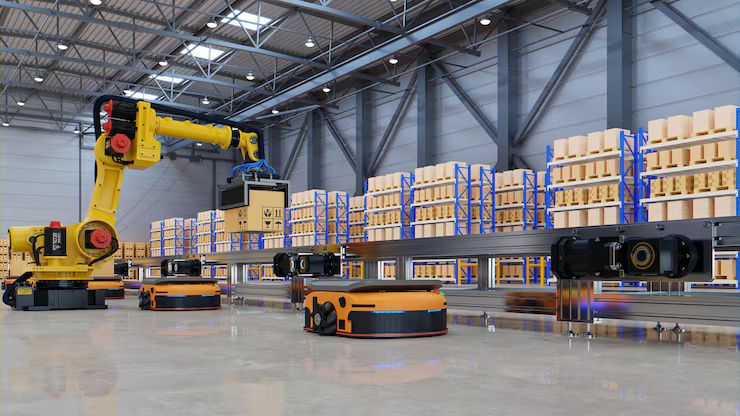
Automated Guided Vehicle (AGV) systems are intelligent material handling solutions designed to transport raw materials, components, finished products, pallets, containers, and equipment within manufacturing facilities, warehouses, distribution centers, hospitals, airports, and logistics operations. Unlike manually operated vehicles, AGVs follow predefined routes using navigation technologies, sensors, onboard controllers, and industrial communication networks.
Modern AGV systems have become an important part of Industry 4.0 and smart manufacturing. They integrate artificial intelligence (AI), Industrial Internet of Things (IIoT), robotics, machine vision, warehouse management systems (WMS), manufacturing execution systems (MES), enterprise resource planning (ERP), and cloud-based monitoring platforms to automate internal transportation while improving operational efficiency, safety, and production coordination.
What Are AGV Systems?
An AGV system consists of one or more driverless vehicles that automatically move materials between designated locations using programmed navigation and intelligent control software. These vehicles operate without continuous human intervention and communicate with central management software to complete transportation tasks.
AGV systems are designed for repetitive material movement in environments requiring consistent, reliable, and traceable logistics.
Typical capabilities include:
- Automated material transport
- Pallet movement
- Component delivery
- Workstation replenishment
- Warehouse transportation
- Inventory movement
- Production line supply
- Finished product handling
- Real-time vehicle monitoring
- Fleet coordination
History of Automated Guided Vehicles
The evolution of AGV technology reflects the growing demand for industrial automation.
Important developments include:
- Wire-guided vehicles
- Magnetic tape navigation
- Laser-guided navigation
- Optical guidance
- Inertial navigation
- Natural feature navigation
- Simultaneous Localization and Mapping (SLAM)
- AI-assisted navigation
- Autonomous fleet management
- Cloud-connected AGV systems
Modern AGVs navigate complex industrial environments with advanced sensors and intelligent software.
Types of AGV Systems
Different AGVs are designed for different industrial applications.
Tow AGVs
Tow AGVs pull multiple carts or trailers for transporting materials over long distances within factories or warehouses.
Unit Load AGVs
Unit load vehicles transport pallets, containers, bins, and packaged products between workstations.
Forklift AGVs
Automated forklift vehicles handle pallet storage, retrieval, stacking, and transportation without manual driving.
Pallet Truck AGVs
These vehicles move palletized goods at ground level between storage and production areas.
Assembly Line AGVs
Assembly AGVs deliver components directly to manufacturing workstations according to production schedules.
Heavy Load AGVs
Heavy-duty AGVs transport large machinery, industrial equipment, steel structures, and oversized components.
Hybrid AGVs
Hybrid systems combine automated operation with manual driving capabilities for flexible industrial use.
Navigation Technologies
Navigation determines how AGVs move safely throughout facilities.
Common navigation methods include:
- Magnetic tape guidance
- Magnetic spot navigation
- Wire guidance
- Laser navigation
- Optical navigation
- QR code navigation
- Natural feature navigation
- SLAM navigation
- LiDAR-based navigation
- Vision-guided navigation
The navigation method depends on facility layout and operational requirements.
Major AGV Components
A complete AGV system includes numerous mechanical, electrical, and digital components.
Typical components include:
- Vehicle chassis
- Drive motors
- Steering motors
- Batteries
- Battery management systems
- LiDAR sensors
- Cameras
- Laser scanners
- Encoders
- Industrial computers
- Safety controllers
- Communication modules
- Emergency stop systems
- Charging interfaces
- Human-machine interface (HMI)
These components work together to enable safe and reliable vehicle operation.
Automation Technologies
Modern AGV systems integrate advanced industrial automation technologies.
Major technologies include:
- Artificial intelligence
- Machine learning
- Industrial Internet of Things (IIoT)
- Programmable Logic Controllers (PLC)
- Machine vision
- Robotics
- Edge computing
- Digital twins
- Cloud connectivity
- Industrial communication networks
Automation supports coordinated fleet operation and continuous monitoring.
Material Handling Equipment Integration
AGVs often operate alongside other automated material handling equipment.
Examples include:
- Conveyor systems
- Automated storage and retrieval systems (AS/RS)
- Industrial robots
- Robotic palletizers
- Depalletizers
- Vertical lifts
- Packaging machines
- Conveyor sortation systems
- Warehouse management systems
- Manufacturing execution systems
Integration creates efficient end-to-end material flow.
Manufacturing Technologies
AGV manufacturing combines precision engineering with advanced production technologies.
Major manufacturing technologies include:
- CNC machining
- Laser cutting
- Robotic welding
- Precision sheet metal fabrication
- Injection molding
- Powder coating
- Electronic assembly
- Battery integration
- Software programming
- Automated testing
These technologies improve manufacturing consistency and equipment reliability.
Production Processes
The manufacturing process generally includes:
- Product engineering
- Mechanical design
- Chassis fabrication
- CNC machining
- Robotic welding
- Surface finishing
- Electrical assembly
- Sensor installation
- Software integration
- Functional testing
- Quality inspection
- Final assembly
Each stage contributes to long-term operational performance.
Raw Materials Used
Manufacturers commonly use:
- Carbon steel
- Stainless steel
- Aluminum alloys
- Engineering plastics
- Rubber wheels
- Polyurethane wheels
- Lithium-ion batteries
- Electric motors
- Servo drives
- Bearings
- Electronic circuit boards
- Optical sensors
- Industrial communication modules
Material selection depends on payload capacity and operating conditions.
Manufacturing Equipment
Production facilities utilize advanced industrial machinery.
Typical equipment includes:
- CNC machining centers
- Fiber laser cutting machines
- Robotic welding cells
- Press brakes
- Powder coating systems
- Electronics assembly stations
- Battery testing equipment
- Calibration systems
- Coordinate measuring machines
- Automated inspection equipment
Automation supports precision manufacturing.
Battery Technologies
Battery systems provide power for AGV operation.
Common battery technologies include:
- Lithium-ion batteries
- Lithium iron phosphate batteries
- Lead-acid batteries
- Nickel-based batteries
Charging methods include:
- Opportunity charging
- Automatic charging stations
- Battery swapping systems
- Inductive charging
Battery selection depends on operating schedules and application requirements.
Quality Control and Testing
AGV systems undergo extensive testing before deployment.
Testing commonly includes:
- Navigation accuracy testing
- Load capacity verification
- Battery performance testing
- Brake testing
- Safety sensor validation
- Collision avoidance testing
- Communication testing
- Software verification
- Environmental testing
- Functional performance evaluation
Quality control helps ensure reliable operation under industrial conditions.
Importance
Why AGV Systems Matter
Industrial facilities increasingly require efficient movement of materials between production, storage, packaging, and shipping areas. AGV systems automate repetitive transportation activities while improving consistency, operational visibility, and workplace safety.
Automated transportation also supports continuous production with reduced manual material handling.
Supporting Smart Manufacturing
AGV systems contribute to:
- Factory automation
- Warehouse automation
- Inventory movement
- Production line supply
- Internal logistics
- Distribution operations
- Manufacturing efficiency
- Material traceability
These capabilities support modern industrial operations.
Industrial Applications
AGV systems are used across numerous industries.
Manufacturing
Factories use AGVs to transport raw materials, work-in-progress components, and finished products between production areas.
Warehousing
Warehouses use AGVs for pallet movement, inventory replenishment, storage operations, and shipment preparation.
Automotive Industry
Vehicle manufacturers use AGVs for assembly line component delivery, engine transportation, and parts logistics.
Electronics Manufacturing
Electronic production facilities transport sensitive components between assembly, testing, and packaging areas.
Food and Beverage
Production facilities move ingredients, packaged products, containers, and palletized goods using automated vehicles.
Pharmaceutical Manufacturing
AGVs transport materials within controlled production environments while maintaining product traceability.
Healthcare
Hospitals utilize AGV systems to transport medical supplies, pharmaceuticals, laboratory materials, meals, and linens.
Airports
Airport logistics operations use automated vehicles for baggage movement and cargo transportation.
Global Manufacturers
AGV systems are manufactured across North America, Europe, Asia-Pacific, the Middle East, Africa, and Latin America.
Global manufacturers produce:
- Tow AGVs
- Forklift AGVs
- Unit load AGVs
- Heavy-load AGVs
- Assembly AGVs
- Pallet transport vehicles
- Intelligent fleet management software
- Automated charging systems
Production ranges from compact indoor vehicles to heavy industrial transport platforms.
Global Suppliers
Global suppliers distribute AGV systems for:
- Manufacturing facilities
- Warehouses
- Distribution centers
- Automotive plants
- Electronics manufacturers
- Healthcare facilities
- Airports
- Logistics operations
- Food processing plants
International distribution networks support industrial automation projects worldwide.
Supply Chain
The AGV supply chain generally includes:
- Raw material sourcing
- Component manufacturing
- Vehicle fabrication
- Electronics assembly
- Software development
- Functional testing
- Distribution centers
- Facility integration
- Industrial operation
Digital supply chain management improves inventory visibility and production planning.
Pricing Factors
Equipment pricing may depend on:
- Payload capacity
- Navigation technology
- Battery type
- Automation features
- Sensor configuration
- Fleet management software
- Safety systems
- Vehicle dimensions
- Transportation
- International trade conditions
Pricing varies according to technical specifications.
Import and Export Market
AGV equipment is widely traded internationally.
Frequently traded products include:
- Automated guided vehicles
- Forklift AGVs
- Navigation sensors
- LiDAR systems
- Industrial batteries
- Fleet management software
- Charging systems
- Safety controllers
International trade follows applicable industrial standards and customs regulations.
Environmental Sustainability
Manufacturers continue improving sustainability through:
- Energy-efficient electric drive systems
- Intelligent battery management
- Lightweight vehicle construction
- Recyclable materials
- Reduced manufacturing waste
- Efficient charging technologies
- Long-life component design
These initiatives support environmentally responsible manufacturing.
Recycling in AGV Manufacturing
Many AGV components can be recovered through recycling processes.
Examples include:
- Steel recycling
- Aluminum recovery
- Battery recycling
- Copper recovery
- Plastic recycling
- Electronic component recovery
- Packaging material recycling
Material recovery supports circular manufacturing practices.
Smart Manufacturing (Industry 4.0)
Modern AGV systems increasingly incorporate Industry 4.0 technologies.
Examples include:
- Artificial intelligence
- Industrial Internet of Things (IIoT)
- Digital twins
- Predictive maintenance
- Machine learning
- Cloud monitoring
- Real-time analytics
- Fleet optimization software
- Manufacturing execution system integration
- Warehouse management system connectivity
Digital technologies improve fleet coordination and operational visibility.
Future Trends
Current developments include:
- AI-assisted navigation
- Autonomous fleet coordination
- Advanced machine vision
- Digital warehouse automation
- High-density battery technologies
- Collaborative mobile robots
- Intelligent charging systems
- Cloud-connected fleet monitoring
- Predictive maintenance platforms
- Modular AGV architectures
These innovations continue advancing automated material handling technologies.
Frequently Asked Questions (FAQs)
What is an AGV system?
An AGV system consists of automated guided vehicles that transport materials within industrial facilities using programmed navigation, sensors, and intelligent control software.
Which industries use AGV systems?
Manufacturing, warehousing, logistics, automotive, electronics, pharmaceutical manufacturing, healthcare, airports, and food processing commonly utilize AGV systems.
How do AGV systems navigate?
AGVs use navigation methods such as laser guidance, LiDAR, magnetic tape, QR codes, optical navigation, natural feature navigation, and SLAM technology to move safely through facilities.
What technologies are used in modern AGV systems?
Modern AGV systems integrate artificial intelligence, Industrial Internet of Things (IIoT), machine vision, robotics, digital twins, cloud monitoring, predictive maintenance, and warehouse management software.
What are the advantages of automated guided vehicles?
AGV systems support automated material transportation, consistent workflow, improved inventory movement, enhanced operational visibility, accurate product tracking, and coordinated industrial logistics.
Conclusion
AGV systems combine automated guided vehicle technologies, intelligent navigation, advanced manufacturing processes, and digital automation to support efficient material handling across modern industries. Global manufacturers and suppliers continue developing increasingly sophisticated AGV solutions using Industry 4.0 technologies, artificial intelligence, and smart fleet management platforms. As manufacturing, warehousing, healthcare, and logistics continue adopting automation, AGV systems remain a fundamental part of modern industrial operations.