
AI-powered HR analytics is changing how organizations understand workforce needs, employee patterns, and future staffing requirements.
Traditional workforce planning often depends on spreadsheets, historical reports, surveys, and manual analysis. While these methods can provide useful information, they may become difficult to manage when organizations have large teams, changing business priorities, and complex workforce data.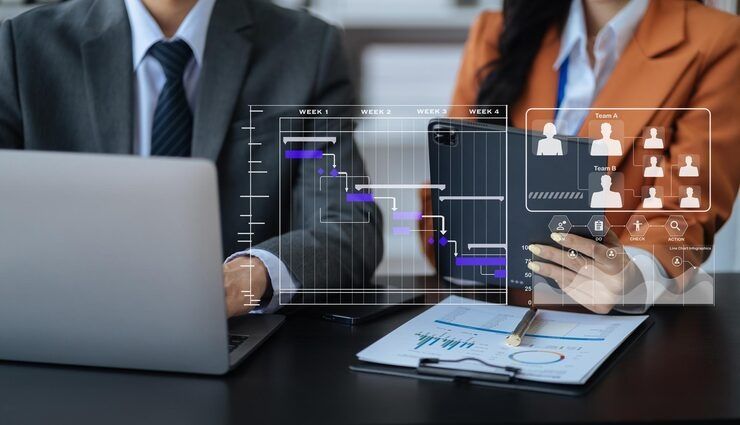
AI-powered HR analytics combines workforce data with artificial intelligence and advanced analytical techniques to identify patterns, estimate future requirements, and support more informed decisions. Instead of looking only at what happened in the past, organizations can use analytical models to explore what may happen next and understand the factors influencing workforce outcomes.
The goal is not to replace human judgment. Rather, AI can help HR teams organize information, identify meaningful patterns, and approach workforce planning with greater clarity.
What Is AI-Powered HR Analytics?
AI-powered HR analytics refers to the use of artificial intelligence, machine learning, statistical analysis, and related technologies to examine workforce information. Depending on the organization and its objectives, this may include information about staffing levels, workforce skills, employee movement, attendance patterns, organizational structures, and other relevant indicators.
Traditional HR reporting generally answers questions such as, “What happened?” AI-enabled analytics can go further by helping explore questions such as:
- What workforce patterns are emerging?
- Which skills may become more important?
- Where could staffing gaps develop?
- What factors are associated with employee turnover?
- How might workforce requirements change under different scenarios?
This makes HR analytics particularly useful for workforce planning, where decisions often need to consider both current conditions and future possibilities.
Why AI Matters for Workforce Planning
Workforce planning involves balancing organizational objectives with available skills, capacity, and talent. A major challenge is that workforce conditions can change faster than traditional reporting cycles.
AI can process large datasets and identify relationships that may be difficult to recognize through manual analysis. For example, an organization could examine historical workforce information alongside business forecasts to identify potential capacity gaps.
AI-driven models can also support scenario analysis. HR teams might compare different workforce situations, such as organizational growth, changes in required skills, internal movement, or anticipated employee departures.
These insights can make planning more responsive. However, AI predictions should be treated as analytical guidance rather than guaranteed outcomes because workforce behavior is influenced by many human and organizational factors.
Key Applications of AI-Powered HR Analytics
Workforce Demand Forecasting
Workforce forecasting helps organizations estimate how many employees and which capabilities may be required in the future. AI models can analyze historical patterns, organizational changes, seasonal trends, and other relevant variables to identify potential workforce requirements.
The quality of the forecast depends heavily on the quality and relevance of the underlying data. A sophisticated model cannot reliably compensate for incomplete, outdated, or inconsistent information.
Skills Gap Analysis
Skills gap analysis compares existing workforce capabilities with the skills an organization may need in the future. AI can help identify recurring skill patterns and highlight areas where capability development may deserve attention.
This approach can be especially useful when technology, regulations, or business processes are changing rapidly. Instead of focusing only on employee numbers, organizations can consider whether they have the right combination of knowledge and capabilities.
Employee Turnover Analysis
Employee turnover can affect workforce continuity and planning. AI analytics can examine historical patterns and identify factors that appear to correlate with employee departures.
These models should be used carefully. A correlation does not necessarily mean that one factor directly causes an employee to leave. HR teams should therefore combine analytical findings with organizational context and human review.
Workforce Scenario Planning
Scenario planning allows organizations to explore different possible workforce conditions. AI can help model scenarios involving expansion, restructuring, changing skill requirements, or shifts in workforce availability.
Rather than producing one fixed prediction, scenario-based analysis can show how workforce requirements might change under different assumptions. This can help decision-makers prepare for uncertainty.
Building a Reliable HR Analytics Framework
Successful AI-powered HR analytics begins with a strong data foundation. Organizations should establish clear definitions for workforce metrics and maintain consistent data across relevant HR systems.
Important considerations include:
- Data quality: Information should be accurate, current, and consistently structured.
- Data governance: Access, retention, security, and appropriate data use should be clearly defined.
- Model transparency: HR professionals should understand what a model is designed to measure and what its limitations are.
- Human oversight: Significant workforce decisions should not depend entirely on automated predictions.
- Regular evaluation: Models should be reviewed as workforce conditions and organizational priorities change.
A practical framework should also distinguish between descriptive, predictive, and prescriptive analytics. Descriptive analytics explains historical patterns, predictive analytics estimates potential future outcomes, and prescriptive approaches explore possible actions based on available information.
Responsible Use of AI in HR
Because HR analytics can involve sensitive workforce information, responsible implementation is essential. Organizations need to consider privacy, data security, fairness, transparency, and potential algorithmic bias.
Historical workforce data can contain existing patterns of unequal treatment or representation. If those patterns are incorporated into an AI model without appropriate controls, the system may reproduce or amplify them.
Human review is therefore an important safeguard. Organizations should regularly evaluate models for unexpected outcomes, document important assumptions, and establish processes for questioning or correcting analytical results.
AI should support fair and evidence-based decision-making rather than become an unquestioned authority.
How HR Teams Can Use AI More Effectively
Organizations do not necessarily need to begin with complex predictive systems. A practical starting point is to identify a specific workforce planning problem and determine what information is needed to address it.
For example, an HR team could begin by improving workforce dashboards, identifying recurring staffing patterns, or analyzing skill requirements for a particular business area. Once the data foundation becomes more reliable, more advanced analytical approaches can be introduced.
Clear communication is equally important. HR professionals, managers, and other stakeholders should understand what the analysis indicates, what assumptions were used, and where uncertainty remains.
The strongest approach combines data, technology, domain expertise, and human judgment rather than relying on any single element.
Frequently Asked Questions
What is AI-powered HR analytics?
AI-powered HR analytics uses artificial intelligence, machine learning, and analytical methods to examine workforce data, identify patterns, and support HR and workforce planning decisions.
How can AI improve workforce planning?
AI can help organizations analyze workforce trends, forecast potential staffing requirements, identify skills gaps, examine turnover patterns, and compare different workforce scenarios.
Is AI able to predict employee behavior accurately?
AI can identify patterns and estimate probabilities, but it cannot guarantee individual outcomes. Human behavior is influenced by many factors that may not be represented in available data.
Why is data quality important in HR analytics?
AI models depend on the information used to train and operate them. Incomplete, inconsistent, or outdated data can produce misleading analytical results regardless of how advanced the technology is.
Should HR decisions rely entirely on AI?
No. AI can provide useful evidence and analytical guidance, but important workforce decisions should include human judgment, organizational context, ethical considerations, and appropriate oversight.
Conclusion
AI-powered HR analytics provides a more analytical approach to workforce planning by connecting workforce data with forecasting, pattern recognition, skills analysis, and scenario planning. Its greatest value comes from helping HR teams understand complex information and prepare for possible future workforce conditions.
The technology is most effective when supported by reliable data, clear governance, responsible model evaluation, and human oversight. Organizations that approach AI as a decision-support capability rather than an automatic decision-maker can use workforce analytics more thoughtfully and develop planning processes that are better informed, adaptable, and aligned with changing organizational needs.