Automated metal polishing machines are industrial systems designed to improve the surface finish of metal components through controlled grinding, polishing, buffing, and finishing processes. These machines combine mechanical equipment, abrasives, programmable controls, sensors, and, in some applications, robotic systems to process metal surfaces with greater consistency.
etal polishing is used after forming, casting, machining, stamping, or fabrication when a component requires a smoother, cleaner, or more uniform surface. The required finish depends on the material, component geometry, manufacturing process, and intended application.
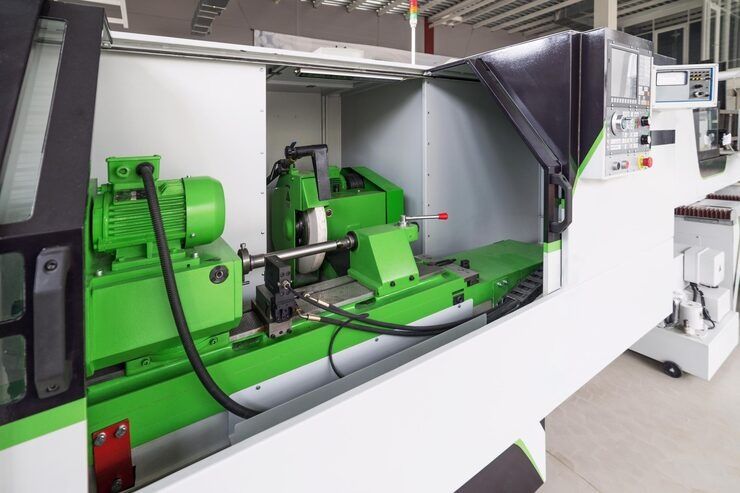
Modern surface finishing technologies range from dedicated polishing machines to flexible robotic polishing systems. Automation can be particularly useful when manufacturers need repeatable processing across large numbers of similar components or when polishing involves difficult-to-reach surfaces.
Context
Understanding Automated Metal Polishing Machines
Automated metal polishing machines use mechanical or computer-controlled systems to perform finishing operations with limited manual intervention. Depending on the machine, the workpiece may be held in a fixture while abrasive wheels, belts, discs, brushes, or polishing compounds move across its surface.
Common operations include:
- Grinding
- Deburring
- Polishing
- Buffing
- Brushing
- Surface smoothing
The objective is not always to create a mirror-like surface. Different applications require different levels of roughness, texture, appearance, and dimensional control.
How Metal Polishing Systems Work
A typical automated polishing process begins with positioning the metal component in a fixture or production cell. The machine then applies an abrasive or polishing tool according to programmed or mechanically controlled movements.
A simplified process includes:
- The metal component is positioned securely.
- The appropriate abrasive or finishing tool is selected.
- Machine parameters are configured.
- The polishing tool contacts the required surface.
- Material is removed or redistributed through controlled abrasion.
- The finished surface is inspected.
The actual sequence depends on the metal, component shape, required finish, and machine configuration.
Main Components of Automated Polishing Equipment
| Component | Function |
|---|---|
| Abrasive tool | Performs grinding or polishing |
| Spindle or drive | Rotates the finishing tool |
| Workholding fixture | Secures the component |
| Control system | Manages programmed movements |
| Robotic arm | Provides automated tool or workpiece movement |
| Sensors | Monitor selected process conditions |
| Dust or slurry collection | Manages process residues |
Types of Metal Polishing Machines
Different machines are used for different finishing requirements.
| Machine Type | General Application |
| Belt polishing machine | Flat and curved surface finishing |
| Wheel polishing machine | Buffing and surface polishing |
| Vibratory finishing system | Batch finishing of smaller components |
| CNC polishing machine | Programmed finishing operations |
| Robotic polishing cell | Complex or repetitive component finishing |
| Tube polishing machine | Finishing cylindrical components |
Surface Finishing Technologies
Surface finishing technologies are used to modify the outer characteristics of a metal component. Mechanical polishing is one category within a broader group of finishing processes.
Other processes may include:
- Grinding
- Honing
- Lapping
- Brushing
- Shot blasting
- Electropolishing
Each process produces different surface characteristics and is selected according to material and application requirements.
Importance
Why Automated Metal Polishing Matters
Metal finishing can affect the appearance, surface characteristics, cleanliness, and functional performance of manufactured components. In some applications, controlling surface roughness is important for reducing friction, supporting sealing, or preparing a surface for another process.
Automated polishing systems can provide controlled and repeatable movement compared with entirely manual finishing.
Industrial Applications
Automated metal polishing machines are used across several manufacturing sectors.
Automotive Manufacturing: Polishing systems can process wheels, exhaust components, engine-related parts, decorative components, and other metal surfaces.
Aerospace Manufacturing: Specialized finishing processes may be used for selected aircraft components where controlled surface characteristics are required.
Medical Equipment: Certain stainless-steel and other metal components may undergo polishing as part of their manufacturing processes.
Kitchen and Food Equipment: Stainless-steel components can be mechanically polished to achieve specific surface characteristics.
Industrial Machinery: Housings, shafts, fittings, tools, and fabricated components may require finishing after machining or forming.
Metal Fabrication: Polishing systems can process fabricated parts before additional finishing or assembly stages.
Role of Robotic Polishing Systems
Robotic polishing systems use industrial robots to control the position and movement of polishing tools or workpieces.
A robotic cell may include:
- Industrial robot
- Polishing spindle
- Abrasive tooling
- Component fixture
- Force or pressure sensing
- Control software
- Safety equipment
Robots can follow programmed paths and repeat defined movements across multiple components.
Advantages and Limitations of Automation
Automation can provide consistent movement, repeatable processing sequences, and integration with other production equipment. It can also reduce the amount of direct manual contact with abrasive tools and certain repetitive operations.
However, automation does not eliminate all process challenges. Tool wear, component variation, surface geometry, material characteristics, and programming quality can influence results.
Importance of Surface Roughness
Surface roughness describes small variations and irregularities on a material's surface. Different manufacturing applications require different roughness levels.
Measurement methods can include specialized instruments such as profilometers. Surface specifications should be defined according to the relevant engineering requirements rather than assuming that a smoother surface is always preferable.
Recent Updates
Growth of Robotic Finishing
From 2024 through 2026, robotic systems continued to develop for manufacturing applications involving grinding, deburring, polishing, and surface finishing.
Modern robotic polishing systems can combine programmed motion with sensors and process monitoring. This allows manufacturers to study variables such as contact force, tool position, and surface condition.
Development of Force-Controlled Polishing
Force control is an important area in robotic finishing because excessive or insufficient pressure can affect the final surface.
Sensor-based systems can monitor contact conditions and adjust robot movement within defined parameters. This approach is particularly relevant for curved or irregular components.
Greater Use of Digital Process Monitoring
Manufacturers are increasingly connecting finishing equipment to digital monitoring systems.
These systems may collect information about:
- Machine operating status
- Tool usage
- Production cycles
- Process parameters
- Maintenance conditions
Collected data can help operators understand production patterns and identify process changes.
Artificial Intelligence in Surface Finishing
Artificial intelligence and machine learning are being researched for applications such as surface inspection, tool-condition monitoring, process optimization, and defect detection.
Computer vision systems can examine surfaces for selected visual characteristics. AI-based analysis may assist with identifying patterns that are difficult to evaluate manually, although inspection systems require appropriate validation.
Integration With Smart Manufacturing
Automated polishing equipment can be integrated into larger smart manufacturing environments.
Connected systems may link polishing machines with:
- Robotic material handling
- CNC machining equipment
- Automated inspection
- Production monitoring
- Manufacturing execution systems
This creates a more connected production workflow.
Laws or Policies
Workplace Machine Safety
Automated metal polishing equipment can involve rotating tools, abrasive particles, moving robotic arms, electrical systems, and other hazards. In the United States, OSHA's machine-guarding requirements address hazards associated with points of operation and moving machine components. OSHA Machine Guarding Requirements
Safety measures may include appropriate guarding, emergency controls, equipment inspection, and operator training.
Robotic System Safety
Industrial robots can create hazards through unexpected movement, crushing points, and interactions between people and automated equipment. OSHA provides guidance covering industrial robot safety and related workplace hazards. OSHA Robotics Safety Resources
Facilities using robotic polishing systems should follow applicable workplace safety requirements and conduct appropriate risk assessments.
Abrasive Wheel Safety
Some metal polishing operations use abrasive wheels or similar rotating equipment. OSHA has specific requirements addressing abrasive wheel machinery, including guarding and operating conditions. OSHA Abrasive Wheel Machinery Requirements
Dust and Chemical Exposure
Polishing can generate metal particles, dust, and residues from abrasive compounds. Certain processes may also involve polishing compounds or other chemical materials.
Facilities should follow applicable occupational exposure, ventilation, waste-management, and environmental requirements for the materials used.
Tools and Resources
CNC Polishing Software
Computer-controlled polishing systems may use specialized software to define tool paths and operating parameters.
These systems can support:
- Motion programming
- Tool-path generation
- Process simulation
- Parameter management
Robotic Programming Software
Robotic polishing cells require programming tools that define robot movement and coordinate peripheral equipment.
These systems may support:
- Path programming
- Collision checking
- Cell simulation
- Robot position control
Surface Roughness Measurement Equipment
Profilometers and related instruments are used to measure surface characteristics.
They can provide information about:
- Surface roughness
- Profile characteristics
- Surface variation
- Finishing consistency
Machine Vision Systems
Machine vision systems use cameras and image-processing software to inspect surfaces or component characteristics.
Applications may include:
- Surface defect detection
- Component positioning
- Visual inspection
- Process verification
Manufacturing Monitoring Systems
Production monitoring platforms can collect information from connected polishing equipment.
Data may include:
- Machine status
- Cycle information
- Tool usage
- Production records
- Maintenance indicators
FAQs
What are automated metal polishing machines?
Automated metal polishing machines are industrial systems that use mechanical, programmable, or robotic equipment to perform controlled polishing, grinding, buffing, and finishing operations.
How do robotic polishing systems work?
Robotic polishing systems use industrial robots to move polishing tools or components along programmed paths. Sensors and control systems can also be used to manage selected process conditions.
What are surface finishing technologies used for?
Surface finishing technologies modify the characteristics of metal surfaces. Depending on the process, they can improve smoothness, texture, appearance, cleanliness, or preparation for subsequent manufacturing stages.
Which industries use automated metal polishing machines?
Automated polishing equipment is used in automotive, aerospace, medical equipment, food and kitchen equipment, metal fabrication, and industrial machinery manufacturing.
Can AI be used in metal polishing?
AI is being researched and applied in areas such as surface inspection, defect detection, tool-condition monitoring, and process analysis. Its effectiveness depends on the quality of data, system design, and validation.
Conclusion
Automated metal polishing machines combine mechanical finishing equipment, programmable controls, sensors, and robotics to process metal surfaces in industrial environments. Robotic polishing systems can support repeatable movement and complex finishing operations, while surface finishing technologies provide different methods for achieving required surface characteristics. Recent developments include force-controlled robotics, digital monitoring, machine vision, and AI-assisted inspection. Workplace safety, abrasive equipment controls, exposure management, and appropriate process validation remain important parts of automated metal finishing.