Cable and wire manufacturing is a highly engineered process that combines electrical materials, mechanical precision, insulation technology, and strict quality control.
From power transmission and telecommunications to automotive systems, industrial machinery, electronics, and renewable energy infrastructure, cables and wires are essential components of modern technology.
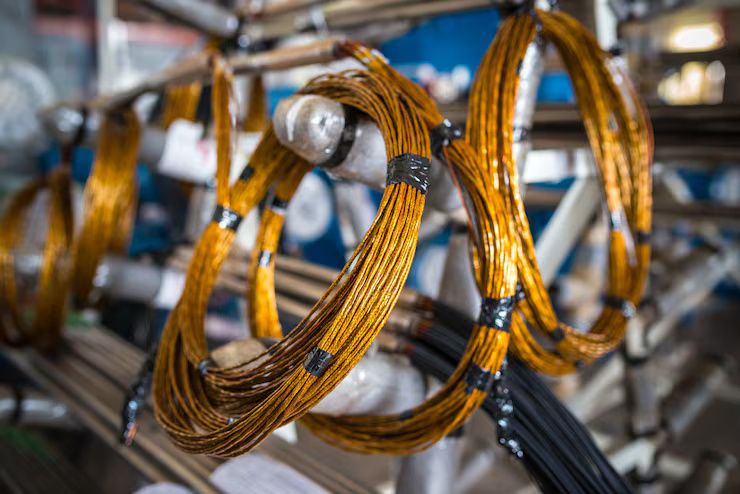
Although the finished products may appear simple, their production involves multiple carefully controlled stages. Conductive materials must be processed to precise dimensions, insulation must provide reliable protection, and finished cables must meet performance requirements for their intended application.
Understanding the wire manufacturing process provides useful insight into how raw materials are transformed into reliable electrical conductors. It also explains why equipment selection, production controls, testing procedures, and workplace safety are essential parts of a modern cable production line.
What Is Cable and Wire Manufacturing?
Cable and wire manufacturing involves producing conductive electrical components and assembling them into finished products designed to transmit electrical power or signals.
A wire generally consists of a single conductor with an insulating layer or protective coating. A cable typically contains two or more insulated conductors assembled together, often with additional shielding, fillers, jackets, or protective layers.
The exact manufacturing process depends on factors such as:
- Conductor material
- Conductor size
- Voltage requirements
- Flexibility requirements
- Operating environment
- Temperature resistance
- Mechanical strength
- Intended application
Copper and aluminum are commonly used as conductive materials because of their electrical properties and suitability for different applications.
The Wire Manufacturing Process
The wire production process generally begins with conductor preparation and continues through drawing, annealing, insulation, testing, and final inspection.
1. Rod Preparation
Metal rods are used as the starting material for many wire products. The material must meet specified requirements for purity, dimensions, and mechanical properties before entering production.
The quality of the initial rod influences the consistency of later manufacturing stages.
2. Wire Drawing
Wire drawing reduces the diameter of the metal rod by pulling it through a series of specially designed dies.
Each drawing stage gradually reduces the conductor diameter while increasing its length. Modern drawing equipment carefully controls speed, tension, lubrication, and dimensional accuracy.
The objective is to achieve the required conductor size while maintaining consistent surface quality.
3. Annealing
Drawing can make metal harder and less flexible. Annealing uses controlled heating and cooling to restore desirable mechanical properties.
This process improves conductor flexibility and helps prepare the material for subsequent manufacturing stages.
4. Stranding
For flexible or larger conductors, multiple individual wires may be twisted together to form a stranded conductor.
Stranding improves flexibility and can provide mechanical advantages compared with a single solid conductor.
The arrangement and direction of the strands depend on the cable's intended application.
5. Insulation
The conductor is covered with an insulating material to prevent unwanted electrical contact and protect against environmental influences.
Common insulation materials include various thermoplastic and thermoset compounds. The choice depends on temperature, voltage, flexibility, chemical exposure, and mechanical requirements.
Extrusion equipment applies the insulation continuously around the conductor while controlling thickness and surface quality.
Cable Production Line: Major Equipment
A modern cable production line consists of multiple machines that work together as a coordinated manufacturing system.
Typical equipment may include:
| Equipment | Main Function |
|---|---|
| Rod Breakdown Machine | Reduces conductor diameter |
| Wire Drawing Machine | Produces precise wire dimensions |
| Annealing Unit | Restores conductor flexibility |
| Stranding Machine | Combines individual wires |
| Extrusion Line | Applies insulation or jacket material |
| Cabling Machine | Assembles multiple insulated cores |
| Armoring Equipment | Adds mechanical protection |
| Take-Up System | Collects finished cable |
| Testing Equipment | Verifies electrical and physical performance |
Automation and computerized controls help maintain consistent production conditions across different stages.
Wire Production Line and Process Control
A wire production line must maintain stable operating conditions to produce consistent results.
Important process variables include:
- Drawing speed
- Conductor tension
- Die condition
- Material temperature
- Extrusion pressure
- Insulation thickness
- Cooling conditions
- Line speed
Small variations can affect the final product. For example, inconsistent insulation thickness may influence electrical performance, while incorrect conductor dimensions can affect resistance and compatibility with connectors.
Modern manufacturing systems increasingly use sensors and automated monitoring to identify deviations during production rather than relying solely on final inspection.
Cable Assembly and Protective Layers
After individual conductors are insulated, several cores may be assembled into a larger cable structure.
Depending on the application, additional layers may include:
- Fillers
- Binding tapes
- Metallic shielding
- Screens
- Armoring
- Inner sheaths
- Outer jackets
Each layer serves a specific function. Shielding may help reduce electromagnetic interference, while armoring can provide mechanical protection in demanding environments.
The outer jacket protects the internal structure from moisture, abrasion, chemicals, temperature changes, and other environmental conditions.
Quality Control in Cable and Wire Manufacturing
Quality control is essential throughout the manufacturing process rather than being limited to final inspection.
Effective quality systems typically monitor incoming materials, production conditions, dimensional accuracy, electrical characteristics, and finished product performance.
Key quality control areas include:
Conductor Quality
Conductors are checked for dimensions, resistance, surface condition, and material consistency.
Insulation Quality
Insulation is evaluated for thickness, uniformity, adhesion, and electrical integrity.
Dimensional Control
Precise measurements help confirm that the finished cable meets required diameter and construction specifications.
Process Monitoring
Production parameters are continuously observed to identify deviations before they affect large quantities of material.
Final Inspection
Finished cables are inspected for visual defects, labeling, packaging integrity, and compliance with applicable specifications.
Cable and Wire Testing
Testing verifies whether manufactured products meet defined electrical, mechanical, and environmental requirements.
Common tests include:
Conductor Resistance Testing
This measures electrical resistance and helps confirm conductor quality and dimensional consistency.
High-Voltage Testing
High-voltage tests assess insulation integrity by applying controlled electrical stress under specified conditions.
Insulation Resistance Testing
This evaluates how effectively insulation prevents unwanted electrical leakage.
Spark Testing
Spark testers can identify insulation defects during continuous production by detecting points where insulation may be incomplete or damaged.
Mechanical Testing
Mechanical tests may evaluate tensile strength, elongation, flexibility, and resistance to physical stress.
Environmental Testing
Specialized cables may undergo tests involving temperature, moisture, chemicals, ultraviolet exposure, or other environmental conditions relevant to their intended application.
The specific tests required depend on the cable design, application, and applicable technical standards.
Safety in Cable Manufacturing
Cable and wire manufacturing involves machinery, electrical systems, high temperatures, moving equipment, and potentially hazardous materials. Workplace safety must therefore be integrated into every stage of production.
Important safety practices include:
- Machine guarding
- Emergency stop systems
- Lockout and isolation procedures
- Electrical safety controls
- Appropriate personal protective equipment
- Safe material handling
- Regular equipment inspections
- Operator training
- Clear workplace procedures
Extrusion systems and annealing equipment may operate at elevated temperatures, while drawing and stranding machinery contain moving components that require effective guarding.
Safety procedures should be adapted to the specific equipment and workplace environment.
Common Manufacturing Challenges
Manufacturers may encounter several challenges during cable production.
Conductor Breakage
Breakage can result from material defects, excessive tension, incorrect drawing conditions, or worn tooling.
Uneven Insulation
Inconsistent insulation thickness may result from unstable extrusion conditions, improper alignment, or variations in material flow.
Surface Defects
Scratches, bubbles, contamination, or other imperfections can affect product performance.
Dimensional Variation
Changes in conductor or cable dimensions can create difficulties during installation and connection.
Production Downtime
Equipment failures, maintenance requirements, and material interruptions can affect production continuity.
Preventive maintenance, process monitoring, operator training, and effective quality management can help reduce these challenges.
Modern Trends in Cable Manufacturing
The cable industry continues to evolve alongside developments in energy, telecommunications, transportation, and industrial automation.
Emerging trends include:
- Increased production automation
- Real-time process monitoring
- Digital quality management
- Advanced insulation materials
- Lightweight conductor designs
- Higher-performance data cables
- Cables for electric vehicles
- Renewable energy applications
- Smart manufacturing systems
Industry 4.0 technologies are also influencing modern production facilities. Sensors, connected machinery, data analytics, and automated inspection systems can provide greater visibility into production conditions and product quality.
Frequently Asked Questions
What is the cable and wire manufacturing process?
The process typically includes conductor preparation, wire drawing, annealing, stranding when required, insulation extrusion, cable assembly, protective layering, testing, and final inspection.
What is the difference between a wire production line and a cable production line?
A wire production line generally focuses on producing individual conductors or insulated wires, while a cable production line may include additional stages for assembling multiple conductors and applying shielding, armoring, or protective jackets.
Why is wire drawing important?
Wire drawing reduces conductor diameter to precise dimensions while improving the material's suitability for specific electrical applications. Controlled drawing conditions are essential for maintaining dimensional consistency.
What tests are performed on manufactured cables?
Testing may include conductor resistance, insulation resistance, high-voltage, spark, mechanical, dimensional, and environmental tests, depending on the product's intended application and technical requirements.
Why is quality control important in cable manufacturing?
Quality control helps ensure that conductors, insulation, dimensions, and finished cable structures meet required performance specifications. Continuous monitoring can also identify manufacturing issues before they affect finished products.
Conclusion
Cable and wire manufacturing is a complex process that depends on precise equipment, controlled production conditions, comprehensive testing, and strong safety practices. From the initial preparation of conductive materials to wire drawing, annealing, insulation, stranding, cable assembly, and final testing, every stage contributes to the performance and reliability of the finished product.
A modern cable production line combines mechanical equipment with automation and process monitoring to maintain consistency and improve production control. At the same time, quality assurance and workplace safety remain essential throughout the manufacturing environment.
As demand grows for advanced electrical infrastructure, telecommunications, renewable energy systems, electric transportation, and industrial automation, cable and wire manufacturing will continue to evolve. Greater automation, improved materials, digital monitoring, and advanced testing technologies are likely to shape the future of wire production lines while supporting the growing need for reliable electrical and communication connectivity.