
Chemical fluid manufacturing involves the production and formulation of liquid chemical products used in industrial, commercial, engineering, and manufacturing operations. These fluids include industrial lubricants, hydraulic fluids, coolants, cleaning chemicals, heat transfer fluids, specialty chemicals, and water treatment formulations.
The development of chemical fluid manufacturing is closely connected to industrialization and the increasing need for materials that support machinery, production processes, temperature control, and equipment maintenance. As manufacturing industries expanded, chemical producers developed specialized liquid formulations with specific physical, chemical, and performance characteristics.
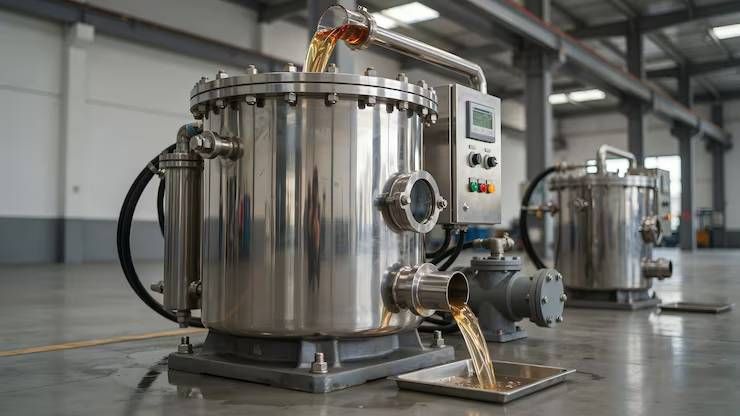
Today, chemical fluid production combines chemical engineering, material science, industrial mixing, blending technologies, filtration, quality testing, and automated manufacturing systems. These processes support industries such as automotive, aerospace, pharmaceuticals, metal processing, energy, construction, and food manufacturing.
Why Chemical Fluid Manufacturing Matters in Modern Industries
Industrial fluids perform important functions across manufacturing and engineering environments. They help control friction, transfer heat, remove contaminants, protect metal surfaces, and support specialized production processes.
Different industrial operations require fluids with specific chemical compositions and performance characteristics.
Major applications include:
Automotive Manufacturing: Lubricants, engine fluids, transmission fluids, and automotive coolants support vehicle production and operation.
Metal Processing: Cutting fluids and metalworking lubricants assist machining, grinding, and metal fabrication.
Industrial Machinery: Hydraulic fluids and industrial lubricants support machinery operation and mechanical systems.
Chemical Processing: Specialty chemical fluids are used in manufacturing, mixing, separation, and temperature management.
Power Generation: Transformer oils and heat transfer fluids support selected electrical and thermal systems.
Water Treatment: Chemical formulations are used in industrial water purification, cooling systems, and wastewater treatment.
Chemical fluid manufacturers must consider formulation stability, material compatibility, contamination control, operating temperatures, and applicable environmental requirements.
Major Types of Industrial Chemical Fluids
Industrial chemical fluids are classified according to their composition, physical properties, and intended applications.
Industrial Lubricants and Hydraulic Fluids
Industrial lubricants reduce friction and wear between moving mechanical components. They are used in bearings, gears, compressors, turbines, industrial motors, and manufacturing equipment.
Hydraulic fluids transmit power through pressurized hydraulic systems. Their characteristics include viscosity, oxidation stability, corrosion protection, and compatibility with system components.
Common categories include mineral-based fluids, synthetic lubricants, and selected biodegradable formulations.
Industrial Coolants and Metalworking Fluids
Industrial coolants help control temperatures during machining, grinding, cutting, and other manufacturing operations.
Metalworking fluids may perform several functions, including lubrication, cooling, corrosion protection, and removal of machining debris.
Common formulations include:
Soluble oil emulsions.
Semi-synthetic metalworking fluids.
Synthetic machining fluids.
Grinding coolants.
Cutting fluid concentrates.
Heat Transfer Fluids
Heat transfer fluids move thermal energy between equipment and processing systems. They are used in industrial heating, cooling, chemical processing, and energy applications.
Depending on operating conditions, these fluids may be based on water-glycol mixtures, synthetic organic compounds, or specialized thermal oils.
Industrial Cleaning and Degreasing Fluids
Industrial cleaning fluids remove oils, grease, dust, residues, and other contaminants from equipment and manufactured components.
These formulations may include aqueous cleaners, alkaline solutions, solvent-based products, and specialty cleaning chemicals.
Their selection depends on the material being cleaned, contamination type, cleaning temperature, and environmental requirements.
Water Treatment Chemical Fluids
Water treatment formulations are used to manage water quality in industrial systems.
Examples include corrosion inhibitors, scale control chemicals, coagulants, flocculants, and pH adjustment formulations.
These chemicals are used in cooling towers, boilers, wastewater treatment plants, and industrial water processing facilities.
Chemical Fluid Formulation Technologies
Chemical formulation is the process of combining selected raw materials, additives, solvents, and functional ingredients to create industrial fluids with defined properties.
The formulation depends on the intended application, operating environment, chemical compatibility, and required performance characteristics.
Industrial Blending and Mixing Technology
Industrial blending combines different liquid ingredients in controlled proportions to produce a uniform chemical formulation.
Common equipment includes:
Stainless steel mixing tanks.
High-speed dispersers.
Industrial agitators.
Homogenizers.
Inline blending systems.
Automated dosing equipment.
Mixing speed, temperature, processing time, and ingredient addition sequence are monitored to maintain formulation consistency.
Emulsification and Homogenization
Emulsification combines liquids that do not naturally mix, such as oil and water, using suitable emulsifying agents.
Homogenization reduces droplet size and improves the uniformity of selected liquid formulations.
These technologies are used in metalworking fluids, industrial cleaners, lubricants, and specialty chemical preparations.
Automated Chemical Processing Systems
Automated chemical processing systems use programmable logic controllers (PLCs), sensors, pumps, flow meters, and industrial software to control manufacturing operations.
These technologies support ingredient dosing, temperature monitoring, mixing sequences, tank-level monitoring, and production documentation.
Chemical Fluid Manufacturing Processes
Industrial fluid production involves several stages, beginning with raw material preparation and ending with finished product testing and packaging.
Raw Material Selection and Preparation
Manufacturers select ingredients according to the intended formulation. Common raw materials include base oils, solvents, surfactants, emulsifiers, corrosion inhibitors, stabilizers, and functional additives.
Each ingredient undergoes appropriate identification and quality checks before entering production.
Formulation and Industrial Mixing
Selected ingredients are introduced into mixing vessels according to established manufacturing instructions.
The formulation may require controlled heating, agitation, emulsification, or dissolution. Process parameters are monitored to maintain uniformity and prevent unwanted chemical interactions.
Filtration and Product Processing
After blending, selected formulations undergo filtration to remove unwanted particles and contaminants.
Additional processing may include cooling, pH adjustment, viscosity adjustment, deaeration, and final concentration checks.
Quality Testing and Packaging
Finished fluids undergo laboratory testing before packaging. Depending on the product category, quality testing may include:
Viscosity and density measurement.
pH and chemical composition analysis.
Corrosion resistance testing.
Flash point measurement where applicable.
Emulsion stability testing.
Contamination and particle analysis.
Products are subsequently packaged in drums, industrial containers, intermediate bulk containers (IBCs), or other suitable packaging formats.
Global Chemical Fluid Manufacturers and Industrial Suppliers
The global industrial fluids market includes specialty chemical companies, lubricant manufacturers, base oil producers, and industrial formulation companies.
Some internationally recognized companies include:
Shell: Develops industrial lubricants, hydraulic fluids, metalworking fluids, and specialty lubricant formulations.
FUCHS: Manufactures industrial lubricants, metalworking fluids, and specialty chemical formulations.
Quaker Houghton: Develops metalworking fluids, industrial process chemicals, and specialty fluid formulations.
Castrol: Manufactures industrial lubricants, hydraulic oils, and metalworking fluid products.
TotalEnergies: Produces industrial lubricants, hydraulic fluids, and specialty lubricant formulations.
Chevron: Develops base oils, industrial lubricants, and related fluid products.
Dow: Produces specialty chemicals, industrial ingredients, and materials used in different fluid formulations.
The product portfolios and manufacturing capabilities of these companies vary by region and industrial application.
Recent Chemical Fluid Manufacturing Developments, 2024–2026
Chemical fluid manufacturing is evolving through formulation research, production automation, environmental considerations, and digital manufacturing technologies.
Important developments include:
Advanced Formulation Research: Manufacturers are examining improved additive combinations, synthetic base materials, and specialized chemical formulations for different industrial operating conditions.
Digital Manufacturing: Data analytics, machine monitoring, and automated process controls are increasingly used to monitor production consistency and identify process variations.
Sustainable Fluid Formulations: Research increasingly focuses on biodegradable base materials, improved chemical handling, and formulations designed to reduce environmental impacts.
Advanced Blending Technologies: Simulation and computational fluid dynamics are being explored to understand mixing behavior, heat transfer, and production scale-up in industrial lubricant manufacturing.
Industrial Fluid Monitoring: Sensors and laboratory analysis are being integrated into fluid management systems to monitor contamination, concentration, viscosity, and operating conditions.
These developments reflect the growing relationship between chemical engineering, industrial automation, and sustainable manufacturing.
Chemical Manufacturing Regulations and Safety Standards in India
Chemical fluid manufacturers in India must follow applicable environmental, industrial safety, storage, labeling, and product quality requirements.
The Ministry of Environment, Forest and Climate Change (MoEFCC) administers important environmental regulations, including the Manufacture, Storage and Import of Hazardous Chemical Rules, 1989. These rules address specified hazardous chemicals and industrial activities.
The Department of Chemicals and Petrochemicals also implements applicable Bureau of Indian Standards (BIS) Quality Control Orders for specified chemicals and petrochemicals. Requirements depend on the product category and relevant notified standard.
Important compliance areas include:
Chemical storage and handling procedures.
Material Safety Data Sheets (SDS).
Industrial fire prevention and emergency planning.
Wastewater and chemical waste management.
Personal protective equipment and worker training.
Applicable factory and environmental permissions.
Product quality and labeling requirements.
Manufacturers must also consider applicable Central and State Pollution Control Board requirements for emissions, effluent treatment, and hazardous waste management.
Chemical Fluid Manufacturing Tools and Technical Resources
Digital and laboratory resources support chemical formulation, manufacturing planning, and product quality management.
Examples include:
Aspen Plus: Chemical process simulation and engineering software.
ChemCAD: Chemical process modeling and simulation.
MATLAB: Mathematical modeling, process analysis, and engineering calculations.
AutoCAD Plant 3D: Industrial plant design and piping documentation.
Laboratory Information Management Systems (LIMS): Laboratory sample tracking and testing records.
ISO Standards Database: Technical references for quality management and applicable industrial standards.
These tools support formulation research, process engineering, equipment planning, and laboratory operations.
Frequently Asked Questions About Chemical Fluid Manufacturing
1. What are the main types of industrial chemical fluids?
Major categories include industrial lubricants, hydraulic fluids, metalworking coolants, heat transfer fluids, cleaning chemicals, and water treatment formulations.
2. How are industrial chemical fluids manufactured?
Industrial fluids are generally manufactured through raw material preparation, formulation, controlled blending, mixing, filtration, quality testing, and packaging. The exact process depends on the chemical composition.
3. What technologies are used in chemical fluid manufacturing?
Common technologies include industrial mixing, emulsification, homogenization, automated dosing, filtration, temperature control, and programmable process automation.
4. Who are the global industrial fluid manufacturers?
International companies include Shell, FUCHS, Quaker Houghton, Castrol, TotalEnergies, Chevron, and Dow. Their product ranges cover different industrial fluid categories.
5. Which industries use industrial chemical fluids?
Automotive, aerospace, metalworking, pharmaceuticals, power generation, construction, food processing, and water treatment industries use different industrial chemical formulations.
Conclusion
Chemical fluid manufacturing involves the formulation and production of specialized liquids for industrial, commercial, and engineering applications. Industrial lubricants, hydraulic fluids, coolants, cleaning chemicals, and heat transfer fluids support different manufacturing processes. Advanced blending equipment, automated controls, filtration technologies, and laboratory testing contribute to consistent production quality. Digital manufacturing, formulation research, environmental management, and regulatory compliance continue to influence the development of the chemical fluid industry.