Chemical manufacturing is a major part of modern industry, providing materials used in agriculture, construction, pharmaceuticals, textiles, automotive production, water treatment, electronics, food processing, and countless everyday products.
Behind these applications are chemical manufacturing companies that transform raw materials into controlled chemical substances through carefully designed industrial processes.
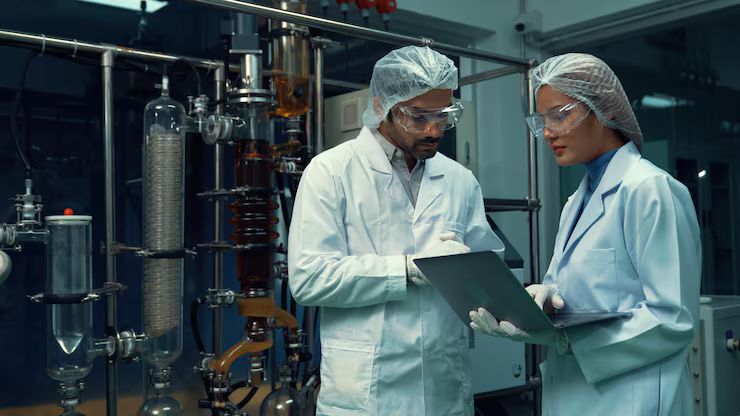
Understanding industrial chemical manufacturing is useful for businesses evaluating chemical supply chains, professionals learning about production systems, and general readers interested in how industrial chemicals are made. The industry involves much more than mixing ingredients. Production requires process engineering, material selection, quality control, environmental management, worker protection, and reliable distribution.
This guide explains how chemical manufacturing works, the major types of chemical production, the role of manufacturing companies, quality considerations, and the technologies shaping the industry.
What Is Industrial Chemical Manufacturing?
Industrial chemical manufacturing is the process of converting raw materials into chemical products through physical, chemical, or biochemical processes. Production can range from relatively simple operations such as blending and purification to complex processes involving controlled reactions, separation, crystallization, drying, and formulation.
Chemical manufacturing companies may produce basic chemicals, specialty chemicals, intermediates, formulated products, or materials designed for highly specific industrial applications.
The manufacturing process generally involves several stages:
- Raw material selection
- Material preparation
- Chemical reaction or physical processing
- Separation and purification
- Formulation or blending
- Quality testing
- Packaging and storage
- Distribution
The exact sequence depends on the chemical product and its intended application.
Major Categories of Chemical Manufacturing
The chemical industry covers a broad range of products. Understanding the main categories helps explain the diversity of chemical manufacturing companies.
Basic Chemicals
Basic chemicals are produced in large volumes and serve as building blocks for many downstream industries. They may include acids, alkalis, solvents, gases, and other fundamental chemical substances.
These materials are often supplied to other manufacturers as raw materials for additional processing.
Specialty Chemicals
Specialty chemicals are generally developed for specific performance requirements rather than simply high-volume production. They may be used in coatings, adhesives, electronics, agriculture, water treatment, construction materials, and industrial processing.
Their value often depends on characteristics such as purity, stability, compatibility, conductivity, corrosion resistance, or thermal performance.
Chemical Intermediates
Chemical intermediates are substances produced during a manufacturing chain and subsequently used to make another chemical product. They connect different stages of industrial production and can be important components of complex chemical supply chains.
Formulated Chemicals
Formulated products combine multiple ingredients to achieve specific performance characteristics. Examples can include industrial cleaners, coatings, treatment formulations, adhesives, and processing chemicals.
Formulation requires careful control of composition, consistency, and compatibility.
How Chemical Manufacturing Companies Operate
Chemical manufacturing companies typically organize production around specialized equipment, process systems, laboratories, and quality-control operations.
A production facility may include reactors, storage vessels, pumps, heat exchangers, filtration equipment, separation systems, dryers, blending units, and automated control systems.
Process engineers design manufacturing procedures to maintain consistent operating conditions. Production teams monitor variables such as temperature, pressure, concentration, flow, and reaction time according to the requirements of the specific process.
Modern facilities increasingly use automation and digital monitoring to improve process consistency and identify unusual operating conditions.
The Role of Chemical Reactions
Chemical reactions are central to many industrial manufacturing processes. A reaction changes one or more starting substances into new chemical compounds.
Different production methods may involve:
- Synthesis
- Oxidation or reduction
- Neutralization
- Polymerization
- Hydrogenation
- Fermentation
- Hydrolysis
- Precipitation
Not every chemical product is created through a single reaction. Some manufacturing processes combine multiple reaction and separation stages before the final product is obtained.
Process design focuses on controlling conditions so the desired product can be produced consistently while managing unwanted by-products and process variability.
Importance of Raw Material Quality
The quality of finished chemicals begins with the quality and consistency of incoming materials.
Chemical manufacturing companies evaluate raw materials according to relevant specifications, which may include purity, concentration, moisture content, physical properties, and chemical composition.
Consistent raw materials help manufacturers maintain stable production conditions and reduce variation between batches.
Supply-chain management is therefore closely connected with chemical manufacturing. Reliable sourcing, appropriate storage, inventory management, and material traceability all contribute to consistent production.
Quality Control in Chemical Manufacturing
Quality control is one of the most important elements of industrial chemical manufacturing.
Laboratories may analyze raw materials, intermediate products, and finished chemicals to verify that they meet established specifications.
Testing can examine characteristics such as:
- Chemical composition
- Purity
- Moisture
- pH
- Density
- Viscosity
- Particle characteristics
- Stability
- Physical appearance
Manufacturers may use analytical instruments and standardized testing procedures to identify variations and confirm product consistency.
Quality management also includes documentation, batch records, equipment calibration, sampling procedures, and traceability.
Safety and Process Management
Chemical manufacturing requires careful management because industrial processes can involve reactive substances, high temperatures, pressure, corrosive materials, and other operational hazards.
Responsible manufacturing therefore incorporates multiple layers of process safety.
Important areas include:
- Equipment inspection
- Process monitoring
- Proper chemical storage
- Ventilation
- Emergency planning
- Worker training
- Protective equipment
- Hazard identification
- Preventive maintenance
- Waste management
Safety procedures should be based on the specific materials and processes used at a facility. Effective process management aims to prevent incidents rather than relying only on emergency responses.
Environmental Considerations
Modern chemical manufacturing increasingly considers environmental performance throughout the production lifecycle.
Manufacturers may focus on reducing waste, improving energy efficiency, minimizing emissions, recycling process materials, and treating wastewater appropriately.
Important environmental considerations include:
Waste Reduction
Optimizing processes can reduce unwanted by-products and improve raw-material utilization.
Energy Efficiency
Efficient heating, cooling, separation, and process control can reduce energy requirements.
Water Management
Facilities may use water-treatment and recycling systems to manage industrial water responsibly.
Emission Control
Appropriate engineering controls and monitoring systems can help manage atmospheric emissions associated with industrial operations.
Environmental management is increasingly integrated into process design rather than being treated as a separate activity.
Automation and Digital Technology
Technology is transforming how chemical manufacturing companies monitor and manage production.
Automated control systems can continuously monitor process conditions and adjust equipment according to predefined operating parameters.
Digital technologies can also support:
- Real-time process monitoring
- Predictive maintenance
- Production data analysis
- Equipment performance tracking
- Quality management
- Inventory monitoring
- Process optimization
Advanced data systems can help engineers identify trends that may not be immediately apparent through manual observation.
Choosing and Evaluating Chemical Manufacturing Companies
Businesses evaluating chemical manufacturers should consider more than product availability.
Relevant factors may include:
- Manufacturing capabilities
- Product specifications
- Quality-control systems
- Production consistency
- Technical expertise
- Regulatory compliance
- Traceability practices
- Environmental management
- Storage capabilities
- Supply-chain reliability
The appropriate manufacturer depends on the chemical application, required specifications, production volume, and technical requirements.
Clear communication about product specifications and intended use can also help ensure that the selected chemical is appropriate for the application.
Trends Shaping Industrial Chemical Manufacturing
The chemical manufacturing sector continues to evolve as industries demand greater efficiency, sustainability, and precision.
Important trends include:
- Process automation
- Digital manufacturing
- Advanced analytical testing
- Sustainable chemistry
- Improved waste recovery
- Energy-efficient production
- Bio-based raw materials
- Circular manufacturing models
- Greater process traceability
- Data-driven quality management
Sustainable chemistry is particularly significant because manufacturers increasingly seek ways to reduce environmental impact while maintaining product performance.
Frequently Asked Questions
What do chemical manufacturing companies produce?
Chemical manufacturing companies produce a wide range of materials, including basic chemicals, specialty chemicals, intermediates, solvents, polymers, formulated products, and industrial processing materials.
How does industrial chemical manufacturing work?
Industrial chemical manufacturing generally involves preparing raw materials, carrying out chemical or physical processing, separating or purifying products, testing quality, and preparing the finished material for storage or distribution.
Why is quality control important in chemical manufacturing?
Quality control helps ensure that chemical products consistently meet defined specifications for composition, purity, physical properties, and intended industrial performance.
What technologies are used in modern chemical manufacturing?
Modern facilities may use automated process controls, analytical instruments, digital monitoring platforms, predictive maintenance systems, and data-analysis technologies to improve consistency and operational efficiency.
What factors should businesses consider when evaluating a chemical manufacturer?
Businesses should consider manufacturing capabilities, quality systems, technical requirements, regulatory practices, traceability, environmental management, and supply-chain reliability.
Conclusion
Chemical manufacturing companies play a foundational role in modern industrial supply chains by converting raw materials into chemicals used across numerous sectors. From basic chemical production to highly specialized formulations, industrial chemical manufacturing depends on carefully controlled processes, reliable raw materials, rigorous quality testing, and responsible operational practices.
As automation, digital monitoring, sustainable chemistry, and advanced process engineering continue to develop, chemical manufacturing is becoming increasingly data-driven and resource-conscious. Understanding these fundamentals helps businesses and industry professionals evaluate chemical production more effectively and recognize how manufacturing quality, process control, safety, and environmental responsibility contribute to dependable industrial chemical supply.