Chemical manufacturing companies play an important role in producing the materials used across agriculture, pharmaceuticals, construction, food processing, water treatment, electronics, textiles, automotive manufacturing, and many other industries.
Although chemical production may appear highly specialized, its basic purpose is straightforward: converting selected raw materials into useful substances through controlled chemical and physical processes.
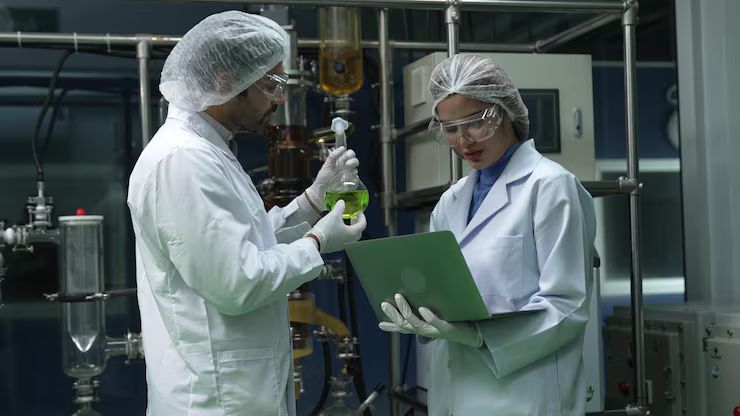
Modern chemical manufacturing combines chemistry, engineering, automation, quality control, environmental management, and workplace safety. Companies operating in this sector may produce basic chemicals, specialty chemicals, industrial intermediates, polymers, solvents, coatings, additives, treatment chemicals, or customized formulations.
Understanding how chemical manufacturing companies operate provides useful insight into how everyday industrial materials are developed, processed, tested, packaged, and supplied.
What Are Chemical Manufacturing Companies?
Chemical manufacturing companies are organizations involved in producing chemical substances and formulations for industrial, commercial, agricultural, scientific, or consumer applications.
Their operations can range from large-scale production of common industrial chemicals to smaller, highly specialized manufacturing processes. Some facilities focus on a single chemical family, while others operate multiple production lines designed for different materials.
Typical activities may include:
- Raw material preparation
- Chemical reactions
- Separation and purification
- Blending and formulation
- Quality testing
- Packaging
- Storage and distribution
- Process monitoring
- Waste management
The final product must meet defined specifications for composition, purity, consistency, stability, and intended application.
Major Categories of Chemical Manufacturing
The chemical industry includes many different manufacturing segments. Understanding these categories makes it easier to see how broad the sector is.
Basic Chemicals
Basic chemicals are produced in large volumes and often serve as starting materials for other industrial processes. They can include acids, alkalis, gases, solvents, and other fundamental chemical substances.
These materials may subsequently be processed into plastics, coatings, detergents, fertilizers, pharmaceuticals, and numerous other products.
Specialty Chemicals
Specialty chemicals are generally developed for specific performance requirements rather than simply high-volume production. They may be used to provide characteristics such as improved stability, corrosion resistance, adhesion, conductivity, lubrication, or processing performance.
Specialty chemical manufacturing often requires detailed formulation control and application-specific testing.
Polymers and Resins
Polymers and resins are important materials used in plastics, adhesives, coatings, packaging, automotive components, construction products, and electrical applications.
Manufacturing involves carefully controlled reactions that determine properties such as strength, flexibility, heat resistance, and chemical durability.
Agricultural Chemicals
This category includes materials used to support agricultural production, including fertilizers, soil-treatment products, and crop-protection formulations. Manufacturing requires careful control of composition and quality because product performance can directly affect agricultural applications.
Water Treatment Chemicals
Water treatment chemicals are used in processes designed to improve water quality, control microorganisms, manage scaling, remove contaminants, and support industrial water systems.
These products are used across municipal, commercial, and industrial water-treatment applications.
How Modern Chemical Manufacturing Works
Modern chemical production typically follows a series of controlled stages. The exact process varies according to the material being manufactured.
1. Raw Material Selection
Production begins with carefully selected raw materials. Their purity, concentration, physical characteristics, and compatibility with the intended process can influence final product quality.
Suppliers and manufacturers may establish specifications for incoming materials to ensure consistency between production batches.
2. Preparation and Processing
Raw materials may be measured, filtered, heated, cooled, dissolved, mixed, or otherwise prepared before entering the main production stage.
Accurate preparation helps maintain stable operating conditions.
3. Chemical Reaction
Many manufacturing processes depend on controlled chemical reactions. Temperature, pressure, concentration, reaction time, and mixing conditions can affect how efficiently a reaction proceeds.
Industrial reactors are designed to provide controlled environments for these processes.
4. Separation and Purification
After a reaction, the desired chemical may need to be separated from by-products, solvents, unreacted materials, or other components.
Methods can include filtration, distillation, crystallization, evaporation, extraction, or other separation techniques.
5. Formulation and Blending
Some products require multiple ingredients to be combined in carefully controlled proportions. Blending equipment helps create uniform formulations while maintaining consistent physical and chemical characteristics.
6. Quality Testing
Testing is an essential part of chemical manufacturing. Finished products may be evaluated for properties such as purity, concentration, viscosity, moisture content, stability, appearance, or performance.
Quality control helps confirm that products meet established specifications before they move to packaging or further processing.
Role of Automation in Chemical Manufacturing
Automation has become an important part of modern chemical production. Automated systems can monitor operating conditions and help maintain consistent process parameters.
Sensors may track factors such as:
- Temperature
- Pressure
- Flow rate
- Level
- Chemical concentration
- Equipment condition
Control systems can then use this information to support process adjustments and maintain stable production conditions.
Automation can also reduce repetitive manual tasks, improve data collection, and provide operators with greater visibility into manufacturing processes.
Importance of Process Safety
Chemical manufacturing requires careful attention to safety because certain substances and processes can present hazards when improperly handled.
Modern facilities commonly use structured safety systems covering areas such as equipment design, employee training, chemical storage, emergency procedures, ventilation, protective equipment, and process monitoring.
Risk assessment is particularly important when dealing with reactive substances, high temperatures, pressurized equipment, or hazardous materials.
A strong safety culture focuses on prevention, proper procedures, equipment maintenance, and continuous employee awareness.
Environmental Management in Chemical Production
Environmental responsibility is another important consideration for chemical manufacturing companies.
Production processes may generate wastewater, emissions, solid residues, or other by-products. Facilities therefore use various approaches to reduce environmental impacts and manage waste responsibly.
Common practices include:
- Waste minimization
- Water reuse
- Emission control
- Process optimization
- Energy-efficiency improvements
- Responsible waste treatment
- Material recovery
Modern manufacturing increasingly considers environmental performance during process design rather than treating it as a separate activity.
Quality Assurance and Consistency
Chemical products often need to perform consistently across different production batches. Small variations in composition can affect downstream manufacturing processes, making quality assurance essential.
Quality systems may cover raw materials, production conditions, laboratory testing, packaging, labeling, documentation, and finished-product release.
Traceability is also valuable because it allows manufacturers to connect finished products with specific production batches and process records.
Choosing a Chemical Manufacturing Partner
Organizations evaluating chemical manufacturing companies may consider several practical factors rather than focusing on a single characteristic.
Important areas include:
- Manufacturing capabilities
- Product specifications
- Quality-control processes
- Production capacity
- Technical expertise
- Safety procedures
- Regulatory compliance
- Environmental practices
- Packaging capabilities
- Supply reliability
Clear communication about technical specifications and intended applications can help ensure that the manufactured material is appropriate for its purpose.
Technology Trends Shaping Chemical Manufacturing
The chemical manufacturing industry continues to adopt technologies that improve efficiency, consistency, and process visibility.
Important developments include advanced process control, industrial sensors, predictive maintenance, digital production records, data analytics, and increasingly connected manufacturing systems.
Artificial intelligence and machine-learning technologies are also being explored for applications such as process optimization, equipment monitoring, quality analysis, and demand forecasting.
At the same time, manufacturers are investigating cleaner production methods, alternative raw materials, improved recycling processes, and lower-resource manufacturing approaches.
Frequently Asked Questions
What do chemical manufacturing companies produce?
They produce a wide range of materials, including basic chemicals, specialty chemicals, polymers, resins, solvents, additives, agricultural chemicals, and water-treatment products.
What are the main stages of chemical manufacturing?
Typical stages include raw material preparation, chemical reaction or processing, separation, purification, formulation, quality testing, packaging, and distribution.
Why is quality control important in chemical manufacturing?
Quality control helps ensure that chemical products consistently meet required specifications for composition, purity, stability, and performance.
How does automation help chemical manufacturers?
Automation can monitor process conditions, improve consistency, collect production data, support equipment monitoring, and reduce repetitive manual activities.
Is environmental management important in chemical production?
Yes. Modern facilities increasingly focus on waste reduction, emissions management, water efficiency, energy use, and responsible handling of manufacturing by-products.
Conclusion
Chemical manufacturing companies form an essential part of the global industrial system by converting raw materials into substances that support countless products and processes. Their work combines chemistry, engineering, automation, quality management, safety, and environmental responsibility.
Modern chemical production is no longer simply about carrying out chemical reactions. It involves carefully coordinated systems that control raw materials, operating conditions, product specifications, equipment performance, and environmental impacts.
As technology continues to advance, chemical manufacturers are likely to place greater emphasis on automation, data-driven process control, resource efficiency, sustainable production, and improved quality management. Understanding these fundamentals provides a clearer view of how modern chemical manufacturing operates and why it remains an important foundation of industrial development.