Supply chains have become increasingly complex as businesses coordinate suppliers, manufacturers, warehouses, transportation networks, retailers, and customers across multiple locations.
Managing these interconnected activities effectively requires more than spreadsheets and historical assumptions. Organizations now use data to understand what is happening across the supply chain, identify potential disruptions, and make better operational decisions.
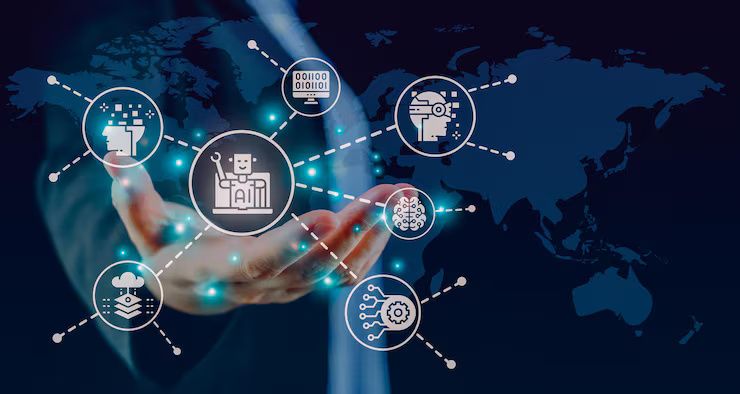
A data-driven supply chain uses information from multiple sources to improve planning, inventory management, procurement, logistics, production, and customer fulfillment. Digital supply chain management builds on this approach by connecting physical operations with technologies such as cloud platforms, analytics, artificial intelligence, Internet of Things devices, automation, and real-time monitoring.
Understanding how these systems work provides a useful foundation for organizations adapting to increasingly dynamic supply environments.
What Is a Data-Driven Supply Chain?
A data-driven supply chain uses accurate, timely, and relevant information to guide operational decisions throughout the movement of materials, products, and information.
Traditional supply chain decisions may depend heavily on historical patterns, manual reports, or individual experience. A data-driven model combines these sources with current operational information to create a more complete view of supply chain activity.
Data can come from many areas, including:
- Supplier systems
- Manufacturing equipment
- Warehouse management platforms
- Transportation systems
- Sales channels
- Inventory databases
- Customer demand information
- IoT sensors
- Market conditions
- Weather and logistics information
When these sources are connected effectively, organizations can move from reactive decision-making toward more proactive planning.
What Is Digital Supply Chain Management?
Digital supply chain management refers to the use of digital technologies to plan, coordinate, monitor, and optimize supply chain activities.
Instead of managing each stage as an isolated process, digital systems connect information across procurement, production, inventory, warehousing, transportation, and distribution.
A digital supply chain may use:
- Cloud computing
- Data analytics
- Artificial intelligence
- Machine learning
- Internet of Things technology
- Robotics and automation
- Digital twins
- Supply chain management software
- Application programming interfaces
- Real-time tracking systems
The objective is not simply to collect more information. The greater value comes from turning information into useful operational insights.
Why Data Matters in Supply Chain Management
Data provides visibility into how supply chain activities are performing.
For example, inventory information can show where materials are located, while transportation data can reveal shipment progress. Production information can indicate whether manufacturing schedules are operating as expected.
When these data points are analyzed together, organizations can identify relationships that may not be visible when departments operate independently.
Better data visibility can support decisions involving:
- Inventory levels
- Demand planning
- Supplier coordination
- Production scheduling
- Warehouse operations
- Transportation planning
- Delivery management
- Risk monitoring
The quality of these decisions depends heavily on the accuracy, completeness, and timeliness of the underlying data.
Key Components of a Data-Driven Supply Chain
A modern data-driven supply chain typically consists of several interconnected layers.
Data Collection
The first layer involves gathering information from operational systems, sensors, transactions, suppliers, and logistics networks.
Automated data collection can reduce manual entry and provide information more frequently.
Data Integration
Different departments may use different software platforms and data formats. Integration connects these systems so information can move between them.
Without effective integration, organizations may have large quantities of data but still lack a unified view of operations.
Data Analytics
Analytics transforms raw information into meaningful insights. Descriptive analytics can explain what happened, while predictive approaches can help identify what may happen next.
Decision Support
The final stage involves using insights to support practical decisions. This may include adjusting inventory levels, changing production schedules, monitoring suppliers, or responding to transportation disruptions.
How Digital Technologies Transform Supply Chains
Digital technologies are changing how supply chains operate by improving visibility, connectivity, and automation.
Internet of Things
IoT sensors can collect information about location, temperature, humidity, equipment condition, and other operational variables.
This is particularly useful when goods require controlled environmental conditions or when equipment performance needs continuous monitoring.
Artificial Intelligence and Machine Learning
AI and machine learning can analyze large datasets to identify patterns and support forecasting.
Applications may include demand forecasting, anomaly detection, inventory planning, predictive maintenance, and logistics optimization.
Cloud Computing
Cloud platforms allow supply chain information to be accessed across locations and departments. They can support collaboration between organizations that need to exchange information during procurement, manufacturing, and distribution.
Digital Twins
A digital twin creates a virtual representation of a physical operation or supply chain process. Organizations can use simulations to examine potential changes before applying them to real-world operations.
Demand Forecasting and Planning
Demand forecasting is one of the most important applications of supply chain data.
Accurate forecasting helps organizations understand potential future demand and align inventory, production, procurement, and logistics accordingly.
Traditional forecasting often relies primarily on historical sales patterns. Modern analytics can incorporate additional variables such as seasonality, market changes, customer behavior, promotions, and external disruptions.
However, forecasts are not guarantees. Unexpected events can still change demand rapidly, which is why continuous monitoring and scenario planning remain important.
Inventory Management
Inventory represents a balance between availability and operational efficiency.
Too much inventory can create storage and management challenges, while insufficient inventory can disrupt production or customer fulfillment.
Data-driven inventory management uses information such as demand patterns, lead times, supplier performance, inventory turnover, and product movement to support more informed planning.
Real-time visibility can also help organizations identify slow-moving materials, potential shortages, and unexpected changes in inventory levels.
Supply Chain Visibility and Risk Management
Supply chain visibility means having a clear understanding of what is happening across interconnected operations.
A digital system can help organizations monitor:
- Supplier performance
- Shipment status
- Production progress
- Inventory movement
- Warehouse activity
- Transportation conditions
- Potential disruptions
This visibility supports risk management by helping organizations identify problems earlier.
For example, a delayed shipment may affect production several days later. Early identification provides more time to evaluate alternative schedules or sourcing arrangements.
The Importance of Data Quality
Technology alone cannot create a reliable data-driven supply chain.
Poor-quality data can lead to inaccurate forecasts, incorrect inventory information, inefficient planning, and misleading performance measurements.
Important aspects of data quality include:
| Data Factor | Why It Matters |
|---|---|
| Accuracy | Supports reliable decisions |
| Timeliness | Reflects current conditions |
| Completeness | Reduces information gaps |
| Consistency | Keeps systems aligned |
| Accessibility | Helps authorized teams use information |
| Security | Protects sensitive operational data |
Organizations therefore need clear data governance practices alongside digital technology.
Measuring Supply Chain Performance
Data allows organizations to monitor supply chain performance through meaningful operational indicators.
Common measures include:
- Order fulfillment performance
- Inventory turnover
- Forecast accuracy
- Supplier reliability
- Warehouse productivity
- Transportation performance
- Lead-time consistency
- Production efficiency
These indicators become more useful when viewed together rather than independently. A change in one area can create consequences elsewhere in the supply chain.
Challenges of Digital Supply Chain Management
Moving toward a data-driven model can introduce several challenges.
Legacy systems may not communicate effectively with newer platforms. Organizations may also encounter inconsistent data standards across departments or suppliers.
Other challenges include:
- Cybersecurity risks
- Employee training requirements
- Data governance complexity
- Integration difficulties
- Resistance to process changes
- Limited data quality
- Dependence on technology infrastructure
Successful digital transformation therefore requires both technological development and organizational change.
Future of Data-Driven Supply Chains
The future of supply chain management is likely to involve increasingly connected systems and more advanced analytical capabilities.
Emerging developments include autonomous logistics, AI-assisted planning, real-time digital twins, intelligent warehouse systems, advanced robotics, and predictive risk monitoring.
Another important direction is greater collaboration between supply chain partners. Secure data-sharing frameworks can provide organizations with a broader understanding of supply conditions while maintaining appropriate controls over sensitive information.
The emphasis is gradually shifting from simply tracking historical performance toward continuously understanding current conditions and anticipating potential changes.
Frequently Asked Questions
What is a data-driven supply chain?
A data-driven supply chain uses operational data, analytics, and digital technologies to support decisions across procurement, production, inventory, warehousing, transportation, and distribution.
What is digital supply chain management?
Digital supply chain management uses connected technologies such as cloud computing, analytics, IoT, AI, and automation to coordinate and monitor supply chain activities.
Why is data quality important?
Accurate, timely, complete, and consistent data provides a stronger foundation for forecasting, inventory planning, risk management, and operational decision-making.
How does AI support supply chain management?
AI can analyze large datasets to identify patterns, support demand forecasting, detect anomalies, assist planning, and improve visibility into potential operational changes.
What are the main challenges of digital supply chains?
Common challenges include legacy-system integration, inconsistent data, cybersecurity requirements, employee training, data governance, and organizational resistance to process changes.
Conclusion
Data-driven supply chains represent a major shift from isolated, reactive operations toward connected and informed decision-making. By combining reliable data with analytics, cloud platforms, IoT, AI, and automation, organizations can gain greater visibility into the movement of materials, products, and information.
Digital supply chain management is not simply about adopting new technology. Its effectiveness depends on data quality, system integration, clear processes, skilled teams, and the ability to turn information into practical decisions. As supply networks continue to become more interconnected and unpredictable, these capabilities will play an increasingly important role in creating responsive, transparent, and resilient supply chain operations.