
Drilling equipment plays an important role across construction, mining, infrastructure development, geotechnical investigation, and industrial engineering.
These machines create holes or bore through soil, rock, concrete, and other materials for purposes ranging from foundation work to mineral exploration. The right equipment depends on ground conditions, drilling depth, hole diameter, project requirements, and operating environment.
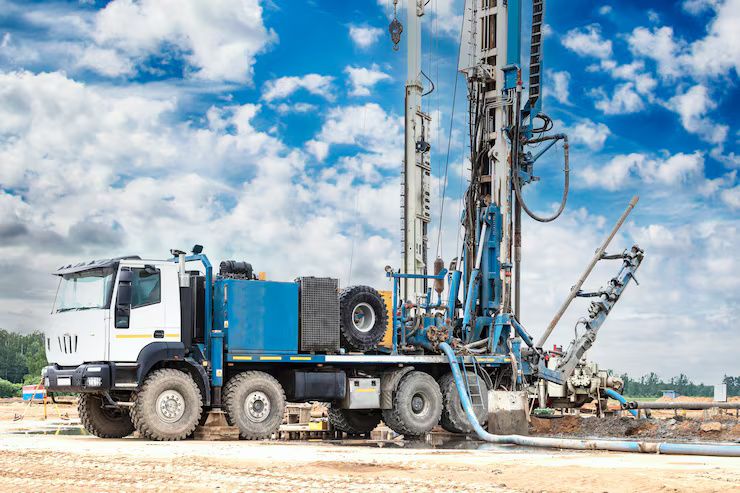
Understanding the different types of drilling equipment helps engineers, contractors, site managers, and technical professionals make better-informed decisions. This guide explains how drilling machines work, where they are used, how equipment categories differ, and which factors influence equipment selection and performance.
What Is Drilling Equipment?
Drilling equipment refers to a broad group of machines, tools, and supporting systems used to create cylindrical holes in various materials. Depending on the application, drilling may involve rotating, hammering, or combining both actions to penetrate the ground or another surface.
A complete drilling system may include:
- Drilling rigs
- Drill bits
- Drill rods
- Rotary drives
- Hydraulic systems
- Air compressors
- Mud pumps
- Hoisting systems
- Control systems
The configuration varies significantly between construction sites, mines, quarries, and industrial facilities. A small drilling machine used for concrete work has very different characteristics from a large rig designed to penetrate hard rock.
How Drilling Machines Work
Although drilling systems differ in design, most follow a basic process. The machine applies mechanical energy to a drilling tool, allowing it to penetrate the target material.
In rotary drilling, the drill bit turns continuously while applying downward pressure. In percussion drilling, repeated impacts help break hard material into smaller fragments. Some modern systems combine rotation and percussion to improve penetration in challenging geological conditions.
The drilling process may also involve fluid or compressed air to remove cuttings from the hole. This helps maintain drilling efficiency and provides better control over the borehole.
Main Types of Drilling Equipment
Different project conditions require different drilling technologies. The most suitable choice depends on the material being drilled and the required depth, diameter, and accuracy.
Rotary Drilling Rigs
Rotary drilling rigs use continuous rotation to penetrate soil, rock, or other materials. They are widely used in construction, mining, water exploration, and geotechnical projects.
Their applications include:
- Foundation drilling
- Borehole creation
- Geological exploration
- Water well drilling
- Soil investigation
Rotary systems can be configured for different drilling depths and ground conditions.
Percussion Drilling Machines
Percussion drilling uses repeated impact energy to break hard materials. These machines are particularly useful where dense rock or compact formations make conventional rotary drilling less effective.
They are commonly associated with:
- Rock drilling
- Quarrying
- Mining exploration
- Construction projects involving hard formations
Down-the-Hole Drilling Systems
Down-the-hole systems position the hammer near the drill bit, allowing impact energy to be delivered directly to the bottom of the borehole.
This approach can provide accurate drilling in hard rock and is frequently used in mining, quarrying, and large-scale construction activities.
Top-Hammer Drilling Equipment
Top-hammer systems place the impact mechanism outside the borehole. The impact energy travels through the drill string to the bit.
These machines are often used for:
- Surface drilling
- Underground mining
- Construction excavation
- Rock fragmentation
The choice between top-hammer and down-the-hole drilling depends on rock conditions, hole size, required depth, and project objectives.
Industrial Drilling Equipment
Industrial drilling equipment is designed for demanding applications where precision, durability, and operational consistency are important. These systems may be used in manufacturing environments, infrastructure projects, energy-related applications, and specialized engineering operations.
Industrial drilling machines can include automated or computer-controlled systems that improve repeatability and monitoring. Advanced equipment may also incorporate sensors that track drilling pressure, torque, vibration, and other operating parameters.
These capabilities can help technical teams identify changes in drilling conditions and adjust operations accordingly.
Mining Drilling Equipment
Mining drilling equipment is essential for both surface and underground operations. It is used to investigate geological formations, support excavation, and prepare rock for further processing.
Common applications include:
- Exploration drilling
- Blast-hole drilling
- Production drilling
- Grade-control drilling
- Ground investigation
Mining drilling equipment must often operate in demanding environments with hard rock, dust, vibration, and restricted access. Equipment selection therefore depends heavily on geological conditions and mine design.
Construction Applications
Construction projects use drilling machines for many purposes beyond simple hole creation.
Common applications include:
- Pile foundation drilling
- Soil investigation
- Anchor installation
- Ground improvement
- Tunneling support
- Utility installation
- Concrete drilling
For example, foundation drilling may require large rigs capable of creating deep, accurately positioned boreholes. In contrast, smaller drilling machines may be used for installing anchors or creating openings in concrete structures.
Geotechnical and Environmental Drilling
Geotechnical drilling helps engineers understand subsurface conditions before construction begins. Boreholes can provide information about soil layers, rock formations, groundwater, and other underground characteristics.
The information gathered may support:
- Foundation design
- Slope stability analysis
- Road construction
- Bridge development
- Building planning
Environmental drilling may also be used to investigate soil and groundwater conditions. These applications often require specialized equipment capable of obtaining representative samples while minimizing disturbance to the surrounding environment.
Key Factors When Selecting Drilling Equipment
Choosing the appropriate drilling machine requires consideration of several technical and operational factors.
| Selection Factor | Why It Matters |
|---|---|
| Ground conditions | Determines suitable drilling method |
| Rock hardness | Influences bit and impact requirements |
| Drilling depth | Affects rig capacity and drill-string design |
| Hole diameter | Determines equipment and tooling requirements |
| Site access | Influences machine size and mobility |
| Required accuracy | Helps determine control and monitoring needs |
| Production rate | Affects equipment configuration |
| Environmental conditions | Influences operating and safety considerations |
No single drilling system is suitable for every application. Equipment must be matched to the specific conditions of the project.
Drill Bits and Supporting Components
The performance of drilling equipment depends heavily on the tools used at the point of contact with the material.
Common drill bit designs include:
- Tricone bits
- Drag bits
- Diamond bits
- Roller-cone bits
- Hammer bits
- PDC bits
The appropriate bit depends on material characteristics and drilling objectives. Softer formations may require different cutting mechanisms than hard rock.
Drill rods, casings, pumps, compressors, and other supporting components also influence the overall drilling process. A well-matched system helps maintain stable operations and consistent borehole quality.
Automation and Digital Monitoring
Technology is changing how modern drilling operations are managed. Advanced industrial drilling machines may include automated controls, digital dashboards, remote monitoring, and data collection systems.
Digital tools can help operators monitor:
- Drilling depth
- Torque
- Rotation speed
- Penetration rate
- Pressure
- Vibration
Collected data can support operational analysis and help identify changes in geological conditions. Automation can also improve consistency in applications where precise drilling patterns are required.
Maintenance and Operational Considerations
Regular maintenance is essential for maintaining reliable drilling performance. Drilling equipment operates under significant mechanical loads, making inspection and preventive maintenance important parts of site management.
Maintenance programs may include:
- Checking hydraulic systems
- Inspecting drill rods
- Monitoring bit wear
- Examining mechanical connections
- Maintaining lubrication systems
- Inspecting control systems
Operators should also follow equipment-specific procedures and applicable workplace safety requirements. Proper training is important because drilling machinery involves moving components, high forces, and potentially hazardous site conditions.
Environmental Considerations
Modern drilling projects increasingly consider environmental impact alongside technical performance.
Important considerations may include:
- Managing drilling fluids
- Controlling dust generation
- Reducing unnecessary noise
- Managing rock cuttings
- Preventing soil contamination
- Protecting groundwater resources
The appropriate approach depends on the location, geological conditions, and regulatory requirements of the project.
Emerging Trends in Drilling Technology
The drilling industry continues to evolve through improvements in automation, digitalization, and equipment design.
Several developments are shaping modern drilling operations:
- Automated drilling controls
- Remote equipment monitoring
- Data-driven performance analysis
- Electrification of selected equipment
- More efficient drilling systems
- Improved operator interfaces
- Advanced geological data integration
These developments are helping technical teams better understand drilling conditions while improving operational control and efficiency.
Frequently Asked Questions
What is drilling equipment used for?
Drilling equipment is used to create holes or boreholes in soil, rock, concrete, and other materials. Applications include construction foundations, mining exploration, geotechnical investigation, quarrying, and industrial engineering.
What is the difference between rotary and percussion drilling?
Rotary drilling uses continuous rotation to cut or penetrate material, while percussion drilling uses repeated impact energy. Some systems combine both methods to handle challenging ground conditions.
What is mining drilling equipment used for?
Mining drilling equipment is used for exploration, production, blast-hole preparation, geological investigation, and grade-control activities in surface and underground mining environments.
How do I select the right drilling machine?
Selection depends on factors such as ground conditions, drilling depth, hole diameter, required accuracy, site access, production requirements, and environmental conditions.
Why is equipment maintenance important?
Regular maintenance helps identify wear, maintain equipment performance, support operational reliability, and reduce unexpected interruptions. Maintenance should follow manufacturer guidance and applicable safety procedures.
Conclusion
Drilling equipment is a fundamental part of modern construction, mining, and industrial engineering. From compact drilling machines used for specialized construction work to large industrial drilling machines designed for demanding geological conditions, each system serves a specific purpose.
Understanding drilling methods, equipment types, supporting components, applications, and selection factors provides a stronger foundation for evaluating technical requirements. Construction professionals may focus on foundation and geotechnical applications, while mining operations often prioritize exploration and rock drilling capabilities. Industrial projects may require greater automation, precision, and monitoring.
As drilling technology continues to advance, digital monitoring, automation, improved equipment design, and environmentally conscious practices are becoming increasingly important. A clear understanding of these developments helps engineers, contractors, and technical teams approach drilling projects with better preparation and a more informed perspective.