Engine assembly machines are industrial systems used to assemble, position, tighten, inspect, and test the many components that make up an engine.
They are used across automotive, agricultural equipment, commercial vehicle, construction equipment, and other engine manufacturing environments.
Modern engine assembly can involve a combination of automated machinery, programmable controls, robotic handling, torque tools, sensors, inspection equipment, and production tracking systems. The exact equipment used depends on the engine design, production volume, component characteristics, and required quality standards.
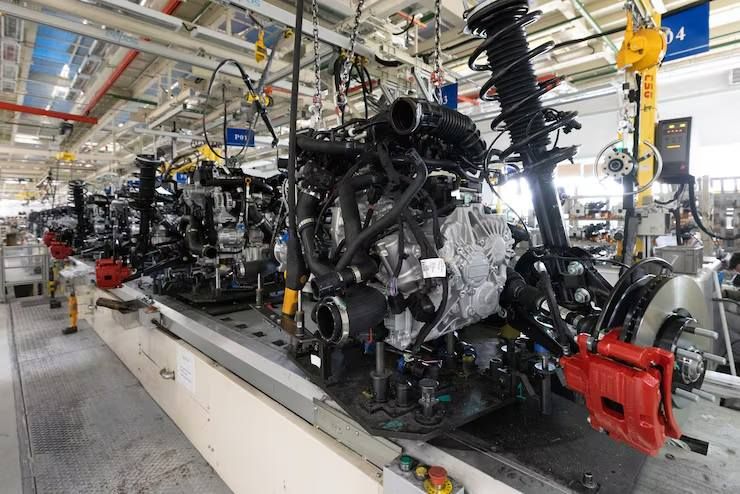
Understanding Engine Assembly Machines
An engine is made from numerous components that must be installed in a defined sequence. Typical components include the cylinder block, crankshaft, pistons, connecting rods, cylinder head, valves, camshaft, timing components, oil system components, fuel system parts, and various seals and fasteners.
Engine assembly machines help manufacturers maintain consistent assembly procedures. A production line may include several dedicated stations, with each machine performing a specific operation.
Common equipment includes:
- Engine block assembly stations
- Crankshaft and bearing installation machines
- Piston and connecting-rod assembly equipment
- Cylinder-head assembly systems
- Valve and spring installation machines
- Automated fastening and torque systems
- Press-fit and component insertion machines
- Leak-testing equipment
- Vision inspection systems
- Engine testing and verification equipment
- Robotic material-handling systems
The combination of these machines creates an engine assembly line designed around a particular engine architecture and manufacturing process.
How Engine Assembly Systems Work
A typical automated engine assembly process begins with component identification and preparation. Parts may be scanned or checked before entering an assembly station.
Fixtures hold major components in precise positions while automated or semi-automated equipment performs installation. Sensors can verify component presence, position, force, torque, or other process characteristics.
A simplified production sequence may look like this:
| Assembly Stage | Typical Equipment | Main Purpose |
|---|---|---|
| Block preparation | Cleaning and inspection station | Verify the base component |
| Bearing installation | Bearing assembly machine | Position bearings accurately |
| Crankshaft installation | Pressing and fastening equipment | Install and secure crankshaft |
| Piston assembly | Piston insertion system | Install piston and connecting rod |
| Cylinder-head assembly | Automated fastening system | Secure cylinder head |
| Valve assembly | Valve installation equipment | Position valve components |
| Final fastening | Torque-controlled tools | Apply specified fastening values |
| Inspection | Vision and measurement systems | Verify assembly conditions |
| Testing | Engine test bench | Check functional performance |
The use of controlled machines helps reduce variation between assembly cycles and provides production data for quality monitoring.
Why Engine Assembly Machines Matter
Engine assembly machines are important because modern engines require accurate installation of numerous interacting components. Small variations in fastening, alignment, clearance, or component positioning can affect engine operation.
Automation can support several manufacturing objectives:
- Consistent application of specified torque values
- Controlled component positioning
- Repeatable assembly sequences
- Traceability of production data
- Faster identification of process deviations
- Reduced manual handling of heavy components
- Integration with manufacturing execution systems
- Better documentation of inspection results
These capabilities are particularly relevant to manufacturers producing engines in large volumes or working with increasingly complex powertrain designs.
Engine assembly technology also affects engineers, production planners, maintenance teams, quality specialists, machine operators, and equipment designers. The equipment must therefore balance mechanical accuracy, automation, safety, maintainability, and compatibility with the production process.
Automation and Digital Manufacturing Trends
Engine assembly equipment is increasingly connected to digital manufacturing systems. Programmable logic controllers, industrial networks, sensors, machine vision, and production databases can work together to monitor assembly operations.
One important development is traceability. Instead of recording only whether an engine passed final inspection, a manufacturing system can associate individual assembly steps with production information such as torque results, component identification, station data, and inspection results.
Machine vision is another growing technology. Cameras can help verify component presence, orientation, markings, and selected dimensional characteristics.
Robotic systems can also support repetitive handling and positioning operations. Collaborative automation may be used where human workers and automated equipment operate within controlled production environments.
Recent Developments in India
India's automotive manufacturing environment continues to evolve toward advanced manufacturing, greater component localization, and new powertrain technologies.
On March 27, 2025, the Ministry of Heavy Industries highlighted progress under the Production Linked Incentive scheme for automobiles and auto components. The scheme has a ₹25,938 crore budgetary outlay for FY2022-23 through FY2026-27 and is intended to strengthen advanced automotive technology manufacturing and domestic supply chains.
The government's 2025-26 outcome budget also identified automobile and auto-component manufacturing targets under the PLI framework, including investment and production-related indicators.
Another important development is the continued evolution of vehicle emission requirements. India's BS-VI framework includes increasingly detailed testing and diagnostic requirements. A Ministry of Road Transport and Highways notification specifies BS-VI OBD Stage II-B thresholds for applicable vehicles manufactured from April 1, 2025.
These developments can influence engine production because manufacturing and testing processes must support increasingly precise quality and emissions-related requirements.
At the same time, India's automotive sector is expanding electric and other alternative powertrain manufacturing. This means traditional engine assembly remains relevant while manufacturers increasingly develop flexible production capabilities that can accommodate changing powertrain portfolios.
Laws, Standards, and Policies in India
Engine assembly machines are affected by several categories of Indian requirements rather than one single regulation.
The Motor Vehicles Act framework and Central Motor Vehicles Rules establish requirements affecting vehicle and engine emissions. Automotive Industry Standards, including AIS-137, provide testing methods and procedures associated with BS-VI emissions and conformity-of-production requirements.
Workplace safety is another important consideration. The Occupational Safety, Health and Working Conditions Code addresses health, safety, working conditions, factory requirements, and responsibilities associated with workplace equipment. The Code includes requirements concerning safe working environments and factory approval and licensing.
Draft central rules under the OSH&WC Code were published in September 2025, demonstrating continuing development of India's workplace regulatory framework.
The Bureau of Indian Standards also maintains standards relevant to automobiles and their components. Its automobile and component standards database includes standards covering internal-combustion-engine testing and automotive performance and emissions measurement.
Manufacturers should therefore verify the latest applicable requirements for the specific engine, vehicle category, workplace, and production process rather than relying on a general compliance assumption.
Tools and Resources for Engine Assembly Planning
Several technical resources can help engineers and manufacturing teams understand standards, production requirements, and machine capabilities.
- BIS Know Your Standard: Allows users to search Indian Standards by IS number or keyword and review associated documents and amendments.
- Ministry of Road Transport and Highways AIS database: Provides access to Automotive Industry Standards and related technical documents.
- Ministry of Heavy Industries: Provides information about automotive manufacturing programs and the PLI-Auto framework.
- Torque calculation and verification tools: Useful for checking specified fastening parameters during assembly planning.
- Production traceability software: Helps connect components, assembly stations, inspection results, and production records.
- Digital manufacturing simulation tools: Can help evaluate station layouts, robot movements, cycle sequences, and material flow before physical implementation.
Key Factors When Evaluating Engine Assembly Equipment
The appropriate equipment depends on the engine and manufacturing environment. Important technical factors include:
| Factor | Why It Matters |
|---|---|
| Engine architecture | Determines tooling and assembly sequence |
| Production volume | Influences automation level |
| Component variation | Affects fixture and inspection requirements |
| Torque accuracy | Supports consistent fastening |
| Cycle time | Determines production-line capacity |
| Traceability | Supports process documentation |
| Inspection capability | Helps detect assembly deviations |
| Safety design | Protects operators and maintenance personnel |
| Flexibility | Helps accommodate product changes |
| Integration | Enables communication with factory systems |
A machine should therefore be assessed as part of the complete assembly process rather than as an isolated piece of equipment.
Frequently Asked Questions
What are engine assembly machines used for?
They are used to position, install, fasten, inspect, and test engine components. Different machines perform different operations within an engine assembly line.
Can engine assembly machines be fully automated?
Some production lines can use a high degree of automation, while others combine automated equipment with manual operations. The appropriate level depends on engine design, production volume, process complexity, and quality requirements.
What components are commonly assembled using automated equipment?
Automated equipment may be used for bearings, crankshafts, pistons, connecting rods, cylinder heads, valves, timing components, fasteners, and other engine components.
Why is torque control important in engine assembly?
Specified fastening torque helps ensure that components are secured consistently. Automated torque systems can record fastening results and identify operations that fall outside defined process parameters.
Do Indian regulations affect engine assembly processes?
Yes. Vehicle emission requirements, Automotive Industry Standards, workplace safety rules, factory requirements, and applicable BIS standards can influence engine production, testing, equipment design, and documentation. Requirements vary according to the application and should be checked against the latest official regulations.
Conclusion
Engine assembly machines form an important part of modern engine manufacturing. They combine mechanical fixtures, fastening systems, sensors, robotics, inspection technologies, and digital controls to support consistent production processes.
In India, developments in automotive manufacturing, emission regulations, workplace safety, domestic component production, and alternative powertrain technologies are influencing how assembly facilities are designed. The PLI-Auto framework, updated automotive requirements, and continuing development of Indian standards are also shaping the wider manufacturing environment.
For manufacturers and engineers, selecting appropriate engine assembly equipment requires consideration of the engine architecture, production requirements, process controls, inspection methods, worker safety, traceability, and applicable Indian standards. As automotive production becomes increasingly digital and flexible, engine assembly systems are likely to remain an important part of advanced manufacturing infrastructure.