
Analog Devices is a semiconductor technology company known for products that connect the physical world with digital systems.
Its technologies include analog, mixed-signal, digital, sensing, power management, radio-frequency, and embedded solutions used across many types of electronic equipment.
Understanding Analog Devices also helps explain how modern electronic systems measure temperature, pressure, movement, sound, light, voltage, and other real-world signals. These signals often need to be sensed, conditioned, converted, processed, and controlled before a digital system can use them effectively.
Context
Analog Devices, Inc. (ADI) was founded in 1965 and has developed a broad portfolio of semiconductor technologies. Its products are used in industrial equipment, automobiles, communications systems, healthcare equipment, consumer electronics, data centers, and other applications. The company reported more than 75,000 stock-keeping units in its fiscal 2025 annual report.
The basic purpose of analog electronics is to work with signals that represent physical conditions. Unlike purely digital information, these signals can vary continuously. For example, a temperature sensor may generate a changing electrical signal as temperature changes.
Important categories associated with Analog Devices include:
- Analog and mixed-signal integrated circuits
- Analog-to-digital and digital-to-analog converters
- Amplifiers and signal-conditioning circuits
- Power-management components
- Sensors and sensing technologies
- Radio-frequency and microwave technologies
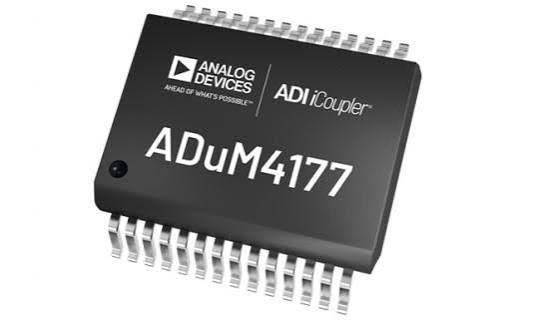
- Digital isolation products
- Embedded processing technologies
- Connectivity and communication components
A simple signal path can be understood as:
| Stage | Main Function | Example |
|---|---|---|
| Sensing | Detect a physical condition | Temperature |
| Signal conditioning | Prepare the signal | Amplification |
| Conversion | Change signal format | ADC |
| Processing | Analyze information | Microcontroller |
| Control | Produce a response | Motor control |
Analog-to-digital converters, commonly called ADCs, transform analog signals into digital data. Digital-to-analog converters, or DACs, perform the reverse process. These technologies are important whenever digital electronics need to interact with physical signals.
Importance
Analog and mixed-signal technologies are important because most physical information begins in an analog form. Sound, light, temperature, pressure, acceleration, electrical current, and many other measurements exist as continuously changing physical quantities.
Analog Devices' technologies are particularly relevant to industrial automation, automotive electronics, communications, healthcare, energy systems, instrumentation, and data infrastructure. Its fiscal 2025 materials describe applications including industrial robotics, factory control, motion control, measurement equipment, electric vehicles, renewable energy, and other electronic systems.
For engineers and electronics students, understanding these technologies can help with:
- Sensor interface design
- Signal measurement
- Power management
- Motor and motion control
- Data conversion
- Industrial automation
- Automotive electronics
- Communication systems
- Electronic instrumentation
The importance of analog technology has also increased as digital systems have become more powerful. A processor can perform complex calculations, but it still needs accurate information from the physical environment. Analog circuitry provides much of the interface between real-world conditions and digital computation.
For example, an industrial machine may use sensors to detect vibration and temperature. Analog signal-conditioning circuits can prepare these signals before conversion into digital information. Software can then analyze the information to identify changes in machine behavior.
Recent Updates
Analog Devices has continued expanding its focus on power management, data center infrastructure, industrial automation, sensing, robotics, and artificial intelligence-related electronics.
In May 2026, ADI announced an agreement to acquire Empower Semiconductor for approximately $1.5 billion. The transaction focused on high-density power delivery technologies, including integrated voltage regulators and silicon capacitor technologies for demanding computing environments.
The acquisition was completed on July 7, 2026. ADI stated that the combination would strengthen its capabilities in power delivery for AI computing systems.
Financial and technology developments have also reflected increasing demand from data centers and industrial applications. In its fiscal third-quarter 2026 results announced in August 2026, ADI reported revenue of $4.02 billion, with year-over-year growth driven particularly by data center and industrial markets.
Several broader technology trends are shaping analog semiconductor development:
- Higher power density in computing systems
- Greater use of industrial robotics
- Electrification of transportation
- More sophisticated sensor networks
- Growth of edge computing
- Increasing demand for accurate measurement
- Greater attention to energy efficiency
- Integration of analog, digital, embedded, and AI technologies
These trends show that analog technology remains important even as artificial intelligence and digital computing expand.
Laws or Policies
Semiconductor companies operate under a wide range of environmental, trade, export-control, product-safety, and manufacturing requirements. The exact requirements depend on the product, destination, application, and jurisdiction.
In the United States, semiconductor manufacturing has been influenced by the CHIPS and Science Act. In January 2025, the U.S. Department of Commerce announced preliminary terms for up to $105 million in proposed direct funding for Analog Devices projects in Massachusetts and the Pacific Northwest. The proposed investment was intended to support semiconductor packaging, testing, and related manufacturing capabilities.
Export controls are another important area. Analog Devices provides export classification information using U.S. Export Control Classification Numbers, or ECCNs. These classifications help determine whether particular products or technologies may require authorization for export to certain destinations or end users.
Environmental regulations are also relevant. ADI publishes information concerning regulations such as the European Union's Restriction of Hazardous Substances framework and REACH. Its 2026 REACH statement discusses material declarations and requirements concerning substances of very high concern.
Product safety can also involve standards and certification requirements. Depending on the application, electronic components may be evaluated against standards associated with electrical isolation, medical equipment, industrial equipment, hazardous locations, and other specialized environments. ADI publishes regulatory information for certain isolation technologies, including references to UL, IEC, CSA, VDE, TÜV, and other certification frameworks.
Regulatory compliance is therefore an important part of semiconductor development, especially when components are used in safety-sensitive, industrial, automotive, medical, or internationally distributed systems.
Tools and Resources
People learning about Analog Devices can use technical documentation and educational resources to understand components, circuits, specifications, and applications.
Useful resources include:
- Analog Devices product documentation and technical data
- Datasheets for individual integrated circuits
- Application notes explaining circuit concepts
- Reference designs for system-level learning
- Evaluation boards for laboratory development
- Simulation and circuit-design tools
- Semiconductor terminology references
- Regulatory and environmental compliance documents
- Annual reports and investor publications
- Technical training materials and tutorials
A datasheet is particularly important when studying an analog component. It normally explains electrical characteristics, operating conditions, pin functions, performance specifications, application information, and safety limitations.
When comparing components, readers should examine parameters such as supply voltage, input range, output range, bandwidth, noise, accuracy, resolution, power consumption, package type, operating temperature, and environmental requirements.
The official Analog Devices website also maintains technical documentation, product information, news, financial reports, and compliance resources. Its investor resources include annual reports and current financial disclosures.
FAQs
What are Analog Devices used for?
Analog Devices technologies are used in systems that sense, measure, convert, control, or process real-world signals. Common application areas include industrial automation, automotive electronics, communications, healthcare, energy, instrumentation, and data infrastructure.
What is an analog device?
An analog device works with continuously varying electrical signals. Examples include amplifiers, voltage regulators, sensor interfaces, and data converters. These components help electronic systems interact with physical signals.
What does an ADC do?
An ADC, or analog-to-digital converter, changes an analog electrical signal into digital data. This allows processors and digital systems to analyze information from sensors and other physical sources.
Why are mixed-signal devices important?
Mixed-signal devices combine analog and digital functions or interfaces. They are useful because modern electronic systems often need to measure physical signals while also performing digital processing.
What industries use Analog Devices technology?
Major application areas include industrial automation, automotive systems, communications, consumer electronics, healthcare, energy, instrumentation, robotics, and computing infrastructure. ADI identifies industrial, automotive, communications, and consumer markets among its major end-market categories.
Conclusion
Analog Devices plays an important role in modern semiconductor technology by developing components and systems that connect physical signals with digital processing. Its technologies cover areas such as data conversion, sensing, signal conditioning, power management, communications, and embedded systems.
Recent developments show increasing attention to artificial intelligence infrastructure, high-density power delivery, industrial automation, robotics, and advanced sensing. At the same time, environmental requirements, export controls, safety standards, and semiconductor policies continue to influence how these technologies are developed and used.
For beginners, the best starting point is understanding basic concepts such as analog signals, digital signals, ADCs, DACs, amplifiers, sensors, and power management.
For engineers and technical learners, datasheets, application notes, evaluation materials, simulation tools, and regulatory documentation provide deeper information for understanding individual components and their intended applications.