Fruit processing equipment includes the machinery used to clean, sort, prepare, extract, preserve, concentrate, fill, and package fruit-based products. A modern processing line may transform fresh fruit into juice, pulp, puree, concentrate, jam, sauce, dried products, frozen products, or prepared fruit ingredients.
The exact equipment configuration depends on the fruit variety, finished product, production capacity, hygiene requirements, processing method, and packaging format. Industrial lines can range from individual machines to integrated systems covering multiple stages of production.
Why Fruit Processing Equipment Matters
Fresh fruit is highly perishable and can vary in size, maturity, texture, moisture content, and composition. Processing equipment helps manufacturers handle these variations through controlled mechanical, thermal, and separation operations.
A typical fruit processing line can include:
- Raw fruit receiving and inspection
- Washing and cleaning
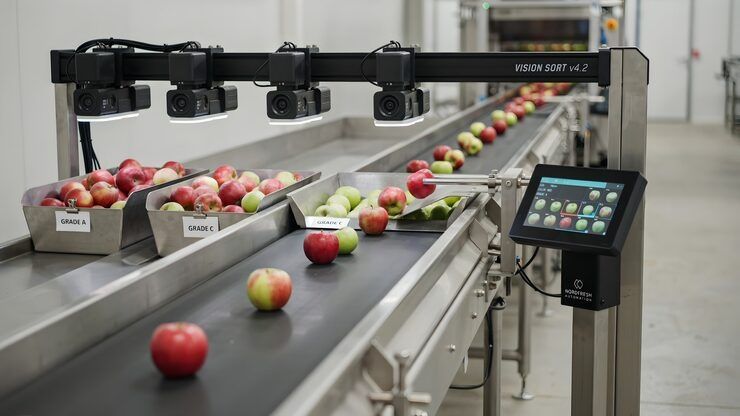
- Sorting and grading
- Peeling, coring, or destoning
- Cutting and crushing
- Pulping or juice extraction
- Filtration and refining
- Blending and formulation
- Pasteurization or sterilization
- Concentration
- Filling and packaging
- Cleaning and sanitation systems
Food-processing training materials also identify operations such as washing, sorting, peeling, slicing, pulping, heating, filling, sealing, sterilization, labeling, and storage as common stages in fruit processing.
Fruit Processing Technologies
Different fruit products require different processing technologies. The process selected should protect the desired characteristics of the final product while meeting food-safety and production requirements.
Washing and Cleaning Technology
Fruit washing removes soil, debris, and other surface contaminants before subsequent processing. Equipment can include washing tanks, spray systems, brush washers, bubble washers, and conveyor-based washing systems.
The washing method should match the fruit's surface characteristics. Delicate fruits may require gentler handling, while robust fruits can tolerate more intensive mechanical cleaning.
Sorting and Grading
Sorting separates fruit according to characteristics such as size, color, maturity, visible defects, or other quality parameters.
Manual inspection may be used for smaller operations, while automated systems can incorporate cameras, sensors, conveyors, and electronic controls.
Peeling, Coring, and Destoning
Certain fruits require removal of skin, cores, pits, stems, or seeds before further processing.
Peeling equipment can use mechanical, abrasive, or other specialized methods. Destoning and coring equipment is particularly important when processing stone fruits, apples, and other products where unwanted hard material must be separated.
Crushing and Pulping
Crushing reduces fruit size before extraction or pulping. Pulping machines then separate edible pulp from seeds, skin, fibers, or other unwanted material.
Fruit pulp processing commonly involves inspection, washing, sorting, preparation, crushing, pulping, and finishing, with optional pasteurization, concentration, filling, and packaging depending on the final product.
Juice Extraction
Juice extraction equipment separates liquid from fruit solids. Depending on the fruit, systems may use presses, extractors, mills, centrifugal technologies, or specialized citrus extraction equipment.
The choice depends heavily on fruit structure and the desired juice characteristics.
Filtration and Refining
Filtration and refining remove suspended solids or unwanted particles from fruit liquids. These processes can help achieve the desired texture and appearance.
Some applications require coarse filtration, while others require finer separation or clarification.
Thermal Processing
Pasteurization and sterilization use controlled heat treatment to improve product safety and stability. The appropriate thermal process depends on the product formulation, packaging method, processing conditions, and regulatory requirements.
For fruit preparations, integrated processing lines can combine blending and heat-treatment stages according to the desired product characteristics.
Evaporation and Concentration
Concentration removes part of the water from fruit juice or other liquid products. Industrial evaporation systems can produce concentrates that are easier to store, transport, or incorporate into other products.
Major Types of Fruit Processing Machinery
| Machinery Type | Main Function | Typical Applications |
|---|---|---|
| Fruit Washer | Removes surface contaminants | Fresh fruit, juice, pulp |
| Sorting Machine | Separates fruit by quality or characteristics | Fresh-cut and processed fruit |
| Peeler | Removes skin | Apples, potatoes, selected fruits |
| Destoner | Separates stones or pits | Mango, peach, plum and similar fruits |
| Fruit Cutter | Cuts fruit into controlled sizes | Fresh-cut and prepared fruit |
| Crusher | Reduces fruit size | Juice and pulp processing |
| Pulper | Separates pulp from seeds, skin, and fibers | Puree and pulp |
| Juice Extractor | Separates juice from fruit | Juice production |
| Filter | Removes unwanted particles | Juice and liquid products |
| Pasteurizer | Applies controlled heat treatment | Juices and fruit preparations |
| Evaporator | Concentrates liquid products | Juice concentrates |
| Filling Machine | Fills containers | Juice, puree, jam and sauces |
| Packaging Machine | Seals and packages finished products | Retail and industrial products |
| CIP System | Supports equipment cleaning | Hygienic processing plants |
Fruit Processing Manufacturing Process
Although processing lines differ by product, a general manufacturing sequence can be represented as follows:
Raw Fruit → Inspection → Washing → Sorting → Preparation → Crushing/Cutting → Pulping or Extraction → Filtration → Blending → Thermal Processing → Concentration if Required → Filling → Packaging
Not every product requires every stage. For example, fresh-cut fruit may require washing, sorting, cutting, dewatering, and packaging, while fruit puree may require crushing, pulping, refining, heat treatment, and filling.
Fruit Processing Equipment for Different Products
Fruit Juice
Juice production can involve washing, sorting, extraction, filtration, blending, pasteurization, and filling.
Fruit Pulp and Puree
Pulp and puree lines commonly use washers, preparation equipment, crushers, pulpers, refiners, heat-treatment equipment, and filling systems.
Jam and Fruit Preparations
Jam and fruit preparation production may require preparation, crushing, blending, heating, concentration, and filling. Tetra Pak describes fruit preparation lines that can handle smooth and particulate products, with technologies including blending and heat treatment.
Dried Fruit
Dried-fruit production can include washing, sorting, preparation, drying, cooling, inspection, and packaging. The drying technology depends on the fruit, moisture target, product characteristics, and production requirements.
Frozen Fruit
Frozen products require preparation followed by suitable freezing, handling, storage, and packaging systems. The equipment arrangement depends on product size, freezing method, throughput, and final packaging.
Automation and Process Control
Modern fruit processing plants increasingly use automation to monitor production parameters and coordinate individual machines.
Sensors and control systems can monitor variables such as:
- Temperature
- Flow rate
- Pressure
- Product level
- Processing time
- Equipment status
- Production throughput
Automation can also connect different processing stages into an integrated production line. This can improve process consistency and provide operators with greater visibility into equipment performance.
Global Fruit Processing Equipment Manufacturers and Suppliers
The international market includes companies supplying individual processing machines, complete processing systems, food-processing technologies, and packaging equipment.
GEA provides food-processing technologies covering areas such as separation, evaporation, filling and packaging, mixing, homogenization, and liquid processing. Its portfolio also includes solutions spanning individual process units and integrated food-processing systems.
Tetra Pak supplies food and beverage processing equipment and integrated solutions. Its technology portfolio includes areas such as blending, buffering, extraction, cleaning-in-place, heat treatment, and filling, with specific solutions for fruit preparations.
Other companies identified in industry market research for fruit and vegetable processing equipment include Bühler, JBT, Alfa Laval, KRONEN, Turatti Group, FENCO, Bertuzzi Food Processing, Sormac, Krones, Bucher Industries, SPX FLOW, and Syntegon, among others. The suitability of any supplier depends on the particular process, product, capacity, location, and technical requirements rather than company name alone.
How to Select Fruit Processing Equipment
Equipment selection should begin with the finished product and work backward through the processing stages.
1. Define the Finished Product
Determine whether the plant will produce juice, pulp, puree, jam, concentrate, dried fruit, frozen fruit, or another product.
2. Identify the Fruit Characteristics
Consider fruit size, hardness, maturity, seeds, skin, fiber content, acidity, and moisture. These characteristics influence equipment design.
3. Determine Production Capacity
Specify the required throughput, such as kilograms or tonnes processed per hour. Capacity affects machine size and the configuration of the complete line.
4. Consider Hygiene Requirements
Food-contact surfaces, cleanability, drainage, equipment layout, and cleaning systems are important considerations for hygienic food production.
5. Evaluate Automation
Decide which operations require manual handling and which can benefit from automated control, inspection, sorting, or process monitoring.
6. Consider the Complete Processing Line
Individual machines must work together. Conveyor speeds, pump capacity, heating systems, storage tanks, filling equipment, and packaging machinery should be compatible with the overall process.
Costs and Pricing Factors
The fruit processing equipment cost varies significantly according to equipment type, processing capacity, automation level, construction materials, product requirements, installation configuration, and packaging format.
A single washing machine has a very different investment profile from a complete automated juice or puree processing line.
When comparing equipment pricing, manufacturers and processors typically need to consider the full system configuration rather than the price of one machine. Utilities, installation requirements, controls, cleaning systems, storage tanks, filling equipment, and packaging equipment can all affect the overall project scope.
Food Industry Applications
Fruit processing equipment is used across several segments of the food industry, including:
- Juice manufacturing
- Fruit pulp and puree production
- Jam and preserve production
- Fruit preparations
- Beverage manufacturing
- Baby-food production
- Dairy and dessert ingredients
- Frozen fruit processing
- Dried fruit processing
- Food ingredient manufacturing
- Ready-to-eat fruit products
Integrated food-processing suppliers may provide technologies spanning preparation, processing, separation, heat treatment, and packaging.
Frequently Asked Questions
What is fruit processing equipment?
Fruit processing equipment refers to machinery used to clean, sort, prepare, extract, process, preserve, fill, and package fruit and fruit-based products.
What machines are used in fruit processing?
Common machines include fruit washers, sorting systems, peelers, cutters, crushers, pulpers, juice extractors, filters, pasteurizers, evaporators, filling machines, and packaging systems.
What is a fruit processing line?
A fruit processing line is a connected sequence of machines that performs multiple processing stages, from raw fruit handling through preparation, processing, preservation, and packaging.
How is fruit pulp manufactured?
Fruit pulp production generally involves inspection, washing, sorting, preparation, crushing, pulping, and finishing. Depending on the product, thermal processing, concentration, filling, and packaging may follow.
How do I choose fruit processing equipment?
Start by defining the fruit, finished product, required throughput, processing stages, hygiene requirements, automation level, utilities, and packaging format. Equipment should then be selected as a compatible processing system rather than as isolated machines.
Conclusion
Fruit processing equipment forms the technological foundation of modern fruit-based food production. From washing and sorting to pulping, extraction, thermal processing, concentration, filling, and packaging, each stage contributes to the characteristics and consistency of the finished product.
The right machinery depends on the fruit, product specification, production capacity, processing technology, hygiene requirements, and level of automation. Evaluating the complete processing line can help manufacturers develop a system that is technically compatible with their production objectives and food-industry application.