
Furniture production has changed considerably as manufacturers adopt automated equipment to improve consistency, workflow, and production efficiency.
Among the technologies supporting this transformation are furniture assembly machines, which help organize, position, join, fasten, and prepare furniture components for later stages of production.
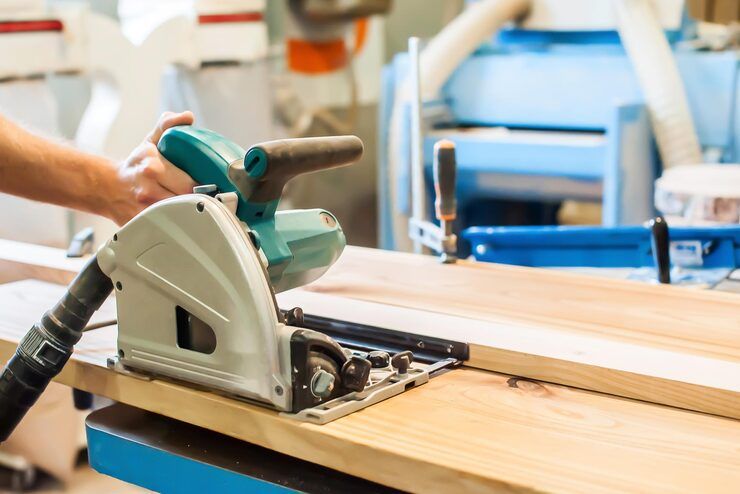
From cabinets and shelving units to tables, desks, wardrobes, and modular furniture, assembly is a critical stage because individual panels and components must be brought together accurately. Modern machinery combines mechanical systems, pneumatic or electric tools, sensors, control software, and specialized fixtures to make this process more consistent.
Understanding how furniture assembly machines work provides useful insight into modern furniture manufacturing and the technologies used to turn prepared components into finished products.
What Are Furniture Assembly Machines?
Furniture assembly machines are industrial systems designed to assist with or automate different stages of putting furniture components together. Depending on the machine configuration, equipment may position panels, drill connection points, insert hardware, apply fasteners, press components together, or move assembled sections between production stages.
The level of automation varies considerably. Some equipment supports workers by performing repetitive operations, while highly automated production lines can coordinate several assembly tasks with limited manual intervention.
These machines are commonly integrated with other woodworking and furniture production equipment, creating a connected workflow from panel preparation through final assembly.
Why Assembly Is Important in Furniture Production
Assembly directly affects the structural integrity, appearance, and consistency of finished furniture. Even accurately manufactured panels can produce an inconsistent result if components are incorrectly positioned or joined.
Manual assembly can involve repetitive movements and numerous individual measurements. Automated or semi-automated systems help standardize these operations by controlling positioning, pressure, drilling locations, fastening sequences, and other variables.
The main objectives of modern furniture assembly technology include:
- Consistent component positioning
- Repeatable joining operations
- Reduced repetitive manual work
- Better production flow
- Improved dimensional consistency
- Easier handling of standardized designs
- More organized manufacturing processes
The appropriate level of automation depends on furniture designs, production volume, component dimensions, and the flexibility required by the manufacturer.
How Furniture Assembly Machines Work
Although machines differ according to their purpose, many follow a straightforward sequence.
First, prepared components are introduced into the assembly area. Fixtures, clamps, guides, or robotic positioning systems then align the parts according to predetermined specifications.
The machine performs its assigned operation, such as drilling, fastening, pressing, or hardware insertion. Sensors may monitor component position and machine conditions throughout the process.
Once the operation is complete, the assembled component moves to the next production stage. In a connected manufacturing environment, conveyors or automated material-handling equipment may transfer components between machines.
Computerized controls allow operators to adjust production parameters and switch between different furniture configurations when the equipment supports multiple product designs.
Common Types of Furniture Assembly Equipment
Furniture assembly technology includes several machine categories, each designed for specific operations.
Panel Assembly Machines
Panel assembly systems help position and join large furniture components. They are particularly useful for cabinets, shelving systems, storage units, and other products constructed from multiple panels.
Drilling and Hardware Insertion Equipment
These machines create precisely positioned holes and may insert connectors, dowels, hinges, or other furniture hardware. Accurate positioning is particularly important when several components must align during final assembly.
Screw Fastening Machines
Automated fastening equipment can apply screws or other mechanical fasteners according to predetermined settings. Controlled fastening helps maintain consistency across repeated production cycles.
Pressing and Clamping Systems
Pressing equipment applies controlled pressure while components are joined or adhesives are setting. These machines can help maintain alignment and produce consistent joints.
Automated Assembly Cells
An assembly cell combines multiple operations within a defined production area. Depending on its design, it may incorporate robotic handling, fastening, inspection, and material transfer into a coordinated workflow.
Components That Make Modern Assembly Machines Effective
Several technologies work together to support reliable furniture assembly.
Sensors can detect component position, dimensions, or machine conditions. Controllers interpret this information and coordinate mechanical movements.
Pneumatic systems are often used for clamping, positioning, and pressing because compressed air can provide controlled movement. Electric actuators and servo systems provide another method for precise positioning and motion.
Fixtures are equally important. A properly designed fixture holds components in the correct orientation while an operation is performed. Without reliable positioning, even a highly sophisticated machine may struggle to maintain consistent results.
Software is increasingly important as well. Digital controls allow production parameters to be stored, adjusted, monitored, and coordinated with other manufacturing equipment.
Integration With Furniture Manufacturing Systems
Furniture assembly machines rarely operate completely independently in modern production environments. They may form part of a broader manufacturing sequence that includes panel cutting, edge processing, drilling, surface finishing, material handling, and quality inspection.
For example, a cabinet production workflow may begin with digitally controlled panel cutting. Edges can then be processed, connection points prepared, and components transferred to an assembly station.
When these stages are properly coordinated, material movement becomes more organized and production information can flow between different parts of the manufacturing process.
This approach is increasingly associated with smart manufacturing, where machines, software, sensors, and operators work within a connected production environment.
Benefits of Automation in Furniture Assembly
Automation can provide several operational advantages when correctly matched to a production environment.
Consistency is one of the most important. A machine can repeat a defined operation using the same programmed parameters, helping reduce variations between furniture units.
Automation can also support production planning by making repetitive processes more predictable. Workers can focus more heavily on tasks requiring judgment, inspection, setup, or problem-solving.
Another advantage is improved material handling. Automated systems can reduce unnecessary movement between workstations and help establish a clearer production sequence.
However, automation does not eliminate the need for skilled personnel. Operators are still needed for machine setup, programming, maintenance, quality control, troubleshooting, and process supervision.
Factors to Consider When Selecting Assembly Equipment
The appropriate furniture assembly machine depends on the specific manufacturing environment rather than one universal configuration.
Important considerations include:
| Factor | Why It Matters |
|---|---|
| Furniture design | Determines required assembly operations |
| Component dimensions | Influences machine capacity and fixtures |
| Production volume | Helps determine the appropriate automation level |
| Product variety | Affects flexibility and changeover requirements |
| Available floor space | Influences machine layout and material flow |
| Existing equipment | Determines integration requirements |
| Operator skills | Affects setup and machine management |
| Maintenance needs | Influences long-term operational planning |
Manufacturers should also consider workplace safety, electrical requirements, ventilation where relevant, machine accessibility, and the training needed for operators.
Quality Control in Furniture Assembly
Quality control is an essential part of automated furniture production. Assembly machines can provide repeatability, but they must still be monitored and maintained.
Inspection may involve checking dimensions, alignment, fastening, joint integrity, surface condition, and hardware placement.
Sensors and machine monitoring can identify certain deviations during production, while visual inspection remains useful for detecting issues that automated systems may not recognize.
Preventive maintenance is also important. Worn fixtures, misaligned components, damaged tooling, or improperly calibrated systems can gradually affect assembly quality.
Current Trends in Furniture Assembly Technology
Furniture manufacturing is increasingly influenced by digitalization and flexible production.
Important trends include greater use of robotics, automated material handling, sensor-based monitoring, digital production instructions, and software-connected machinery.
Flexible assembly systems are particularly relevant as furniture manufacturers increasingly handle varied designs, modular products, and customized configurations.
Another developing area is data collection. Machines can record operational information that helps manufacturers understand production performance, identify recurring issues, and improve workflow planning.
Common Challenges
Despite its advantages, automated furniture assembly presents practical challenges.
Complex machinery requires proper setup, operator training, and maintenance. Poorly designed production layouts can also reduce the benefits of automation by creating unnecessary material movement.
Product variation can create additional difficulties. Equipment designed for a narrow range of components may require adjustments when furniture designs change significantly.
Successful implementation therefore depends on matching machinery capabilities with actual production requirements rather than focusing solely on automation level.
Frequently Asked Questions
What are furniture assembly machines used for?
They are used to assist or automate operations such as component positioning, drilling, hardware insertion, fastening, pressing, clamping, and material transfer during furniture production.
Can furniture assembly machines handle different furniture designs?
Some systems are designed for flexible production and can accommodate multiple configurations. Their flexibility depends on machine design, software, fixtures, and the range of component dimensions they support.
Do automated assembly machines eliminate manual work?
Not entirely. Operators remain important for setup, supervision, quality inspection, maintenance, programming, and troubleshooting.
Why are sensors used in furniture assembly?
Sensors can help detect component position, machine conditions, and process deviations, supporting consistent operation and more effective monitoring.
What is the role of software in furniture assembly?
Software can control machine movements, store production parameters, coordinate equipment, support product changes, and provide operational information for manufacturing management.
Conclusion
Furniture assembly machines have become an important part of modern furniture production because they bring greater consistency, organized workflow, and repeatability to assembly operations. From panel positioning and hardware insertion to fastening, pressing, inspection, and material handling, different types of equipment can address specific stages of the manufacturing process.
The most effective approach depends on furniture design, production requirements, component variety, available space, and the desired level of automation. As manufacturing continues to adopt robotics, sensors, digital controls, and connected production systems, furniture assembly technology is likely to become increasingly flexible and data-driven.
Understanding these fundamentals helps explain how modern furniture manufacturers coordinate machinery, materials, software, and skilled workers to create consistent products while adapting to changing production requirements.