Furniture manufacturing has changed significantly with the development of automation, digital controls, advanced materials, and precision engineering.
Modern production facilities increasingly rely on specialized machinery to improve consistency, manage complex assembly processes, and support higher levels of manufacturing efficiency. Among these technologies, furniture assembly machines play an important role in connecting individual components and transforming prepared parts into finished furniture products.
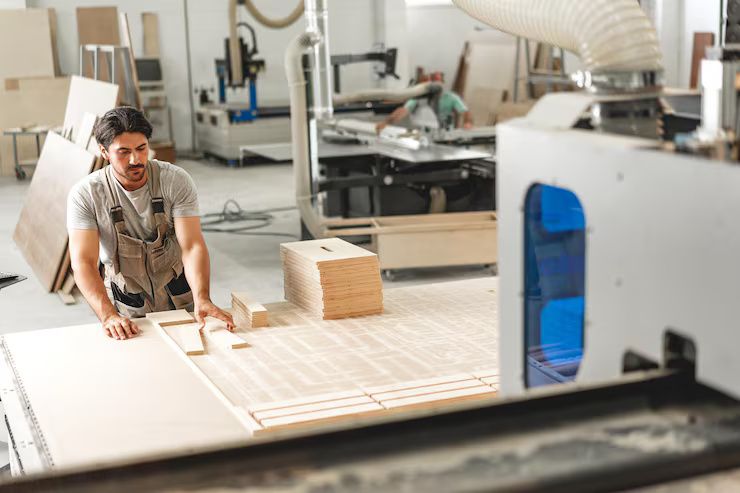
From cabinet systems and office furniture to modular storage units and residential furnishings, assembly processes vary widely depending on product design and materials. Modern furniture assembly equipment is therefore designed to handle different joining methods, component sizes, production volumes, and levels of automation.
Understanding how these machines work can help manufacturers, engineers, students, and industry professionals better understand the role of automation in modern furniture production. This guide explores the major types of furniture assembly machinery, how they fit into manufacturing workflows, key selection considerations, and emerging trends shaping the industry.
What Are Furniture Assembly Machines?
Furniture assembly machines are specialized systems used to join, position, fasten, or integrate individual furniture components during manufacturing. They can perform tasks that might otherwise require manual labor, helping improve consistency and repeatability across production processes.
Depending on the application, a machine may work with:
- Wood panels
- Engineered wood
- Metal components
- Plastic parts
- Glass elements
- Composite materials
- Upholstered components
The specific technology used depends on the furniture design and the type of connection required.
Modern systems can range from relatively simple semi-automated equipment to highly integrated robotic production cells controlled by digital manufacturing software.
Why Furniture Assembly Equipment Matters
Furniture assembly equipment has become increasingly important as manufacturers seek greater precision and consistent production quality.
Automation can support several key objectives:
- Repeatable assembly processes
- Consistent component positioning
- Reduced variation between products
- Improved workplace ergonomics
- Better production monitoring
- More efficient material handling
- Integration with digital manufacturing systems
The role of automation is not necessarily to eliminate every manual task. Instead, many modern facilities combine automated machinery with skilled human oversight to create flexible production environments.
Types of Furniture Assembly Machines
Different furniture products require different assembly technologies. Manufacturers typically select equipment according to product design, materials, and production requirements.
Panel Assembly Machines
Panel assembly systems are commonly used for cabinets, shelving, desks, wardrobes, and other furniture constructed from flat components.
These machines help align panels and perform joining operations with consistent positioning.
Screw and Fastening Systems
Automated fastening equipment uses controlled mechanisms to insert screws or other fasteners at predetermined locations.
These systems can improve consistency in repetitive assembly operations while helping maintain uniform fastening depth and alignment.
Dowel Insertion Equipment
Dowel-based connections are common in wood furniture manufacturing. Automated dowel insertion machines accurately position and insert dowels into prepared holes.
This technology is particularly useful when repeated assembly accuracy is important.
CNC Assembly Support Systems
Computer numerical control, or CNC, technology can connect machining and assembly processes within a digital workflow.
CNC equipment may prepare components with precise drilling, cutting, and routing before they move into subsequent assembly stages.
Robotic Assembly Systems
Robotic systems can perform repetitive assembly tasks involving positioning, fastening, handling, or component placement.
These systems are often integrated with sensors and machine vision to improve accuracy and adapt to variations in production.
How Furniture Production Machinery Fits Into Manufacturing
Furniture production machinery generally operates as part of a connected workflow rather than as isolated equipment.
A typical production sequence may include:
- Material preparation
- Cutting and shaping
- Drilling and machining
- Edge processing
- Component inspection
- Assembly
- Surface finishing
- Quality inspection
- Packaging
Furniture assembly machines typically operate after components have been prepared and before final inspection and packaging.
The efficiency of the entire production line depends on how well these stages communicate and coordinate with one another.
Manual, Semi-Automated, and Automated Assembly
Furniture manufacturing environments can be categorized according to their level of automation.
| Production Approach | Characteristics | Suitable Applications |
|---|---|---|
| Manual | Human operators perform most assembly tasks | Custom or low-volume production |
| Semi-Automated | Workers and machines share assembly tasks | Flexible manufacturing |
| Automated | Machines perform repeated operations | High-volume standardized production |
| Integrated | Connected machines coordinate through digital systems | Advanced manufacturing environments |
The appropriate level of automation depends on product variety, production volume, workforce capabilities, and facility layout.
Key Factors When Selecting Furniture Assembly Equipment
Choosing suitable furniture manufacturing machines requires careful evaluation of production requirements.
Product Design
Furniture with complex shapes, multiple components, or specialized connections may require more advanced machinery.
Material Compatibility
Equipment must be suitable for the materials being processed. Wood-based panels, solid wood, metal, and composite materials may require different tooling and handling methods.
Production Volume
High-volume standardized production often benefits from greater automation, while smaller operations may prioritize flexibility and quick changeovers.
Precision Requirements
Products with tight dimensional tolerances require machinery capable of maintaining consistent positioning and repeatable results.
Integration Capabilities
Modern furniture production machinery increasingly needs to communicate with enterprise software, production planning systems, and quality-control platforms.
Automation and Digital Manufacturing
Digital technology is transforming how furniture assembly machines operate.
Modern equipment may include:
- Programmable logic controllers
- Touchscreen interfaces
- Sensors
- Machine vision
- Production monitoring
- Automated diagnostics
- Data collection systems
- Industrial networking
These technologies help manufacturers monitor equipment performance and identify production issues more efficiently.
Connected systems can also provide information about machine utilization, production cycles, and maintenance requirements.
Industrial Furniture Assembly Machines
Industrial furniture assembly machines are generally designed for demanding production environments where repeatability, durability, and continuous operation are important.
Such systems may incorporate automated material handling, robotic arms, precision fastening tools, and integrated inspection technologies.
Industrial environments also require attention to:
- Workplace safety
- Machine guarding
- Operator training
- Preventive maintenance
- Emergency controls
- Equipment accessibility
Safety considerations are essential when integrating automated machinery into manufacturing facilities.
Quality Control in Furniture Assembly
Consistent assembly is critical to furniture quality and long-term performance.
Modern quality-control processes may include visual inspection, dimensional measurement, automated sensors, and machine vision.
Quality checks can identify issues such as:
- Incorrect component positioning
- Missing fasteners
- Improper alignment
- Surface damage
- Incomplete assembly
- Dimensional inconsistencies
Integrating inspection systems into production workflows can help detect problems earlier rather than waiting until final assembly.
Maintenance and Equipment Reliability
Regular maintenance is an important part of operating furniture assembly machines.
Maintenance programs may involve:
- Routine cleaning
- Lubrication
- Tool inspection
- Sensor calibration
- Software updates
- Component replacement
- Safety inspections
Predictive maintenance is becoming increasingly common. Sensors can monitor machine conditions and identify unusual patterns that may indicate potential equipment problems.
This approach allows maintenance teams to respond proactively rather than relying entirely on fixed schedules.
Challenges in Modern Furniture Manufacturing
Despite advances in automation, manufacturers still face several challenges.
Product customization can make automation more complicated because machinery must handle frequent changes in component dimensions and assembly requirements.
Another challenge is workforce development. Modern production environments require employees who understand both traditional manufacturing principles and digital technologies.
Integration can also be complex when facilities combine equipment from different generations or manufacturers.
Successful implementation therefore requires careful planning, staff training, process analysis, and ongoing system management.
Future Trends in Furniture Production Machinery
The future of furniture manufacturing is likely to involve greater integration between physical machinery and digital technologies.
Important trends include:
- Artificial intelligence-assisted quality inspection
- Advanced machine vision
- Collaborative robots
- Automated material handling
- Digital production planning
- Predictive maintenance
- Flexible manufacturing systems
- Greater data connectivity
- Mass customization capabilities
Collaborative robots, often called cobots, may become increasingly relevant in environments where humans and machines work alongside one another.
The broader direction is toward flexible production systems capable of responding quickly to changing product designs while maintaining consistent quality.
Frequently Asked Questions
What are furniture assembly machines used for?
Furniture assembly machines are used to position, join, fasten, and integrate furniture components during manufacturing. They can support manual, semi-automated, or fully automated production processes.
What is the difference between furniture assembly equipment and furniture production machinery?
Furniture assembly equipment focuses specifically on joining and assembling components, while furniture production machinery covers a broader range of manufacturing activities, including cutting, drilling, shaping, finishing, and assembly.
Are industrial furniture assembly machines suitable for customized furniture?
Some advanced systems are designed for flexible production and can accommodate product variations. The suitability depends on the machine's programming capabilities, tooling, and production requirements.
How does automation improve furniture manufacturing?
Automation can improve repeatability, precision, production monitoring, and workplace ergonomics while reducing variation in repetitive manufacturing tasks.
What technologies are shaping the future of furniture assembly?
Machine vision, robotics, artificial intelligence, predictive maintenance, digital manufacturing platforms, and connected production systems are among the technologies influencing the future of furniture assembly.
Conclusion
Furniture assembly machines have become an important part of modern manufacturing technology, helping producers improve consistency, precision, workflow coordination, and production flexibility. From panel assembly and automated fastening to robotic systems and digitally connected production lines, today's furniture assembly equipment supports a wide range of manufacturing requirements.
The future of furniture manufacturing machines is increasingly connected to digital transformation. As machine vision, robotics, data analytics, and intelligent automation continue to develop, furniture production machinery will become more adaptable and integrated.
For manufacturers evaluating modern production systems, the key is to understand how equipment fits into the complete manufacturing workflow. The most effective approach considers product design, materials, production volume, precision, workforce capabilities, safety, maintenance, and future flexibility. By viewing furniture assembly as part of a complete production ecosystem, businesses can better understand how modern technology is reshaping the way furniture is designed, manufactured, assembled, and delivered.