Heavy-duty vehicle combinations are integrated transport systems consisting of a powered truck or tractor unit connected to one or more trailers or specialized transport units. These combinations are designed to move freight, machinery, construction materials, agricultural products, industrial equipment, and other loads over roads and dedicated transport routes.
A vehicle combination brings together the powertrain, chassis, steering, braking, coupling, suspension, trailer, and load-management systems. The configuration depends on the type of cargo, operating environment, road regulations, axle requirements, and required transport capacity.
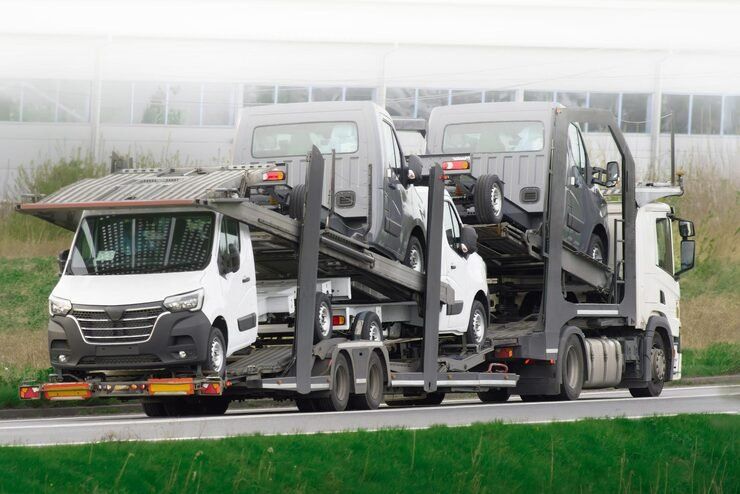
What Are Heavy-Duty Vehicle Combinations?
A heavy-duty vehicle combination consists of a powered vehicle and one or more attached units that operate together as a transport system.
Common configurations include:
Tractor and semi-trailer
Rigid truck and drawbar trailer
Truck and low-loader trailer
Tractor and flatbed trailer
Tractor and tanker trailer
Truck and tipper trailer
Truck and refrigerated trailer
Heavy-haul tractor and modular trailer
Multi-trailer combinations
The powered unit provides propulsion and braking control, while the trailer or combination of trailers provides cargo capacity and specialized load handling.
Major Types of Heavy-Duty Trucks
Heavy-duty trucks are available in different configurations according to their intended application.
Tractor Units
A tractor unit is designed primarily to pull semi-trailers. It generally includes the engine, transmission, cab, chassis, axles, fuel systems, braking equipment, and fifth-wheel coupling.
Tractor units are widely used for long-distance freight transport.
Rigid Heavy Trucks
Rigid trucks have the cargo body permanently mounted on the vehicle chassis.
They are commonly used for:
Construction materials
Distribution
Municipal transport
Mining support
Industrial logistics
Agricultural transportation
Heavy-Haul Tractors
Heavy-haul tractors are configured for transporting unusually heavy or oversized equipment. They can incorporate high-output powertrains, reinforced chassis structures, additional axles, specialized transmissions, and enhanced braking systems.
Off-Highway Heavy Trucks
Some heavy-duty vehicles are designed for specialized environments such as mining, quarrying, construction sites, ports, and industrial facilities.
Their configurations may differ significantly from conventional highway trucks.
Major Trailer Systems
Trailer selection is strongly influenced by cargo dimensions, weight, loading method, and environmental requirements.
| Trailer Type | Typical Cargo | Key Characteristics |
|---|---|---|
| Flatbed Trailer | Machinery and construction materials | Open loading area |
| Curtain-Sider | General freight | Flexible side access |
| Box Trailer | Packaged freight | Enclosed cargo area |
| Refrigerated Trailer | Temperature-sensitive goods | Controlled temperature |
| Tanker Trailer | Liquids and gases | Specialized tank body |
| Lowboy Trailer | Heavy machinery | Low loading deck |
| Extendable Trailer | Oversized equipment | Adjustable length |
| Dump Trailer | Bulk materials | Hydraulic unloading |
| Modular Trailer | Very heavy loads | Multiple axle modules |
| Logging Trailer | Timber and logs | Specialized load supports |
Truck and Trailer Combination Configurations
Tractor-Semi-Trailer
This is one of the most common heavy-duty vehicle combinations. The tractor connects to the semi-trailer through a fifth-wheel coupling.
The semi-trailer transfers part of its weight to the tractor through the coupling while its rear axle group supports the remaining load.
Rigid Truck and Drawbar Trailer
A rigid truck can tow a separate trailer through a drawbar connection.
This arrangement can provide additional cargo capacity while maintaining separate truck and trailer structures.
Heavy-Haul Combination
Heavy-haul combinations may use specialized tractors and modular trailers to distribute extremely heavy loads across multiple axles.
These systems are frequently used for industrial equipment, transformers, construction machinery, and large structures.
Key Components of Heavy-Duty Vehicle Combinations
A combination vehicle integrates numerous mechanical, electrical, and safety systems.
Powertrain
The powertrain typically includes:
Diesel or alternative-fuel engine
Transmission
Driveshaft
Differential
Drive axles
The powertrain determines how efficiently the vehicle can generate and transfer torque to the driven wheels.
Chassis
The chassis supports the cab, engine, suspension, body, coupling equipment, and payload.
Heavy-duty chassis are designed to withstand substantial loads and repeated operating stresses.
Coupling Systems
Coupling equipment connects the tractor or truck to the trailer.
Common systems include fifth-wheel couplings and drawbar connections.
Braking Systems
Heavy-duty combinations require coordinated braking across the tractor and trailer.
Modern systems may include electronically controlled braking, anti-lock braking, electronic stability functions, and automated braking assistance.
Suspension Systems
Suspension systems help support vehicle weight while influencing ride characteristics, axle load distribution, stability, and tire contact.
Air suspension is widely used in many heavy-duty applications, while mechanical suspension remains common in specific operating environments.
Transport Technologies
Modern heavy-duty vehicle combinations incorporate increasingly sophisticated technologies.
Electronic Braking Systems
Electronic braking systems can coordinate braking signals across tractor and trailer units.
They can improve response coordination and support advanced vehicle safety functions.
Advanced Driver Assistance Systems
Depending on the vehicle configuration, driver-assistance technologies may include:
Adaptive cruise control
Lane-departure warning
Forward collision warning
Automatic emergency braking
Blind-spot monitoring
Driver monitoring
Telematics
Telematics systems collect and transmit information about vehicle location, fuel consumption, engine conditions, driving behavior, maintenance status, and other operating parameters.
Fleet Management
Fleet management platforms can combine vehicle data with logistics information to support route planning, maintenance scheduling, utilization monitoring, and operational analysis.
Alternative Powertrains
Heavy-duty transportation is increasingly incorporating alternative propulsion technologies, including battery-electric, hydrogen fuel-cell, hybrid, renewable-fuel, and natural-gas-based systems in selected applications.
Manufacturing Processes
Heavy-duty vehicle manufacturing involves multiple production stages.
Chassis Manufacturing
Steel or other structural materials are cut, formed, welded, and assembled into chassis frames.
Powertrain Production
Engines, transmissions, axles, and related components are manufactured and assembled according to vehicle specifications.
Cab Manufacturing
Cab structures are formed, welded, painted, equipped with electrical systems, and fitted with interior components.
Axle and Suspension Assembly
Axles, braking components, suspension systems, wheels, and tires are installed according to the required axle configuration.
Trailer Manufacturing
Trailer manufacturers fabricate frames, decks, walls, tanks, refrigeration systems, hydraulic equipment, and other specialized components according to trailer type.
Final Assembly
The vehicle systems are integrated, connected, inspected, and tested before delivery.
Heavy-Duty Vehicle Manufacturing Technologies
Manufacturers use a combination of conventional and advanced production technologies, including:
Robotic welding
Automated painting
CNC machining
Metal forming
Laser cutting
Automated assembly
Computer-aided engineering
Electronic testing
End-of-line diagnostics
Digital manufacturing systems can also monitor production quality and traceability.
Global Manufacturers and Suppliers
The heavy-duty vehicle industry includes truck manufacturers, trailer manufacturers, powertrain suppliers, axle producers, braking-system companies, and specialized transport-equipment manufacturers.
Examples include:
Volvo Trucks
Daimler Truck
PACCAR
Scania
MAN Truck & Bus
IVECO
Isuzu Motors
Hyundai Motor Company
Specialized trailer and component suppliers provide equipment such as low-loaders, modular trailers, tankers, refrigeration systems, axles, braking components, couplings, and suspension systems.
Commercial Applications
Long-Distance Freight
Tractor-semi-trailer combinations are extensively used for transporting packaged products, consumer goods, industrial materials, and other freight over long distances.
Construction
Heavy-duty combinations transport excavators, loaders, cranes, structural materials, concrete equipment, and other construction assets.
Energy Infrastructure
Specialized combinations can transport transformers, turbines, generators, pipes, and other large energy-sector components.
Mining
Heavy transport vehicles move equipment, materials, components, and supplies around mining and extraction operations.
Agriculture
Truck-trailer combinations transport grain, livestock-related materials, agricultural machinery, feed, and other farm products.
Industrial Equipment
Low-loaders and modular trailers can transport oversized machinery and industrial equipment.
Logistics and Distribution
Box trailers, curtain-siders, refrigerated trailers, and other configurations support regional and long-distance freight distribution.
Heavy-Haul Transport Technologies
Heavy-haul operations require careful consideration of axle loading, dimensions, route conditions, braking, steering, and load distribution.
Specialized equipment may include:
Modular axle trailers
Self-propelled modular transporters
Extendable trailers
Hydraulic suspension
Hydraulic steering
Ballast tractors
Multi-axle combinations
Specialized coupling systems
These technologies allow transport operators to configure vehicles around unusually large or heavy loads.
Factors Affecting Vehicle Combination Selection
Choosing a vehicle combination requires consideration of several technical and operational factors.
Payload
The expected cargo weight influences tractor, axle, trailer, and braking requirements.
Cargo Dimensions
Length, width, height, and center of gravity influence trailer selection and route requirements.
Route
Road geometry, gradients, bridges, turning areas, surface conditions, and regulatory restrictions can affect vehicle configuration.
Axle Configuration
Additional axles can distribute vehicle and cargo loads across a greater number of contact points.
Loading Method
Forklift access, cranes, ramps, rear loading, side loading, and other requirements influence trailer design.
Operating Environment
Highway freight, construction sites, mines, ports, and industrial facilities can require different vehicle configurations.
Heavy-Duty Vehicle Combination Technologies Compared
| Technology | Purpose | Typical Application |
|---|---|---|
| Fifth-Wheel Coupling | Tractor-trailer connection | Freight transport |
| Drawbar Coupling | Truck-trailer connection | Distribution |
| Air Suspension | Load support and ride control | Highway transport |
| EBS | Electronic braking coordination | Commercial vehicles |
| Telematics | Vehicle data monitoring | Fleet operations |
| Hydraulic Steering | Trailer maneuverability | Heavy haulage |
| Modular Axles | Load distribution | Oversized transport |
| Refrigeration | Temperature management | Cold-chain logistics |
How to Select a Heavy-Duty Vehicle Combination
Consider the following factors:
Determine the cargo weight and dimensions.
Identify the required trailer configuration.
Evaluate the intended routes.
Determine axle and load-distribution requirements.
Assess powertrain requirements.
Review braking and safety systems.
Consider loading and unloading methods.
Evaluate fuel or energy requirements.
Consider telematics and fleet-management capabilities.
Verify applicable vehicle dimensions, weight limits, and transport regulations.
Vehicle configurations should be selected according to the specific operating conditions and applicable jurisdictional requirements.
Frequently Asked Questions
What is a heavy-duty vehicle combination?
A heavy-duty vehicle combination consists of a powered truck or tractor connected to one or more trailers or specialized transport units for moving substantial cargo.
What is the most common heavy-duty vehicle combination?
The tractor and semi-trailer configuration is one of the most widely used arrangements for commercial road freight.
What trailers are used for heavy-duty transport?
Common types include flatbeds, low-loaders, tankers, refrigerated trailers, box trailers, dump trailers, extendable trailers, and modular heavy-haul trailers.
What technologies are used in modern heavy-duty vehicles?
Modern vehicles can incorporate electronic braking, advanced driver-assistance systems, telematics, fleet-management systems, automated transmissions, and alternative powertrains.
What are heavy-haul vehicle combinations used for?
They are used for transporting oversized or very heavy equipment such as transformers, construction machinery, industrial structures, generators, and other large loads.
Conclusion
Heavy-duty vehicle combinations bring together trucks, tractors, trailers, coupling systems, powertrains, braking equipment, suspension systems, and transport technologies into integrated freight solutions. Different configurations are designed around cargo weight, dimensions, route conditions, loading requirements, and operating environments.
Standard tractor-semi-trailer systems support general freight transportation, while low-loaders, extendable trailers, modular axle systems, and specialized heavy-haul tractors address oversized and high-weight cargo.
Advances in electronic braking, telematics, driver assistance, alternative powertrains, and fleet-management technologies are also changing how heavy-duty vehicle combinations are designed and operated. Understanding the individual components and their interaction helps transport operators select configurations suited to their specific commercial and industrial requirements.