Heavy equipment includes large machines used for construction, earthmoving, lifting, road development, mining, agriculture, and other demanding work.
A practical heavy equipment guide helps readers understand excavators, loaders, cranes, bulldozers, graders, and related machines, including what they do and where they are commonly used.
Choosing and operating equipment requires attention to machine capacity, site conditions, operator training, fuel or energy use, safety systems, and maintenance planning. This overview explains the basics in simple language and highlights recent technology, regulations, and useful resources.
Context
Heavy equipment refers to powered machinery designed to perform tasks that require substantial force, reach, lifting capacity, digging ability, or material movement. These machines are widely used where manual work would be slower or physically difficult.
The development of heavy equipment has progressed from basic mechanical machines to computer-controlled systems with hydraulic, electronic, and digital components. Modern equipment can combine engines or electric power systems with hydraulic circuits, sensors, cameras, positioning systems, and onboard computers.
Common categories include:
| Equipment | Main Function | Common Applications |
|---|---|---|
| Excavator | Digging and material handling | Foundations, trenches, earthmoving |
| Wheel Loader | Moving loose materials | Aggregates, construction sites, material yards |
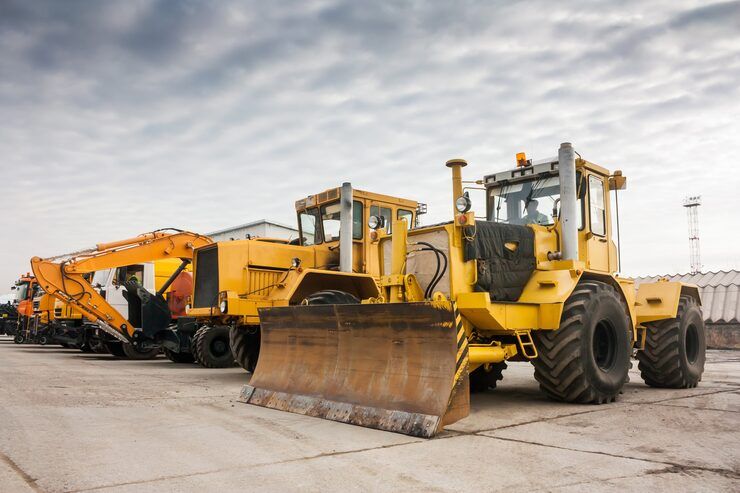
| Bulldozer | Pushing and grading soil | Land preparation, road development |
| Crane | Lifting and positioning loads | Construction, infrastructure, industrial work |
| Motor Grader | Fine grading surfaces | Roads, drainage, site preparation |
| Skid Steer Loader | Compact material handling | Landscaping, construction, utility work |
| Forklift | Lifting and moving loads | Warehouses, manufacturing, construction |
| Compactor | Compressing soil or asphalt | Roads, foundations, earthworks |
An excavator generally uses a boom, arm, and bucket to dig and move materials. Loaders are designed to scoop, carry, and place materials. Cranes use lifting systems to move loads vertically and horizontally within defined operating limits.
Machine selection depends on the task rather than simply on machine size. Important factors include operating weight, bucket or attachment capacity, lifting height, reach, ground conditions, working space, terrain, and expected operating cycle.
Importance
Heavy equipment plays an important role in infrastructure development, construction, mining, agriculture, logistics, and environmental projects. The machines can move large quantities of earth and materials while supporting tasks that require controlled mechanical force.
Understanding equipment also matters for safety. Incorrect machine selection, excessive loads, unstable ground, poor visibility, or inadequate operator training can increase the likelihood of incidents.
Different groups are affected by heavy equipment operations, including:
- Equipment operators and supervisors
- Construction and infrastructure workers
- Engineers and site planners
- Fleet and maintenance teams
- Manufacturers and technology developers
- Government regulators and inspectors
- Nearby communities and road users
Efficiency is another important consideration. A machine that is too small may require more operating cycles, while a machine that is unnecessarily large may create challenges involving transportation, space, energy use, and ground pressure.
Attachments can also expand the functions of a machine. Excavators, skid steer loaders, and other equipment may use buckets, breakers, augers, grapples, forks, compactors, or specialized tools. Each attachment requires appropriate compatibility and operating procedures.
Recent Updates
Heavy equipment technology is increasingly focused on automation, electrification, connectivity, operator assistance, and emissions reduction. These developments are changing how equipment is monitored and used.
Electric and hybrid equipment is receiving attention for applications where lower local emissions and reduced noise are useful. Battery-powered compact excavators, loaders, and other machines are being developed for selected construction and industrial environments. Larger equipment presents different challenges because energy storage, charging infrastructure, operating duration, and machine weight must be considered.
Telematics is another important development. Connected equipment can transmit information such as operating hours, location, fuel or energy consumption, fault notifications, and machine utilization. These data can support fleet planning and preventive maintenance.
Operator-assistance technology is also expanding. Depending on the machine, systems may include cameras, proximity detection, payload measurement, grade control, machine guidance, automatic functions, and stability monitoring.
Autonomous and remotely controlled equipment is being explored for specific environments, particularly where repetitive or hazardous tasks can benefit from reduced direct exposure. Human supervision, system limitations, and site-specific risk controls remain important.
Artificial intelligence is also being incorporated into equipment analysis. Sensor data can be used to identify patterns that may indicate abnormal operation or developing mechanical issues. The exact capabilities vary by manufacturer and machine model.
Laws or Policies
Heavy equipment is subject to different rules depending on the country, machine category, work environment, and type of operation. Regulations can address operator training, machine inspection, lifting activities, workplace safety, emissions, noise, transportation, and environmental protection.
In the United States, the Occupational Safety and Health Administration establishes workplace requirements covering areas such as construction equipment, cranes, powered industrial trucks, and safe operating practices. The applicable requirements depend on the equipment and work activity.
In the European Union, machinery placed on the market is subject to machinery legislation covering health and safety requirements. The EU Machinery Regulation establishes updated requirements for machinery and related products, including provisions addressing digital technologies and certain autonomous functions.
India also has workplace, environmental, road transportation, and construction-related requirements that can apply to heavy equipment. Requirements may vary according to the state, industry, machine category, and project. Organizations should consult the applicable central and state authorities before beginning regulated activities.
Important areas to review include:
- Operator qualification and training requirements
- Crane and lifting regulations
- Workplace inspection procedures
- Personal protective equipment requirements
- Vehicle and equipment movement rules
- Engine emission standards
- Noise and environmental requirements
- Manufacturer instructions and safety documentation
Regulations can change, so official government sources should be checked for the current requirements applicable to a specific machine and location.
Tools and Resources
Several resources can help people learn about heavy equipment and understand technical information.
Manufacturer manuals provide specifications, operating limits, maintenance schedules, attachment compatibility, warning information, and safety instructions. These documents should be reviewed for the exact model because specifications can differ considerably between machines.
Government workplace-safety websites are useful for understanding regulatory requirements. In the United States, OSHA resources cover many categories of construction and industrial equipment. European users can consult European Commission machinery legislation and national authorities.
Equipment specifications can also be organized in comparison tables. Useful fields include:
- Operating weight
- Engine or motor rating
- Rated capacity
- Maximum reach
- Lift height
- Bucket capacity
- Ground clearance
- Dimensions
- Attachment compatibility
Calculators and planning worksheets can help estimate material movement, lifting capacity, productivity, fuel or energy consumption, and transportation requirements. However, calculations should not replace manufacturer specifications, engineering assessments, or required safety procedures.
Training materials, technical manuals, equipment inspection forms, and workplace risk-assessment templates can also support structured planning. For lifting operations, qualified personnel should use the applicable load charts and site-specific procedures.
FAQs
What is heavy equipment?
Heavy equipment consists of large powered machines designed for demanding tasks such as digging, lifting, grading, hauling, compacting, and material handling.
What is an excavator used for?
An excavator is commonly used for digging trenches, foundations, drainage areas, and other earthworks. Attachments can expand its functions for selected applications.
What is the difference between a loader and an excavator?
A loader primarily scoops and moves materials, while an excavator is designed around a boom, arm, and attachment for digging and reaching. Some machines can perform overlapping tasks.
What should be checked before operating a crane?
Operators and supervisors should review the load, lifting capacity, load chart, ground conditions, machine configuration, weather conditions, communication procedures, and applicable safety requirements.
How is technology changing heavy equipment?
Modern equipment increasingly uses telematics, sensors, cameras, machine guidance, automation, electric power systems, and data analysis to support monitoring, efficiency, and safer operation.
Conclusion
Heavy equipment includes a wide range of machines, from excavators and loaders to cranes, bulldozers, graders, and compactors. Understanding each machine's purpose, operating limits, attachments, and working environment helps users approach equipment planning with better technical awareness.
Recent developments are bringing greater connectivity, automation, electrification, and operator assistance to the sector. At the same time, regulations and manufacturer requirements remain essential parts of responsible equipment operation.
A useful heavy equipment guide should therefore combine basic machine knowledge with safety information, technical specifications, and current regulatory guidance. Readers should always verify details against the documentation and rules that apply to their specific equipment, workplace, and location.
For deeper learning, government safety authorities, manufacturer manuals, technical training materials, and engineering resources provide useful references. Keeping information current is particularly important as equipment technology and regulatory requirements continue to develop.