Heavy equipment parts are the mechanical, hydraulic, electrical, structural, and electronic components used in construction machinery, mining equipment, agricultural machines, material-handling systems, and other large mobile equipment.
These components include engines, transmissions, hydraulic cylinders, pumps, undercarriage components, tracks, gears, bearings, filters, sensors, buckets, cutting edges, and many other assemblies.
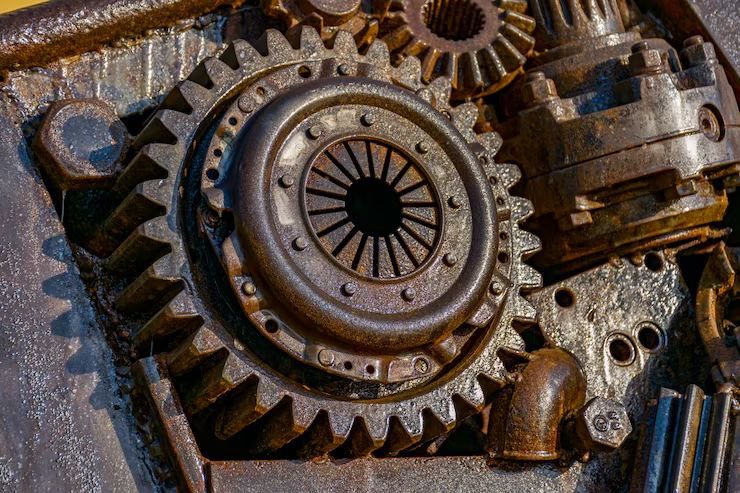
Heavy equipment operates under demanding loads, vibration, dust, temperature changes, and repetitive working cycles. Consequently, component selection involves more than physical dimensions. Material properties, load ratings, compatibility, operating environment, maintenance requirements, and equipment specifications all influence component suitability.
Context
What Are Heavy Equipment Parts?
Heavy equipment parts are components designed for machines that perform demanding earthmoving, lifting, excavation, hauling, agricultural, mining, and industrial activities.
A complete machine may contain thousands of individual components. Some are structural, while others transmit power, control hydraulic movement, protect systems, filter fluids, monitor operating conditions, or support operator controls.
Major Heavy Equipment Component Types
Heavy equipment parts can be grouped into several categories.
Engine Components
Diesel and other heavy-duty engines contain components such as:
Pistons
Cylinder liners
Crankshafts
Camshafts
Connecting rods
Fuel injectors
Turbochargers
Oil pumps
Water pumps
Gaskets
Engine components must operate under high temperature, pressure, vibration, and mechanical loading.
Hydraulic Components
Hydraulic systems are central to many excavators, loaders, cranes, dozers, and other machines.
Typical components include hydraulic pumps, motors, cylinders, valves, hoses, fittings, accumulators, filters, and hydraulic reservoirs.
Powertrain Components
Powertrain systems transfer engine power to the wheels, tracks, or other working mechanisms.
Components can include transmissions, torque converters, differentials, axles, final drives, drive shafts, gears, and couplings.
Undercarriage Components
Tracked machines rely on undercarriage systems to support the machine and transmit movement.
Common components include:
Track chains
Track shoes
Rollers
Idlers
Sprockets
Track frames
Bushings
Pins
Undercarriage components experience significant mechanical loads and contact forces.
Heavy Equipment Parts Overview
| Component Category | Main Function | Common Equipment |
|---|---|---|
| Hydraulic Cylinder | Converts fluid pressure into linear motion | Excavators, loaders |
| Hydraulic Pump | Generates hydraulic flow | Excavators, cranes |
| Final Drive | Transfers power to tracks or wheels | Excavators, tracked machines |
| Track Roller | Supports tracked undercarriage | Dozers, excavators |
| Sprocket | Engages track chain | Tracked equipment |
| Transmission | Controls power transmission | Loaders, tractors |
| Engine Component | Supports combustion and power generation | Heavy machinery |
| Bucket | Performs excavation or material handling | Excavators, loaders |
| Cutting Edge | Contacts and penetrates material | Buckets, blades |
| Hydraulic Hose | Transports pressurized fluid | Hydraulic machinery |
| Bearing | Supports rotating components | Drives, engines, attachments |
| Sensor | Measures machine conditions | Modern equipment |
Importance
Why Heavy Equipment Parts Matter
Heavy machinery frequently operates under substantial mechanical and hydraulic loads. Components must therefore be compatible with the machine's design and intended operating conditions.
A suitable component can support proper mechanical alignment, fluid control, power transmission, and machine operation. An unsuitable component may create dimensional, thermal, hydraulic, electrical, or structural problems.
Replacement Parts
Replacement parts are used when components become worn, damaged, contaminated, or otherwise unsuitable for continued operation.
Common replacement categories include:
Filters
Hydraulic hoses
Seals
Bearings
Track components
Cutting edges
Bucket teeth
Belts
Gaskets
Electrical sensors
Replacement intervals vary significantly depending on component type, machine usage, operating environment, maintenance procedures, and manufacturer specifications.
Original and Alternative Components
Heavy equipment operators may encounter components supplied through original equipment manufacturers and components manufactured by independent producers.
When evaluating an alternative, technical compatibility should be examined carefully. Relevant factors can include dimensions, material, hardness, load capacity, hydraulic pressure rating, electrical characteristics, mounting pattern, and environmental suitability.
Equipment-Specific Compatibility
A component designed for one excavator, loader, bulldozer, crane, or mining machine may not be suitable for another machine even when the parts appear similar.
Useful identification information includes:
Machine model
Serial number
Component identification number
Engine model
Assembly location
Dimensions
Technical drawings
Hydraulic or electrical specifications
Manufacturing Processes
Casting
Casting is used for components such as hydraulic valve bodies, housings, brackets, pump bodies, and selected drivetrain components.
Molten metal is introduced into a mold and allowed to solidify. The resulting component may then undergo machining and finishing.
Forging
Forging shapes metal using controlled mechanical force. Forged shafts, gears, pins, connecting components, and other high-load parts can be produced through this method.
CNC Machining
CNC machining is used to produce precise dimensions and interfaces.
Typical processes include:
Turning
Milling
Drilling
Boring
Grinding
Threading
Machining is particularly important for shafts, hydraulic components, pins, bushings, gear components, and precision housings.
Heat Treatment
Heat treatment can modify hardness, strength, toughness, and wear characteristics.
Common processes include hardening, tempering, carburizing, and induction hardening.
Surface Treatment
Heavy equipment parts can undergo surface treatments such as plating, coating, nitriding, painting, or other protective processes.
These treatments can improve corrosion resistance, wear behavior, or surface durability.
Welding and Fabrication
Structural equipment components such as buckets, frames, booms, arms, guards, and brackets can require welding and fabrication.
Welding procedures need to account for material type, thickness, structural loading, and applicable engineering requirements.
Precision Inspection
Parts can be inspected using:
Coordinate measuring machines
Calipers
Micrometers
Optical measurement systems
Hardness testers
Ultrasonic testing
Magnetic-particle inspection
Dimensional gauges
Inspection methods depend on component design and required specifications.
Applications
Excavator Parts
Excavators use a combination of hydraulic, structural, electrical, and mechanical components.
Common parts include hydraulic cylinders, pumps, valves, buckets, bucket teeth, swing drives, final drives, track assemblies, rollers, idlers, and sensors.
Bulldozer Parts
Bulldozers use tracks, undercarriage components, hydraulic systems, blades, transmissions, final drives, engines, and structural frames.
Cutting edges and blade components experience direct contact with soil, rock, and other materials.
Wheel Loader Parts
Wheel loaders use wheel assemblies, axles, transmissions, hydraulic cylinders, buckets, articulated joints, steering components, and hydraulic systems.
Crane Parts
Mobile and industrial cranes use hydraulic systems, lifting mechanisms, wire ropes, sheaves, bearings, control systems, outriggers, and structural components.
Mining Equipment Parts
Mining machinery can include excavators, haul trucks, crushers, drilling machines, conveyors, and loaders.
These machines use heavy-duty drivetrain, hydraulic, structural, filtration, and wear components.
Agricultural Equipment Parts
Tractors, harvesters, sprayers, tillage machines, and other agricultural equipment use engines, transmissions, hydraulic systems, bearings, belts, chains, sensors, and implements.
Material-Handling Equipment
Forklifts, telehandlers, container handlers, and other machines use hydraulic systems, steering components, transmissions, lifting assemblies, wheels, tires, and electronic controls.
Global Manufacturers and Suppliers
The heavy equipment parts supply chain includes original equipment manufacturers, independent component manufacturers, specialized engineering companies, distributors, machining companies, and remanufacturing organizations.
Supplier categories include:
Engine components
Hydraulic components
Undercarriage parts
Transmission components
Final drives
Bearings
Seals
Filters
Buckets and attachments
Wear components
Electrical components
Sensors
Cooling-system components
When evaluating global manufacturers and suppliers, organizations can examine component identification, dimensional specifications, material documentation, manufacturing quality, compatibility, testing procedures, traceability, technical documentation, and availability.
Parts Identification
Correct identification is especially important for heavy equipment because machines can have multiple configurations and model revisions.
Useful records can include the equipment serial number, engine identification, assembly drawings, parts catalogs, component numbers, and technical specifications.
Recent Updates
Digital Parts Catalogs
Digital catalogs allow maintenance teams to search parts using machine models, component numbers, diagrams, dimensions, and assembly information.
Some systems connect parts data with equipment-management platforms.
3D Scanning and Reverse Engineering
Three-dimensional scanning can capture the geometry of existing components for inspection, documentation, or engineering analysis.
This can be useful when historical components have limited documentation, although reproduction should account for material properties and engineering requirements rather than geometry alone.
Smart Heavy Equipment Components
Modern machines increasingly incorporate sensors into engines, hydraulic systems, transmissions, and undercarriages.
Sensors can measure pressure, temperature, vibration, speed, fluid condition, and other operating variables.
Predictive Maintenance
Condition-monitoring systems can analyze information from heavy equipment components to identify changes in machine behavior.
For example, abnormal vibration, temperature, or hydraulic pressure can indicate that further inspection may be appropriate.
Telematics
Heavy equipment telematics systems can collect machine operating information and transmit selected data to centralized platforms.
Data can include engine hours, fuel consumption, location, operating conditions, fault codes, and maintenance information.
Additive Manufacturing
Additive manufacturing is being explored for selected low-volume components, prototypes, tooling, and specialized replacement applications.
Its suitability depends on material requirements, component geometry, mechanical loading, production volume, and qualification requirements.
Laws or Policies
Machinery Safety
Heavy equipment components must be appropriate for their intended application and installed according to relevant technical documentation.
Structural, hydraulic, lifting, and safety-critical components can have specific engineering and inspection requirements.
Hydraulic Safety
Hydraulic systems operate under significant pressure. Hoses, fittings, valves, cylinders, and pumps must have appropriate ratings and installation procedures.
Damaged hydraulic components can present serious hazards, particularly where high-pressure fluid is involved.
Lifting Equipment
Cranes, lifting attachments, hooks, slings, and related components may be subject to specific inspection, certification, and load-rating requirements.
Environmental Requirements
Heavy equipment maintenance can generate used oils, hydraulic fluids, filters, batteries, lubricants, and contaminated components. Appropriate handling and disposal procedures should follow applicable environmental requirements.
Documentation and Traceability
Safety-critical components may require documentation covering material characteristics, manufacturing records, inspection results, or certification.
Requirements vary according to the component, equipment category, industry, and jurisdiction.
Tools and Resources
Equipment Parts Catalogs
Parts catalogs provide diagrams, component numbers, dimensions, and assembly information that can assist with identification.
CMMS and EAM Platforms
Maintenance-management systems can connect equipment records with component inventories, maintenance histories, inspections, and work orders.
CAD Drawings
Engineering drawings provide dimensions, tolerances, materials, interfaces, and assembly information.
Diagnostic Tools
Electronic diagnostic systems can read fault codes and operating information from modern heavy equipment.
Condition-Monitoring Equipment
Vibration analyzers, thermal cameras, hydraulic pressure gauges, oil-analysis systems, and other diagnostic instruments can help assess equipment condition.
Measurement Tools
Calipers, micrometers, bore gauges, torque tools, and other precision instruments can verify component dimensions and installation requirements.
FAQs
What are heavy equipment parts?
Heavy equipment parts are mechanical, hydraulic, electrical, structural, and electronic components used in large machinery such as excavators, loaders, bulldozers, cranes, mining equipment, and agricultural machines.
What are common heavy equipment replacement parts?
Common replacement categories include filters, hydraulic hoses, seals, bearings, track components, bucket teeth, cutting edges, belts, gaskets, sensors, and selected drivetrain components.
How can heavy equipment parts be identified?
Identification can use the machine model, serial number, component number, engine information, parts catalog, technical drawing, dimensions, and assembly location.
What materials are used for heavy equipment parts?
Common materials include carbon steel, alloy steel, cast iron, aluminum alloys, engineering plastics, elastomers, copper, and specialized wear-resistant materials.
How are heavy equipment parts manufactured?
Manufacturing methods include casting, forging, CNC machining, heat treatment, welding, fabrication, surface treatment, grinding, and precision inspection.
What industries use heavy equipment parts?
Construction, mining, agriculture, forestry, infrastructure development, material handling, energy, waste management, and industrial operations use heavy equipment components.
What technologies are changing heavy equipment parts management?
Digital parts catalogs, telematics, smart sensors, predictive maintenance, 3D scanning, computerized maintenance systems, and additive manufacturing are changing component identification and maintenance practices.
Conclusion
Heavy equipment parts are essential components of construction, mining, agriculture, infrastructure, material-handling, and industrial machinery. Mechanical, hydraulic, electrical, structural, and electronic parts work together to support machine movement, power transmission, lifting, excavation, material handling, and control.
Manufacturing processes include casting, forging, CNC machining, heat treatment, welding, surface treatment, and precision inspection. Modern technologies such as digital parts catalogs, telematics, smart sensors, condition monitoring, 3D scanning, and computerized maintenance systems are also changing how components are identified and managed.
Global manufacturers and suppliers provide everything from engine and transmission components to hydraulic systems, undercarriage parts, wear components, sensors, filters, and specialized attachments. Selecting a suitable heavy equipment component requires careful consideration of machine identification, dimensions, materials, load ratings, operating conditions, compatibility, documentation, and applicable safety requirements.