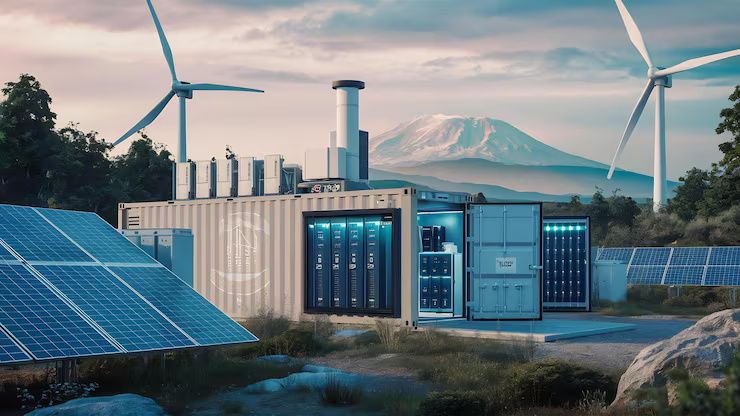
Hybrid power systems combine two or more energy-generation or energy-storage technologies within a coordinated electrical system. Depending on the application, a hybrid system may combine renewable generation, conventional generators, batteries, power converters, and intelligent control equipment.
These systems are used in industrial facilities, remote infrastructure, telecommunications, commercial buildings, microgrids, marine applications, and other environments where reliable electricity and flexible energy management are important. Digital controls can coordinate generation, storage, loads, and grid connections according to operating conditions.
Context
What Are Hybrid Power Systems?
A hybrid power system integrates multiple electrical or energy technologies so they can operate as a coordinated system. A typical configuration may combine solar photovoltaic generation with battery storage and a diesel or gas generator.
The combination depends on the application's energy requirements. A grid-connected industrial facility may use solar generation and batteries alongside utility electricity, while an isolated site may rely on renewable generation, battery storage, and a backup generator.
How Hybrid Power Systems Work
A hybrid system uses power management controls to determine how available energy is generated, stored, converted, and distributed.
For example, during periods of strong solar generation, electricity can supply current loads while surplus generation charges the battery. When renewable generation decreases, stored energy can support the electrical load. A generator or grid connection can provide additional electricity when required.
The operating sequence depends on system design, battery state of charge, load demand, generation availability, and control settings.
Major Energy Technologies
| Technology | Primary Function | Common Applications |
|---|---|---|
| Solar PV | Electricity generation | Industrial sites, microgrids |
| Wind Turbines | Renewable generation | Remote and utility systems |
| Battery Storage | Energy storage | Load support, peak management |
| Diesel Generators | Backup generation | Remote and critical facilities |
| Gas Generators | Dispatchable generation | Industrial facilities |
| Fuel Cells | Electrochemical generation | Distributed power |
| Grid Connection | External electricity supply | Commercial and industrial systems |
| Power Converters | Electrical conversion | Renewable and storage systems |
Renewable Energy Integration
Solar and wind generation can provide variable electricity depending on weather conditions. Hybrid configurations can combine these sources with storage or dispatchable generation to manage periods when renewable output changes.
Energy management software can monitor generation and load conditions and adjust system operation according to configured priorities.
Battery Energy Storage
Battery energy storage systems are an important component of many modern hybrid power systems. Batteries can store electrical energy during periods of available generation and discharge it when required.
Battery systems generally include cells, battery management systems, thermal management, enclosures, protection equipment, and power conversion equipment.
Power Conversion Equipment
Hybrid systems often require equipment that converts electrical energy between different voltage, current, and frequency characteristics.
Important components can include:
- Inverters
- Rectifiers
- DC-DC converters
- Transformers
- Switchgear
- Protection relays
- Energy meters
- Power distribution equipment
- Controllers
These components allow different energy sources and loads to operate within a coordinated electrical architecture.
Importance
Why Hybrid Power Systems Matter
Different energy technologies have different operating characteristics. Solar and wind generation are variable, batteries store energy rather than generate it, and generators can provide dispatchable electricity.
Combining these technologies allows system designers to coordinate their respective characteristics. The resulting configuration can support electrical continuity, energy management, and operational flexibility.
Power Management
Power management is central to hybrid system operation. An energy management system can continuously evaluate parameters such as:
- Electrical load
- Renewable generation
- Battery state of charge
- Generator status
- Grid availability
- Voltage
- Frequency
- Power quality
- Energy demand
The controller can then coordinate generation and storage according to programmed operating conditions.
Industrial Applications
Hybrid power systems can be configured for many industrial environments.
Manufacturing facilities: Solar generation, batteries, and grid electricity can operate together to manage electrical demand.
Mining operations: Remote mines may combine renewable generation, battery storage, and conventional generators.
Oil and gas facilities: Hybrid configurations can support remote production sites and other energy-intensive infrastructure.
Telecommunications: Hybrid systems can provide electricity for communication equipment at locations with limited grid access.
Water infrastructure: Treatment facilities and pumping stations can integrate renewable generation and storage.
Data and communications infrastructure: Battery systems and backup generation can contribute to continuity for critical electrical loads.
Marine applications: Vessels and offshore facilities can use combinations of generators, batteries, and renewable technologies depending on the design.
Remote and Off-Grid Systems
Hybrid power systems are particularly relevant where grid electricity is unavailable or unreliable. A remote system can combine renewable generation with batteries and a dispatchable generator.
The generator may operate when renewable generation and stored energy are insufficient. This arrangement can reduce dependence on a single energy source while maintaining an electrical supply architecture suited to the location.
Microgrid Integration
Hybrid power systems are often integrated into microgrids. A microgrid can coordinate generation, storage, electrical distribution, and loads within a defined network.
Depending on its design, a microgrid may operate while connected to the utility grid or transition into an isolated operating mode.
Recent Updates
Advanced Energy Management Systems
Modern energy management systems increasingly use digital monitoring and automated control. These systems can collect information from meters, inverters, batteries, generators, and other equipment.
Real-time information allows operators to observe system conditions and manage energy flows through centralized interfaces.
Artificial Intelligence and Predictive Analytics
AI and predictive analytics are being explored for forecasting renewable generation, estimating energy demand, identifying equipment abnormalities, and improving dispatch planning.
For example, a forecasting system can combine historical energy data with weather information to estimate expected solar or wind production. The result can then inform battery or generator scheduling.
Battery Technology Development
Battery systems continue to develop through improvements in cell chemistry, energy density, thermal management, monitoring, and control systems.
Lithium-ion technology remains widely used for stationary storage, while other chemistries and emerging storage technologies are also being investigated for different operating requirements.
Digital Monitoring
Connected sensors and industrial communication networks allow hybrid systems to collect detailed operational information. Parameters such as temperature, voltage, current, frequency, and battery state can be monitored continuously.
Remote monitoring can also help operators identify abnormal conditions and schedule maintenance activities based on equipment data.
Grid-Interactive Systems
Grid-connected hybrid systems can coordinate local generation and storage with utility electricity. Depending on local rules and system configuration, these systems may manage demand, store electricity, or export electricity to the grid.
Grid-interconnection requirements vary significantly by jurisdiction and electrical network.
Laws or Policies
Electrical Safety
Hybrid power systems involve multiple electrical components, including batteries, generators, switchgear, transformers, and power converters. Electrical safety procedures should address installation, operation, maintenance, isolation, and emergency conditions.
Applicable electrical codes and standards vary according to the system's location and configuration.
Battery Safety
Battery energy storage installations require appropriate consideration of electrical protection, thermal management, enclosure design, ventilation where applicable, fire protection, and emergency procedures.
Large installations may have additional requirements relating to battery chemistry, installation location, fire detection, and emergency response.
Grid Interconnection
Grid-connected hybrid systems generally need to comply with applicable utility interconnection requirements. These requirements can address voltage, frequency, protection, power quality, anti-islanding functions, metering, and system control.
Project developers should verify requirements with the relevant utility and regulatory authorities.
Environmental Requirements
Some hybrid systems include combustion-based generators. These may be subject to requirements relating to emissions, fuel storage, noise, and environmental protection.
Renewable and storage components may also have specific requirements covering installation, waste management, recycling, and end-of-life handling.
Tools and Resources
Energy Management Systems
An energy management system coordinates electricity generation, storage, and loads. It can provide monitoring dashboards, automated controls, alarms, historical data, and operational reports.
Battery Management Systems
A battery management system monitors battery cells and operating conditions. Depending on the system architecture, it can track voltage, temperature, current, state of charge, and other parameters.
Supervisory Control Systems
SCADA systems can provide centralized monitoring and control for industrial hybrid power installations. Operators can use them to observe generators, batteries, inverters, switchgear, and electrical loads.
Power Quality Analyzers
Power quality instruments can measure parameters such as voltage variation, harmonics, frequency, current, and power factor.
These measurements can help identify electrical issues and evaluate system performance.
Energy Modeling Software
Simulation and modeling tools can help engineers evaluate different system configurations before installation. Models may examine load profiles, renewable generation, storage capacity, generator operation, and system reliability.
FAQs
What is a hybrid power system?
A hybrid power system combines two or more energy-generation or storage technologies within a coordinated electrical system. Examples include solar and batteries, or solar, batteries, and a conventional generator.
What equipment is used in hybrid power systems?
Common equipment includes solar panels, wind turbines, generators, batteries, inverters, converters, transformers, switchgear, meters, protection equipment, and energy management controllers.
How does power management work in a hybrid system?
Power management continuously evaluates electricity generation, load demand, battery conditions, grid availability, and other parameters. Control software then coordinates available energy sources according to configured operating rules.
Where are hybrid power systems used?
Applications include manufacturing facilities, mining sites, telecommunications infrastructure, water facilities, remote installations, commercial buildings, microgrids, marine environments, and energy infrastructure.
Can hybrid power systems operate without the grid?
Yes. Some hybrid configurations are specifically designed for off-grid operation. They can combine renewable generation, energy storage, and dispatchable generators to supply electrical loads without a utility connection.
Conclusion
Hybrid power systems combine different generation and storage technologies into a coordinated electrical architecture. Solar, wind, batteries, generators, grid connections, power converters, and digital controls can be integrated according to the requirements of a particular facility.
Power management and energy management systems play an important role by coordinating generation, storage, and electrical loads. Advances in battery technology, digital monitoring, forecasting, automation, and microgrid controls are expanding the range of applications for hybrid systems.
For industrial projects, system design needs to consider electrical characteristics, load profiles, environmental conditions, safety requirements, grid conditions, equipment compatibility, maintenance procedures, and applicable regulations. A properly engineered configuration can then provide an adaptable framework for managing multiple energy technologies.