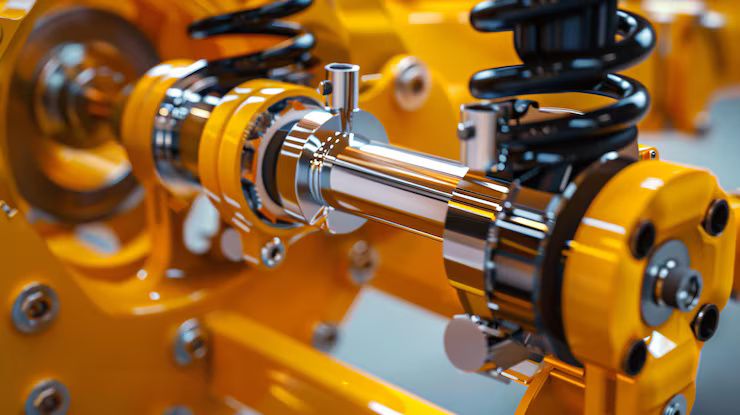
Hydraulic cylinders are mechanical actuators that convert hydraulic pressure into linear force and motion. They are widely used in hydraulic systems that power heavy equipment, industrial machinery, construction vehicles, agricultural equipment, manufacturing lines, and material handling systems. By using pressurized hydraulic fluid, these cylinders can move, lift, push, pull, or position loads with controlled force.
The development of hydraulic cylinders has evolved alongside industrial engineering and manufacturing technologies. Modern production methods combine precision machining, advanced materials, automated inspection, and quality testing to produce components capable of operating under demanding conditions. Today, hydraulic cylinders remain an essential part of industrial applications where reliable linear movement is required.
As industries continue adopting automation and digital monitoring, hydraulic cylinders are increasingly integrated with sensors, predictive maintenance systems, and intelligent control technologies. These developments improve operational visibility while supporting safer and more efficient equipment performance.
Context
What Are Hydraulic Cylinders?
A hydraulic cylinder is a device that transforms the energy of pressurized hydraulic fluid into straight-line mechanical motion. It consists of several precision-engineered components working together inside a sealed housing.
The primary parts of a hydraulic cylinder include:
- Cylinder barrel
- Piston
- Piston rod
- End caps
- Seals
- Hydraulic ports
- Bearings and bushings
When hydraulic fluid enters the cylinder, pressure moves the piston, causing the rod to extend or retract depending on the system design.
How Hydraulic Systems Work
Hydraulic systems use fluid pressure to transmit energy throughout a machine. A hydraulic pump generates pressure, control valves direct fluid flow, and hydraulic cylinders perform the required movement.
The basic operating sequence includes:
- Hydraulic fluid is pressurized by a pump.
- Control valves direct fluid into the cylinder.
- The piston moves inside the barrel.
- The piston rod creates linear motion.
- Fluid exits through the return port as movement is completed.
Because liquids are difficult to compress, hydraulic systems can generate significant force while maintaining controlled movement.
Common Types of Hydraulic Cylinders
Different applications require different cylinder designs.
| Hydraulic Cylinder Type | Main Feature | Typical Applications |
|---|---|---|
| Single-acting cylinder | Pressure applied in one direction | Lifting equipment |
| Double-acting cylinder | Pressure applied in both directions | Industrial machinery |
| Telescopic cylinder | Multiple extending stages | Dump trucks, cranes |
| Tie-rod cylinder | External tie rods secure the cylinder | Manufacturing equipment |
| Welded cylinder | Compact welded construction | Construction machinery |
| Ram cylinder | Large-diameter piston | Heavy-duty hydraulic equipment |
Each type is selected according to movement requirements, available installation space, and operating conditions.
Hydraulic Cylinder Manufacturing Technologies
Modern hydraulic cylinder manufacturing combines traditional engineering with advanced production technologies.
Manufacturing processes typically include:
- Precision machining
- CNC turning and milling
- Cylinder tube honing
- Rod grinding and polishing
- Heat treatment
- Surface coating
- Automated welding
- Dimensional inspection
- Pressure testing
These manufacturing technologies help produce components with accurate dimensions and reliable sealing performance.
Importance
Why Hydraulic Cylinders Matter
Hydraulic cylinders enable machines to move heavy loads smoothly and accurately. They provide controlled linear force in equipment that would otherwise require more complex mechanical systems.
Industries depend on hydraulic cylinders because they support:
- Heavy lifting
- Material positioning
- Machine operation
- Construction activities
- Agricultural processes
- Industrial manufacturing
Without hydraulic cylinders, many types of heavy equipment would not function as intended.
Supporting Industrial Productivity
Industrial operations rely on hydraulic systems to move equipment efficiently. Hydraulic cylinders help automate repetitive mechanical tasks while supporting consistent machine performance.
Applications include:
- Press machines
- Injection molding equipment
- Material handling systems
- Metal forming machinery
- Industrial robots
- Conveyor equipment
Reliable hydraulic motion contributes to smooth production workflows.
Applications Across Multiple Industries
Hydraulic cylinders are used in a wide range of industries.
Construction: Excavators, loaders, bulldozers, cranes, and lifting equipment use hydraulic cylinders for movement and load handling.
Agriculture: Tractors, harvesters, seeders, and hydraulic implements depend on cylinders for lifting and positioning.
Manufacturing: Production equipment uses hydraulic cylinders for pressing, clamping, assembly, and automated operations.
Mining: Heavy mining equipment relies on hydraulic systems to operate under demanding environmental conditions.
Marine: Hydraulic cylinders assist steering systems, cargo equipment, and offshore machinery.
Advantages of Hydraulic Systems
Hydraulic systems provide several operational benefits.
These include:
- High force generation
- Smooth linear movement
- Accurate positioning
- Compact mechanical design
- Adaptability for different machine sizes
- Compatibility with automated control systems
The exact performance depends on system design, operating conditions, and maintenance practices.
Recent Updates
Smart Hydraulic Cylinders
Between 2024 and 2026, manufacturers have continued integrating sensors into hydraulic cylinders. These smart cylinders can monitor stroke position, pressure, temperature, and operating conditions in real time.
Sensor data supports equipment monitoring and maintenance planning without changing the cylinder's primary operating principle.
Growth of Predictive Maintenance
Predictive maintenance technologies have become increasingly common in hydraulic systems. By analyzing operational data, maintenance teams can identify changing equipment conditions before scheduled inspections.
Monitoring systems may evaluate:
- Pressure patterns
- Temperature changes
- Operating cycles
- Seal condition indicators
- Fluid performance
These technologies support maintenance planning while reducing unexpected equipment interruptions.
Advanced Surface Engineering
Manufacturing technologies continue to improve cylinder durability through advanced coatings, improved rod finishing, and enhanced corrosion resistance.
These developments are particularly important for equipment operating in harsh industrial environments such as mining, marine applications, and construction.
Automation and Digital Integration
Industrial automation increasingly connects hydraulic cylinders with programmable logic controllers (PLCs), industrial sensors, and supervisory control systems.
Digital integration supports:
- Real-time monitoring
- Motion control
- Equipment diagnostics
- Production analysis
- Maintenance documentation
Improved Manufacturing Processes
Precision manufacturing technologies such as CNC machining, automated welding, laser measurement, and computer-controlled inspection continue improving production consistency across hydraulic cylinder manufacturing.
Laws or Policies
Manufacturing Quality Standards
Hydraulic cylinder production commonly follows internationally recognized quality management standards to maintain manufacturing consistency, material traceability, and inspection procedures.
Organizations often implement documented quality systems throughout production.
Industrial Safety Regulations
Hydraulic equipment operates under workplace safety regulations covering machinery operation, pressure systems, maintenance procedures, and employee protection.
Safe operation typically includes:
- Routine inspections
- Pressure testing
- Leak prevention
- Proper installation
- Equipment maintenance
Specific requirements depend on national regulations and industry sectors.
Pressure Equipment Requirements
Many hydraulic components are manufactured according to engineering standards related to pressure-containing equipment. These standards help establish requirements for materials, testing, and product documentation.
The applicable standards vary by country and application.
Environmental Considerations
Industries increasingly focus on environmentally responsible hydraulic fluid management, leak prevention, waste handling, and recycling of hydraulic components during maintenance and equipment replacement.
Tools and Resources
Hydraulic Cylinder Design Software
Engineering software assists with cylinder sizing, load calculations, pressure evaluation, and mechanical design before production begins.
Hydraulic System Calculators
Engineers commonly use calculation tools for:
- Cylinder force
- Fluid pressure
- Bore diameter
- Rod diameter
- Stroke length
- Hydraulic flow
These calculations support equipment design and performance evaluation.
CAD Platforms
Computer-aided design (CAD) software is widely used to create detailed hydraulic cylinder models, manufacturing drawings, and assembly documentation.
Condition Monitoring Systems
Digital monitoring platforms collect operational information from hydraulic equipment, including pressure, temperature, operating cycles, and maintenance records.
Engineering Resources
People interested in hydraulic systems can learn from:
- Engineering standards organizations
- Hydraulic engineering publications
- Manufacturing technology journals
- Industrial automation resources
- Equipment maintenance manuals
- Technical training materials
These resources explain hydraulic principles, manufacturing technologies, inspection methods, and equipment operation.
FAQs
What is a hydraulic cylinder?
A hydraulic cylinder is a mechanical actuator that converts hydraulic pressure into straight-line motion and force for lifting, pushing, pulling, or positioning equipment.
What are the main types of hydraulic cylinders?
Common types include single-acting cylinders, double-acting cylinders, telescopic cylinders, tie-rod cylinders, welded cylinders, and ram cylinders. Each is designed for different hydraulic system applications.
How are hydraulic cylinders manufactured?
Hydraulic cylinder manufacturing typically includes precision machining, CNC processing, honing, rod finishing, heat treatment, welding, assembly, inspection, and pressure testing to verify performance and dimensional accuracy.
Where are hydraulic systems and hydraulic cylinders used?
Hydraulic systems and hydraulic cylinders are widely used in construction equipment, agricultural machinery, manufacturing plants, mining equipment, marine applications, transportation, and industrial automation.
Why are hydraulic cylinders important in industrial applications?
Hydraulic cylinders provide controlled linear movement and high force generation, allowing machinery to lift, press, clamp, position, and move heavy loads efficiently across many industrial applications.
Conclusion
Hydraulic cylinders are fundamental components of modern hydraulic systems, converting fluid pressure into controlled mechanical motion for countless industrial applications. Advances in manufacturing technologies, digital monitoring, and automation continue improving their reliability, precision, and integration with modern equipment. From construction and agriculture to manufacturing and mining, hydraulic cylinders remain essential for powering machines that require dependable linear force and movement.