Industrial chemical blending is an important part of manufacturing processes where two or more chemical materials are combined to create a consistent product.
Although blending may appear straightforward, achieving uniform composition, stable properties, and repeatable production requires careful consideration of materials, equipment, process conditions, and quality controls.
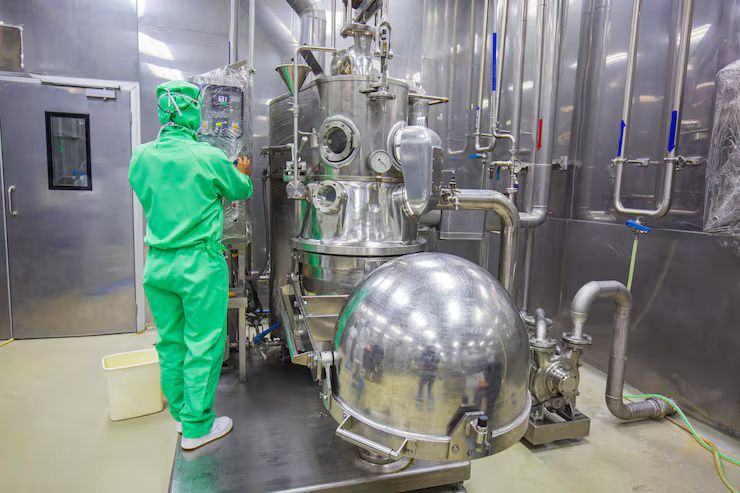
From liquid formulations and powdered compounds to specialty industrial products, blending systems are designed around the physical and chemical characteristics of the materials being processed. Understanding these fundamentals helps manufacturers, engineers, operators, and technical learners recognize how industrial mixing works and why different equipment configurations are used.
What Is Industrial Chemical Blending?
Industrial chemical blending is the controlled process of combining multiple ingredients or chemical components into a homogeneous mixture. The objective is generally to distribute each component consistently throughout the finished material.
A blending process may involve:
- Two or more liquids
- Liquids and solids
- Dry powders
- Granular materials
- Viscous compounds
- Suspensions or emulsions
- Heat-sensitive or reactive materials
The required blending method depends on factors such as viscosity, particle size, density, temperature, solubility, moisture content, and chemical compatibility.
Unlike simple stirring, industrial blending often requires carefully controlled movement of materials. Poor mixing can create concentration differences, unwanted sedimentation, agglomeration, or inconsistent product characteristics.
Why Consistency Matters in Chemical Production
Consistency is one of the central objectives of chemical blending. When ingredients are not evenly distributed, different portions of a batch may have different physical or chemical properties.
For example, variations in composition can affect:
- Product performance
- Appearance
- Viscosity
- Concentration
- Stability
- Reaction behavior
- Storage characteristics
- Downstream processing
A well-designed blending process helps reduce these variations by controlling how materials enter the mixer, how they circulate, and how long they remain under mixing conditions.
Batch and continuous processes may both be used. Batch blending processes combine a defined quantity of materials during a production cycle, while continuous systems introduce and blend ingredients as materials move through the process.
Understanding Chemical Blending Equipment
Chemical blending equipment provides the mechanical action needed to distribute materials throughout a mixture. The equipment configuration is selected according to the characteristics of the materials and the desired result.
Common components can include:
- Mixing vessels
- Agitators
- Impellers
- Motors and drives
- Pumps
- Valves
- Heating or cooling systems
- Feed systems
- Sensors and control instruments
A mixing vessel provides the environment in which materials are combined. Inside the vessel, an agitator or impeller generates movement. Different impeller designs produce different flow patterns, making some configurations more suitable for low-viscosity liquids and others for thicker materials.
The equipment must also be compatible with the chemical environment. Material selection for tanks, shafts, seals, and other components can influence durability and process reliability.
Types of Industrial Mixing Equipment
There is no single type of chemical mixing equipment suitable for every application. Equipment is typically selected according to the properties of the materials and the required degree of mixing.
Paddle and Propeller Mixers
Paddle and propeller designs are commonly associated with liquid mixing. Their geometry influences circulation and turbulence inside the vessel.
Propeller-style mixers can create strong fluid movement, while paddle designs may be appropriate where gentler circulation is required.
High-Shear Mixers
High-shear equipment generates intense localized mixing forces. These systems can be useful when materials need substantial dispersion or when fine particles must be distributed through a liquid.
The appropriate operating conditions depend on viscosity, particle characteristics, temperature, and formulation requirements.
Ribbon Blenders
Ribbon blenders are commonly associated with dry powders and granular materials. Their internal ribbon elements move materials through the mixing chamber, encouraging distribution across the batch.
They can be useful when handling dry ingredients that require relatively uniform blending.
Planetary Mixers
Planetary mixing systems are designed for materials with relatively high viscosity. Their mixing elements move through the material while also rotating around their own axes.
This movement can help process thick compounds that would be difficult to mix with conventional liquid agitators.
How Chemical Blending Systems Work
A typical chemical blending system follows several basic stages.
First, the required raw materials are identified and prepared according to the formulation or process specification. Materials may need screening, filtration, weighing, temperature adjustment, or other preparation before entering the mixer.
Next, ingredients are introduced into the blending vessel. The order of addition can be important because some materials disperse more easily when added at particular stages.
The mixing equipment then generates controlled movement. Depending on the application, the process may involve circulation, dispersion, suspension, dissolution, or homogenization.
During blending, process parameters such as temperature, mixing speed, pressure, and batch duration may be monitored. Once the required degree of uniformity is reached, the finished mixture can proceed to the next production stage.
Factors That Influence Mixing Performance
Several variables determine how effectively a chemical blending process works.
Viscosity: Thick materials require more mechanical energy to move and distribute than low-viscosity liquids.
Density: Large density differences between components can encourage separation, making appropriate circulation important.
Particle size: Powder characteristics influence how quickly solids disperse and whether agglomerates form.
Temperature: Temperature can change viscosity and other material properties. Heating or cooling may therefore influence mixing behavior.
Mixing speed: Increasing speed can change turbulence and circulation, but excessive agitation may introduce unwanted effects such as air entrainment or excessive heat generation.
Mixing time: Longer operation does not automatically produce better results. The appropriate duration depends on the formulation and equipment.
Equipment geometry: Vessel shape, impeller position, baffles, and internal dimensions affect fluid movement.
Understanding these factors allows process designers to evaluate blending requirements more systematically.
Batch Versus Continuous Blending
Batch blending is useful when a specific quantity of ingredients is processed together. It provides a defined production cycle and can accommodate formulations that change between batches.
Continuous blending operates differently. Materials are continuously introduced, mixed, and discharged. This approach can support processes where consistent material flow and controlled production conditions are important.
The choice between batch and continuous chemical blending depends on production characteristics, material behavior, formulation requirements, and process-control needs.
Process Control and Quality Monitoring
Modern chemical blending systems can incorporate sensors and automated controls to monitor important operating conditions.
Temperature sensors can help track thermal conditions, while flow and level instruments can help control material movement. Other measurements may be used to monitor pressure, speed, density, or other process characteristics.
Quality monitoring can also involve sampling and laboratory analysis. Depending on the product, testing may examine concentration, viscosity, particle distribution, moisture, appearance, or other relevant properties.
Combining process controls with appropriate testing helps identify variations and supports repeatable production.
Safety Considerations in Chemical Blending
Chemical blending requires careful attention to process safety because materials can have different physical and chemical properties. Some combinations may generate heat, pressure, vapors, or other process hazards.
Important considerations can include appropriate equipment materials, ventilation, temperature control, containment, electrical requirements, and operating procedures.
Compatibility between ingredients should also be evaluated before materials are combined. Equipment design should account for the characteristics of the chemicals being processed and the conditions under which blending occurs.
Safe operation depends on suitable engineering controls, documented procedures, trained personnel, and appropriate monitoring.
Choosing an Appropriate Blending Approach
Selecting chemical blending equipment begins with understanding the material rather than simply choosing a mixer based on capacity.
Key questions include:
- What are the physical properties of each ingredient?
- Are the materials liquids, solids, powders, or combinations?
- What viscosity range is involved?
- Is heating or cooling required?
- Does the process require dispersion, dissolution, suspension, or homogenization?
- Is the process batch-based or continuous?
- What level of uniformity is required?
- What process conditions need to be monitored?
Answering these questions helps connect the characteristics of the formulation with the appropriate equipment design.
Conclusion
Industrial chemical blending combines materials under controlled conditions to produce consistent and usable formulations. The effectiveness of a blending process depends on much more than simply moving ingredients together. Material properties, equipment geometry, mixing intensity, temperature, processing time, and quality controls all influence the final result.
Understanding chemical blending equipment and chemical blending systems provides a useful foundation for evaluating industrial production processes. Whether a facility handles liquids, powders, viscous compounds, or complex formulations, the central objective remains the same: achieve controlled and repeatable mixing while maintaining appropriate process and safety conditions.
For engineers, operators, manufacturers, and technical learners, a clear understanding of these fundamentals makes it easier to interpret how chemical mixing equipment fits into modern industrial production.