
Industrial gas turbines are among the most important power generation technologies used across manufacturing facilities, energy plants, refineries, and utility operations. Known for their ability to generate substantial amounts of power while maintaining operational flexibility, gas turbines play a significant role in supporting modern industrial infrastructure.
Gas turbines are used in power plants, manufacturing facilities, oil and gas operations, and various industrial environments where dependable energy production is required. Their ability to generate significant amounts of power while operating continuously has made them a key component of modern energy systems.
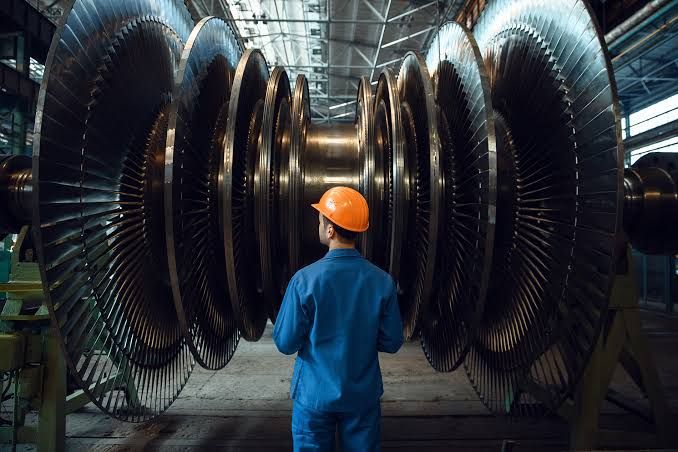
This guide provides an overview of Industrial Gas Turbine technology, including its working principles, major components, applications, operational advantages, and emerging industry trends.
What Is an Industrial Gas Turbine?
An Industrial Gas Turbine is a rotating machine that converts the energy contained in fuel into mechanical energy and electricity. It operates through a continuous combustion process that produces high-temperature gases. These gases flow through turbine blades, causing the turbine shaft to rotate.
The rotating shaft can be connected to:
Electrical generators
Compressors
Pumps
Industrial machinery
Mechanical drive systems
Industrial gas turbines are widely used in both power generation and industrial process applications because of their ability to produce substantial energy output within a relatively compact footprint.
Why Industrial Gas Turbines Are Important
Modern industries require stable and efficient energy sources to support operations around the clock.
Industrial gas turbines help meet these needs by:
Generating electricity for industrial facilities
Supporting utility-scale power generation
Driving mechanical equipment
Providing operational flexibility
Supporting continuous energy production
Their ability to respond quickly to changing power demands makes them valuable in many operational environments.
How an Industrial Gas Turbine Works
Although gas turbine technology involves advanced engineering, the basic operating process can be understood through three primary stages.
1. Air Compression
The process begins when ambient air enters the turbine through the air intake system.
A compressor then:
Draws in air
Compresses the air
Increases air pressure
Compressed air is essential for the combustion process that follows.
2. Combustion
Compressed air enters the combustion chamber where fuel is introduced.
Within the combustion chamber:
Fuel mixes with compressed air
Combustion occurs
High-temperature gases are produced
This process generates the energy needed to drive the turbine.
3. Expansion Through the Turbine
The hot gases flow through turbine blades.
As the gases expand:
Turbine blades rotate
Mechanical energy is generated
The shaft begins turning
Part of the generated energy powers the compressor, while the remaining energy is available for electricity generation or industrial applications.
Main Components of an Industrial Gas Turbine
Several critical components work together to support turbine operation.
Air Intake System
The air intake system supplies clean air to the compressor.
Its functions include:
Filtering contaminants
Managing airflow
Supporting efficient operation
Air quality directly influences turbine performance and reliability.
Compressor
The compressor increases air pressure before combustion.
Modern compressors typically contain multiple stages that gradually raise pressure levels while maintaining airflow stability.
Combustion Chamber
The combustion chamber is where fuel and compressed air combine.
This component is designed to:
Maintain controlled combustion
Produce high-temperature gases
Support stable turbine operation
Efficient combustion is important for overall performance.
Turbine Section
The turbine section extracts energy from the expanding gases.
Its rotating blades convert thermal energy into mechanical motion.
This mechanical motion powers both the compressor and external equipment.
Exhaust System
After passing through the turbine, exhaust gases exit through the exhaust system.
In some facilities, the remaining heat is captured and used for additional energy production.
Types of Industrial Gas Turbines
Industrial gas turbines are available in various configurations depending on operational requirements.
Heavy-Duty Gas Turbines
Heavy-duty turbines are commonly used in large-scale power generation facilities.
Characteristics include:
High power output
Continuous operation capability
Long operational lifecycles
These turbines are often found in utility power stations.
Aeroderivative Gas Turbines
Aeroderivative turbines are derived from aircraft engine technology.
Features often include:
Lower weight
Faster startup times
Flexible operation
These units are frequently used in industrial and offshore applications.
Small Industrial Gas Turbines
Smaller turbines are used in facilities with lower energy requirements.
Applications may include:
Manufacturing plants
Commercial facilities
Distributed energy systems
Their compact size allows installation in a wider variety of environments.
Applications of Industrial Gas Turbines
Industrial gas turbines support many sectors of the global economy.
Power Generation
One of the most common applications is electricity generation.
Gas turbines help produce electricity for:
Utility networks
Industrial facilities
Regional power systems
They are often integrated into larger energy generation strategies.
Oil and Gas Industry
The oil and gas sector uses turbines for:
Gas compression
Pipeline operations
Offshore platforms
Processing facilities
These applications require dependable mechanical power.
Manufacturing Operations
Manufacturing facilities may use gas turbines to support:
Industrial production processes
Facility energy requirements
Mechanical drive systems
Reliable energy production contributes to operational continuity.
Combined Cycle Power Plants
Combined cycle facilities use both gas turbines and steam turbines.
In these systems:
The gas turbine generates electricity.
Exhaust heat produces steam.
The steam powers an additional turbine.
This approach improves overall energy utilization.
Advantages of Industrial Gas Turbines
Several characteristics contribute to the widespread use of gas turbines.
High Power Output
Gas turbines can generate substantial energy from a relatively compact machine.
Operational Flexibility
Many systems can adjust output levels based on changing demand conditions.
Fast Startup Capability
Compared with some traditional power generation technologies, gas turbines can reach operating conditions relatively quickly.
Compact Design
Gas turbines generally require less installation space than some alternative power generation systems.
Compatibility With Multiple Applications
The same technology can support power generation, mechanical drive operations, and industrial processes.
Factors Affecting Performance
Several operational factors influence turbine efficiency and performance.
Ambient Temperature
Higher temperatures may affect air density and turbine output.
Air Quality
Clean intake air supports reliable operation and reduces component wear.
Fuel Characteristics
Fuel quality influences combustion efficiency and system stability.
Maintenance Practices
Routine inspections and maintenance help maintain performance and equipment reliability.
Understanding these factors helps operators optimize turbine operation.
Safety and Environmental Considerations
Modern industrial gas turbines are designed with safety and environmental objectives in mind.
Common considerations include:
Emission management systems
Combustion monitoring
Temperature control systems
Vibration monitoring
Automated shutdown functions
These measures support safe and reliable operation.
Emerging Trends in Industrial Gas Turbine Technology
The gas turbine industry continues to evolve through technological innovation.
Current developments include:
Advanced Digital Monitoring
Digital systems help operators monitor performance in real time.
Artificial Intelligence Applications
AI-assisted analytics support predictive maintenance and operational insights.
Improved Combustion Technologies
New combustion approaches aim to improve fuel utilization and reduce emissions.
Hybrid Energy Integration
Gas turbines are increasingly integrated with renewable energy systems to support grid stability.
Enhanced Materials
Advanced materials help turbines operate at higher temperatures and improve durability.
These innovations continue to shape the future of industrial energy systems.
Future Outlook
Industrial gas turbines are expected to remain an important part of global energy infrastructure.
Future developments may focus on:
Improved operational efficiency
Lower emissions
Advanced automation
Greater integration with renewable energy sources
Enhanced digital control systems
As industries continue to modernize, gas turbine technology will likely play a significant role in supporting reliable energy production.
Conclusion
The Industrial Gas Turbine is a critical technology used in power generation, manufacturing, oil and gas operations, and utility infrastructure. By converting fuel energy into mechanical and electrical power, these systems support a wide range of industrial activities and energy requirements.
Understanding how gas turbines work, their major components, operational advantages, and applications provides valuable insight into their importance within modern industry. As technology continues to advance, industrial gas turbines are expected to evolve further, supporting efficient, flexible, and reliable energy production for years to come.