Industrial technology development is reshaping how factories, production facilities, warehouses, utilities, and other industrial environments operate.
Advances in automation, connected equipment, artificial intelligence, data analytics, and digital engineering are creating production systems that are more connected, responsive, and information-driven.
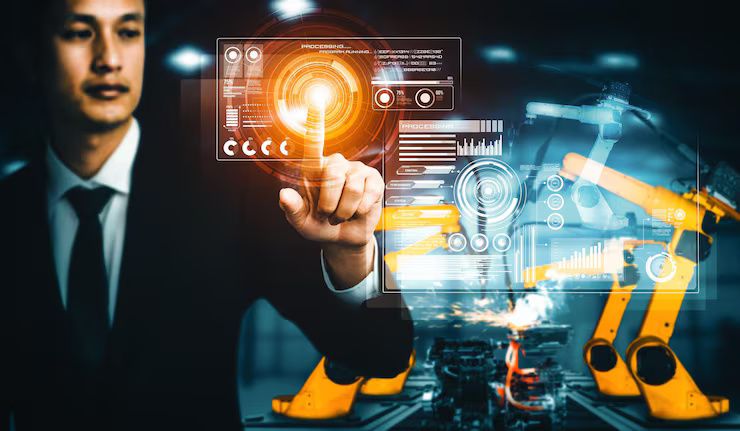
Modern industrial development is no longer limited to replacing manual processes with automated machines. It increasingly involves connecting physical equipment with software platforms, collecting operational data, improving decision-making, and creating systems that can adapt to changing production requirements. Technologies such as digital twins, industrial Internet of Things (IIoT), robotic process automation, and smart factory integration are becoming important parts of this transformation.
This guide explains the foundations of industrial technology development, major methods being adopted, important technology areas, implementation considerations, and trends shaping the future of Industry 4.0.
What Is Industrial Technology Development?
Industrial technology development refers to the continuous improvement and integration of technologies used to design, manufacture, monitor, manage, and maintain industrial operations.
It combines several disciplines, including:
- Industrial automation
- Robotics
- Artificial intelligence
- Industrial IoT
- Data analytics
- Digital engineering
- Cloud and edge computing
- Cybersecurity
- Advanced manufacturing
The objective is not simply to introduce more technology. Effective development focuses on solving operational problems, improving visibility, supporting workers, increasing consistency, and making industrial processes easier to manage.
How Industrial Technology Has Evolved
Traditional industrial environments often relied on isolated machines, manual monitoring, and periodic maintenance. Modern systems increasingly connect machines, sensors, software, and operational teams through integrated digital infrastructure.
This evolution is commonly associated with Industry 4.0, where physical production systems are connected with digital technologies.
A modern production environment may collect information from equipment, analyze operating conditions, identify changes in performance, and provide useful information to operators. This creates a continuous relationship between physical operations and digital decision-making.
The transition is gradual, and many facilities operate a combination of legacy equipment and newer connected technologies.
Digital Twin Production Optimization
Digital twins are one of the important developments in modern industrial technology. A digital twin is a digital representation of a physical machine, production line, facility, or process that can be updated using operational information.
In production environments, digital twins can help organizations understand how equipment and processes behave under different conditions.
Digital twin production optimization can support areas such as:
- Production planning
- Equipment performance analysis
- Process simulation
- Maintenance planning
- Workflow evaluation
- Capacity assessment
- Operational monitoring
Instead of experimenting directly with physical production systems, engineers can use digital models to evaluate potential changes before applying them to real operations.
The value of a digital twin depends heavily on the quality, accuracy, and timeliness of the information used to maintain the model.
Industrial IoT and Connected Operations
Industrial IoT connects machines, sensors, controllers, and other industrial assets so that operational information can be collected and shared.
An Industrial IoT platform can provide a central environment for organizing equipment data, monitoring processes, and connecting different operational applications.
Industrial IoT platform providers typically support capabilities such as:
- Device connectivity
- Data collection
- Equipment monitoring
- Analytics
- Alerts and notifications
- Dashboard development
- Integration with business systems
The most useful IIoT implementations focus on meaningful operational information rather than collecting data without a clear purpose.
AI-Powered Robotic Process Automation in Industry
Artificial intelligence and robotic process automation are increasingly being combined to improve repetitive industrial and administrative workflows.
AI-powered robotic process automation industrial applications can support tasks such as data processing, document handling, workflow coordination, inspection assistance, and information transfer between systems.
In physical production environments, AI can also support machine vision, quality analysis, predictive maintenance, and process monitoring.
The important distinction is that automation should complement human expertise rather than remove the need for appropriate oversight. Workers remain important for interpreting complex situations, managing exceptions, and making decisions that require contextual understanding.
Smart Factory Integration Services
A smart factory depends on communication between machines, production software, sensors, data platforms, and human operators.
Smart factory integration services generally focus on connecting these different components into a coordinated environment.
Integration may involve:
- Production equipment
- Manufacturing execution systems
- Enterprise software
- Industrial controllers
- Sensors
- Analytics platforms
- Cloud infrastructure
- Edge computing systems
Successful integration requires careful consideration of existing infrastructure. Older equipment may not have modern connectivity features, meaning industrial modernization often involves creating connections between legacy systems and newer digital platforms.
Industrial Cybersecurity for Industry 4.0
As industrial systems become more connected, cybersecurity becomes an important part of technology development. Industrial cybersecurity for Industry 4.0 focuses on protecting connected operational environments while maintaining reliability and availability.
Modern industrial cybersecurity programs may include:
- Access management
- Network segmentation
- System monitoring
- Security updates
- Device management
- Incident preparedness
- Backup and recovery planning
- Employee awareness
Industrial cybersecurity differs from ordinary office IT security because production systems may have strict uptime, safety, and operational requirements. Security improvements therefore need to be designed around the characteristics of industrial environments.
A balanced approach protects systems without unnecessarily disrupting legitimate production activities.
Methods for Successful Industrial Technology Development
Technology adoption is more effective when it follows a structured process.
Identify Operational Needs
Start with specific challenges rather than selecting technology simply because it is new. Problems may involve downtime, quality variation, inefficient workflows, limited visibility, or difficulty managing large volumes of operational information.
Assess Existing Infrastructure
A detailed assessment should consider equipment age, software systems, communication protocols, data availability, workforce capabilities, and existing automation.
Prioritize High-Value Applications
Organizations can begin with clearly defined applications that have measurable operational objectives. A focused implementation can provide useful experience before technology is expanded across larger parts of a facility.
Build Interoperability
Industrial environments often contain equipment from different generations and manufacturers. Interoperability allows information to move between systems without requiring every component to be replaced.
Develop Workforce Skills
Technology transformation also requires people with appropriate technical and operational knowledge. Training can help employees understand new systems, interpret data, and manage changing workflows.
Benefits of Modern Industrial Technology
When appropriately implemented, industrial technologies can provide several operational advantages.
Connected systems can improve visibility into equipment and processes. Automation can reduce repetitive manual work and improve consistency. Analytics can help teams identify patterns that may otherwise be difficult to recognize.
Other potential benefits include:
- Better production monitoring
- Improved process consistency
- More informed maintenance planning
- Faster access to operational information
- Improved resource management
- Greater production flexibility
- Stronger quality monitoring
The actual results depend on technology selection, implementation quality, workforce adoption, and the characteristics of the industrial environment.
Challenges in Industrial Technology Development
Industrial modernization also introduces challenges.
Legacy equipment can make integration complicated. Poor-quality data can limit the usefulness of analytics and artificial intelligence. Different systems may use incompatible communication standards, while insufficient workforce training can slow adoption.
Organizations must also consider reliability, safety, cybersecurity, data governance, and long-term system maintenance.
These challenges demonstrate why industrial technology development should be approached as an ongoing process rather than a single technology installation.
Future Trends in Industrial Technology
Several trends are likely to influence industrial development in the coming years.
Artificial intelligence will continue to expand across quality monitoring, predictive analysis, process optimization, and decision support. Digital twins are expected to become more detailed as industrial data becomes easier to collect and analyze.
Edge computing will remain important where rapid local processing is required, while cloud platforms can support broader analytics and coordination.
Other emerging trends include:
- Autonomous industrial systems
- Advanced machine vision
- Collaborative robotics
- Industrial AI assistants
- Energy optimization
- Sustainable manufacturing technologies
- More connected supply chains
- Integrated digital engineering
The strongest industrial environments will likely combine these technologies rather than depend on one solution.
Frequently Asked Questions
What is industrial technology development?
Industrial technology development is the process of improving industrial operations through automation, connected systems, artificial intelligence, robotics, data analytics, digital engineering, and related technologies.
How does a digital twin support production optimization?
A digital twin creates a digital representation of a physical asset or process. It can help teams analyze performance, simulate changes, monitor conditions, and evaluate potential process improvements.
What is the role of Industrial IoT platforms?
Industrial IoT platforms connect equipment and data sources, helping organizations collect, organize, monitor, and analyze operational information across industrial environments.
Why is cybersecurity important for Industry 4.0?
Greater connectivity creates additional digital dependencies. Industrial cybersecurity helps protect connected operational systems while supporting reliability, availability, and responsible access.
What is the future of smart factory technology?
Future smart factories are likely to combine artificial intelligence, robotics, digital twins, IIoT, edge computing, advanced analytics, and integrated control systems to create more adaptive and data-driven operations.
Conclusion
Industrial technology development is moving from isolated automation toward interconnected, intelligent, and data-driven operational environments. Digital twin production optimization, Industrial IoT, AI-supported automation, smart factory integration, and industrial cybersecurity are becoming important elements of this transition.
However, successful modernization depends on more than adopting advanced technologies. Organizations need clear operational objectives, compatible infrastructure, reliable data, skilled workers, appropriate security practices, and a practical implementation strategy.
As Industry 4.0 continues to develop, the most effective industrial environments will be those that combine technological innovation with human expertise. The goal is not simply to create more automated factories, but to build industrial systems that are more visible, adaptable, efficient, secure, and capable of supporting informed decisions over the long term.