Welding is one of the most important joining processes used in modern manufacturing, construction, transportation, energy, and industrial fabrication.
It allows separate pieces of metal to be joined into strong, permanent structures by applying controlled heat, pressure, or a combination of both. As industrial requirements have become more demanding, welding has evolved from relatively simple manual processes into highly controlled systems supported by electronics, automation, sensors, and computer-based monitoring.
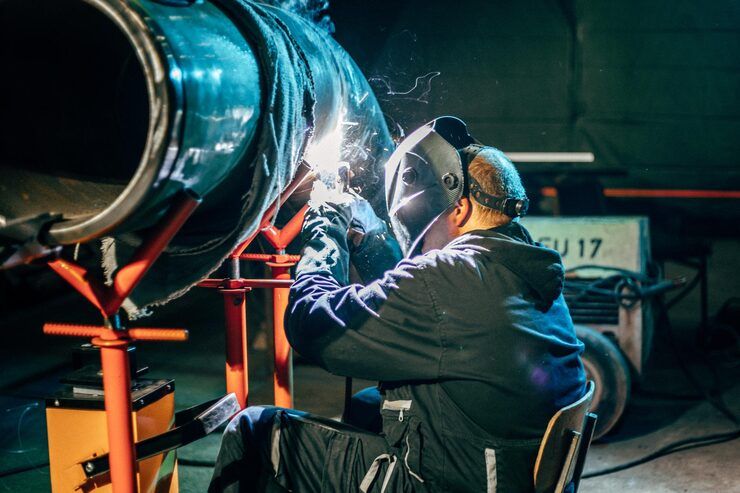
Modern industrial welding equipment is designed to provide consistent results while accommodating different metals, material thicknesses, production speeds, and working environments. Understanding how these systems operate makes it easier to appreciate their role in manufacturing and fabrication.
This guide explains the fundamentals of industrial welding equipment, the main welding processes, key system components, automation technologies, safety considerations, and factors that influence equipment selection.
What Is Industrial Welding Equipment?
Industrial welding equipment includes the machines, power sources, tools, control systems, accessories, and supporting components used to join metal parts through welding processes.
A typical welding system may include a welding power source, torch or electrode holder, cables, shielding gas equipment, control interfaces, cooling equipment, and material-handling components. More advanced installations may also include robotic arms, positioners, sensors, automated feeders, and production monitoring software.
The equipment selected depends on the welding method, material, joint design, required production rate, and level of automation.
How Modern Welding Systems Work
Although welding processes differ, the basic principle involves creating conditions that allow two or more materials to form a strong joint.
In many systems, an electrical power source produces an arc between an electrode and the workpiece. The resulting heat melts the metal at the joint. Filler material may be introduced to fill the joint, while shielding gas or another protective method helps prevent atmospheric contamination.
As the molten material cools, it solidifies and creates the welded connection.
Modern welding machines regulate important operating parameters such as current, voltage, wire-feed speed, travel speed, and heat input. Digital controls allow operators to select or adjust settings more precisely than traditional mechanical controls.
Major Types of Industrial Welding Processes
Different applications require different welding technologies. The most common processes include several distinct approaches.
MIG and GMAW Welding
Gas Metal Arc Welding, commonly known as MIG welding, uses a continuously fed wire electrode and shielding gas. The wire serves as both the electrode and, in many applications, the filler material.
MIG systems are widely used because they can provide relatively high productivity and can be adapted to automated production environments.
TIG and GTAW Welding
Gas Tungsten Arc Welding, commonly called TIG welding, uses a non-consumable tungsten electrode. Filler material can be added separately when required.
TIG welding provides precise control and is often used when weld quality, appearance, and control of heat input are particularly important.
Stick and SMAW Welding
Shielded Metal Arc Welding uses a consumable coated electrode. The coating produces shielding gases and slag during welding.
Stick welding remains useful for many maintenance, repair, construction, and field applications because its equipment can be relatively portable and does not depend on a continuous external shielding-gas supply.
Flux-Cored Arc Welding
Flux-Cored Arc Welding uses a tubular wire containing flux. Depending on the process, additional shielding gas may or may not be required.
This method is used in applications where productivity and penetration characteristics are important.
Resistance Welding
Resistance welding generates heat through electrical resistance between materials under pressure. Spot welding is a well-known example.
It is particularly important in high-volume manufacturing environments where repeated joints can be produced rapidly and consistently.
Key Components of Industrial Welding Systems
Understanding the main components helps explain how welding equipment delivers controlled performance.
Power Source
The power source provides and regulates the electrical energy required by the welding process. Modern inverter-based power sources can provide precise control while being more compact than many older designs.
Welding Torch or Electrode Holder
The torch or electrode holder transfers energy and, depending on the process, delivers electrode or filler material to the joint.
Wire-Feeding System
In processes using continuous wire electrodes, a wire feeder controls the movement of welding wire toward the torch. Consistent feeding is important for stable welding conditions.
Shielding Gas System
Some welding processes use shielding gases to protect the molten weld pool from atmospheric contamination. Gas flow must be appropriately controlled for the selected application.
Cooling System
Certain high-duty welding systems generate substantial heat. Water- or air-based cooling systems can help manage temperatures and protect equipment components.
Control Interface
Modern machines commonly include digital displays, programmable settings, diagnostic information, and process controls that help operators manage welding parameters.
Automation in Modern Welding
Automation has transformed industrial welding by improving repeatability and reducing dependence on manual movement.
Robotic welding systems can move welding torches along programmed paths while maintaining consistent travel speeds and positioning. Automated systems are particularly useful for repetitive production tasks where joint geometry remains relatively consistent.
A modern automated welding cell may include:
- Robotic arms
- Welding power sources
- Positioners
- Automated wire feeders
- Sensors
- Safety systems
- Vision or seam-tracking technologies
- Production monitoring software
Automation does not eliminate the need for skilled personnel. Operators, technicians, and engineers remain important for programming, setup, inspection, maintenance, troubleshooting, and process optimization.
Sensors and Digital Welding Controls
Digital technology has become an important part of industrial welding equipment.
Sensors can monitor conditions such as electrical characteristics, temperature, position, and joint alignment. These measurements can help control the process and identify irregularities.
Some advanced systems also record welding data for quality monitoring and production documentation. This can be valuable in industries where traceability and consistent manufacturing processes are important.
Digital controls also allow welding parameters to be stored as predefined programs, reducing setup variation between production runs.
Choosing Welding Equipment for an Application
Selecting industrial welding equipment requires more than choosing a machine based on output capacity.
Several factors should be considered.
Material Type
Steel, stainless steel, aluminum, and other metals have different welding characteristics. Equipment must be compatible with the materials being joined.
Material Thickness
Thin sheet metal may require precise heat control, while thicker materials may require greater penetration and higher energy input.
Production Volume
A system designed for occasional fabrication may differ significantly from equipment intended for continuous industrial production.
Joint Design
Joint geometry influences electrode selection, torch access, welding position, and process requirements.
Level of Automation
Manual, semi-automatic, and robotic systems each have different equipment and operator requirements.
Working Environment
Indoor fabrication facilities, construction sites, maintenance areas, and specialized production environments can impose different requirements for portability, ventilation, power supply, and equipment protection.
Welding Quality and Process Control
A strong welded joint depends on consistent control of several variables.
Important factors include:
- Correct welding parameters
- Appropriate material preparation
- Proper joint alignment
- Suitable filler material
- Adequate shielding
- Consistent travel speed
- Appropriate heat input
- Equipment condition
Inspection methods can help identify issues such as porosity, cracking, incomplete fusion, undercutting, or dimensional inconsistencies.
Quality control should therefore be considered throughout the welding process rather than only after production is complete.
Safety Considerations for Industrial Welding
Welding involves heat, electrical energy, intense light, fumes, sparks, and other workplace hazards. Appropriate safety procedures are essential.
Basic precautions include using suitable protective clothing, welding helmets, gloves, eye protection, hearing protection where necessary, and appropriate respiratory or ventilation controls based on the work environment.
Work areas should also be kept clear of unnecessary combustible materials, and equipment should be inspected regularly for damaged cables, connections, hoses, and other components.
Proper training and adherence to applicable workplace safety requirements are important parts of responsible welding operations.
Maintenance of Welding Equipment
Regular maintenance supports reliable operation and can help identify developing equipment problems.
Maintenance activities may include inspecting cables and connections, cleaning equipment, checking wire-feeding components, examining torches and electrodes, maintaining cooling systems, and verifying gas delivery components.
Automated systems may require additional attention to robotic joints, sensors, positioning equipment, software, and programmed welding paths.
Preventive maintenance is generally more effective than waiting for equipment failure to interrupt production.
Future Trends in Industrial Welding
Welding technology continues to move toward greater automation, digital monitoring, and process intelligence.
Future developments are likely to include more sophisticated sensors, improved robotic coordination, automated seam tracking, real-time process monitoring, digital quality records, and data-driven maintenance.
Artificial intelligence may also assist with process analysis and defect detection, although human oversight remains important for engineering decisions, safety, and quality management.
These developments are gradually turning welding equipment into interconnected manufacturing systems rather than standalone machines.
Frequently Asked Questions
What is industrial welding equipment?
Industrial welding equipment consists of machines and supporting components used to join metals in manufacturing, fabrication, construction, repair, and other industrial applications.
Which welding process is best?
There is no single best welding process. The appropriate method depends on material type, thickness, joint design, production requirements, work environment, and desired weld characteristics.
What does a welding power source do?
A welding power source supplies and regulates the electrical energy required to establish and maintain the welding process.
Why is automation used in industrial welding?
Automation can improve repeatability, productivity, positioning accuracy, and process consistency, particularly for repetitive production tasks.
How important is welding equipment maintenance?
Regular maintenance helps support consistent operation, reduce unexpected interruptions, identify component wear, and maintain equipment performance.
Conclusion
Modern industrial welding equipment combines proven welding principles with advanced electrical controls, digital technology, automation, sensors, and monitoring systems. From MIG and TIG welding to resistance and robotic welding, each technology serves different manufacturing and fabrication requirements.
Choosing and operating welding equipment effectively requires attention to materials, joint design, production conditions, process control, safety, and maintenance. As industrial manufacturing becomes increasingly connected and automated, welding systems are also becoming more intelligent and data-driven.
Understanding how these systems work provides a useful foundation for evaluating welding processes and recognizing how modern welding technology contributes to reliable, efficient, and consistent industrial production.