A lab grown diamond ring features a diamond created through a controlled technological process rather than formed naturally underground. Lab grown diamonds have essentially the same chemical composition and crystal structure as mined diamonds, while their origin is different. They are commonly made using Chemical Vapor Deposition (CVD) or High Pressure High Temperature (HPHT) methods.
The diamond itself is only one part of a ring. The setting, metal, shape, proportions, and overall design can significantly influence its appearance. Understanding these elements helps readers compare different styles without relying only on visual impressions.
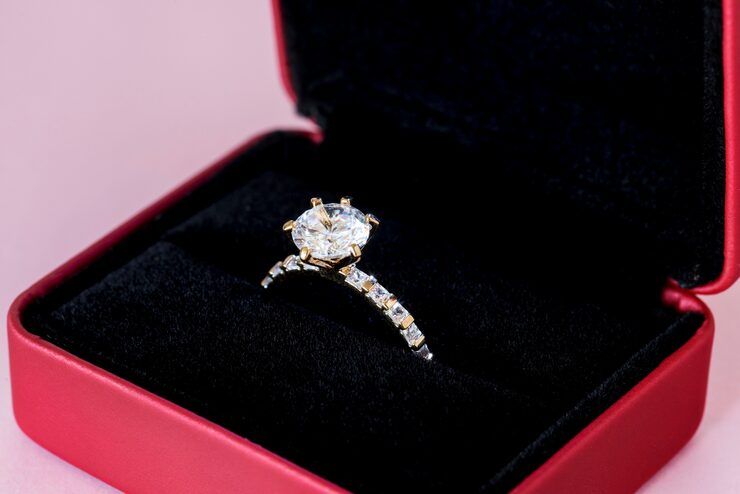
Lab grown diamonds are also used across many types of diamond jewellery. These include diamond rings, diamond necklaces, diamond earrings, diamond bracelets, pendants, tennis bracelets, studs, and other decorative pieces. A person interested in one type of jewellery may therefore find it useful to understand how diamond quality and setting principles apply across the wider jewellery category.
How Lab Grown Diamonds Are Created
CVD and HPHT are two established methods used to create laboratory-grown diamonds. CVD grows diamond material from a carbon-containing gas in a controlled chamber, while HPHT recreates conditions involving high pressure and high temperature that can form diamond material.
After growth, a diamond can be cut and polished into shapes such as:
- Round
- Princess
- Oval
- Emerald
- Cushion
- Pear
- Marquise
- Radiant
- Asscher
- Heart
The same diamond shape can appear quite different depending on its proportions, cutting pattern, setting, and surrounding metal.
Importance
Understanding lab grown diamond rings matters because jewellery involves several characteristics that are easy to confuse. A larger-looking diamond is not necessarily better cut, and a particular setting may change how large or bright a stone appears.
Quality assessment also involves more than the four commonly discussed characteristics: cut, color, clarity, and carat weight. For a lab grown diamond, information about its laboratory origin and grading documentation can also be relevant.
Why Setting Matters
The setting holds the diamond in place and contributes to the overall appearance of a ring. It also affects how much of the stone is visible and how much light can reach it.
Common ring settings include:
- Prong setting, which uses small metal claws to hold the stone.
- Bezel setting, which surrounds the outer edge of the diamond with metal.
- Halo setting, which places smaller diamonds around a central stone.
- Pavé setting, which places multiple small diamonds closely along the metal surface.
- Channel setting, where diamonds sit within a channel between metal edges.
- Tension-style setting, which visually holds the diamond between sections of metal.
For everyday wear, the setting also has a practical role. A design with exposed edges may have a different maintenance profile from a more enclosed setting.
Popular Lab Grown Diamond Ring Styles
Solitaire rings feature one central diamond and usually have a relatively simple design. They allow the center stone to remain the main visual element.
Halo rings surround a central diamond with smaller stones. This arrangement creates a wider overall outline and can produce a detailed appearance.
Three-stone rings contain a central diamond accompanied by two additional stones. The stones may be similar in shape or intentionally different.
Cluster rings use several diamonds arranged closely together to create a combined visual pattern. Their appearance depends strongly on stone sizes, shapes, and spacing.
Vintage-inspired rings may include detailed metalwork, milgrain edges, engraved patterns, or geometric arrangements. These features can make the setting itself an important part of the design.
Recent Updates
From 2024 through 2026, lab grown diamond jewellery has continued to receive attention as diamond-growing technology, grading practices, jewellery design, and consumer awareness develop. The market has also seen greater discussion around how laboratory-grown diamonds should be identified and described separately from mined diamonds.
Technology has continued to improve the ability to produce larger laboratory-grown diamonds and create material with different characteristics. At the same time, grading laboratories and jewellery professionals continue to emphasize clear identification of laboratory-grown origin.
Growth Across Diamond Jewellery
Lab grown diamonds are not limited to rings. Their use extends across several jewellery categories.
| Jewellery type | Common diamond arrangements | Typical design focus |
|---|---|---|
| Diamond ring | Solitaire, halo, three-stone | Center stone and setting |
| Diamond necklace | Pendant, station, line designs | Length and stone arrangement |
| Diamond earrings | Stud, drop, hoop designs | Symmetry and proportion |
| Diamond bracelet | Tennis, station, link designs | Continuous or spaced stones |
| Diamond pendant | Single stone or cluster | Shape and metal framework |
| Diamond bangle | Pavé or decorative patterns | Metal structure and coverage |
This wider application has made it useful to understand diamond characteristics beyond a single jewellery category.
Changes in Consumer Evaluation
People increasingly compare laboratory-grown diamonds using grading reports, measurements, cut information, and photographs rather than relying solely on carat weight. This encourages a more detailed approach to jewellery evaluation.
For rings, proportions and setting design remain particularly important because they influence how the diamond appears when worn.
Laws or Policies
Diamond jewellery is shaped by general consumer-protection, product-description, hallmarking, gemstone disclosure, and advertising rules. These requirements vary by jurisdiction, but the underlying principle is that jewellery descriptions should accurately identify the nature and characteristics of the product.
Laboratory-grown diamonds should be clearly distinguished from mined diamonds in appropriate product descriptions and documentation. Terms describing origin, treatment, grading, and material characteristics should be used accurately.
Diamond Identification and Documentation
A grading report can document characteristics such as:
- Diamond origin
- Carat weight
- Measurements
- Color grade
- Clarity grade
- Cut-related information
- Polish and symmetry
- Fluorescence, where applicable
Consumers should also understand that a grading report describes a particular diamond rather than guaranteeing how attractive it will appear to every person. Visual preference remains partly subjective.
Jewellery may also contain other materials, including natural or laboratory-created gemstones and different metal alloys. Accurate descriptions help distinguish these materials.
Tools and Resources
Several tools can help readers understand lab grown diamond rings and related jewellery. Diamond grading reports are useful for reviewing the documented characteristics of an individual stone.
Online diamond calculators can help explain relationships between carat weight, dimensions, and proportions. Ring size charts can also help readers understand standard sizing systems, although actual fit can vary with ring width and finger shape.
Jewellery measurement guides can explain:
- Carat weight versus physical dimensions
- Ring sizes
- Necklace lengths
- Bracelet measurements
- Earring proportions
- Diamond shape terminology
A loupe or jeweller's microscope can provide a closer view of a diamond, although professional examination may reveal characteristics that are difficult for an untrained observer to interpret.
Comparing Diamond Quality
The four traditional characteristics provide a useful starting point for understanding diamond quality.
| Characteristic | What it describes | Why it matters |
| Cut | How a diamond is proportioned and finished | Influences light performance |
| Color | Degree of body color | Affects visual appearance |
| Clarity | Internal and surface characteristics | Indicates visible or microscopic features |
| Carat | Weight of the diamond | Relates to overall size but not directly to dimensions |
For lab grown diamonds, origin is an additional consideration because it distinguishes laboratory-created material from mined material.
Jewellery Beyond Rings
Diamond necklaces can use a single pendant diamond, multiple stones, or a continuous arrangement. Diamond earrings may appear as simple studs, drop designs, hoops, or more elaborate compositions.
Diamond bracelets include designs such as tennis bracelets, station bracelets, and diamond-accented links. Other jewellery can combine diamonds with colored gemstones, pearls, or decorative metals.
Understanding these categories can make it easier to compare jewellery based on design rather than treating every diamond piece as if it follows the same construction principles.
FAQs
What is a lab grown diamond ring?
A lab grown diamond ring contains a diamond created through a controlled laboratory process and mounted in a jewellery setting. The diamond has the characteristic crystal structure and chemical composition of diamond.
How do I compare lab grown diamond ring quality?
Compare the diamond's cut characteristics, color, clarity, carat weight, measurements, grading documentation, and laboratory-grown origin. The setting and metal should also be considered because they influence the finished ring.
What are the popular lab grown diamond ring settings?
Common settings include prong, bezel, halo, pavé, channel, and tension-style designs. Each setting changes the amount of metal surrounding the diamond and the way the stone is presented.
Are lab grown diamonds used in necklaces and earrings?
Yes. Lab grown diamonds can be incorporated into diamond necklaces, pendants, earrings, bracelets, bangles, and other jewellery designs. The appropriate design depends on the intended shape, stone arrangement, and setting structure.
What should a diamond grading report show?
A grading report can document characteristics such as carat weight, measurements, color, clarity, cut-related information, and laboratory-grown origin. The exact information depends on the grading organization and report format.
Conclusion
Lab grown diamond rings combine laboratory-created diamonds with settings designed around different shapes, proportions, and jewellery styles. Understanding cut, color, clarity, carat weight, origin, and setting provides a clearer way to compare individual pieces. Lab grown diamonds are also used in necklaces, earrings, bracelets, pendants, and other jewellery categories, making these concepts useful beyond rings. Accurate descriptions and grading documentation help readers understand what a particular diamond and jewellery piece contains.