Industrial coatings play an important role in protecting metal, concrete, plastic, wood, and other materials from environmental damage, chemical exposure, corrosion, abrasion, and everyday wear.
Behind every effective coating system is a carefully selected combination of raw materials that determines how the final coating behaves, adheres, cures, and performs under specific conditions.
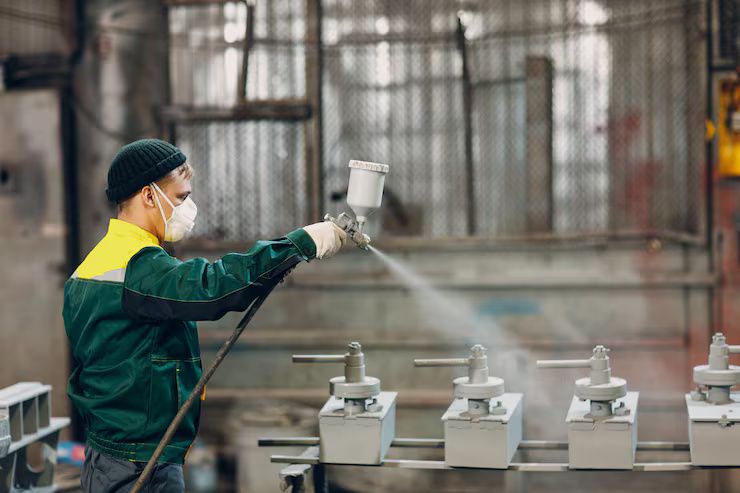
Understanding industrial coating raw materials is useful for manufacturers, engineers, formulators, procurement teams, and businesses evaluating coating technologies. The right combination of binders, pigments, solvents, additives, and other components can influence durability, appearance, application properties, and resistance to demanding environments.
This guide explains the main categories of industrial coating materials, how they work together, and the factors that influence their selection for different surface protection requirements.
What Are Industrial Coating Raw Materials?
Industrial coating raw materials are the fundamental ingredients used to formulate protective and decorative coating systems for industrial applications. Each material contributes specific physical or chemical properties to the finished coating.
A typical formulation may contain:
- Binders or resins
- Pigments
- Solvents or carriers
- Functional additives
- Fillers and extenders
- Curing agents
- Specialized performance modifiers
The exact formulation depends on the intended application, substrate, environmental conditions, and required performance characteristics.
Unlike decorative coatings designed primarily for appearance, industrial coatings often need to withstand demanding conditions such as moisture, chemicals, temperature changes, mechanical impact, and continuous exposure to outdoor environments.
Why Raw Materials Matter in Industrial Coatings
The performance of a coating is strongly influenced by the interaction between its individual ingredients.
For example, the binder determines how the coating forms a continuous film and adheres to the substrate. Pigments influence color and opacity, while additives can improve flow, stability, drying, or resistance to specific environmental conditions.
A well-designed formulation balances these components rather than relying on a single ingredient.
The selection of industrial coating materials can affect:
- Adhesion
- Corrosion resistance
- Chemical resistance
- Abrasion resistance
- Weather durability
- Flexibility
- Hardness
- Drying and curing behavior
- Surface appearance
- Application performance
This makes raw material selection a critical part of coating formulation and surface protection.
Key Categories of Industrial Coating Materials
Industrial coating formulations typically contain several major categories of ingredients.
Binders and Resins
Binders, also called resins, form the primary film of a coating after application and curing. They help hold other ingredients together while providing adhesion and many of the coating's core performance characteristics.
Common resin families include:
- Epoxy
- Polyurethane
- Acrylic
- Alkyd
- Polyester
- Vinyl
- Silicone-based systems
Epoxy resins are widely associated with strong adhesion and chemical resistance, while polyurethane systems are often selected for durability and weathering performance. Acrylic resins are commonly used where appearance, color retention, and weather resistance are important.
The choice of resin depends heavily on the intended environment and substrate.
Pigments
Pigments provide color, opacity, and visual characteristics. However, their role can extend beyond appearance.
Some pigments contribute to:
- Corrosion protection
- UV resistance
- Light stability
- Heat resistance
- Improved hiding power
Pigment selection must consider compatibility with the binder system and the performance requirements of the finished coating.
Solvents and Carriers
Solvents or carriers help control viscosity and application characteristics, allowing a coating to be applied using methods such as spraying, brushing, or rolling.
During or after application, the carrier evaporates or otherwise leaves the coating system, allowing the remaining components to form the protective film.
Modern coating development increasingly considers formulations designed to reduce environmental impact and volatile organic compound emissions.
Additives
Additives are used in relatively small quantities but can have a significant effect on coating performance.
Depending on the formulation, additives may improve:
- Flow and leveling
- Foam control
- Dispersion
- Surface wetting
- Storage stability
- Drying behavior
- UV resistance
- Anti-settling properties
The correct additive package can help a coating perform consistently during manufacturing, storage, application, and service.
Fillers and Extenders
Fillers and extenders can influence coating volume, texture, hardness, density, and mechanical properties.
Examples include mineral-based materials and other functional particles selected according to the formulation.
Their role varies significantly between coating systems, making compatibility and particle characteristics important considerations.
Industrial Paint Raw Materials and Their Applications
Industrial paint raw materials are used across a wide range of industries where surfaces require protection and functional performance.
Common application areas include:
| Industry | Typical Surface Requirements |
|---|---|
| Automotive | Corrosion resistance and appearance |
| Construction | Weather and moisture resistance |
| Oil and Gas | Chemical and corrosion protection |
| Marine | Resistance to water and harsh environments |
| Infrastructure | Long-term durability |
| Manufacturing | Abrasion and chemical resistance |
| Energy | Protection against demanding operating conditions |
Each industry presents different environmental challenges, so coating formulations must be adapted accordingly.
How Industrial Coatings Protect Surfaces
A coating protects a substrate by creating a barrier between the material and its surrounding environment.
For metal surfaces, this barrier can reduce exposure to moisture, oxygen, salts, and chemicals that contribute to corrosion.
In other applications, coatings may provide protection against:
- Abrasion
- Impact
- UV radiation
- Temperature fluctuations
- Chemical exposure
- Moisture penetration
- Industrial contaminants
Some coating systems also provide specialized functional properties, such as electrical insulation, heat resistance, or improved surface hygiene.
The effectiveness of a coating depends not only on raw materials but also on surface preparation, application technique, film thickness, curing conditions, and maintenance.
Selecting Industrial Coating Materials
Choosing appropriate raw materials requires consideration of the complete operating environment.
Important factors include:
Substrate Compatibility
The coating must adhere effectively to the surface being protected. Metal, concrete, plastic, and wood each present different adhesion and preparation requirements.
Environmental Exposure
Consider whether the coated surface will experience moisture, salt, chemicals, sunlight, temperature extremes, or mechanical wear.
Application Method
Spraying, brushing, rolling, dipping, and other application methods may require different viscosity and flow characteristics.
Curing Requirements
Some coating systems cure through evaporation, chemical reaction, moisture exposure, heat, or other mechanisms. The available curing conditions influence material selection.
Regulatory and Environmental Considerations
Formulators increasingly evaluate emissions, hazardous substances, waste generation, and environmental impact when selecting raw materials.
The Role of Industrial Coating Materials Suppliers and Manufacturers
Industrial coating materials suppliers and industrial coating materials manufacturers contribute to the coating industry's broader supply chain by providing raw ingredients and specialized formulation components.
Their role may involve materials such as:
- Resins
- Pigments
- Additives
- Solvents
- Fillers
- Curing components
For industrial users, evaluating raw material consistency and technical suitability is important because variations in material properties can affect final coating performance.
Technical documentation, quality control, compatibility data, and application guidance can help formulators assess whether a particular material is appropriate for a specific coating system.
Challenges in Industrial Coating Formulation
Developing a high-performance coating often requires balancing several competing requirements.
For example, increasing hardness may affect flexibility, while improving chemical resistance may influence application properties. Similarly, efforts to reduce environmental impact must be balanced with durability and performance expectations.
Other challenges include:
- Maintaining consistent quality
- Achieving strong substrate adhesion
- Controlling drying and curing
- Managing raw material compatibility
- Meeting environmental requirements
- Maintaining long-term durability
Coating development therefore requires both material science knowledge and practical understanding of real-world application conditions.
Trends Shaping Industrial Coating Raw Materials
The industrial coatings sector continues to evolve as industries seek improved performance and greater environmental responsibility.
Important trends include:
- Waterborne coating technologies
- High-solids formulations
- Powder coatings
- Bio-based raw materials
- Low-emission systems
- Nanotechnology-enabled materials
- Smart coatings
- Improved corrosion protection
- Faster curing technologies
Research is also focused on developing coatings that provide multiple functions within a single system, such as corrosion resistance combined with improved durability or self-cleaning properties.
These developments are encouraging manufacturers and formulators to reconsider traditional approaches to coating design.
How to Evaluate Raw Material Selection
A systematic evaluation process can help identify suitable industrial coating raw materials.
Consider the following questions:
- What substrate will be coated?
- What environmental conditions will the surface experience?
- What level of durability is required?
- How will the coating be applied?
- What curing conditions are available?
- Are there regulatory or environmental requirements?
- How will the coating be inspected and maintained?
Answering these questions helps connect raw material characteristics with actual application requirements.
Frequently Asked Questions
What are industrial coating raw materials?
Industrial coating raw materials are the ingredients used to formulate protective and functional coatings. They commonly include resins, pigments, solvents, additives, fillers, and curing components.
What is the most important raw material in a coating?
The binder or resin is often considered a central component because it forms the coating film and strongly influences adhesion, durability, chemical resistance, and other performance characteristics. However, overall performance depends on the complete formulation.
How do paint coating raw materials protect surfaces?
Different raw materials work together to create a protective film that can limit exposure to moisture, chemicals, oxygen, UV radiation, abrasion, and other damaging conditions.
What factors influence the selection of industrial paint raw materials?
Selection depends on the substrate, environmental exposure, application method, curing requirements, performance expectations, regulatory considerations, and compatibility between formulation components.
Why are industrial coating materials manufacturers important?
Industrial coating materials manufacturers develop and produce specialized raw materials that enable coating formulators to create systems with specific performance characteristics, including durability, corrosion resistance, chemical resistance, and environmental compatibility.
Conclusion
Industrial coating raw materials form the foundation of modern surface protection systems. Resins, pigments, solvents, additives, fillers, and curing components each contribute distinct properties that determine how a coating performs in real-world environments.
From infrastructure and manufacturing to automotive, marine, and energy applications, carefully selected coating materials help protect surfaces from corrosion, moisture, chemicals, abrasion, and environmental exposure. As the industry moves toward lower emissions, sustainable chemistry, advanced functionality, and more efficient application methods, the role of innovative raw materials will continue to grow.
Understanding the relationship between raw material characteristics, formulation design, substrate requirements, and operating conditions is essential for developing coating systems that provide reliable and durable surface protection.