A marine engine turbocharger is an important component used in many modern marine diesel engines. It helps increase the amount of air entering the engine cylinders, allowing the engine to burn fuel more effectively. Turbochargers are commonly associated with large commercial vessels, cargo ships, offshore vessels, ferries, and other marine applications where engine efficiency and reliable operation are important.
Marine engines operate under demanding conditions for long periods. Because of this, components such as turbochargers must be designed to handle high temperatures, pressure, vibration, and continuous operation. Understanding the working principle, construction, maintenance, and common problems of a marine turbocharger can help operators and maintenance professionals understand overall engine performance.
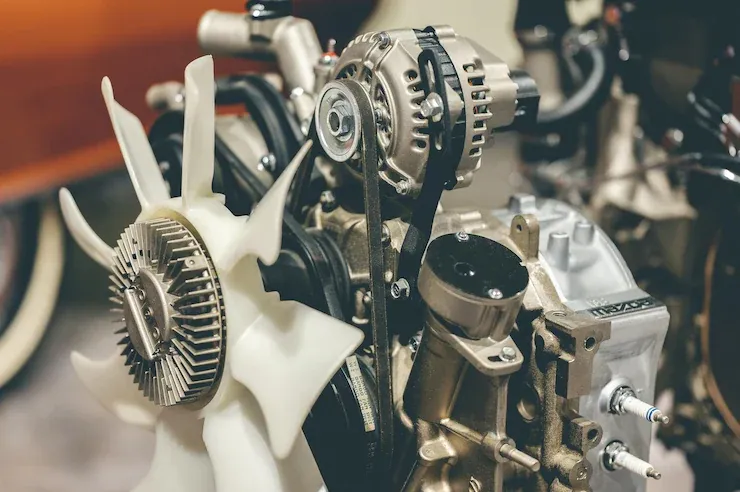
What Is a Marine Engine Turbocharger?
A marine engine turbocharger is an air-induction device that uses energy from the engine's exhaust gases to compress air before it enters the combustion chamber. The compressed air contains more oxygen than naturally aspirated air occupying the same volume. This allows the engine to burn an appropriate quantity of fuel more efficiently.
A typical turbocharger consists of a turbine and compressor connected by a common shaft. Exhaust gases leaving the engine rotate the turbine wheel. The turbine transfers this rotational energy through the shaft to the compressor wheel. The compressor then draws in atmospheric air and compresses it before sending it toward the engine cylinders.
This process allows a relatively compact engine to produce greater power than a comparable naturally aspirated engine under suitable operating conditions.
How Does a Marine Turbocharger Work?
Exhaust Gas Drives the Turbine
The process begins when combustion gases leave the engine cylinders through the exhaust system. Instead of allowing all of this energy to escape unused, the turbocharger directs the exhaust gases toward the turbine.
The high-temperature gases cause the turbine wheel to rotate at high speed. The amount of energy available depends on factors such as engine load, exhaust temperature, gas flow, and engine design.
The Compressor Increases Air Pressure
The turbine is connected to the compressor through a shaft. As the turbine rotates, the shaft causes the compressor wheel to rotate.
The compressor draws air from the surrounding environment and accelerates it through the compressor housing. The resulting compressed air is then directed toward the engine's intake system.
Combustion Receives More Air
The additional air supplied by the turbocharger provides more oxygen for combustion. This can allow the engine to achieve the required power output with improved combustion characteristics.
Many marine diesel engines also use an intercooler or charge-air cooler. It reduces the temperature of compressed air before the air enters the engine, increasing air density and supporting efficient combustion.
Main Components of a Marine Engine Turbocharger
Turbine Wheel
The turbine wheel receives energy from exhaust gases. It is manufactured from materials capable of handling high temperatures and high rotational speeds.
Compressor Wheel
The compressor wheel is responsible for compressing intake air. Its aerodynamic design has a major influence on airflow, pressure ratio, and turbocharger efficiency.
Turbocharger Shaft
The shaft connects the turbine and compressor wheels. It transfers rotational energy from the turbine to the compressor.
Bearings
Turbocharger bearings support the rotating shaft and help maintain stable operation at very high speeds. Proper lubrication is essential because bearing failure can result in serious turbocharger damage.
Housing
The turbocharger normally has separate turbine and compressor housings. Their internal shapes are designed to control the movement of exhaust gas and compressed air.
Nozzle Ring
In many marine turbochargers, the nozzle ring controls and directs exhaust gases toward the turbine. Its condition can influence turbine performance and exhaust-gas flow.
Types of Marine Engine Turbochargers
Axial-Flow Turbochargers
Axial-flow turbochargers direct exhaust gases through the turbine in a direction generally parallel to the turbine shaft. They are commonly associated with large marine diesel engines where substantial gas flow must be handled.
Radial-Flow Turbochargers
Radial-flow designs direct exhaust gases toward the turbine in a radial direction. They are widely used in applications where their compact construction and operating characteristics are suitable.
Single Turbocharger Systems
Some engines use a single turbocharger to supply compressed air to the engine. The arrangement is relatively straightforward and can be suitable for particular engine sizes and operating requirements.
Multiple Turbocharger Systems
Larger or specialized marine engines may use more than one turbocharger. Multiple turbochargers can provide the required airflow and support engine operation across different load conditions.
Why Turbochargers Are Important in Marine Engines
Turbocharging plays an important role in improving the air supply of a diesel engine. Marine propulsion systems often need to produce substantial power while operating for extended periods.
By recovering part of the energy contained in exhaust gases, a turbocharger can help improve the engine's overall use of available energy. Proper turbocharger operation can also contribute to appropriate combustion, engine power output, and fuel economy.
For commercial marine operations, these factors are particularly important because engine performance can influence operating efficiency and maintenance requirements.
Marine Turbocharger and Fuel Efficiency
Fuel efficiency is an important consideration in marine engineering because large marine engines can consume significant quantities of fuel during extended operation.
A properly functioning turbocharger helps maintain the required air-to-fuel relationship by supplying sufficient combustion air. When the turbocharger, air intake system, charge-air cooler, and fuel system are operating correctly, combustion can occur under the conditions intended by the engine manufacturer.
However, turbocharger efficiency alone does not determine fuel consumption. Engine condition, vessel loading, operating speed, propeller characteristics, hull condition, fuel quality, weather, and maintenance practices can also affect overall fuel consumption.
Common Marine Turbocharger Problems
Reduced Turbocharger Performance
A marine turbocharger may lose performance because of fouling, deposits, damaged components, restricted airflow, or problems with the exhaust system.
Reduced airflow can affect combustion and may contribute to increased exhaust temperature, smoke, or reduced engine output.
Compressor Fouling
Dust, salt particles, oil deposits, and other contaminants can accumulate on compressor components. Fouling can change the aerodynamic characteristics of the compressor and reduce its efficiency.
Regular inspection and cleaning according to the engine manufacturer's procedures can help maintain appropriate performance.
Turbine Fouling
Combustion deposits can accumulate around the turbine and nozzle ring. Excessive deposits may restrict exhaust-gas flow and affect turbine operation.
Bearing Problems
Insufficient lubrication, contaminated oil, excessive wear, or incorrect operating conditions can damage turbocharger bearings. Unusual vibration or noise can sometimes indicate a mechanical problem requiring inspection.
High Exhaust Temperature
An abnormal exhaust temperature may have several causes, including insufficient air supply, fuel-system problems, injector issues, turbocharger fouling, or excessive engine load. Therefore, high exhaust temperature should not automatically be attributed to the turbocharger alone.
Marine Turbocharger Maintenance
Regular Inspection
Routine inspection should include checking the turbocharger housing, air passages, exhaust passages, lubrication system, and associated components. Maintenance intervals should follow the engine and turbocharger manufacturer's recommendations.
Cleaning
Compressor and turbine components may require cleaning when deposits or contamination affect performance. Cleaning procedures depend on the turbocharger design and operating environment.
Lubrication System Checks
The lubrication system is essential for turbocharger reliability. Oil pressure, oil quality, filters, supply lines, and return passages should be checked according to the applicable maintenance schedule.
Vibration Monitoring
High-speed rotating equipment can develop mechanical problems that appear as increased vibration. Monitoring vibration trends can help identify potential issues before they become severe.
Performance Monitoring
Important operating parameters may include boost pressure, exhaust temperature, turbocharger speed, charge-air temperature, and engine load. Comparing these measurements with established operating values can help identify changes in turbocharger performance.
Factors That Affect Turbocharger Performance
Marine turbocharger performance can be influenced by several factors. Engine load is particularly important because exhaust-gas energy changes with operating conditions. Air filter condition, intake restrictions, exhaust back pressure, charge-air cooler condition, fuel quality, and engine maintenance can also affect performance.
The marine environment introduces additional challenges. Salt-containing air, humidity, temperature variations, and long operating periods can contribute to corrosion, deposits, and component wear if appropriate maintenance is not performed.
Turbocharger Inspection and Troubleshooting
Troubleshooting should begin by comparing current engine parameters with normal operating data. Changes in boost pressure, exhaust temperature, smoke, vibration, or unusual sounds can provide useful clues.
If turbocharger performance appears abnormal, engineers should also inspect related systems rather than examining the turbocharger in isolation. Fuel injection, air intake, exhaust restrictions, charge-air cooling, lubrication, and engine load can all influence turbocharger behavior.
Because turbochargers operate at very high rotational speeds and temperatures, major repairs should be carried out using appropriate technical procedures and manufacturer specifications.
Marine Turbocharger Technology Trends
Modern marine propulsion systems increasingly focus on improving energy efficiency and reducing emissions. Turbocharger technology continues to develop alongside improvements in engine control systems, combustion technology, waste-heat recovery, and emissions-management systems.
Advanced monitoring systems can also provide more detailed information about engine and turbocharger operating conditions. Data-based maintenance approaches may help operators identify changes in performance earlier and plan maintenance more effectively.
Applications of Marine Engine Turbochargers
Marine turbochargers are used across many types of vessels and marine power systems. Applications can include commercial cargo vessels, container ships, bulk carriers, tankers, passenger vessels, ferries, offshore support vessels, fishing vessels, and marine generator systems.
The specific turbocharger design depends on engine size, engine speed, power requirements, operating profile, and manufacturer specifications.
Frequently Asked Questions
What is the main purpose of a marine engine turbocharger?
The main purpose is to increase the amount of air supplied to the engine by compressing intake air using energy recovered from exhaust gases.
Does a turbocharger improve marine engine fuel efficiency?
A properly operating turbocharger can support efficient combustion and may contribute to better overall engine efficiency. Actual fuel consumption depends on the complete engine and vessel operating system.
What causes marine turbocharger failure?
Possible causes include inadequate lubrication, bearing wear, contamination, excessive deposits, foreign-object damage, excessive operating temperatures, and improper maintenance.
How often should a marine turbocharger be serviced?
The appropriate service interval depends on the turbocharger model, engine design, operating conditions, and manufacturer's maintenance schedule. The manufacturer's technical documentation should be used as the primary reference.
Can turbocharger problems affect engine power?
Yes. A turbocharger that cannot supply the required amount of air can affect combustion and may contribute to reduced engine power, increased exhaust temperature, or visible smoke.
Conclusion
A marine engine turbocharger is a critical component of many modern marine diesel engines. By using exhaust-gas energy to compress intake air, it supports the combustion process and helps engines achieve their required power output.
Understanding the turbine, compressor, shaft, bearings, housings, lubrication system, and charge-air system provides a useful foundation for marine engine maintenance. Regular inspection, appropriate cleaning, lubrication checks, performance monitoring, and manufacturer-recommended servicing can help maintain reliable turbocharger operation.
As marine engineering continues to focus on efficiency, emissions control, and advanced engine monitoring, turbocharger technology will remain an important part of marine propulsion and power-generation systems.