Metal detection and inspection products are designed to identify metallic contaminants, inspect materials, and improve quality control across industrial production and processing environments. These systems help detect unwanted metal fragments in food, pharmaceuticals, plastics, chemicals, recycled materials, and manufactured goods.
Different products use electromagnetic fields, X-ray imaging, magnetic sensing, or other inspection technologies to identify specific types of contamination or product defects. The appropriate equipment depends on the material being inspected, the expected contaminants, production speed, product characteristics, and required inspection accuracy.
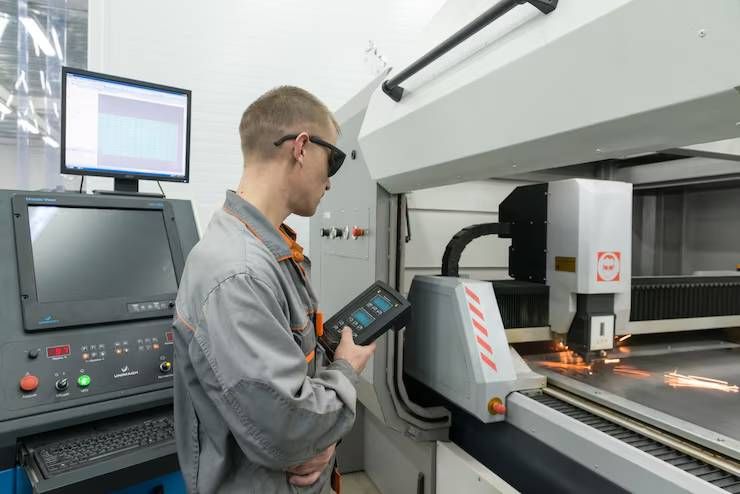
Context
What Are Metal Detection and Inspection Products?
Metal detection and inspection products are devices and integrated systems used to identify metal objects or assess product integrity during manufacturing, packaging, processing, and material handling.
Metal detectors generally identify conductive or magnetic objects by monitoring changes in an electromagnetic field. Inspection systems may use additional technologies, such as X-ray imaging, magnetic separation, or automated sensing, to identify contaminants and other abnormalities.
These products can be installed at raw-material intake points, conveyor belts, production lines, packaging machines, pipelines, and final inspection stations. Depending on the design, they may inspect individual products, bulk materials, powders, liquids, or packaged goods.
A complete inspection system may include a detector head, conveyor or pipeline assembly, electronic control unit, product sensor, reject mechanism, alarm, and data-recording software. More advanced installations can connect with production management systems to record inspection results and monitor performance.
Metal detection and inspection equipment serves several purposes. It can help reduce contamination risks, protect downstream machinery, improve product consistency, and support documented quality-control procedures.
Major Types of Metal Detection and Inspection Products
1. Conveyor Metal Detectors
Conveyor metal detectors inspect products or bulk materials moving along a conveyor belt. A detection coil identifies metallic objects as material passes through the inspection zone.
When a potential contaminant is detected, the system may trigger an alarm, stop the conveyor, or activate an automatic reject mechanism. These systems are widely used in food production, packaging, plastics processing, and industrial manufacturing.
2. Pipeline Metal Detectors
Pipeline metal detectors inspect liquids, pastes, slurries, and other pumpable materials moving through enclosed pipes. They are designed to identify metallic contaminants without requiring the material to be transferred to an open conveyor.
Applications include food ingredients, dairy processing, chemical production, and selected pharmaceutical processes. Pipeline systems must be compatible with the material, operating pressure, flow rate, and cleaning requirements.
3. Gravity-Fall Metal Detectors
Gravity-fall detectors inspect free-flowing products that move vertically through a detection assembly. They are commonly used for powders, granules, seeds, grains, and plastic pellets.
These systems can be integrated with automated rejection mechanisms that divert contaminated material away from the main product stream.
4. Pharmaceutical Metal Detectors
Pharmaceutical metal detectors inspect tablets, capsules, powders, and other pharmaceutical products for metallic contamination. They are designed for integration with pharmaceutical production and packaging equipment.
Equipment selection may depend on product size, throughput, cleaning requirements, validation procedures, and the need for documented inspection records.
5. Ferrous and Non-Ferrous Metal Detectors
Industrial metal detectors may be configured to identify ferrous metals, non-ferrous metals, and stainless steel. Detection capability depends on the detector technology, operating frequency, product characteristics, metal type, and contaminant size.
Stainless steel can be more difficult to detect than certain other metals, especially in products that produce strong electromagnetic signals of their own.
6. X-Ray Inspection Systems
X-ray inspection systems examine products using differences in X-ray absorption. They can identify many dense foreign objects, including certain metals, glass, stone, and calcified materials, depending on the product and inspection configuration.
Unlike conventional metal detectors, X-ray systems can also inspect for selected non-metallic contaminants and product defects. Their capabilities depend on material density, object size, product geometry, and image-processing performance.
7. Magnetic Inspection and Separation Systems
Magnetic inspection equipment uses magnetic fields to detect or capture ferrous materials. Magnetic separators remove magnetic contaminants from a material stream, while other magnetic sensing arrangements can identify changes associated with metal objects.
Magnetic separation is not equivalent to universal metal detection because non-magnetic metals may not be captured.
8. Metal Detection for Wood, Mining, and Recycling
Specialized industrial detectors can identify metal objects within timber, mineral feed, waste streams, aggregates, or other bulk materials. These systems may be installed around conveyor belts to protect crushers, saws, shredders, and other machinery from metal damage.
9. Integrated Inspection and Reject Systems
Integrated systems combine detection equipment with automated product handling. Depending on the production line, the system may reject an individual package, divert a contaminated batch, stop the conveyor, or send an alert to an operator.
These installations help make inspection repeatable and reduce reliance on manual identification.
Metal Detection and Inspection Technologies
Different technologies serve different inspection purposes.
Electromagnetic induction: Detects conductive and magnetic metal objects through changes in an electromagnetic field.
Multi-frequency detection: Uses multiple frequencies to improve detection performance across different products and metal types.
X-ray imaging: Identifies objects and product variations based on differences in X-ray absorption.
Magnetic sensing: Detects magnetic-field changes or identifies ferrous materials, depending on the system design.
Inductive proximity sensing: Detects metal objects within a limited sensing distance, commonly in automation and machinery control.
Sensor-based sorting: Uses selected sensors and automated mechanisms to identify and separate materials in recycling and industrial processing.
Digital signal processing: Helps distinguish contaminant signals from product effects and environmental interference.
No single technology detects every contaminant under every condition. A system should be selected and validated against the expected metal types, product characteristics, line speed, and required inspection sensitivity.
Comparison of Metal Detection and Inspection Products
| Equipment type | Primary technology | Common applications |
|---|---|---|
| Conveyor metal detector | Electromagnetic induction | Food, packaging, bulk materials |
| Pipeline metal detector | Electromagnetic sensing | Liquids, pastes, slurries |
| Gravity-fall detector | Electromagnetic sensing | Powders and granules |
| Pharmaceutical detector | High-sensitivity metal detection | Tablets, capsules, pharmaceutical products |
| X-ray inspection system | X-ray imaging | Packaged foods, pharmaceuticals, manufactured goods |
| Magnetic separator | Magnetic attraction | Ferrous contaminant removal |
| Industrial conveyor detector | Metal sensing | Mining, timber, aggregates, recycling |
| Integrated reject system | Detection plus automated handling | Automated production and packaging |
Importance of Metal Detection and Inspection Products
Metal detection and inspection products support quality control, equipment protection, and contamination prevention across many industries.
In food processing, metallic fragments may enter products through damaged machinery, cutting equipment, worn components, or raw materials. Detection systems help identify affected products before distribution, although they must form part of a broader food-safety program.
In pharmaceutical manufacturing, contamination control is important because unwanted particles can affect product quality and regulatory compliance. Inspection systems can help identify certain contaminants when configured for the specific product and production process.
Industrial metal detectors also protect equipment. Metal objects entering crushers, shredders, saws, grinders, or extruders can cause severe damage, production interruptions, and safety hazards. Early detection can help prevent such events.
Inspection data can support traceability by recording rejected products, alarms, test results, and equipment status. Effective implementation requires defined operating procedures, appropriate calibration or performance verification, employee training, and clear responses to detection events.
Manufacturing Processes
The manufacturing of metal detection and inspection products combines mechanical fabrication, sensor engineering, electronics, software development, system integration, and performance verification.
1. Product Design and Engineering
Manufacturing begins with defining the intended application, detection targets, product dimensions, throughput, installation environment, and inspection requirements.
Engineers determine the detection aperture, sensor configuration, conveyor dimensions, enclosure design, reject mechanism, user interface, and communication interfaces. Computer-aided design software supports mechanical layout, while electrical and electronic design tools support sensor and control development.
For X-ray inspection systems, the design also considers the X-ray source, detector array, shielding, imaging geometry, and safety interlocks.
2. Mechanical Component Fabrication
Frames, housings, conveyor structures, mounting brackets, chutes, and protective enclosures are produced using cutting, bending, machining, welding, and forming processes.
Stainless steel is commonly used in food, pharmaceutical, and washdown environments because of its corrosion resistance and suitability for hygienic equipment construction. Other materials may be selected for dry industrial settings, mining operations, or specialized installations.
Conveyor belts, rollers, bearings, reject gates, and product guides are selected according to the material being handled and the production environment.
3. Sensor and Detector Assembly
Metal detectors generally contain coils or sensor arrangements that generate and monitor electromagnetic fields. Their performance depends on coil geometry, shielding, signal stability, and the surrounding mechanical environment.
X-ray inspection systems require the integration of an X-ray source, imaging detectors, shielding, and related electronic components. Inductive proximity sensors and specialized industrial detectors use different sensing arrangements based on their intended functions.
Precise positioning and electrical stability are important because interference, vibration, and surrounding metal structures can affect detection performance.
4. Electronics and Control-System Integration
Electronic circuits amplify, filter, and process sensor signals. Embedded controllers and industrial computers evaluate the signals and determine whether an alarm or reject action is required.
Control systems may include touchscreens, product recipes, password-protected settings, event logs, network connectivity, and interfaces with production equipment. The system can also coordinate conveyors, reject devices, and line-stop functions.
Software configuration must account for product effects, operating speed, expected contaminants, and the intended inspection procedure.
5. Assembly and Environmental Protection
Mechanical, electronic, and software components are assembled into the final product. Enclosures may be designed to resist dust, moisture, cleaning chemicals, vibration, or other environmental conditions.
For hygienic applications, the equipment design should minimize areas where product residue or contaminants can accumulate. Sealing, drainage, accessibility, and cleaning compatibility must be considered.
X-ray systems require appropriate shielding and interlocks to control radiation exposure.
6. Calibration and Performance Verification
Finished equipment undergoes testing to verify detection behavior, reject operation, alarm functions, and system stability.
Testing may include:
Detection checks using defined test pieces
Verification across the inspection aperture or relevant product path
Testing at representative conveyor speeds
Assessment of product-effect compensation
Reject mechanism and alarm checks
Electrical safety and control-system checks
Inspection of shielding and safety interlocks for X-ray systems
Review of event records and data interfaces
Performance verification should reflect the actual application. A detector's stated sensitivity does not necessarily represent its sensitivity for every product, metal type, package size, or production condition.
7. Final Integration and Commissioning
The final stage involves integrating the equipment into the production line and confirming that it performs under normal operating conditions. This may include product-specific configuration, rejection testing, operator instruction, documentation, and routine verification procedures.
For regulated production environments, installation and validation activities may require formal records and approval according to the applicable quality system.
Global Manufacturers and Suppliers
The metal detection and inspection sector includes manufacturers of industrial metal detectors, food inspection equipment, X-ray systems, sensor technologies, and integrated quality-control equipment.
Mettler-Toledo: Develops industrial inspection technologies, including metal detection, X-ray inspection, and related product inspection systems used in food and other manufacturing sectors.
Sesotec: Produces metal detection, sorting, and contamination-control systems for plastics, food processing, recycling, and other industrial applications.
Eriez: Manufactures magnetic separation, metal detection, and material-processing equipment for manufacturing, mining, food processing, and recycling.
Fortress Technology: Specializes in industrial metal detection systems, including equipment used in food processing and packaging environments.
CEIA: Develops electromagnetic inspection and detection technologies for industrial and other specialized applications.
Loma Systems: Produces inspection equipment, including metal detectors and X-ray inspection systems for packaged and processed products.
Minebea Intec: Provides industrial weighing and inspection technologies, including metal detection and X-ray inspection equipment.
Thermo Fisher Scientific: Supplies analytical and industrial technologies, including selected metal detection and inspection systems for production environments.
Bunting: Manufactures magnetic separation and metal detection equipment for material handling, recycling, plastics, and industrial processing.
These companies operate across different product categories, and their current product ranges may vary by market. Not every manufacturer supplies every type of detector, X-ray system, or integrated inspection line described in this article.
When comparing manufacturers and suppliers, engineering teams should examine detection capability, throughput, product compatibility, equipment construction, cleaning requirements, data recording, technical documentation, maintenance arrangements, and regional support availability.
Industrial Applications
1. Food and Beverage Manufacturing
Metal detectors and X-ray inspection systems are used to inspect ingredients, processed foods, packaged products, beverages, and other consumables. Equipment may be installed after processing, before packaging, or at another critical inspection point.
Metal detection is generally used to identify metallic contaminants, while X-ray inspection can identify many dense foreign objects and selected product defects. The appropriate method depends on the product and the hazards being controlled.
2. Pharmaceutical Manufacturing
Inspection equipment is used for tablets, capsules, powders, and packaged pharmaceutical products. The equipment must suit the product dimensions, production rate, cleaning procedures, and documentation requirements.
Inspection is typically integrated with other quality controls rather than used as the sole means of contamination prevention.
3. Plastics and Rubber Processing
Metal detection systems help identify metal fragments in polymer pellets, recycled plastics, rubber compounds, and other feed materials. Removing contamination before extrusion, injection molding, or mixing can protect equipment and improve material quality.
4. Mining and Mineral Processing
Industrial metal detectors are installed on conveyors carrying ore, aggregates, and bulk minerals. They can identify unwanted metal objects before the material enters crushers, mills, or other equipment vulnerable to metal damage.
Detection systems may operate with automatic alarms, conveyor stops, or upstream process controls.
5. Recycling and Waste Management
Recycling facilities use metal detectors, magnetic separators, eddy current separators, and sensor-based sorting systems to identify or separate materials. Their roles differ: detectors identify the presence of metal, while separation equipment physically removes selected materials.
6. Timber and Wood Processing
Metal detectors inspect logs, lumber, wood chips, and other timber products for embedded metal objects. Detection can help protect saw blades, chippers, and other cutting equipment from damage.
7. Chemical and Industrial Manufacturing
Chemical plants and general manufacturing facilities may inspect powders, liquids, granules, or finished products for metallic contamination. Equipment construction and sensor configuration must suit the process environment, product chemistry, and potential safety hazards.
8. Packaging and Consumer Goods
Inspection systems can be integrated into packaging lines to examine individual packages and remove products that trigger a detection event. Data logging and automatic rejection can support consistent production procedures.
9. Textile and Other Material Processing
Specialized metal detectors can be used to identify needles, metal fragments, or other metallic objects in selected textiles and manufactured materials. Detection requirements depend on the product type and the potential consequences of contamination.
Recent Developments
Metal detection and inspection technology continues to advance through improvements in sensor design, digital signal processing, image analysis, and automation.
Multi-frequency metal detectors can improve inspection performance for selected products by helping distinguish contaminant signals from signals generated by the product itself. Digital processing and adaptive algorithms can support more stable operation when product characteristics vary.
Modern X-ray inspection systems may use improved detector arrays and image-processing software to identify contaminants and selected product defects. Automated reject systems can be monitored to verify that a detected item was removed correctly.
Connectivity features allow inspection equipment to exchange operating data with production systems. Recorded information can help quality teams review alarms, monitor verification results, identify recurring issues, and document corrective actions.
Developments in sensor-based sorting are also expanding the range of materials that can be identified in recycling and industrial processing. However, detection performance still depends on the material, contaminant properties, equipment configuration, and real operating conditions.
Laws or Policies
Metal detection and inspection products may be subject to different safety, quality, and regulatory requirements depending on the application and location.
Food manufacturers may use inspection systems as part of a hazard analysis and critical control point (HACCP) program or another documented food-safety management system. The inspection point, test frequency, corrective action, and recordkeeping procedure should be based on the facility's hazard assessment and applicable requirements.
Pharmaceutical production may require equipment qualification, documented testing, data integrity controls, and validation procedures under the applicable quality framework.
Machinery safety and electrical safety requirements may apply to conveyor systems, reject mechanisms, moving parts, and control equipment. X-ray inspection systems also require appropriate radiation shielding, safety interlocks, and compliance with relevant radiation protection rules.
In the European Union, applicable machinery, electrical, and radiation-related legislation depends on the equipment and its use. In the United States, relevant workplace safety, food safety, and radiation control requirements may apply according to the system and industry.
Standards from organizations such as ISO and IEC may address quality management, electrical safety, testing, and equipment performance. Users should confirm the specific standards and regulations applicable to their installation.
Tools and Resources
Several tools and resources help operators and engineering teams select, verify, and maintain metal detection and inspection equipment.
Certified or specified test pieces: Used to verify detection performance under defined conditions.
Calibration and verification records: Document system checks and changes in operating performance.
Conveyor speed measurement tools: Help verify that inspection conditions remain within the equipment's operating limits.
Product inspection guides: Help configure detection settings for different products and packaging formats.
X-ray image analysis software: Supports review of images and identification of selected contaminants or product defects.
Maintenance logs: Record cleaning, component replacement, faults, and corrective actions.
Manufacturer technical documentation: Provides installation requirements, operating limits, maintenance instructions, and inspection procedures.
Inspection systems should be verified at an appropriate frequency using defined procedures. Test results, reject performance, alarms, and corrective actions should be documented where required by the quality system.
FAQs
1. What is the purpose of metal detection and inspection products?
Their purpose is to identify metallic contaminants, inspect selected product characteristics, and support quality control. Some systems also protect machinery by detecting metal before it enters sensitive equipment.
2. What is the difference between a metal detector and an X-ray inspection system?
A metal detector primarily identifies metallic objects through electromagnetic sensing. An X-ray inspection system evaluates differences in X-ray absorption and can detect many dense non-metallic objects as well as selected product defects.
3. Can metal detectors identify stainless steel?
Yes, many industrial metal detectors can identify stainless steel. Detection sensitivity depends on the stainless-steel grade, contaminant size and shape, detector configuration, product characteristics, and inspection conditions.
4. Which industries use metal detection equipment?
Food and beverage production, pharmaceuticals, plastics, rubber, mining, recycling, timber processing, chemicals, packaging, and general manufacturing use metal detection and inspection systems.
5. How often should a metal detector be tested?
The appropriate frequency depends on the application, risk assessment, equipment instructions, and applicable quality requirements. Some production environments require checks at defined intervals and after specific events, with documented results and corrective actions.
Conclusion
Metal detection and inspection products play an important role in contamination control, machinery protection, and industrial quality management. Conveyor detectors, pipeline systems, gravity-fall detectors, pharmaceutical inspection units, X-ray systems, and integrated reject equipment address different production requirements.
Selecting a suitable system requires evaluating the target contaminant, product characteristics, line speed, environmental conditions, inspection sensitivity, and regulatory obligations. Correct installation, routine performance verification, operator training, and documented procedures help maintain reliable inspection throughout the production process.