Offset printing machines are industrial printing systems that transfer an inked image from a printing plate to a rubber blanket and then onto paper or another printable substrate. This indirect transfer process is the defining feature of offset lithography and allows printing presses to produce consistent images across large quantities of material.
Offset printing remains an important commercial printing technology for books, magazines, catalogs, brochures, packaging materials, newspapers, business documents, and other printed products. Modern machines combine mechanical printing units with computerized controls, automated plate handling, color management, drying systems, and digital monitoring.
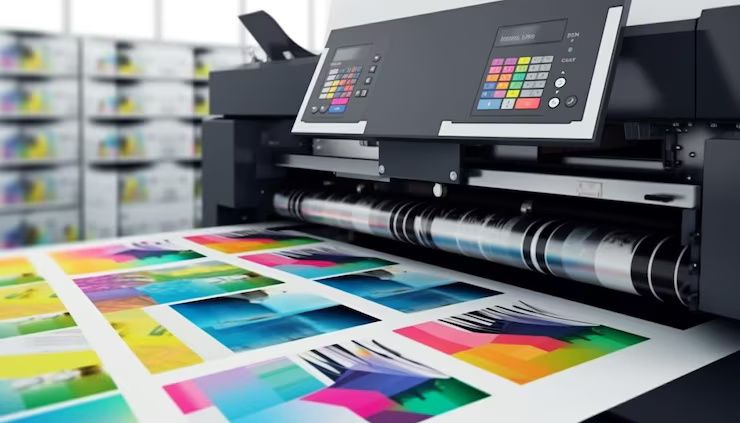
The technology has developed from manually operated mechanical presses into sophisticated high-volume production systems. Although digital printing has expanded for short and variable print runs, offset printing continues to have an important role where consistent reproduction, multiple colors, and large production volumes are required.
Context
Understanding Offset Printing Machines
Offset printing machines use a plate cylinder, blanket cylinder, and impression cylinder to transfer an image onto a substrate. The printing plate contains image and non-image areas that interact differently with ink and fountain solution.
In conventional offset lithography, the non-image areas of the plate accept water while image areas accept oil-based or other compatible inks. The inked image first moves from the plate to a rubber blanket and then from the blanket to the paper.
This indirect process helps protect the printing plate and allows the blanket to conform to certain surface variations in the substrate. The U.S. Environmental Protection Agency describes offset lithography as a major commercial printing process based on the interaction between water and ink.
How Offset Printing Works
The basic offset printing process involves several coordinated stages:
- A digital or physical design is prepared for printing.
- Printing plates are produced for the required colors.
- Plates are mounted onto plate cylinders.
- Fountain solution and ink are applied through the printing unit.
- The image transfers from the plate to the blanket.
- The blanket transfers the image to the paper or other substrate.
- Drying, folding, cutting, binding, or other finishing operations are completed.
Four-color process printing commonly uses cyan, magenta, yellow, and black inks. Additional spot colors can be incorporated when a particular color specification or printing requirement calls for them.
Main Components of Offset Printing Systems
| Component | Main Function |
|---|---|
| Plate cylinder | Holds and rotates the printing plate |
| Blanket cylinder | Receives and transfers the inked image |
| Impression cylinder | Presses the substrate against the blanket |
| Ink system | Delivers controlled amounts of ink |
| Dampening system | Supplies fountain solution |
| Feeder | Transfers sheets or web material into the press |
| Dryer | Helps dry printed material where required |
| Delivery system | Collects or transfers printed material |
Types of Offset Printing Machines
Offset printing machines can be grouped according to how the substrate is supplied and how the press is configured.
| Machine Type | General Application |
| Sheet-fed offset press | Books, brochures, catalogs, commercial documents |
| Web offset press | Newspapers, magazines, and continuous high-volume production |
| Heatset web offset press | Publications and printed materials requiring rapid drying |
| Coldset web offset press | Newspapers and certain uncoated paper applications |
| Multi-color offset press | Full-color commercial and publication printing |
| Digital offset workflow press | Automated plate-to-print production environments |
Sheet-fed systems use individual sheets, while web offset machines feed paper from continuous rolls.
Offset Printing and Digital Printing
Offset printing and digital printing use different production approaches. Offset systems rely on physical printing plates, while digital presses generally transfer digital data directly to the printing system without conventional plates.
Digital printing can be useful for variable information and shorter runs. Offset printing is commonly associated with consistent production across larger quantities and multi-color applications.
The appropriate technology depends on factors such as print quantity, substrate, image requirements, turnaround considerations, and finishing requirements.
Importance
Role in Commercial Printing Technologies
Commercial printing technologies support the production of physical information and communication materials used across many sectors. Offset printing remains an important part of this industry because its process is designed for repeated image transfer across large quantities of printed material.
Common applications include:
- Books and educational publications
- Magazines and catalogs
- Brochures and business materials
- Newspapers
- Packaging components
- Posters and promotional materials
- Corporate documents
The printing process selected depends on the substrate, required image quality, production volume, and final product.
High-Volume Production Systems
High-volume production systems are designed to maintain continuous or repeated printing operations while controlling ink, paper movement, registration, and drying.
Web offset presses are particularly suited to continuous roll-fed production. Sheet-fed presses are commonly used when individual sheets, varied paper sizes, or particular finishing requirements are involved.
Modern presses can include automated systems for:
- Plate changing
- Paper handling
- Ink adjustment
- Color registration
- Inspection
- Waste monitoring
Industrial Applications
Offset printing machines are used across a broad range of industries.
Publishing: Books, magazines, newspapers, journals, and catalogs can be produced using sheet-fed or web offset systems.
Packaging: Offset processes can be used for certain folding cartons, labels, inserts, and other printed packaging components.
Education: Textbooks, workbooks, manuals, and institutional publications can involve offset production.
Business Communication: Forms, reports, brochures, stationery, and other printed materials can be produced through commercial offset presses.
Advertising Materials: Posters, catalogs, direct-mail materials, and other printed communication products may use offset processes.
Importance of Color Management
Color management is an important part of modern offset production. Printing systems must coordinate ink densities, registration, paper characteristics, and color profiles to maintain consistent reproduction.
Computerized color controls can measure selected characteristics during production and help operators identify changes that could affect the printed result.
Printing Quality and Registration
Registration refers to the alignment of different color images on the same printed sheet or web. Accurate registration is particularly important in multi-color printing because small alignment differences can affect text, images, and fine details.
Modern presses may use cameras, sensors, and computerized controls to monitor registration during production.
Recent Updates
Growth of Automated Printing Systems
From 2024 through 2026, commercial printing technology has continued moving toward greater automation and digital integration. Modern presses increasingly connect mechanical equipment with computerized production controls, inspection systems, and workflow software.
Automation can reduce the amount of manual adjustment required for repetitive activities while providing operators with more information about machine conditions.
Development of Intelligent Press Monitoring
Sensors and digital monitoring technologies are being incorporated into printing systems to track production conditions.
Monitoring may include:
- Color consistency
- Registration
- Ink levels
- Paper movement
- Machine status
- Production interruptions
Collected information can help operators identify process changes during production.
Integration With Digital Workflows
Modern offset printing often begins with digitally prepared artwork and automated prepress systems. Computer-to-plate workflows can transfer digital designs to printing plates with fewer manual preparation stages.
Digital workflow integration can connect design, prepress, plate production, printing, inspection, and finishing activities.
Greater Focus on Resource Management
Printing facilities continue exploring ways to manage paper, ink, energy, solvents, and other production materials more efficiently.
Automation can help monitor production conditions and identify process variations. Waste management and emissions control are also important considerations for facilities using inks, coatings, cleaning materials, and other chemical products.
Continued Role of Offset Printing
Digital printing has expanded significantly, but offset remains relevant for many large-volume applications. The EPA identifies offset lithography as the most common form of commercial printing within its overview of major printing processes.
This means modern printing environments can include both offset and digital technologies rather than relying exclusively on one process.
Laws or Policies
Environmental Requirements
Printing facilities in the United States may be subject to federal, state, and local environmental requirements. The EPA identifies printing and related activities as part of the manufacturing sector and lists environmental regulations that can affect printing operations.
Requirements can vary according to the type of press, materials used, facility size, emissions, and location.
VOC and Air-Quality Considerations
Printing inks, coatings, cleaning materials, and other chemicals can contain volatile organic compounds (VOCs) or hazardous air pollutants. EPA guidance identifies VOC and organic hazardous air pollutants as relevant emissions from parts of the printing industry.
Facilities may use approaches such as lower-emission inks and coatings, capture systems, or other emission-control technologies depending on applicable requirements.
Printing and Publishing Regulations
Federal rules can apply to specific printing and publishing activities. The EPA maintains information covering National Emission Standards for Hazardous Air Pollutants and other requirements affecting printing operations.
State and local air-quality rules can also apply. Printing facilities therefore need to evaluate requirements based on their location and particular operations.
Workplace Safety
Offset presses contain rotating cylinders, moving paper systems, mechanical components, electrical equipment, and other hazards. Workplace safety programs generally address machine guarding, operator procedures, maintenance activities, and hazardous materials.
Specific workplace requirements depend on the jurisdiction and facility conditions.
Tools and Resources
Prepress Software
Prepress software prepares digital artwork for offset production.
It may support:
- Color separation
- Imposition
- PDF preparation
- Plate layout
- Image processing
Computer-to-Plate Systems
Computer-to-plate systems transfer digital artwork directly to printing plates. This technology is an important part of automated offset workflows.
Color Management Systems
Color management tools help coordinate color information between digital artwork, proofing systems, and printing equipment.
Press Monitoring Systems
Digital press monitoring systems can track:
- Ink conditions
- Registration
- Machine status
- Production data
- Quality indicators
Finishing Equipment
Post-press operations can include cutting, folding, trimming, binding, die cutting, embossing, foil stamping, drilling, and gluing. The EPA identifies these activities as common finishing processes within printing facilities.
Industry Information Resources
Readers researching commercial printing technologies can consult:
- Government environmental agencies
- Printing technology organizations
- Engineering publications
- Manufacturing research institutions
- Printing equipment documentation
- Technical standards organizations
FAQs
What are offset printing machines?
Offset printing machines are presses that transfer an inked image from a plate to a rubber blanket and then onto paper or another substrate.
How does offset printing work?
Offset printing uses plate, blanket, and impression cylinders. Ink is transferred from the plate to the blanket and then from the blanket to the final printing surface.
What is the difference between sheet-fed and web offset printing?
Sheet-fed offset presses print on individual sheets, while web offset presses use continuous rolls of paper. Web systems are commonly associated with continuous high-volume production.
What are commercial printing technologies used for?
Commercial printing technologies are used to produce books, magazines, catalogs, newspapers, brochures, business materials, packaging components, and many other printed products.
Are offset printing machines still used today?
Yes. Offset printing remains an important commercial printing process, particularly for publications and other applications involving repeated, multi-color production. The technology is increasingly combined with automated prepress, monitoring, and digital workflow systems.
Conclusion
Offset printing machines are sophisticated production systems that combine printing plates, cylinders, ink systems, paper handling equipment, computerized controls, and finishing technologies. They remain important in commercial printing and high-volume production across publishing, education, packaging, business communication, and other industries. Recent developments have increased automation, digital workflow integration, monitoring, and resource management. Environmental requirements, workplace safety, emissions control, and responsible material handling remain important considerations for modern printing facilities.