
PLC automation systems have become a core technology in modern industrial environments. These systems help businesses control machines, production lines, and complex processes with greater accuracy, reliability, and efficiency.
A Programmable Logic Controller (PLC) acts as the central control system that manages automated operations by receiving information from sensors, processing programmed instructions, and controlling connected equipment.
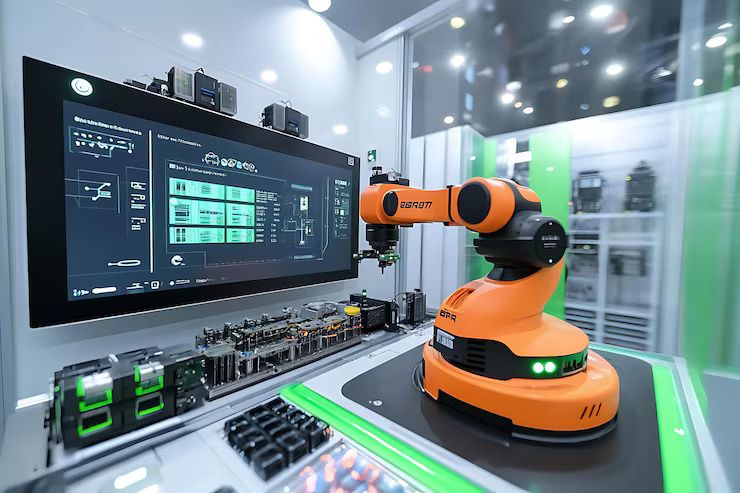
Today, PLC systems are widely used across industries such as manufacturing, automotive, food processing, pharmaceuticals, energy, and logistics. With the growth of Industry 4.0, PLC automation is becoming more connected through smart technologies, data monitoring systems, and intelligent manufacturing platforms.
This guide explains PLC automation systems, programming methods, industrial applications, and their role in smart manufacturing integration.
What Are PLC Automation Systems?
PLC automation systems are industrial control solutions designed to operate machines and processes automatically. They use programmable controllers to monitor inputs, execute logic instructions, and control outputs.
Unlike traditional control methods that rely on complex electrical circuits, PLC systems allow engineers to modify operations through software programming.
A complete PLC automation system usually includes:
- Programmable Logic Controller
- Input and output modules
- Sensors and field devices
- Human-machine interface (HMI)
- Communication networks
- Industrial control software
These components work together to create an automated environment where machines can perform tasks according to predefined instructions.
For example, in a packaging plant, a PLC system can monitor product movement, control conveyor speed, manage filling processes, and coordinate packaging equipment automatically.
Importance of PLC Automation in Modern Industries
Industrial automation has become essential as companies require faster, more accurate, and consistent production processes.
PLC systems provide several important advantages:
- Reliable machine control
- Improved process accuracy
- Real-time monitoring capabilities
- Flexible automation programming
- Better production management
For example, an automotive manufacturing facility can use PLC automation to coordinate robotic arms, conveyor systems, and inspection equipment throughout the production process.
The ability to adapt programming without completely redesigning hardware makes PLC systems valuable for changing industrial requirements.
How PLC Automation Systems Work
PLC automation systems operate through a continuous control process known as the scan cycle.
The PLC repeatedly performs three main operations: collecting information, processing instructions, and controlling equipment.
Input Scanning Process
The PLC first collects information from connected input devices.
Inputs may come from:
- Temperature sensors
- Pressure sensors
- Motion detectors
- Limit switches
- Level sensors
These devices provide real-time information about the current condition of the industrial process.
For example, a sensor may detect when a product reaches a specific position on a conveyor system.
Program Execution Process
After receiving input signals, the PLC processes the information according to its programmed logic.
The control program determines what actions should happen based on the received data.
For example, if a sensor detects a product position, the PLC may activate a robotic system or adjust machine speed.
Output Control Process
After processing the instructions, the PLC sends signals to output devices.
Outputs may control:
- Motors
- Valves
- Pumps
- Actuators
- Robotic equipment
This continuous cycle allows industrial systems to operate automatically with minimal manual intervention.
Main Components of PLC Automation Systems
Understanding the major components helps explain how PLC-based control systems function.
Programmable Logic Controller
The PLC is the main processing unit of an automation system.
It contains:
- Processor
- Memory
- Communication ports
- Programming interface
The processor executes control programs and manages communication between connected devices.
Input and Output Modules
Input and output modules connect the PLC with external equipment.
Input modules collect information from sensors, while output modules send commands to machines.
Common module types include:
- Digital input and output modules
- Analog input and output modules
- Communication modules
Human-Machine Interface (HMI)
HMI systems allow operators to interact with automated equipment.
Through an HMI, operators can:
- Monitor machine conditions
- View production information
- Adjust operating settings
- Identify system alerts
HMIs improve visibility and make industrial operations easier to manage.
Sensors and Field Devices
Sensors provide the information needed for automated decision-making.
Common industrial sensors include:
- Temperature sensors
- Pressure sensors
- Proximity sensors
- Flow sensors
These devices allow PLC systems to respond accurately to changing conditions.
PLC Programming Methods
PLC programming defines how automation systems operate. Different programming methods are used depending on application complexity and industry requirements.
Ladder Logic Programming
Ladder Logic is one of the most widely used PLC programming languages.
It represents control operations using symbols similar to traditional electrical relay diagrams.
Ladder Logic is popular because:
- It is easy for technicians to understand
- Troubleshooting is simpler
- It matches traditional industrial control concepts
It is commonly used in machine control, conveyor systems, and production equipment.
Function Block Diagram Programming
Function Block Diagram programming uses graphical blocks to represent control functions.
It is often used for process automation systems involving multiple control operations.
Applications include:
- Industrial process control
- Temperature regulation
- Automated production systems
Structured Text Programming
Structured Text is a programming language designed for more advanced PLC applications.
It is suitable for:
- Complex calculations
- Data processing
- Advanced control logic
This method provides greater flexibility for sophisticated automation projects.
Sequential Function Chart Programming
Sequential Function Chart programming represents industrial processes as a series of steps.
It is useful for operations involving multiple stages, such as automated production workflows.
Industrial Applications of PLC Automation Systems
PLC automation technology supports many industries by improving process control and operational efficiency.
Manufacturing Industry
Manufacturing plants use PLC systems to control production equipment and automated processes.
Applications include:
- Assembly lines
- Conveyor systems
- Machine control
- Quality monitoring systems
PLC automation helps coordinate multiple machines and maintain consistent production operations.
Automotive Industry
The automotive sector relies heavily on automation technologies.
PLC systems are used for:
- Robotic assembly
- Welding operations
- Vehicle component production
- Inspection processes
They help manage complex manufacturing activities with high precision.
Food and Beverage Industry
Food processing industries use PLC automation for controlling production and packaging operations.
Applications include:
- Mixing systems
- Filling equipment
- Temperature management
- Packaging machines
PLC systems help maintain consistent processing conditions.
Pharmaceutical Industry
Pharmaceutical manufacturing requires accurate and controlled processes.
PLC automation supports:
- Equipment monitoring
- Production control
- Environmental management systems
Automation helps maintain reliable manufacturing environments.
Energy and Utility Systems
PLC systems are used in energy and utility operations for monitoring and controlling equipment.
Applications include:
- Water treatment systems
- Power management systems
- Industrial equipment monitoring
Logistics and Warehousing
Modern warehouses use PLC automation to manage material movement and storage operations.
Applications include:
- Conveyor automation
- Sorting systems
- Automated handling equipment
PLC Automation and Smart Manufacturing Integration
Smart manufacturing combines automation, digital technologies, and data analysis to create connected industrial environments.
PLC systems play an important role in this transformation.
Industrial Internet of Things (IIoT)
Modern PLC systems can connect with IIoT platforms to collect and exchange operational data.
Connected systems allow industries to monitor:
- Equipment performance
- Production status
- Machine conditions
This information helps improve operational decisions.
Data Analytics and Monitoring
Advanced PLC systems can integrate with industrial software platforms for analyzing production data.
Data analysis helps identify:
- Process improvements
- Equipment performance trends
- Maintenance requirements
Robotics Integration
PLC systems often work together with industrial robots to create automated production environments.
The PLC coordinates robotic movements with other equipment to maintain smooth workflows.
Applications include:
- Robotic assembly
- Material handling
- Automated packaging
Predictive Maintenance
Smart PLC systems can support predictive maintenance by collecting equipment information through connected sensors.
Monitoring machine conditions helps identify potential issues before major disruptions occur.
Benefits of PLC-Based Smart Manufacturing
Integrating PLC systems with smart technologies provides several advantages.
Important benefits include:
- Better production visibility
- Improved process control
- Faster decision-making
- More flexible manufacturing systems
Connected automation allows industries to respond more effectively to changing production requirements.
Challenges in PLC Automation
Although PLC systems provide many advantages, industries must consider several challenges.
Common challenges include:
- Requirement for skilled programming knowledge
- Integration with existing systems
- Cybersecurity concerns
- Regular maintenance needs
As automation networks become more connected, protecting industrial control systems becomes increasingly important.
Future Trends in PLC Automation Technology
PLC technology continues to develop with advancements in digital transformation.
Future trends include:
- Artificial intelligence integration
- Cloud-connected automation systems
- Edge computing technologies
- Advanced cybersecurity solutions
- More intelligent control systems
These developments will support the growth of smarter and more efficient industrial environments.
Conclusion
PLC automation systems have become a foundation of modern industrial control by providing reliable programming, accurate machine management, and flexible automation capabilities.
From manufacturing and automotive production to healthcare, energy, and logistics, PLC systems help industries improve efficiency and manage complex processes.
With integration into smart manufacturing, IIoT platforms, robotics, and advanced data technologies, PLC automation will continue playing an important role in the future of connected industrial systems.