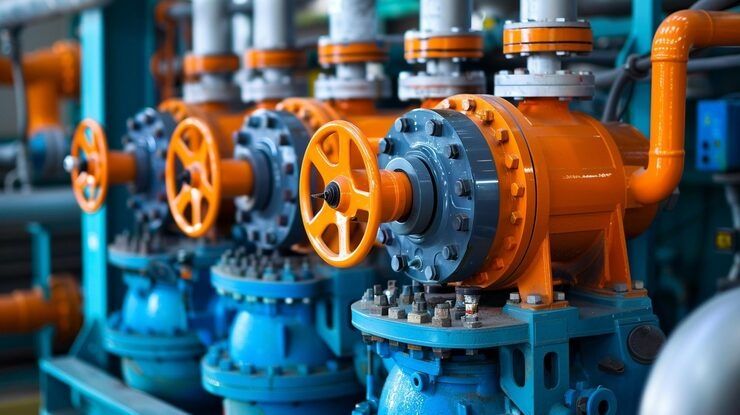
Pneumatic valves are mechanical devices that control the flow, direction, and pressure of compressed air within pneumatic systems. They play an essential role in industrial automation by regulating how air moves through cylinders, actuators, and other pneumatic equipment. These valves are widely used in manufacturing, packaging, food processing, pharmaceuticals, automotive production, and material handling because compressed air provides a clean and efficient method of powering machinery.
Modern pneumatic valves are manufactured using precision engineering, advanced machining technologies, and automated quality inspection systems. They are available in various designs to meet different industrial requirements, from simple manual valves to electronically controlled solenoid valves integrated with programmable logic controllers (PLCs). As Industry 4.0 technologies continue to develop, pneumatic valves are increasingly connected with smart sensors and digital monitoring platforms for improved process control.
Context
What Are Pneumatic Valves?
A pneumatic valve controls compressed air flowing through a pneumatic circuit. By opening, closing, or redirecting airflow, the valve determines how pneumatic actuators and cylinders operate.
Most pneumatic systems consist of:
- Air compressor
- Air preparation unit
- Pneumatic valves
- Pneumatic cylinders
- Air tubing
- Sensors
- Control systems
The valve acts as the control point that manages airflow according to machine requirements.
How Pneumatic Valves Work
Compressed air enters the valve through an inlet port. Depending on the valve position, the air is directed toward one or more outlet ports while exhaust air is released through designated exhaust ports.
The operating process generally includes:
- Compressed air enters the valve.
- The valve changes position manually, mechanically, pneumatically, or electrically.
- Air is directed toward the actuator.
- The actuator performs the required movement.
- Exhaust air leaves through the exhaust port.
This controlled airflow enables precise machine operation.
Common Types of Pneumatic Valves
Different industrial applications require different valve designs.
| Valve Type | Primary Function | Typical Applications |
|---|---|---|
| Directional control valve | Controls airflow direction | Pneumatic cylinders |
| Solenoid valve | Electrically operated airflow control | Automated production lines |
| Flow control valve | Regulates airflow rate | Speed control |
| Pressure control valve | Controls air pressure | Pneumatic equipment |
| Check valve | Prevents reverse airflow | Air circuits |
| Shuttle valve | Selects one of two air sources | Control systems |
Each valve type performs a specific function within a pneumatic control system.
Manufacturing Technologies
Pneumatic valve manufacturing combines precision machining with automated production processes.
Typical manufacturing stages include:
- CNC machining
- Precision drilling
- Surface finishing
- Assembly
- Seal installation
- Leak testing
- Pressure testing
- Functional inspection
These processes help maintain dimensional accuracy and reliable operation.
Importance
Why Pneumatic Valves Matter
Pneumatic valves are essential because they control the movement of compressed air throughout industrial machinery. Without proper valve control, pneumatic systems cannot perform lifting, clamping, positioning, sorting, or automated production tasks.
Reliable airflow control contributes to consistent machine performance and efficient production processes.
Supporting Industrial Automation
Industrial automation relies heavily on pneumatic valves to coordinate machine movements.
Common automated functions include:
- Product handling
- Conveyor operation
- Packaging
- Assembly processes
- Sorting systems
- Material transfer
- Robotic gripping
Valves work together with sensors and controllers to execute programmed machine sequences.
Applications Across Industries
Pneumatic valves are used in numerous industrial sectors.
Manufacturing: Production equipment uses pneumatic valves to control cylinders, presses, clamps, and automated workstations.
Automotive: Assembly lines depend on pneumatic systems for positioning, fastening, and component handling.
Food Processing: Compressed air systems operate packaging equipment and production machinery where clean operation is important.
Pharmaceutical Manufacturing: Pneumatic valves control automated equipment used during packaging and material handling.
Electronics: Precision assembly equipment uses pneumatic control for delicate positioning operations.
Advantages of Pneumatic Systems
Pneumatic systems remain widely used because they provide several operational advantages.
These include:
- Fast response
- Simple mechanical design
- Clean operation using compressed air
- Easy integration with automation
- Reliable repetitive movement
- Flexible installation
Performance depends on proper system design and maintenance.
Recent Updates
Smart Pneumatic Valves
Between 2024 and 2026, manufacturers have expanded the use of intelligent pneumatic valves equipped with digital sensors. These valves monitor pressure, airflow, switching cycles, and operating conditions in real time.
Operational data supports equipment monitoring and maintenance planning.
Industry 4.0 Integration
Modern pneumatic valves increasingly communicate with industrial automation platforms through digital communication networks.
Connected systems support:
- Remote monitoring
- Predictive maintenance
- Production analysis
- Equipment diagnostics
- Digital documentation
This integration improves visibility across manufacturing operations.
Energy-Efficient Air Management
Manufacturers continue developing valve designs that improve airflow efficiency and reduce unnecessary compressed air consumption.
Improved sealing technologies and optimized airflow paths contribute to more efficient pneumatic system operation.
Compact Valve Manifolds
Valve manifold systems allow multiple pneumatic valves to be installed within a compact assembly. This approach simplifies installation, reduces tubing requirements, and supports modular machine design.
Improved Manufacturing Quality
Advanced CNC machining, automated leak testing, laser measurement, and digital inspection technologies continue improving production consistency and product quality.
Laws or Policies
Manufacturing Quality Standards
Pneumatic valves are commonly manufactured according to internationally recognized quality management standards that define production, inspection, and documentation requirements.
Industrial Safety Regulations
Compressed air systems operate under workplace safety regulations covering pressure equipment, machinery operation, and maintenance procedures.
Important safety practices include:
- Pressure inspections
- Leak detection
- Routine maintenance
- Proper installation
- Equipment testing
Requirements vary according to industry and national regulations.
Pressure Equipment Standards
Many pneumatic components follow engineering standards related to pressure systems, material selection, and performance testing to support safe operation.
Environmental Considerations
Manufacturers increasingly focus on efficient compressed air usage, waste reduction, recyclable materials, and environmentally responsible production processes.
Tools and Resources
Pneumatic Circuit Design Software
Engineering software helps create pneumatic circuit diagrams, component layouts, and system simulations before installation.
Pneumatic Calculators
Engineers frequently use calculation tools for:
- Airflow rate
- Working pressure
- Valve sizing
- Cylinder force
- Air consumption
- Pipe sizing
These calculations support system design and equipment selection.
PLC Programming Platforms
Programmable Logic Controller software integrates pneumatic valves with industrial automation equipment, sensors, and production machinery.
Condition Monitoring Systems
Digital monitoring platforms collect information about:
- Valve operation
- Air pressure
- Switching frequency
- Equipment status
- Maintenance history
These systems support predictive maintenance and equipment diagnostics.
Engineering Resources
Useful educational resources include:
- Pneumatic engineering manuals
- Industrial automation publications
- Fluid power associations
- Manufacturing technology journals
- Technical standards organizations
- Equipment documentation
These materials explain pneumatic principles, valve technologies, and industrial applications.
FAQs
What is a pneumatic valve?
A pneumatic valve is a device that controls the direction, pressure, and flow of compressed air within a pneumatic system.
What are the main types of pneumatic valves?
Common types include directional control valves, solenoid valves, flow control valves, pressure control valves, check valves, and shuttle valves.
How do pneumatic valves work?
Pneumatic valves direct compressed air through different ports to control the movement of cylinders, actuators, and other pneumatic devices according to the required operation.
Where are pneumatic valves used?
Pneumatic valves are widely used in manufacturing, automotive production, food processing, pharmaceuticals, packaging, electronics, material handling, and industrial automation systems.
Why are pneumatic valves important in industrial automation?
Pneumatic valves regulate compressed air that powers automated machinery, enabling controlled movement, accurate positioning, and coordinated machine operation.
Conclusion
Pneumatic valves are essential components of compressed air systems, providing precise control over airflow in countless industrial applications. Advances in manufacturing technologies, digital monitoring, and Industry 4.0 integration continue improving valve performance, reliability, and automation capabilities. From simple manual controls to intelligent electronically operated systems, pneumatic valves remain fundamental to modern manufacturing and industrial automation.