PVC laminate products are widely used in furniture, interior surfaces, cabinetry, wall applications, and other decorative environments where a combination of appearance, durability, and easy maintenance is important.
Behind these finished products is a coordinated manufacturing process that transforms PVC-based materials into consistent laminate sheets or films with controlled thickness, surface characteristics, color, and finish.
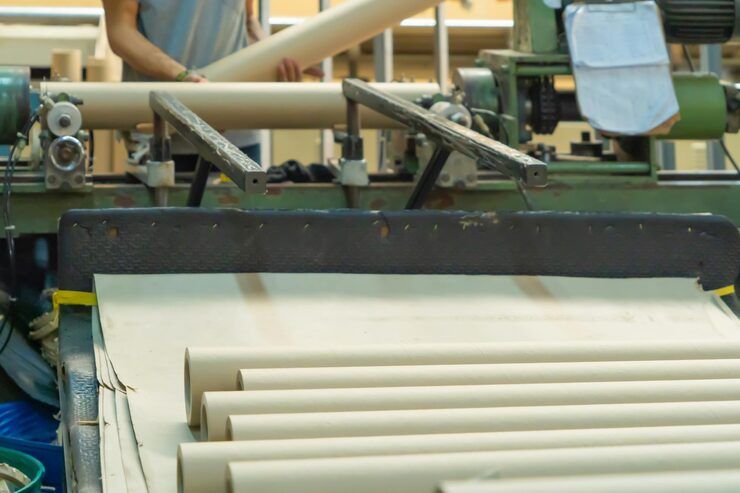
A modern PVC laminate production line brings together material preparation, blending, extrusion, surface treatment, printing or decoration, lamination, cooling, cutting, inspection, and other supporting operations. Each stage contributes to the final quality of the laminate, making process coordination an important part of manufacturing.
Understanding how a PVC laminate manufacturing line works provides useful insight into the technologies, equipment, materials, and quality-control practices involved in modern production systems.
What Is a PVC Laminate Production Line?
A PVC laminate production line is an integrated manufacturing system designed to process PVC-based materials into decorative or functional laminate products. Depending on the product design, the line may produce flexible PVC films, rigid sheets, decorative surfaces, or laminated panels.
A typical PVC laminate production machine setup can include several interconnected units rather than one standalone machine. Material moves through sequential stages, with each machine performing a specific processing function.
The exact configuration depends on factors such as:
- Product thickness
- Surface finish
- Width requirements
- Decorative design
- Production capacity
- Substrate type
- Required dimensional accuracy
- Final application
This modular approach allows manufacturers to configure production systems around particular product characteristics.
Main Stages of PVC Laminate Manufacturing
Although production layouts vary, most systems follow a logical sequence from raw materials to finished products.
1. Raw Material Preparation
The process begins with PVC resin and other formulation components. Depending on the intended product, manufacturers may incorporate stabilizers, pigments, processing aids, fillers, and other materials.
Accurate material preparation is important because variations in formulation can affect color, flexibility, strength, surface appearance, and processing behavior.
Automated feeding and weighing systems can help maintain consistency by controlling the quantity of individual materials entering the production process.
2. Mixing and Compounding
Prepared materials are blended to create a homogeneous PVC compound.
Mixing equipment distributes additives and pigments throughout the material so that the formulation behaves consistently during subsequent processing. Temperature, mixing time, and material ratios are important process variables.
Good compounding provides a more uniform foundation for extrusion and helps reduce variations in the finished laminate.
3. Extrusion
Extrusion is one of the central stages of a PVC laminate manufacturing machine system.
During extrusion, the prepared PVC compound is heated and processed through an extruder. Mechanical action and controlled temperature cause the material to become workable before it is pushed through a specially designed die.
The die determines the basic shape and width of the emerging material. Precise control of temperature, pressure, screw operation, and material flow helps maintain consistent output.
For sheet-based products, the extruded material is generally formed into a continuous layer before entering downstream processing equipment.
Thickness and Surface Control
After extrusion, the material must be stabilized and brought to the required dimensions.
Calendering or related sheet-forming systems may be used in some production configurations to control thickness and surface characteristics. Rollers apply controlled pressure while shaping the material into a uniform sheet or film.
Cooling systems then help stabilize the processed material.
Thickness control is particularly important because uneven thickness can influence appearance, flexibility, dimensional stability, and the performance of the finished laminate.
Modern production lines may use sensors and automated controls to continuously monitor process conditions and maintain consistent dimensions.
Decorative Surface Processing
A major characteristic of many PVC laminates is their decorative appearance. Depending on the product, the surface may include wood patterns, stone effects, solid colors, textures, or other visual designs.
Printing equipment can transfer decorative patterns onto the PVC surface using controlled processes. Accurate registration is important when repeating patterns or matching visual elements across continuous material.
Surface treatment may also be used to improve characteristics such as:
- Gloss level
- Texture
- Scratch resistance
- Surface protection
- Print adhesion
- Visual consistency
These processes allow the same underlying PVC material to support a broad range of decorative appearances.
Lamination and Bonding
Some PVC laminate products involve bonding a decorative PVC layer to another substrate or material.
The lamination stage brings the layers together under controlled conditions. Depending on the product structure, bonding can involve adhesives, heat, pressure, or a combination of these methods.
The objective is to create a stable composite structure with consistent adhesion across the surface.
Important variables may include temperature, pressure, line speed, adhesive distribution, and material compatibility. Poor control at this stage can result in bubbles, wrinkles, separation, or uneven surfaces.
Cooling, Trimming, and Cutting
After forming or lamination, the material is cooled and stabilized before being converted into its required dimensions.
Edge-trimming systems remove irregular edges and establish consistent product width. Cutting systems can then divide continuous material into sheets, rolls, or other specified formats.
Automated cutting and handling systems improve dimensional consistency while reducing unnecessary manual intervention.
The finished material may then be stacked, rolled, or transferred to subsequent processing or packaging operations.
Quality Control in a PVC Laminate Production Line
Quality control is integrated throughout modern PVC laminate manufacturing rather than being limited to final inspection.
Manufacturers may monitor:
- Thickness
- Width
- Color consistency
- Surface appearance
- Gloss
- Pattern alignment
- Adhesion
- Dimensional stability
- Mechanical properties
- Surface defects
Online monitoring systems can detect variations during production, allowing process parameters to be adjusted before large quantities of material are affected.
Visual inspection remains useful for identifying defects that automated systems may not fully evaluate, particularly where decorative appearance is an important product characteristic.
Automation and Process Control
Automation has become an important feature of modern PVC laminate production machines.
Programmable control systems can coordinate multiple stages of production, including temperature management, extrusion speed, roller operation, material feeding, cooling, and cutting.
Sensors provide real-time information about operating conditions, while control systems use this information to maintain predefined process parameters.
Automation can provide several operational advantages:
- More consistent production
- Reduced process variation
- Improved monitoring
- Better synchronization between machines
- Easier recording of production data
- More predictable material handling
The role of automation is not simply to increase machine activity. Its larger purpose is to improve process stability and provide better control over manufacturing conditions.
Factors That Influence Production Quality
Several factors can affect the performance of a PVC laminate production line.
Material Consistency
Variations in raw materials can influence extrusion behavior and finished-product properties.
Temperature Control
PVC processing requires carefully controlled thermal conditions. Excessive or insufficient heat can affect material behavior and surface quality.
Line Speed
Production speed must remain synchronized across different stages. If one section operates significantly faster or slower than another, defects or material instability may occur.
Equipment Alignment
Rollers, dies, guides, and downstream equipment need appropriate alignment to maintain dimensional accuracy.
Environmental Conditions
Temperature, humidity, dust, and general manufacturing conditions can influence certain stages of production and surface quality.
Applications of PVC Laminates
PVC laminate products are used across many interior and functional applications.
Common areas include:
- Furniture surfaces
- Kitchen cabinetry
- Wall panels
- Interior doors
- Decorative boards
- Shelving systems
- Commercial interiors
- Office furniture
- Retail fixtures
Their combination of decorative flexibility and practical surface characteristics makes PVC laminates suitable for environments where appearance and everyday usability are both important.
Trends in PVC Laminate Manufacturing
Modern manufacturing is increasingly focused on automation, process monitoring, material efficiency, and product customization.
Emerging developments include greater use of digital controls, automated inspection, data collection, improved surface technologies, and more precise material management.
Manufacturers are also exploring designs that support lower material waste, improved recyclability, and more efficient production workflows.
Digital monitoring can provide manufacturers with greater visibility into production conditions, helping identify process deviations and maintenance requirements earlier.
Frequently Asked Questions
What is a PVC laminate production line?
A PVC laminate production line is an integrated manufacturing system that processes PVC materials through stages such as mixing, extrusion, forming, surface decoration, lamination, cooling, cutting, and inspection.
What does a PVC laminate manufacturing machine do?
A PVC laminate manufacturing machine performs a specific stage of the production process, such as extrusion, forming, printing, lamination, cooling, or cutting. Multiple machines can operate together as a complete manufacturing line.
What affects PVC laminate quality?
Material consistency, temperature control, extrusion conditions, surface treatment, lamination parameters, line speed, equipment alignment, and quality inspection can all affect the finished product.
Where are PVC laminates commonly used?
PVC laminates are commonly used for furniture, cabinetry, wall panels, interior doors, shelving, office furnishings, retail fixtures, and other decorative surfaces.
How is automation used in PVC laminate production?
Automation can coordinate material feeding, temperature control, extrusion, forming, cooling, cutting, and inspection while collecting process data and helping maintain consistent operating conditions.
Conclusion
A PVC laminate production line is a coordinated manufacturing system in which material preparation, extrusion, forming, decoration, lamination, cooling, cutting, and inspection work together to produce consistent finished materials. The quality of the final product depends not only on individual machines but also on how effectively these stages are integrated and controlled.
Modern PVC laminate manufacturing machines increasingly combine mechanical processing with sensors, automated controls, digital monitoring, and quality-assurance systems. As production technology continues to develop, greater process precision, efficient material use, surface innovation, and automation are likely to remain important areas of advancement.
Understanding the complete PVC laminate manufacturing line therefore provides a clearer view of how raw PVC materials are transformed into durable, consistent, and visually diverse laminate products used across modern interior and furniture applications.