PVC pipes are widely used in water distribution, drainage, irrigation, construction, and industrial infrastructure because they are lightweight, durable, and resistant to corrosion.
However, manufacturing a PVC pipe is only part of the production process. For many piping systems, one end of the pipe must be shaped into a socket or bell so that another pipe can fit securely into it. This process is known as pipe belling or socketing.
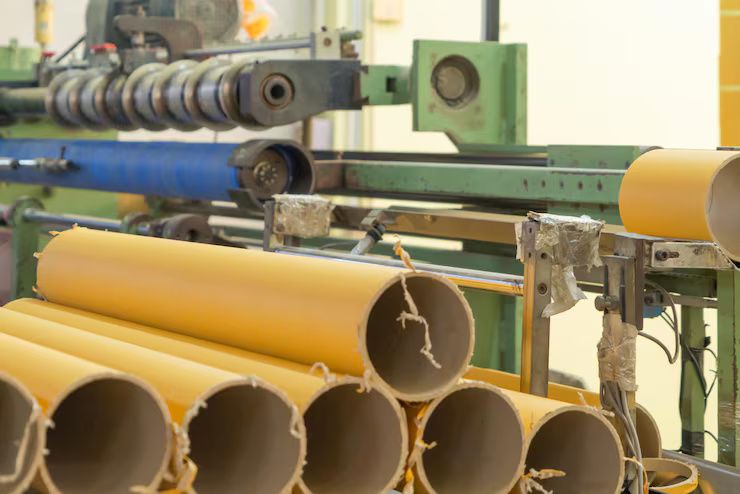
PVC Pipe Belling Machines are designed to create this expanded socket end with consistent dimensions and controlled forming conditions. By combining heating, shaping, cooling, and automated handling, these machines help manufacturers produce pipes that can be joined efficiently while maintaining dimensional accuracy.
Understanding PVC Pipe Belling Equipment is useful for anyone involved in plastic pipe manufacturing, production planning, equipment maintenance, or quality control. This guide explains how belling machines work, their main components, common operating stages, maintenance requirements, and the factors that influence reliable production.
What Is a PVC Pipe Belling Machine?
A PVC Pipe Belling Machine is an industrial system used to form a socket, or bell, at one end of a PVC pipe. The socket allows two compatible pipes to be connected without requiring additional joining methods for certain applications.
The process generally involves heating the pipe end until the PVC becomes sufficiently flexible for controlled forming. A specialized forming tool or mandrel then shapes the heated section into the required socket profile. After forming, the pipe is cooled so that the new shape becomes stable.
Modern machines may be integrated directly into a PVC Pipe Production Machine line, allowing pipes to move automatically from extrusion to cutting and then into the belling process.
The overall objective is to create a consistent socket that meets specified dimensional and functional requirements.
Why Pipe Belling Is Important
Pipe belling is important because the socket geometry directly affects how pipes are assembled.
A properly formed socket should provide:
- Consistent internal dimensions
- Accurate wall thickness
- Reliable pipe alignment
- Proper connection between compatible pipes
- Consistent sealing performance where applicable
- Efficient downstream installation
Poorly formed sockets can create assembly difficulties or dimensional inconsistencies. For this reason, temperature control, forming accuracy, and cooling conditions are important parts of the manufacturing process.
How PVC Pipe Belling Machines Work
Although machine configurations differ, the basic operating sequence is relatively consistent.
First, a cut PVC pipe enters the belling station. The machine positions the pipe accurately before the socket-forming process begins.
The pipe end is then heated using a controlled heating system. The objective is to soften the material evenly without causing excessive deformation or thermal damage.
Once the required forming condition is reached, the heated pipe end is placed over or around a forming mandrel. The forming tool creates the desired socket geometry.
After shaping, the formed section is cooled. Cooling may use air, water, or a combination of controlled methods depending on machine design and production requirements.
Once the socket has stabilized, the finished pipe is released and transferred to the next stage.
This sequence can be summarized as:
- Pipe positioning
- End heating
- Socket forming
- Cooling
- Shape stabilization
- Inspection and discharge
Automation allows these stages to be coordinated with greater consistency across repeated production cycles.
Main Components of PVC Pipe Belling Equipment
A typical PVC Pipe Belling Equipment system consists of several interconnected components.
Heating System
The heating system softens the PVC pipe end before forming. Heating must be carefully controlled because insufficient heat may result in incomplete forming, while excessive heat can affect dimensional stability and surface quality.
Depending on the equipment design, heating may involve infrared systems, hot air, or other controlled heating technologies.
Forming Mandrel
The forming mandrel is one of the most important components because it determines the internal shape and dimensions of the socket.
Different pipe specifications may require different forming tools. Accurate alignment between the pipe and mandrel helps maintain consistent socket geometry.
Cooling System
After forming, the socket must be cooled to stabilize its shape.
Cooling systems may use controlled air circulation, water cooling, or other methods. The cooling rate can influence the final dimensional accuracy of the formed socket.
Clamping and Positioning System
The pipe must remain stable throughout heating and forming. Clamping mechanisms and positioning devices help maintain accurate alignment and prevent unwanted movement.
Control System
Modern PVC Pipe Socketing Equipment often incorporates digital controls for temperature, timing, movement, and production sequences.
These controls allow operators to monitor operating conditions and adjust settings according to pipe specifications.
Transfer and Handling System
Automated conveyors, rollers, or mechanical handling systems move pipes between different stages of production. Efficient handling helps maintain a continuous workflow and reduces unnecessary manual intervention.
PVC Pipe Socketing Machines and Their Applications
A PVC Pipe Socketing Machine performs essentially the same core function as a belling machine: it forms a socket at the pipe end for compatible joining.
These machines are used in the production of PVC pipes for applications such as:
- Water distribution
- Sewer and drainage networks
- Agricultural irrigation
- Electrical conduit systems
- Construction infrastructure
- Industrial piping
The exact machine configuration depends on pipe diameter, wall thickness, socket design, production volume, and applicable manufacturing requirements.
Comparing Belling and Socketing Equipment
The terms belling and socketing are often used interchangeably in the PVC pipe industry, although terminology may vary between manufacturers and regions.
| Equipment | Main Function | Key Consideration |
|---|---|---|
| PVC Pipe Belling Machine | Forms a bell-shaped socket | Heating and forming accuracy |
| PVC Pipe Socketing Machine | Creates a joining socket | Consistent socket dimensions |
| PVC Pipe Belling Equipment | Complete forming system | Integrated process control |
| PVC Pipe Socketing Equipment | Equipment used for socket formation | Tooling and cooling |
| PVC Pipe Production Machine | Broader pipe manufacturing system | Extrusion and downstream integration |
The appropriate terminology depends on the production process and equipment configuration, but the underlying objective remains the controlled formation of a pipe socket.
Factors That Affect Belling Quality
Several production variables influence the final quality of a socket.
Heating Temperature
The PVC must reach an appropriate forming condition. Uneven heating may produce inconsistent socket dimensions or surface defects.
Heating Time
The duration of heating must correspond to the pipe's material characteristics and dimensions. Changes in wall thickness or diameter may require adjustments.
Forming Alignment
Accurate positioning between the pipe and forming tool is essential for producing symmetrical sockets.
Cooling Conditions
Controlled cooling helps stabilize the formed shape. Uneven cooling can contribute to dimensional variation.
Tooling Condition
Worn or damaged mandrels can affect socket geometry and surface quality. Regular inspection is therefore important.
Maintenance of PVC Pipe Belling Machines
Preventive maintenance is essential for maintaining reliable production and consistent product quality.
Inspect Heating Systems
Heating elements should be checked regularly for damage, contamination, or uneven performance. Temperature sensors should also be inspected to ensure accurate monitoring.
Maintain Forming Tools
Mandrels and other forming components should remain clean and properly aligned. Surface damage can affect the internal finish of the socket.
Check Cooling Systems
Cooling lines, air systems, and related components should be inspected for blockages or performance issues.
Inspect Moving Components
Bearings, guide rails, clamps, actuators, and mechanical drives require routine inspection. Lubrication should follow the equipment manufacturer's maintenance requirements.
Verify Control Systems
Sensors, control panels, and automated sequences should be checked regularly. Accurate temperature and timing controls are particularly important for repeatable production.
Common Operational Problems
Several issues may occur if equipment settings or maintenance conditions are not properly managed.
Incomplete Socket Formation
This may result from insufficient heating, incorrect forming conditions, or poor alignment.
Deformed Socket Geometry
Uneven heating or cooling can cause distortion after forming.
Surface Defects
Excessive heat, contaminated tooling, or material degradation may affect the surface of the formed area.
Dimensional Variation
Inconsistent temperature, timing, or tooling conditions can lead to differences between production batches.
Identifying the underlying cause is generally more effective than simply adjusting one operating parameter without examining the complete process.
Improving Production Efficiency
Manufacturers can improve operational consistency by taking a process-oriented approach.
Useful practices include:
- Standardizing operating procedures
- Monitoring heating conditions
- Performing regular tooling inspections
- Calibrating sensors
- Tracking production data
- Scheduling preventive maintenance
- Training operators
- Inspecting finished sockets
Data monitoring can also help identify gradual changes in machine performance before they become major production problems.
Future Developments in PVC Pipe Belling Technology
PVC pipe manufacturing continues to adopt greater automation and digital monitoring.
Future developments are likely to include:
- More precise temperature control
- Automated tool changing
- Advanced production monitoring
- Predictive maintenance systems
- Integrated quality inspection
- Improved energy management
- Greater connectivity between extrusion and downstream equipment
These developments can help manufacturers maintain consistent production while improving process visibility.
Frequently Asked Questions
What is a PVC Pipe Belling Machine?
A PVC Pipe Belling Machine is equipment used to heat and form one end of a PVC pipe into a socket or bell shape for compatible pipe joining applications.
What is the difference between a belling machine and a socketing machine?
In many manufacturing contexts, the terms describe similar equipment. Both systems form a socket at the end of a PVC pipe, although specific machine designs and terminology may vary.
Why is temperature control important in PVC pipe socketing?
Temperature control ensures that the PVC becomes sufficiently flexible for forming without excessive heating that could affect material quality or dimensional stability.
How often should PVC Pipe Belling Equipment be maintained?
Maintenance frequency depends on operating conditions, production volume, machine design, and manufacturer recommendations. Regular inspections combined with scheduled preventive maintenance are important for reliable operation.
What affects the quality of a formed PVC pipe socket?
Heating temperature, heating time, pipe alignment, forming tool condition, cooling conditions, and material characteristics can all influence socket quality.
Conclusion
PVC Pipe Belling Machines are an important part of modern plastic pipe manufacturing because they transform the end of a PVC pipe into a precisely formed socket suitable for compatible joining systems. Their operation combines controlled heating, accurate forming, cooling, and automated handling to produce consistent results.
Reliable performance depends on more than machine operation alone. Proper tooling, accurate temperature control, effective cooling, routine maintenance, and systematic quality inspection all contribute to stable production. As PVC Pipe Belling Equipment becomes increasingly integrated with digital controls and automated production lines, manufacturers can gain greater visibility into the forming process while improving consistency and operational efficiency.
Understanding the components and operating principles of PVC Pipe Socketing Equipment provides a useful foundation for evaluating production processes, troubleshooting common issues, and establishing maintenance practices that support dependable PVC pipe manufacturing.