PVC profile extrusion is a widely used manufacturing process for producing continuous plastic shapes with consistent dimensions and properties.
From window frames and door profiles to decorative trims, construction components, and technical sections, PVC profiles are found across many industries. The quality and efficiency of these products depend heavily on the design of the extrusion system, the properties of the raw material, and the precision of the processing conditions.
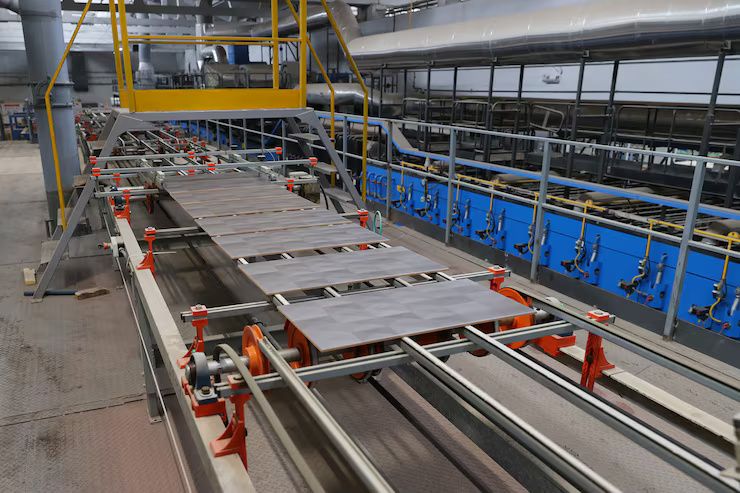
PVC Profile Extrusion Machines are designed to transform PVC compounds into continuous profiles through controlled heating, melting, shaping, cooling, and cutting. Modern systems combine mechanical equipment, temperature controls, automation, and quality monitoring to maintain consistent production.
Understanding how these machines work provides useful insight into plastic processing technology and helps explain how manufacturers produce complex PVC profiles at industrial scale.
What Are PVC Profile Extrusion Machines?
PVC Profile Extrusion Machines are industrial systems used to manufacture continuous profiles from polyvinyl chloride, commonly known as PVC. The process begins with PVC material in a prepared compound form, which is heated and processed until it reaches a suitable condition for forming.
The processed material is then pushed through a specially designed die that determines the profile's cross-sectional shape. After leaving the die, the profile is cooled, calibrated, pulled through the production line, and cut or collected according to the required specifications.
Unlike injection molding, which creates individual components, extrusion is a continuous process. This makes it particularly suitable for products with a consistent cross-sectional design and extended length.
Common PVC profiles include:
- Window and door frames
- Construction trims
- Cable management channels
- Decorative moldings
- Wall and ceiling profiles
- Furniture components
- Technical sections
- Sealing and protective profiles
How PVC Profile Extrusion Works
A typical PVC Profile Extrusion Line includes several stages that operate together as a coordinated system.
Material Feeding
PVC compound is introduced into the extrusion system through a controlled feeding mechanism. Depending on the manufacturing process, the material may be supplied as powder, pellets, or a prepared compound.
Consistent material feeding helps maintain stable production conditions.
Heating and Plasticization
Inside the extruder, rotating screws transport the PVC material through heated zones.
The combination of controlled temperature and mechanical shear allows the material to become sufficiently plasticized for forming.
Precise temperature management is important because excessive heat can affect PVC properties, while insufficient heating may prevent proper processing.
Extrusion Through the Die
The plasticized material is pushed through a profile die.
The die determines the shape and dimensions of the finished product. Complex profiles may require carefully engineered internal channels and multiple sections, making die design a critical part of the process.
Calibration and Cooling
Once the profile exits the die, it must be stabilized and cooled.
Calibration equipment helps maintain dimensional accuracy while cooling systems remove heat from the profile. Vacuum calibration is commonly used for certain rigid PVC profiles because it helps maintain consistent dimensions during cooling.
Pulling and Cutting
A haul-off or pulling unit moves the profile through the line at a controlled speed.
Once the desired length is reached, a cutting system separates the continuous profile into individual sections.
The finished products may then undergo inspection, packaging, or additional processing.
Main Components of PVC Profile Extrusion Equipment
A complete PVC Profile Extrusion Equipment setup typically includes multiple machines and supporting systems.
| Component | Primary Function |
|---|---|
| Extruder | Melts and conveys PVC material |
| Feeding System | Supplies material consistently |
| Profile Die | Forms the required cross-sectional shape |
| Calibration Unit | Stabilizes profile dimensions |
| Cooling System | Removes heat after extrusion |
| Haul-Off Unit | Pulls the profile at controlled speed |
| Cutting Unit | Produces specified profile lengths |
| Control System | Monitors and adjusts operating parameters |
Each component contributes to overall process stability. The performance of one section can influence the output of the entire extrusion system.
Understanding the PVC Profile Extrusion Production Line
A PVC Profile Extrusion Production Line is more than a single machine. It is an integrated manufacturing system in which individual units work together continuously.
The layout may vary depending on the profile being produced, but a typical production sequence is:
Material preparation → feeding → extrusion → die forming → calibration → cooling → pulling → cutting → inspection
Automation helps coordinate these stages by monitoring factors such as temperature, extrusion speed, pulling speed, and production length.
A properly synchronized line helps reduce dimensional variation and supports consistent product quality.
The Importance of Die Design
The extrusion die is one of the most important elements in profile manufacturing.
A die must distribute the molten PVC evenly across the profile's cross-section. Uneven flow can lead to dimensional differences, surface defects, or inconsistent wall thickness.
Die design becomes more complex when profiles contain:
- Multiple internal chambers
- Thin walls
- Uneven sections
- Complex geometries
- Reinforcement cavities
- Interlocking features
The relationship between material flow, die geometry, cooling, and pulling speed must be carefully considered to achieve the intended profile shape.
Factors That Influence Extrusion Quality
Several variables affect the quality of PVC profiles during production.
Temperature Control
PVC processing requires carefully controlled temperature zones throughout the extruder and die.
Stable thermal conditions help maintain consistent material flow.
Screw Design
The screw influences material transport, mixing, plasticization, and pressure development.
Different PVC formulations and profile requirements may require different screw configurations.
Extrusion Speed
Production speed must be balanced with cooling capacity and profile geometry.
Excessive speed can create dimensional instability, while overly slow operation may reduce productivity.
Cooling Conditions
Uniform cooling helps prevent warping, distortion, and dimensional changes.
Pulling Speed
The haul-off speed must be synchronized with material output from the die. An imbalance can affect profile dimensions and surface quality.
Common Applications of PVC Profiles
PVC profiles are widely used because they can provide useful combinations of durability, dimensional stability, weather resistance, and ease of processing.
Common applications include:
Construction
PVC profiles are used in window frames, door systems, wall panels, trims, and other building components.
Electrical Applications
Cable ducts, conduits, and protective channels can be manufactured using specialized PVC extrusion processes.
Interior Products
Decorative moldings, ceiling components, furniture edges, and finishing profiles are among the many interior applications.
Industrial Components
Technical profiles may be used in machinery, equipment housings, protective systems, and specialized manufacturing applications.
Advantages of PVC Profile Extrusion Technology
Plastic extrusion provides several characteristics that make it suitable for continuous profile manufacturing.
The process can produce long sections with consistent cross-sectional geometry. Once the extrusion system is properly configured, continuous production can also support repeatable manufacturing conditions.
Other potential advantages include:
- Flexible profile design
- Continuous production capability
- Consistent dimensions
- Compatibility with various PVC formulations
- Integration with automated controls
- Efficient material processing
- Suitability for complex cross-sections
The actual performance of a finished profile depends on material formulation, machine configuration, die design, and processing conditions.
Challenges in PVC Profile Extrusion
Despite its advantages, PVC profile extrusion requires careful process control.
Common challenges include:
Dimensional Variation
Changes in temperature, material flow, cooling, or pulling speed can affect profile dimensions.
Surface Defects
Improper processing conditions may result in roughness, discoloration, or other surface imperfections.
Warping
Uneven cooling can cause profiles to bend or distort.
Material Degradation
PVC is sensitive to excessive thermal exposure. Poorly controlled processing conditions can affect material quality.
Equipment Wear
Screws, barrels, dies, and other components experience wear over time, which may influence production consistency.
Regular inspection and appropriate maintenance help address these challenges.
Automation and Modern Extrusion Technology
Modern PVC Profile Extrusion Equipment increasingly incorporates digital controls and automated monitoring.
Features may include:
- Programmable control systems
- Digital temperature monitoring
- Automated speed adjustment
- Production data collection
- Fault detection
- Remote equipment monitoring
- Energy management systems
These technologies improve process visibility and allow operators to identify changes in production conditions more quickly.
Advanced systems may also use data analysis to identify patterns that could indicate equipment wear or process instability.
Maintenance of PVC Profile Extrusion Machines
Regular maintenance supports consistent performance and helps extend equipment operating life.
Important maintenance activities include:
- Inspecting screws and barrels
- Checking heating zones
- Cleaning extrusion components
- Inspecting dies
- Verifying calibration equipment
- Maintaining cooling systems
- Checking haul-off rollers
- Inspecting cutting equipment
- Reviewing control systems
Maintenance schedules should be based on equipment specifications, production conditions, and operating frequency.
Future Trends in PVC Profile Extrusion
The future of plastic extrusion technology is increasingly connected to automation, sustainability, and digital manufacturing.
Emerging developments include:
- More intelligent process controls
- Improved energy efficiency
- Automated quality inspection
- Advanced material formulations
- Increased use of recycled PVC where technically appropriate
- Predictive maintenance
- Digital production monitoring
- Greater process data integration
These developments are expected to make PVC Profile Extrusion Production Line systems more adaptable and data-driven while supporting consistent manufacturing.
Frequently Asked Questions
What are PVC Profile Extrusion Machines used for?
PVC Profile Extrusion Machines are used to manufacture continuous PVC products with consistent cross-sectional shapes, including window frames, trims, conduits, and technical profiles.
What is included in a PVC Profile Extrusion Line?
A typical line includes a material feeding system, extruder, profile die, calibration unit, cooling equipment, haul-off system, cutting machine, and control system.
Why is die design important in PVC extrusion?
The die controls the shape and material distribution of the profile. Proper design helps maintain consistent dimensions, wall thickness, and surface quality.
How does cooling affect PVC profile production?
Controlled cooling helps stabilize the profile after it leaves the die and reduces the risk of warping or dimensional changes.
What factors affect PVC extrusion quality?
Temperature, material formulation, screw design, extrusion speed, die geometry, cooling conditions, and pulling speed can all influence the quality of the finished profile.
Conclusion
PVC Profile Extrusion Machines form the foundation of a manufacturing process that produces a wide range of continuous plastic profiles for construction, electrical, interior, and industrial applications. From material feeding and plasticization to die forming, calibration, cooling, and cutting, every stage contributes to the final product's consistency and performance.
Modern PVC Profile Extrusion Equipment is becoming increasingly automated, with digital monitoring and intelligent controls improving process visibility and operational stability. At the same time, advances in material development, energy management, recycling practices, and predictive maintenance are shaping the future of plastic extrusion technology.
Understanding the components and processes within a PVC Profile Extrusion Production Line provides a clearer view of how modern manufacturers transform PVC compounds into precise, durable, and application-specific profiles through a carefully controlled continuous manufacturing process.