Rubber products are used in nearly every industry, from transportation and healthcare to construction, electronics, and consumer goods.
Tires, seals, hoses, conveyor belts, medical components, footwear, and industrial gaskets all depend on carefully controlled manufacturing processes. Behind these products is a wide range of rubber machinery designed to mix, shape, cure, inspect, and finish rubber materials with precision and consistency.
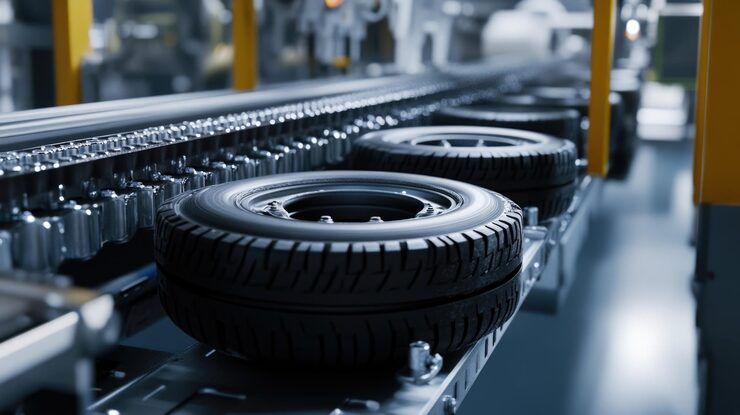
Modern rubber manufacturing has evolved significantly over the past few decades. Advances in automation, digital monitoring, energy efficiency, and process control have improved production quality while supporting greater consistency and reduced material waste. Understanding how rubber machinery works provides valuable insight into one of the world's most important manufacturing sectors.
This guide explains the major types of rubber machinery, the manufacturing process, key technologies, applications, challenges, and future trends shaping the rubber industry.
What Is Rubber Machinery?
Rubber machinery refers to specialized industrial equipment used throughout the production of natural and synthetic rubber products. These machines perform different tasks, from preparing raw materials to shaping finished components.
Each stage of production requires machinery designed for specific manufacturing objectives. Some equipment focuses on mixing rubber compounds, while others handle forming, molding, curing, cutting, testing, or finishing.
Rather than operating independently, modern rubber manufacturing machines work together as part of an integrated production system that emphasizes efficiency, repeatability, and product quality.
Why Rubber Machinery Is Important
Manufacturing rubber products requires precise control over temperature, pressure, mixing time, and material composition. Even small variations can influence the performance of the finished product.
Modern rubber machinery helps manufacturers achieve:
- Consistent product quality
- Accurate material mixing
- Improved production efficiency
- Reduced material waste
- Better workplace safety
- Reliable process control
- Higher production capacity
- Improved product uniformity
These advantages make advanced machinery essential across industries that depend on high-performance rubber components.
Understanding the Rubber Manufacturing Process
Although production methods vary depending on the final product, most rubber manufacturing follows a similar sequence.
Raw Material Preparation
Production begins with natural rubber, synthetic rubber, fillers, reinforcing agents, processing oils, and other ingredients that contribute to specific product characteristics.
Materials are carefully measured before entering the mixing stage.
Mixing and Compounding
Mixing combines raw materials into a uniform rubber compound with the desired physical and chemical properties.
This stage is one of the most important because it directly affects product quality, flexibility, strength, durability, and processing performance.
Forming and Shaping
After mixing, the rubber compound is shaped into the required form using specialized machinery such as extrusion systems, calenders, or molding equipment.
The shaping method depends on the intended product.
Vulcanization
Vulcanization is the curing process that improves the elasticity, strength, and durability of rubber through controlled heat and pressure.
This stage transforms soft rubber compounds into stable finished products capable of performing under demanding conditions.
Finishing and Inspection
Finished products undergo trimming, surface finishing, dimensional inspection, and quality testing before packaging or further assembly.
Main Types of Rubber Machinery
Different manufacturing stages require different types of industrial equipment.
Internal Mixers
Internal mixers blend rubber with additives under controlled conditions.
These machines provide consistent compound preparation while improving mixing efficiency and repeatability.
Two-Roll Mills
Two-roll mills further refine rubber compounds after mixing.
They help improve material consistency, blend additives evenly, and prepare rubber for downstream processing.
Rubber Extrusion Machines
Extrusion machines force rubber through specially designed dies to create continuous profiles with consistent cross-sections.
Common applications include:
- Hoses
- Weather seals
- Tubing
- Window gaskets
- Industrial profiles
Extrusion supports high-volume production while maintaining dimensional accuracy.
Calender Machines
Calendering machines compress rubber into sheets using large precision rollers.
These sheets are widely used in tire manufacturing, industrial belts, coated fabrics, and various laminated products.
Compression Molding Machines
Compression molding shapes rubber by placing measured material into heated molds where pressure forms the finished component.
This method is commonly used for seals, gaskets, and molded industrial parts.
Injection Molding Machines
Rubber injection molding improves production efficiency by injecting prepared rubber compounds directly into precision molds.
The process supports complex product designs with consistent quality.
Transfer Molding Equipment
Transfer molding combines features of compression and injection molding, making it suitable for certain intricate rubber components requiring controlled material flow.
Comparing Common Rubber Machinery
| Machine Type | Primary Function | Typical Applications |
|---|---|---|
| Internal Mixer | Compound preparation | Rubber mixing |
| Two-Roll Mill | Material refinement | Compound finishing |
| Extrusion Machine | Continuous shaping | Tubes, seals, hoses |
| Calender Machine | Sheet production | Tires, coated materials |
| Compression Molding Machine | Molded components | Gaskets, industrial parts |
| Injection Molding Machine | Precision molding | Automotive and technical products |
| Transfer Molding Machine | Complex molded parts | Specialized rubber components |
Each machine performs a distinct function while contributing to an integrated manufacturing workflow.
Automation in Modern Rubber Manufacturing
Automation has transformed rubber production by improving consistency and reducing manual intervention.
Modern manufacturing systems often include:
- Automated material feeding
- Computer-controlled mixing
- Digital temperature regulation
- Pressure monitoring
- Production scheduling
- Robotic material handling
- Automated inspection systems
- Process data collection
Automation allows manufacturers to maintain stable production conditions while improving overall operational efficiency.
Quality Control in Rubber Manufacturing
Quality assurance is essential because rubber products often operate under demanding mechanical and environmental conditions.
Quality control typically includes:
Material Inspection
Raw materials are evaluated before entering production to ensure consistency.
Process Monitoring
Production parameters such as temperature, pressure, mixing time, and curing conditions are continuously monitored.
Dimensional Measurement
Finished components are inspected to verify that they meet design specifications.
Physical Performance Testing
Manufacturers evaluate properties such as elasticity, hardness, tensile strength, flexibility, and wear resistance depending on product requirements.
Continuous quality monitoring helps reduce variation across production batches.
Industries That Depend on Rubber Machinery
Rubber manufacturing supports a broad range of industries.
Examples include:
- Automotive manufacturing
- Aerospace engineering
- Healthcare equipment
- Construction
- Mining
- Agriculture
- Industrial machinery
- Consumer products
- Marine applications
- Electrical equipment
Each industry requires rubber products with unique performance characteristics, making specialized machinery an essential part of production.
Energy Efficiency and Sustainable Manufacturing
Sustainability has become an increasingly important focus within rubber manufacturing.
Modern machinery often incorporates features that improve resource efficiency, including:
- Energy-efficient motors
- Optimized heating systems
- Reduced material waste
- Improved process monitoring
- Recycling support for production scrap
- Digital energy management
- Efficient hydraulic systems
These improvements help manufacturers reduce resource consumption while maintaining product quality.
Challenges in Rubber Manufacturing
Despite technological advances, manufacturers continue to face several operational challenges.
Material Consistency
Natural and synthetic rubber materials may vary in composition, requiring careful process adjustments.
Temperature Control
Maintaining stable processing temperatures is essential for consistent product quality.
Equipment Maintenance
Production equipment operates under demanding conditions and requires regular maintenance to sustain performance.
Precision Requirements
Many industries require components with extremely tight dimensional tolerances and consistent physical properties.
Production Flexibility
Manufacturers increasingly need equipment capable of producing multiple product types while minimizing changeover time.
Addressing these challenges requires advanced machinery, skilled operators, and continuous process monitoring.
Future Trends in Rubber Machinery
Rubber manufacturing continues to evolve alongside broader industrial technologies.
Several emerging trends are shaping the future of the industry:
- Artificial intelligence-assisted process optimization
- Predictive equipment maintenance
- Industrial Internet of Things (IIoT) integration
- Digital production monitoring
- Smart manufacturing systems
- Increased robotics
- Advanced material processing
- Sustainable manufacturing technologies
- Improved recycling capabilities
- Data-driven quality control
As Industry 4.0 technologies continue to expand, rubber machinery is expected to become increasingly connected, intelligent, and efficient.
Choosing Rubber Machinery for Manufacturing Needs
Different production environments require different equipment configurations.
Selection often depends on factors such as:
- Product type
- Production volume
- Material characteristics
- Process complexity
- Automation requirements
- Available production space
- Energy efficiency goals
- Maintenance considerations
- Quality requirements
Evaluating these factors helps manufacturers develop production systems that align with operational objectives and long-term manufacturing strategies.
Frequently Asked Questions
What is rubber machinery?
Rubber machinery includes industrial equipment used to mix, shape, mold, cure, inspect, and finish rubber materials during manufacturing.
Why is rubber mixing important?
Mixing ensures that rubber compounds have consistent physical properties, allowing finished products to achieve reliable strength, flexibility, and durability.
What is the purpose of vulcanization?
Vulcanization strengthens rubber by improving elasticity, durability, heat resistance, and overall performance through controlled curing.
Which industries use rubber manufacturing equipment?
Automotive, aerospace, healthcare, construction, mining, agriculture, electronics, and consumer goods industries all rely on rubber manufacturing machinery.
How is automation changing rubber manufacturing?
Automation improves process consistency, production efficiency, quality control, equipment monitoring, and overall manufacturing performance through digital technologies.
Conclusion
Rubber machinery forms the foundation of modern rubber manufacturing by supporting every stage of production, from raw material preparation to final inspection. Internal mixers, extrusion systems, molding machines, calenders, and curing equipment work together to produce reliable rubber products for industries around the world.
As manufacturing continues to evolve, automation, digital monitoring, sustainable production methods, and intelligent process control are transforming how rubber products are made. Understanding these technologies provides valuable insight into the complex manufacturing systems that produce the durable, high-performance rubber components used in everyday life and across countless industrial applications.