
Servo motors play an important role in modern automation because they can produce precise, controlled movement across a wide range of machines and equipment.
Unlike conventional motors that may operate primarily at a fixed speed or according to basic control signals, servo systems continuously monitor motion and adjust performance to achieve a desired position, speed, or torque.
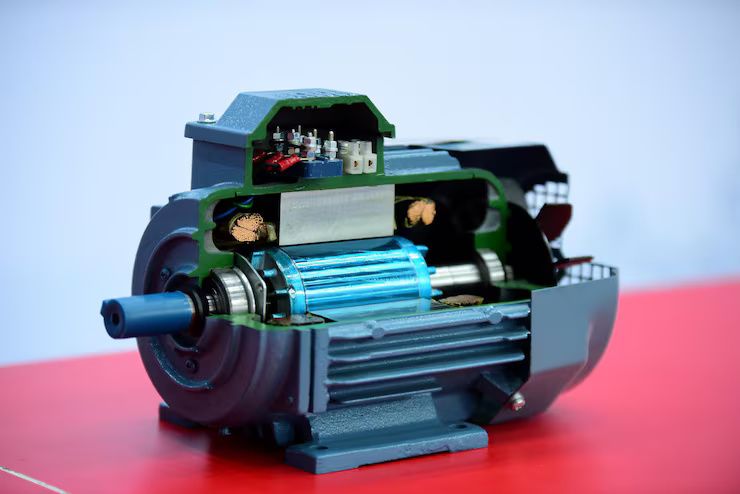
This ability makes servo motors valuable in manufacturing, robotics, packaging, electronics, medical equipment, and other applications where accurate movement matters. Understanding how servo motors work, how their control systems are structured, and where they are used can help explain why precision motion control has become an essential part of modern industrial technology.
What Is a Servo Motor?
A servo motor is an electric motor used in a closed-loop control system to achieve controlled movement. The term "servo" refers less to a specific motor design and more to a system that combines a motor with feedback, control electronics, and mechanical components.
A typical servo motor system includes:
- Motor
- Feedback device
- Servo motor controller or drive
- Motion control software
- Mechanical load
The feedback device continuously reports information about the motor's actual movement. The controller compares this information with the desired motion and makes adjustments when necessary.
This closed-loop approach allows the system to respond to changes in load, speed, or position while maintaining accurate performance.
How Servo Motors Work
The basic operating principle of servo motion control involves three key stages: command, movement, and feedback.
First, a controller receives a motion command. This command may specify a target position, movement speed, or required torque.
The controller then sends an electrical signal to the motor. The motor responds by rotating the connected mechanical components.
At the same time, a feedback device measures the actual motor position or speed. The system compares the measured result with the original command and corrects any difference.
This continuous process is known as closed-loop control.
For example, if a robotic arm must move to a specific position, the servo system does not simply power the motor and assume the movement is accurate. Instead, it monitors the arm's position and adjusts motor output until the desired movement is achieved.
Main Components of a Servo Motor System
A complete Servo Motor System consists of several interconnected components. Each part contributes to the overall accuracy and reliability of the motion process.
Servo Motor
The motor converts electrical energy into mechanical movement. Depending on the application, systems may use AC servo motors, DC servo motors, or brushless designs.
Modern industrial systems frequently use brushless AC motors because they can provide high efficiency, precise control, and reliable operation.
Feedback Device
Feedback is essential for accurate motion control.
Common feedback technologies include:
- Encoders
- Resolvers
- Hall-effect sensors
Encoders are widely used because they can provide detailed information about shaft position and rotational movement.
Servo Motor Controller
Servo Motor Controllers process commands and determine how the motor should respond. They can regulate variables such as position, speed, and torque.
The controller communicates with the servo drive or amplifier, which manages the electrical power delivered to the motor.
Mechanical Transmission
The motor may connect directly to a load or operate through components such as:
- Gears
- Ball screws
- Belts
- Couplings
- Linear mechanisms
The mechanical design affects how effectively motor movement is transferred to the final application.
Position, Speed, and Torque Control
One of the most important characteristics of servo systems is their ability to control different aspects of motion.
Position Control
Position control ensures that a mechanical component reaches a specific location.
This is important in applications such as:
- Robotic arms
- CNC machinery
- Semiconductor equipment
- Automated assembly systems
Speed Control
Speed control regulates how quickly a motor rotates or how fast a mechanical component moves.
It is useful when equipment must maintain consistent movement during production processes.
Torque Control
Torque control manages the rotational force produced by the motor.
This is valuable in applications where controlled force is necessary, such as winding, tension management, and certain assembly operations.
In many advanced systems, these control modes can work together to create highly coordinated movement.
Servo Motors vs. Conventional Motors
Servo motors differ from conventional motors mainly in how they are controlled.
| Feature | Servo Motors | Conventional Motors |
|---|---|---|
| Feedback | Typically integrated | Often not required |
| Position control | Highly precise | Limited without additional systems |
| Speed control | Dynamic and accurate | Depends on control method |
| Response | Fast adjustment | Generally less responsive |
| Typical use | Precision automation | General mechanical operation |
This does not mean servo motors are suitable for every application. Conventional motors remain useful where simple, continuous rotation is sufficient and precise positioning is not a major requirement.
The key difference is the level of control required by the machine.
Understanding Servo Motion Control
Servo Motion Control refers to the coordinated management of motor movement within an automated system. It involves more than simply turning a motor on or off.
A motion control system may manage:
- Position
- Velocity
- Acceleration
- Deceleration
- Torque
- Synchronization
Advanced systems can coordinate multiple servo motors simultaneously. This allows different machine components to move together according to carefully defined timing and positioning requirements.
For example, a packaging machine may need a conveyor, cutting mechanism, and sealing unit to operate in precise coordination. Servo motion control allows these movements to be synchronized.
Applications of Industrial Servo Motors
Industrial Servo Motors are used across many industries where accuracy, repeatability, and dynamic movement are important.
Robotics
Robotic systems rely on controlled movement across multiple axes. Servo motors allow robotic joints and mechanical arms to move accurately according to programmed instructions.
CNC Machines
Computer numerical control machines use servo systems to position cutting tools and workpieces with high precision.
This helps support complex manufacturing processes where small positioning errors can affect the finished component.
Packaging Equipment
Packaging machinery often requires synchronized movement for filling, labeling, cutting, and sealing.
Servo systems provide the control needed to coordinate these operations efficiently.
Electronics Manufacturing
Electronic components may require highly accurate positioning during assembly and inspection.
Servo motors support the precise movement of automated equipment used in these processes.
Material Handling
Automated storage systems, conveyor equipment, and sorting machinery can use servo technology when movement needs to be carefully coordinated.
Advantages of Servo Motor Systems
Servo Motor Systems provide several technical advantages when applied to suitable environments.
High Precision
Feedback allows the system to continuously monitor movement and correct deviations.
Fast Response
Servo motors can respond quickly to changing commands, making them useful for dynamic applications.
Repeatability
Automated equipment can perform the same movement repeatedly with consistent results.
Flexible Control
Modern servo systems can manage position, speed, and torque according to application requirements.
Improved Automation
Servo technology supports advanced machine automation by allowing multiple axes and mechanical functions to operate in coordination.
Factors to Consider When Selecting a Servo System
Choosing a servo system requires understanding the specific motion requirements of the application.
Important considerations include:
- Required speed
- Required torque
- Load characteristics
- Position accuracy
- Acceleration and deceleration
- Duty cycle
- Operating environment
- Number of controlled axes
- Communication requirements
The motor should be matched with the controller, feedback device, drive, and mechanical transmission. Treating these components as one integrated system generally produces better results than selecting the motor separately.
Common Challenges in Servo Applications
Although servo systems provide advanced control, their performance depends on proper system design.
Potential challenges include:
- Incorrect motor sizing
- Poorly configured control parameters
- Mechanical backlash
- Excessive vibration
- Inadequate feedback resolution
- Electrical interference
- Improper installation
For example, a highly precise servo motor cannot fully compensate for mechanical components with excessive looseness or instability. Precision therefore depends on the entire motion system, not only the motor itself.
The Role of Modern Servo Controllers
Modern Servo Motor Controllers have become increasingly sophisticated. Digital control technologies allow engineers to configure motion profiles, monitor system performance, and coordinate multiple axes.
Some systems can also communicate with broader industrial automation platforms, allowing servo equipment to work alongside programmable logic controllers, industrial computers, sensors, and other connected devices.
This integration supports more intelligent manufacturing environments where machines can be monitored and adjusted based on real-time operating conditions.
Future Trends in Servo Motion Technology
Servo technology continues to evolve alongside industrial automation.
Important trends include:
- Greater integration with smart manufacturing
- More compact motor and drive designs
- Improved energy efficiency
- Advanced digital feedback systems
- Multi-axis synchronization
- Predictive maintenance capabilities
- Greater connectivity with industrial networks
As factories become more automated, servo systems are likely to remain an important foundation for precise and coordinated machine movement.
Frequently Asked Questions
What is a servo motor used for?
A servo motor is used for applications requiring controlled movement, particularly where accurate positioning, speed regulation, or torque management is important.
How does a servo motor differ from a regular motor?
A servo motor typically operates within a closed-loop system that uses feedback to monitor and adjust movement. A conventional motor may operate without continuous position feedback.
What is a Servo Motor Controller?
A Servo Motor Controller is a control device that processes motion commands and regulates motor behavior. It can manage variables such as position, speed, and torque.
Where are Industrial Servo Motors commonly used?
Industrial Servo Motors are commonly used in robotics, CNC machinery, packaging systems, electronics manufacturing, material handling, and automated assembly equipment.
Why is feedback important in servo systems?
Feedback allows the controller to compare actual movement with the desired result. The system can then make corrections to maintain accurate motion.
Conclusion
Servo motors have become a fundamental technology in precision automation because they combine controlled electrical power, mechanical movement, and continuous feedback. Their ability to regulate position, speed, and torque makes them suitable for applications where accuracy and repeatability are essential.
A complete Servo Motor System includes more than the motor itself. Controllers, feedback devices, drives, mechanical components, and software all contribute to overall performance. Understanding these relationships is important when evaluating motion control requirements for industrial machinery and automated equipment.
As manufacturing and robotics continue moving toward greater automation, Servo Motion Control will remain an important part of modern machine design. From robotic arms and CNC equipment to packaging and electronics production, servo technology provides the precise, coordinated movement needed to support increasingly sophisticated industrial processes.