Single gemstone drops are earrings designed around one prominent gemstone suspended below the ear.
Unlike heavily decorated earrings that use many stones or elaborate patterns, this style places visual attention on a single central gem. The stone may be a diamond, sapphire, ruby, emerald, amethyst, topaz, garnet, pearl, or another gemstone, depending on the design.
The drop can be attached to a simple stud, hoop, lever-back, hook, or another earring fitting. The gemstone may hang directly below the earlobe or be connected through a short metal link. Designs range from compact everyday earrings to longer pieces intended for formal occasions.
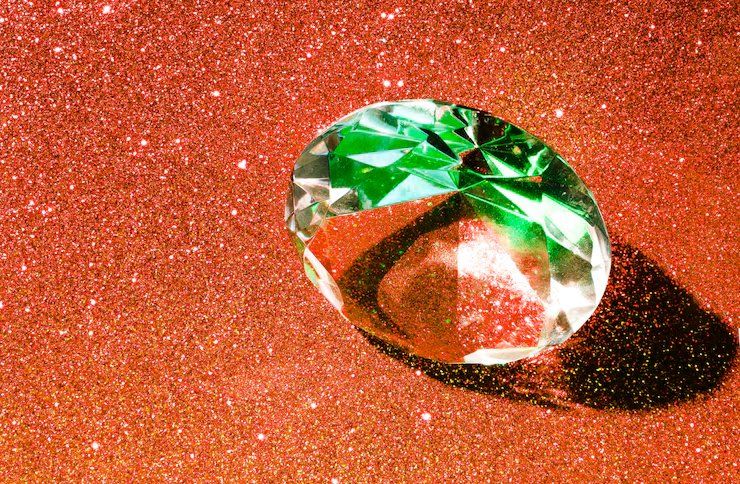
The concept exists because a single gemstone can create a clear focal point without requiring a complex arrangement. It also provides designers with a simple format for combining gemstone characteristics such as color, cut, transparency, and shape with different metals and earring structures.
Why Single Gemstone Drops Matter Today
Single gemstone drops are relevant to modern jewelry design because they combine a relatively simple structure with considerable variation. Changing only the gemstone, metal, cut, or drop length can produce a noticeably different appearance.
The style can appeal to people looking for jewelry that is visually distinctive without relying on multiple decorative elements. It is also useful for understanding several important aspects of gemstone jewelry, including stone selection, setting design, durability, and metal purity.
Important factors include:
- Gemstone type: Different gems vary in hardness, color, transparency, and durability.
- Cut: The cut influences how a gemstone reflects and transmits light.
- Setting: Prongs, bezels, and other settings affect how securely a gemstone is held.
- Drop length: Short drops generally create a subtle appearance, while longer drops produce more movement.
- Metal: Gold, silver, platinum, and other metals can change the visual character of the same gemstone.
- Wear conditions: Earrings worn frequently may need a different gemstone and setting approach from pieces reserved for occasional use.
For example, diamonds and sapphires are relatively hard gemstones and are commonly used in jewelry that receives regular handling. Softer stones may require greater care because scratching or surface damage can occur more easily.
A single gemstone format also makes gemstone characteristics easier to observe. In a multi-stone design, differences between individual stones can be visually blended together. In a single-stone design, color consistency, inclusions, shape, and cutting quality become more noticeable.
Common Design Characteristics
Single gemstone drops can be categorized according to several design features.
| Design feature | Common variations | Main visual effect |
|---|---|---|
| Gemstone | Diamond, ruby, sapphire, emerald, pearl, quartz | Determines color and character |
| Shape | Round, oval, pear, cushion, marquise | Influences overall silhouette |
| Setting | Prong, bezel, halo-free solitaire | Changes visibility and security |
| Drop | Short, medium, elongated | Controls movement and proportion |
| Metal | Gold, silver, platinum | Influences color and structure |
| Closure | Stud, hook, lever-back | Affects wearing and retention |
The solitaire-like approach is particularly recognizable because there is one dominant gemstone rather than a cluster. The surrounding metal usually remains visually secondary.
Proportion is another important consideration. A large gemstone on a very thin fitting can create an unbalanced appearance, while a small stone on a heavy structure may lose the intended simplicity. Designers therefore consider gemstone dimensions, metal thickness, earring weight, and the relationship between the drop and the wearer’s ear.
Recent Developments and Trends
Recent developments in the wider jewelry sector have increasingly emphasized traceability, identification, and standardization rather than only appearance. These changes are especially relevant when single gemstone drops use precious-metal components.
In India, the Bureau of Indian Standards (BIS) continues to update its hallmarking framework. The BIS mandatory hallmarking page records amendments to the gold jewellery framework during 2025 and 2026, including amendments dated July 31, 2025, March 2, 2026, April 28, 2026, and August 3, 2026.
Another notable development occurred in silver jewellery. BIS introduced revised standard IS 2112:2025, with HUID-based hallmarking for silver jewellery and articles becoming voluntary from September 1, 2025. The revised standard includes seven silver purity grades and allows information associated with the hallmark to be checked through the BIS CARE App.
For single gemstone drops, these developments matter mainly when the earrings contain gold or silver. Hallmarking concerns the precious-metal component and should not be confused with independent certification of the gemstone itself.
Laws and Policies in India
In India, hallmarking is governed through the Bureau of Indian Standards under the BIS Act, 2016 and the BIS (Hallmarking) Regulations, 2018. BIS states that hallmarking provides an official indication of the proportion or fineness of precious metal in covered articles. At present, gold and silver are the precious metals covered by the Indian hallmarking system.
Gold jewellery can carry the BIS mark, purity or fineness information, and a six-digit alphanumeric Hallmark Unique Identification (HUID) number. BIS explains that consumers can use the BIS CARE App's “Verify HUID” feature to check the identification of hallmarked gold jewellery.
The rules are particularly relevant to single gemstone drops made with gold because the gemstone itself does not determine whether the metal requires hallmarking. The applicable requirements depend on the precious-metal article and the relevant rules, exemptions, location, and other conditions.
BIS also lists certain exemptions from mandatory gold hallmarking. These include articles weighing less than two grams and specific categories such as Kundan, Polki, and Jadau jewellery, among other specified cases. Requirements can change through amendments, so the current BIS notifications should be consulted for the applicable circumstances.
For consumers, BIS recommends retaining an authentic invoice for hallmarked jewellery. Its guidance states that invoices should include information such as the article description, net precious-metal weight, purity in carat and fineness, and relevant hallmarking details.
These rules do not establish that a gemstone is naturally occurring, untreated, or of a particular quality. Such characteristics require appropriate gemstone identification or laboratory documentation where relevant.
Tools and Resources
Several resources can help people understand single gemstone drops and the precious-metal components used in them.
- BIS Hallmarking Resources: The BIS website provides information about hallmarking standards, registered jewellers, recognized Assaying and Hallmarking Centres, and applicable notifications.
- BIS CARE App: The app includes the “Verify HUID” feature for checking relevant hallmarked gold jewellery information.
- BIS Jeweller Registration Information: BIS publishes information about registered jewellers and the registration framework.
- Gemstone identification reports: Independent gemological laboratories can provide documentation concerning gemstone identity and characteristics.
- Ring and jewelry measurement tools: Digital calipers and jewelry measurement charts can help record gemstone dimensions and design proportions.
- Jewelry design software: Computer-aided design tools can be used to visualize gemstone shapes, metal structures, and earring proportions before production.
When evaluating gemstone documentation, it is useful to distinguish between a report identifying the gemstone and a hallmark identifying precious-metal fineness. They address different characteristics.
Frequently Asked Questions
What are single gemstone drops?
Single gemstone drops are earrings featuring one principal gemstone that hangs below the earlobe. The stone may be attached to a stud, hook, hoop, or another earring fitting.
Which gemstones are commonly used for this style?
Diamonds, sapphires, rubies, emeralds, pearls, amethyst, topaz, garnet, and other colored gemstones can be used. The appropriate choice depends on factors such as hardness, color, transparency, intended use, and design.
Are single gemstone drops suitable for regular wear?
They can be, but suitability depends on the gemstone, setting, metal structure, closure, and frequency of use. Harder gemstones and secure settings are generally better suited to situations involving regular handling.
Does a BIS hallmark certify the gemstone?
No. A BIS hallmark relates to the purity or fineness of covered precious-metal articles. It does not by itself establish a gemstone's identity, origin, treatment status, or quality. Gemstone characteristics may require separate documentation from an appropriate gemological laboratory.
How can hallmarked gold earrings be checked in India?
For hallmarked gold jewellery, consumers can examine the BIS mark, purity or fineness information, and the six-digit HUID. BIS states that the HUID can be verified using the BIS CARE App.
Conclusion
Single gemstone drops represent a straightforward jewelry design in which one gemstone becomes the primary visual element. Their appearance can vary substantially according to gemstone type, cut, setting, metal, size, and drop length.
The style also provides a useful example of the difference between gemstone characteristics and precious-metal standards. Gemstone identification concerns the stone, while hallmarking addresses the purity or fineness of covered precious metals.
In India, developments in BIS hallmarking during 2025 and 2026 have continued to emphasize identification, traceability, and standardized information for precious-metal jewellery. Understanding these standards, together with basic gemstone characteristics, can help readers interpret product descriptions and documentation more accurately.