Hot water is an essential part of everyday life, from bathing and cleaning to cooking and household maintenance.
As interest in sustainable living and energy efficiency continues to grow, Solar Water Heaters have become an increasingly popular solution for providing hot water using renewable solar energy. Unlike conventional systems that rely primarily on electricity or fuel, a Solar Water Heating System captures heat from sunlight and transfers it to water, reducing dependence on traditional energy sources.
Modern solar water heating technology has advanced significantly over the years. Today's systems are designed to operate efficiently in various climates, integrate with existing plumbing, and provide dependable performance throughout the year. Understanding how these systems work, their major components, maintenance requirements, and safety considerations can help homeowners and property managers make informed decisions.
This guide explains the fundamentals of Solar Water Heaters, explores the components of a Solar Water Heater System, discusses routine maintenance, highlights important safety practices, and examines the factors that contribute to long-term system performance.
What Are Solar Water Heaters?
Solar Water Heaters are systems that use solar energy to heat water for residential, commercial, or institutional use. Instead of generating electricity, these systems collect thermal energy from sunlight and transfer it directly to water or a heat-transfer fluid.
A Solar Water Heating System generally includes solar collectors, insulated storage tanks, circulation components, and safety devices that work together to deliver heated water whenever it is needed.
Because they rely on renewable solar energy, these systems contribute to improved energy efficiency while reducing reliance on conventional water heating methods.
How a Solar Water Heating System Works
The basic operating principle is straightforward. Solar collectors absorb sunlight and convert it into heat. This heat is transferred to water either directly or through a heat-transfer fluid that circulates within the system.
Depending on the system design, circulation may occur naturally through temperature differences or with the help of pumps controlled by electronic sensors.
Once heated, the water is stored in an insulated tank until it is required for household use. Many installations also include a backup heating source to maintain water temperature during extended periods of limited sunlight.
The efficiency of Solar Thermal Water Heating depends on collector design, sunlight availability, system insulation, installation quality, and routine maintenance.
Main Components of a Solar Water Heater System
Understanding the major components helps explain how the system delivers reliable hot water.
Solar Collectors
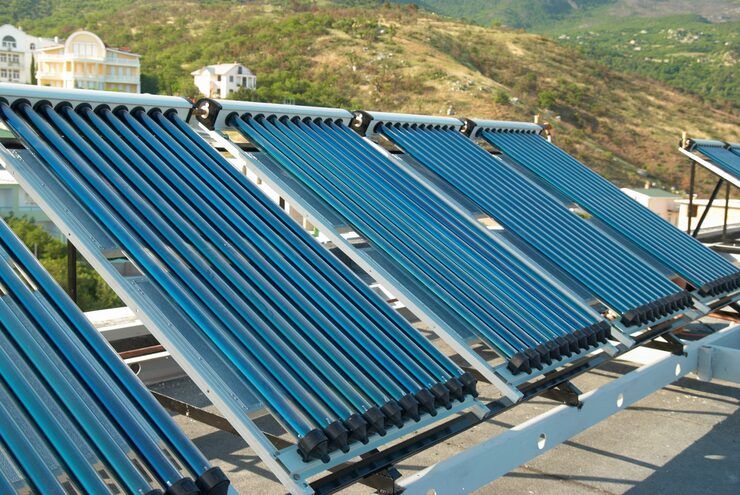
Solar collectors are the heart of the system. Installed on rooftops or other sun-exposed areas, they absorb solar radiation and convert it into usable thermal energy.
Common collector types include:
- Flat-plate collectors
- Evacuated tube collectors
- Integral collector-storage systems
Each design offers different performance characteristics depending on climate, installation location, and hot water demand.
Storage Tank
The insulated storage tank holds heated water until it is needed. High-quality insulation minimizes heat loss and helps maintain water temperature for longer periods.
Many modern tanks are specifically designed to integrate efficiently with solar heating systems.
Heat Exchanger
In indirect Solar Water Heater Systems, the heat exchanger transfers heat from the circulating fluid to the household water supply without mixing the two fluids.
This design is particularly useful in regions where freezing temperatures may occur.
Circulation System
Some systems rely on natural circulation, while others use electrically powered pumps to move water or heat-transfer fluid between the collectors and storage tank.
Electronic controllers help regulate circulation for efficient operation.
Expansion Tank and Safety Valves
As water heats, it expands. Expansion tanks and pressure relief valves help maintain safe operating conditions by controlling pressure within the system.
These components are essential for safe long-term performance.
Types of Solar Water Heating Systems
Several types of Solar Water Heating Systems are available, each suited to different environmental conditions and building requirements.
| System Type | Operating Method | Typical Applications |
|---|---|---|
| Active Direct System | Pumps circulate water through collectors | Mild climates |
| Active Indirect System | Heat-transfer fluid circulates through collectors | Cold climates |
| Passive Thermosiphon System | Natural circulation without pumps | Residential homes |
| Integral Collector Storage | Water stored directly in collector unit | Areas with moderate temperatures |
The appropriate system depends on climate, water usage patterns, available installation space, and local environmental conditions.
Benefits of Solar Thermal Water Heating
Solar Thermal Water Heating offers several practical advantages beyond energy savings.
Some key benefits include:
- Utilizes renewable solar energy
- Supports reduced dependence on conventional energy sources
- Operates quietly
- Requires relatively low routine maintenance
- Integrates with backup heating systems
- Suitable for residential and commercial applications
- Long operational lifespan with proper maintenance
- Supports environmentally responsible energy use
Because solar energy is naturally available during daylight hours, these systems contribute to sustainable resource utilization while providing dependable hot water.
Factors That Influence Long-Term Performance
The long-term effectiveness of a Solar Water Heater System depends on several important factors.
Installation Quality
Proper collector orientation, pipe insulation, secure mounting, and correct plumbing connections significantly influence system efficiency.
Professional installation helps ensure that all components operate together effectively.
Climate Conditions
The amount of available sunlight naturally affects thermal energy collection.
Modern systems are designed to perform efficiently under varying weather conditions, although seasonal performance differences are normal.
System Design
Collector size, storage capacity, insulation quality, and circulation methods should be matched to the building's expected hot water demand.
A balanced design helps maximize overall system efficiency.
Water Quality
Mineral content in water can gradually lead to scale buildup inside pipes or heat exchangers.
Periodic inspection helps maintain efficient heat transfer.
Routine Maintenance for Solar Water Heaters
Like any mechanical system, Solar Water Heaters benefit from regular maintenance.
Routine inspections help identify small issues before they become larger problems.
Important maintenance tasks include:
Inspect Solar Collectors
Check collector surfaces for dirt, leaves, or debris that may reduce sunlight absorption.
Keeping collectors clean supports efficient heat collection.
Examine Pipe Insulation
Outdoor piping should remain properly insulated to reduce heat loss and protect system performance.
Damaged insulation should be repaired promptly.
Check Storage Tank Condition
Inspect the storage tank for signs of corrosion, leaks, or insulation damage.
A well-maintained storage tank helps preserve water temperature efficiently.
Monitor System Pressure
Pressure gauges and safety valves should operate correctly to maintain safe system conditions.
Unusual pressure changes should be evaluated by qualified professionals.
Inspect Pumps and Controllers
Active systems rely on circulation pumps and electronic controllers.
Routine inspection helps verify that these components continue operating as intended.
Safety Considerations
Safety remains an important aspect of any Solar Water Heating System.
Several protective features help ensure reliable operation.
Temperature Control
Some systems include mixing valves that regulate delivered water temperature to reduce the risk of excessively hot water at household fixtures.
Pressure Protection
Pressure relief valves prevent excessive pressure buildup within the system.
Regular inspection ensures these safety devices remain functional.
Freeze Protection
In colder climates, indirect systems use specialized heat-transfer fluids that help protect collectors and piping from freezing temperatures.
Structural Support
Roof-mounted collectors should be securely installed to withstand environmental conditions such as wind, rain, and seasonal weather variations.
Proper structural assessment contributes to safe long-term installation.
Common Performance Challenges
Although Solar Water Heaters are generally reliable, several factors may influence system performance over time.
Potential challenges include:
- Dust accumulation on collectors
- Mineral scale formation
- Insulation deterioration
- Pump wear in active systems
- Sensor calibration issues
- Air trapped within circulation lines
- Seasonal variations in sunlight
Routine maintenance helps minimize these issues and supports consistent operation.
Improving System Efficiency
Several practices help maintain strong long-term performance.
Helpful approaches include:
- Cleaning collectors periodically
- Maintaining proper insulation
- Scheduling routine inspections
- Monitoring system controls
- Protecting pipes from weather exposure
- Inspecting valves and fittings
- Following manufacturer maintenance recommendations
Consistent preventive maintenance often contributes more to system performance than major repairs after problems develop.
Future Trends in Solar Water Heating
Solar Water Heating technology continues to evolve as renewable energy research advances.
Emerging developments include:
- Higher-efficiency collector materials
- Smarter digital monitoring systems
- Improved thermal storage technologies
- Enhanced weather-resistant materials
- Better integration with smart home systems
- Advanced circulation controls
- Hybrid renewable energy solutions
- Improved insulation technologies
These innovations aim to improve reliability, simplify maintenance, and enhance overall energy efficiency while supporting sustainable building design.
Frequently Asked Questions
What is a Solar Water Heating System?
A Solar Water Heating System uses solar collectors to capture heat from sunlight and transfer it to water for residential, commercial, or institutional use.
How long can Solar Water Heaters perform effectively?
With proper installation, routine maintenance, and regular inspections, many Solar Water Heater Systems can provide reliable long-term performance for many years.
Do Solar Water Heaters work on cloudy days?
Yes. Solar collectors can still capture some thermal energy under cloudy conditions, although heating efficiency is generally lower than during bright sunlight. Many systems also include backup heating for consistent hot water availability.
Is maintenance required for Solar Water Heaters?
Yes. Regular maintenance includes cleaning collectors, inspecting insulation, checking pressure relief devices, examining storage tanks, and ensuring pumps and controllers operate correctly.
What is the difference between Solar Water Heating and Solar Thermal Water Heating?
The terms are closely related. Solar Water Heating refers to the overall process of heating water using solar energy, while Solar Thermal Water Heating specifically emphasizes the use of solar heat rather than solar-generated electricity.
Conclusion
Solar Water Heaters provide an effective and environmentally responsible method of producing hot water by using renewable solar energy. Through well-designed solar collectors, insulated storage tanks, circulation systems, and carefully engineered safety features, a modern Solar Water Heater System delivers dependable performance while supporting greater energy efficiency.
Understanding system components, following routine maintenance practices, monitoring safety devices, and considering long-term performance factors are essential for maintaining reliable operation. As Solar Thermal Water Heating technology continues to advance through improved materials, intelligent controls, and enhanced system integration, Solar Water Heating Systems are expected to remain an important part of sustainable residential and commercial energy solutions for years to come.