Solvent extraction systems are industrial process systems used to transfer selected components from one phase into another using a suitable solvent. The technology is widely used in chemical processing, hydrometallurgy, pharmaceutical production, food and oil processing, environmental treatment, and specialty manufacturing.
A complete solvent extraction system can include extraction vessels, mixers, settlers, pumps, solvent storage tanks, phase-separation equipment, stripping units, solvent recovery systems, heat exchangers, instrumentation, and control systems. The configuration depends on the feed material, target compound, solvent characteristics, throughput, and required product purity.
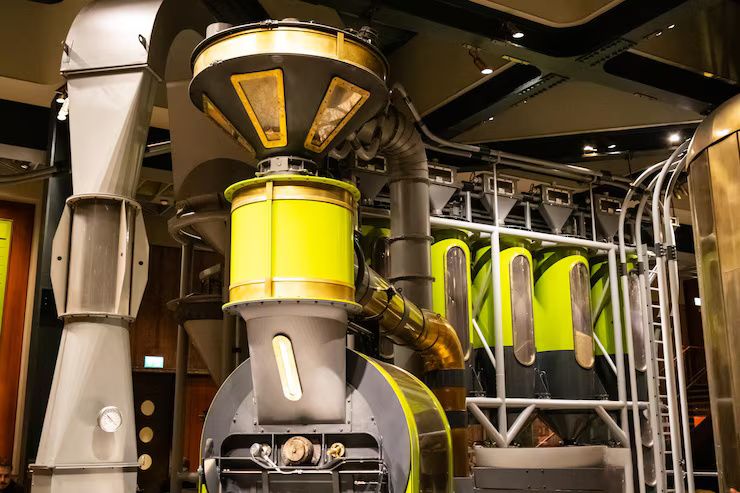
Why Solvent Extraction Systems Matter
Solvent extraction provides a controlled method for separating or recovering specific components from complex mixtures. Unlike mechanical separation methods, the process relies on differences in chemical affinity between the feed components and the selected solvent.
A typical industrial system may include:
- Feed preparation
- Solvent preparation
- Mixing and contact
- Phase separation
- Extraction
- Washing or scrubbing
- Stripping
- Solvent regeneration or recovery
- Product recovery
- Solvent recycling
The precise sequence depends on the process and the type of material being treated.
Solvent Extraction Technologies
Several extraction configurations are used in industrial applications.
Liquid-Liquid Extraction
Liquid-liquid extraction transfers a dissolved component from one liquid phase into another immiscible liquid phase.
The two phases are contacted to promote mass transfer and then separated based on differences in density and phase behavior.
This technology is widely used for chemical purification, metal recovery, pharmaceutical processing, and other liquid-phase separations.
Solid-Liquid Extraction
Solid-liquid extraction transfers soluble components from a solid material into a liquid solvent.
The technique can be used for recovering oils, active compounds, natural products, and other extractable materials from solid feedstocks.
Depending on the application, equipment may use batch vessels, percolation systems, continuous extractors, or specialized contactors.
Counter-Current Extraction
In counter-current systems, the feed and solvent move in opposite directions through the extraction equipment.
This arrangement can improve contact efficiency and solvent utilization and is commonly used in continuous industrial processes.
Batch Solvent Extraction
Batch systems process a defined quantity of material during each operating cycle.
They can provide flexibility for changing feed compositions, specialty products, smaller production volumes, or processes requiring frequent product changes.
Continuous Solvent Extraction
Continuous systems maintain a steady feed and solvent flow, with extraction and separation occurring continuously.
They are often considered for larger production capacities where stable operating conditions and consistent throughput are required.
Major Types of Solvent Extraction Equipment
| Equipment Type | Main Function | Typical Application |
|---|---|---|
| Mixer-Settler | Mixes phases and separates them | Liquid-liquid extraction |
| Extraction Column | Provides continuous phase contact | Chemical processing |
| Packed Column | Provides contact surface | Mass-transfer operations |
| Agitated Extractor | Promotes phase mixing | Solid-liquid or liquid-liquid extraction |
| Centrifugal Extractor | Rapid phase separation | Compact extraction systems |
| Settler | Separates immiscible phases | Solvent extraction circuits |
| Stripping Unit | Removes extracted component from solvent | Product recovery |
| Solvent Recovery Unit | Recovers reusable solvent | Solvent recycling |
| Storage Tank | Stores feed or solvent | Process support |
| Heat Exchanger | Controls process temperature | Extraction and recovery |
| Pump System | Transfers process streams | Process circulation |
| Control System | Monitors process conditions | Automated operation |
Solvent Extraction Process
A generalized industrial solvent extraction sequence can be represented as:
Feed Preparation → Solvent Contact → Mixing → Phase Separation → Extract Collection → Stripping → Product Recovery → Solvent Recovery → Solvent Recycling
Not every system requires all these stages. Some applications use direct extraction and recovery, while others require multiple extraction, washing, stripping, and purification stages.
Liquid-Liquid Extraction Process
In a liquid-liquid system, the feed containing the target component is brought into contact with a solvent selected for its ability to preferentially dissolve that component.
After mixing, the phases are allowed to separate. One phase becomes enriched with the extracted component, while the other is depleted.
The solvent-rich phase can then be processed through a stripping or recovery stage to isolate the desired product and regenerate the solvent.
Solid-Liquid Extraction Process
Solid-liquid extraction involves contacting a solid feed with a solvent capable of dissolving the desired component.
The process may involve:
- Feed preparation
- Solvent addition
- Contact and mixing
- Extraction
- Solid-liquid separation
- Extract recovery
- Solvent recovery
Particle size, solvent properties, temperature, contact time, and solid structure can influence extraction performance.
Solvent Recovery and Recycling
Solvent recovery is an important part of many industrial extraction systems.
After extraction, the solvent may contain the target product or unwanted dissolved materials. Recovery systems can separate the desired product from the solvent so that the solvent can be reused.
Depending on the solvent and process, recovery may involve:
- Distillation
- Evaporation
- Condensation
- Membrane separation
- Adsorption
- Phase separation
Solvent recovery can reduce solvent consumption and help control process emissions when appropriately engineered.
Automation and Process Control
Industrial solvent extraction systems can incorporate instrumentation and automation to maintain stable process conditions.
Typical monitored variables include:
- Flow rate
- Temperature
- Pressure
- Liquid level
- Phase interface
- Solvent concentration
- Density
- pH
- Agitation speed
- Product composition
Automated valves, pumps, control loops, sensors, and programmable systems can coordinate extraction, separation, stripping, and solvent-recovery operations.
Materials of Construction
Material selection is important because solvents can interact differently with metals, plastics, elastomers, seals, and gaskets.
Equipment materials should be evaluated according to:
- Solvent compatibility
- Corrosion resistance
- Operating temperature
- Operating pressure
- Mechanical requirements
- Cleaning requirements
- Regulatory requirements
Stainless steel is widely used in many process applications, but specialized alloys, glass-lined equipment, polymers, or other materials may be appropriate for particular chemical environments.
Global Solvent Extraction Equipment Manufacturers and Suppliers
The global market includes companies supplying extraction technologies, process equipment, separation systems, solvent recovery equipment, and complete process plants.
Alfa Laval provides separation, heat-transfer, fluid-handling, and process technologies used across chemical, food, pharmaceutical, and industrial applications.
Sulzer provides separation and process technologies, including equipment and systems relevant to extraction, mass transfer, and solvent-processing applications.
GEA provides process engineering and separation technologies used across food, pharmaceutical, chemical, and other industries.
De Dietrich Process Systems supplies process equipment and engineering technologies for chemical and pharmaceutical applications, including extraction-related processing systems.
Specialized suppliers also manufacture mixer-settlers, extraction columns, centrifugal extractors, solvent-recovery systems, tanks, pumps, and integrated extraction plants.
Supplier selection depends on feed characteristics, solvent chemistry, required capacity, separation efficiency, materials, automation, safety requirements, and applicable regulations.
How to Select Solvent Extraction Systems
1. Define the Feed Material
Identify whether the feed is a liquid mixture, solid material, slurry, or another process stream.
2. Identify the Target Component
Determine which compound or material must be extracted and the required recovery rate and purity.
3. Select the Solvent
The solvent should provide appropriate selectivity while being compatible with the feed, equipment, recovery process, and safety requirements.
4. Determine Capacity
Establish the required feed and solvent flow rates or batch volume. Equipment dimensions should be based on the required throughput and contact time.
5. Evaluate Phase Separation
The density difference, viscosity, interfacial behavior, and tendency toward emulsification can influence the choice of separator.
6. Plan Solvent Recovery
Determine how the solvent will be separated, purified, and recycled after extraction.
7. Review Safety Requirements
Solvent properties such as flammability, toxicity, vapor pressure, and chemical reactivity can significantly influence plant design, ventilation, containment, instrumentation, and electrical equipment selection.
Solvent Extraction System Cost and Pricing Factors
The solvent extraction system cost varies according to system capacity, equipment configuration, solvent type, materials of construction, automation, recovery technology, and process complexity.
Major cost factors include:
- Extraction vessel or column size
- Mixer-settler configuration
- Pumps and piping
- Solvent storage
- Phase-separation equipment
- Stripping system
- Solvent recovery equipment
- Heat exchangers
- Instrumentation
- Automation
- Safety systems
- Installation and commissioning
A laboratory-scale extractor and a continuous industrial solvent extraction plant have very different equipment requirements.
When comparing equipment pricing, it is important to evaluate the complete process system rather than considering only the extraction vessel.
Industrial Applications
Solvent extraction systems are used across numerous industries.
Hydrometallurgy
Solvent extraction can be used to selectively recover and purify metals from aqueous process solutions. Copper, nickel, cobalt, uranium, and other metals can be processed using suitable extraction chemistries.
Chemical Processing
Chemical manufacturers use solvent extraction for purification, recovery, concentration, and separation of selected compounds.
Pharmaceutical Manufacturing
Extraction technologies can be used for isolating active compounds, intermediates, and other materials, subject to the process and regulatory requirements.
Food and Natural Products
Solvent-based extraction can be used in selected food, oil, flavor, fragrance, and natural-product applications where appropriate solvents and recovery systems are employed.
Environmental Processing
Extraction technologies can support the treatment or recovery of selected contaminants from process streams and industrial waste materials.
Best Practices for Solvent Extraction Systems
Reliable operation requires attention to process conditions, equipment compatibility, and solvent management.
- Select solvents according to process requirements and compatibility.
- Monitor phase interfaces and flow rates.
- Control temperature and pressure where required.
- Prevent unwanted emulsification where possible.
- Inspect pumps, seals, valves, and piping regularly.
- Maintain appropriate ventilation and containment.
- Monitor solvent concentration and recovery.
- Inspect equipment for corrosion or material degradation.
- Follow applicable chemical-handling and process-safety procedures.
- Maintain accurate process and maintenance records.
Frequently Asked Questions
What are solvent extraction systems?
Solvent extraction systems are process systems that use a solvent to selectively transfer a desired component from one phase into another for separation, purification, concentration, or recovery.
What equipment is used in solvent extraction?
Common equipment includes mixer-settlers, extraction columns, packed columns, agitated extractors, centrifugal extractors, settlers, stripping units, solvent-recovery systems, pumps, tanks, heat exchangers, and control systems.
What is the difference between liquid-liquid and solid-liquid extraction?
Liquid-liquid extraction transfers a component between two liquid phases, while solid-liquid extraction transfers soluble components from a solid material into a liquid solvent.
Why is solvent recovery important?
Solvent recovery allows the solvent to be separated from the extracted product and potentially reused. It can help reduce solvent consumption and support controlled process operation.
How do I choose a solvent extraction system?
Consider the feed material, target component, solvent properties, required recovery and purity, throughput, phase behavior, materials of construction, solvent recovery method, automation, and process-safety requirements.
Conclusion
Solvent extraction systems provide a versatile approach for separating, recovering, and purifying selected components from complex feed materials. Technologies such as liquid-liquid extraction, solid-liquid extraction, batch extraction, continuous extraction, and counter-current processing can be configured around different industrial requirements.
A complete system may combine extraction equipment, mixers, settlers, columns, pumps, stripping units, solvent-recovery equipment, heat exchangers, instrumentation, and automated controls. Selecting the appropriate configuration requires careful consideration of feed characteristics, solvent chemistry, capacity, separation requirements, materials, recovery methods, and safety conditions.