Supply chains are changing rapidly as businesses respond to new technologies, evolving customer expectations, environmental priorities, geopolitical uncertainty, and changing patterns of production.
What was once a relatively linear process of moving materials from suppliers to manufacturers and then to customers has become a connected network involving data, automation, multiple transportation channels, and geographically distributed partners.
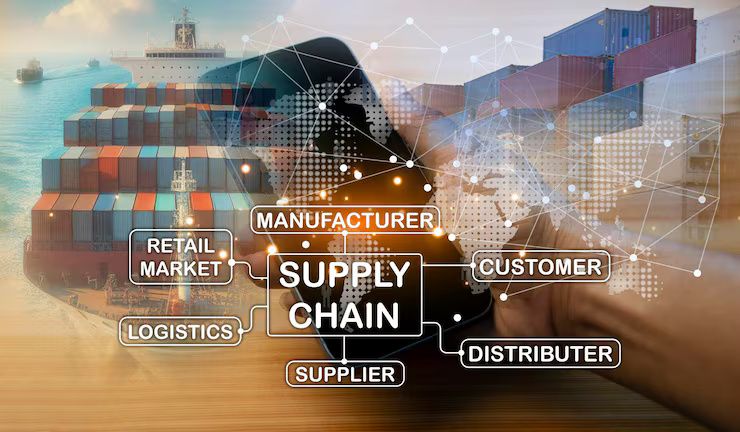
Understanding supply chain shifts is important for businesses that want to maintain reliable operations in an increasingly unpredictable environment. Modern logistics is no longer focused only on moving goods efficiently. It also involves visibility, resilience, flexibility, inventory planning, digital coordination, and the ability to respond quickly when conditions change.
This overview examines the major logistics and business trends shaping modern supply chains and explains how organizations are adapting to a more connected and dynamic operating environment.
What Are Supply Chain Shifts?
Supply chain shifts are changes in the way organizations plan, source, manufacture, store, transport, and distribute goods. These changes can result from technology, economic conditions, customer behavior, environmental requirements, regulatory developments, or disruptions affecting transportation and production.
Traditional supply chains often prioritized efficiency and predictable demand. Modern supply chain strategies increasingly balance efficiency with resilience.
Organizations are paying greater attention to questions such as:
- Where are critical materials coming from?
- How visible is inventory across the network?
- How quickly can operations respond to disruption?
- Which processes can be automated?
- How accurately can demand be predicted?
- How can transportation and warehousing become more efficient?
These questions are influencing both short-term logistics decisions and long-term business planning.
From Linear Supply Chains to Connected Networks
One of the most important developments is the transition from linear supply chains toward interconnected networks.
A traditional model may involve a straightforward sequence from raw materials to manufacturing, warehousing, transportation, and final distribution. Modern networks can involve multiple suppliers, manufacturing locations, logistics providers, distribution centers, digital platforms, and transportation routes.
This network approach creates more flexibility but also introduces greater complexity. Businesses need better visibility across different stages so that changes in one part of the network can be understood quickly elsewhere.
Digital coordination has therefore become an important part of supply chain management.
Digital Transformation in Logistics
Technology is reshaping almost every stage of logistics. Cloud platforms, connected sensors, analytics, artificial intelligence, and automation allow businesses to process operational information more quickly.
Digital systems can help organizations monitor:
- Inventory levels
- Shipment movement
- Warehouse activity
- Equipment performance
- Delivery schedules
- Supplier activity
- Demand patterns
Instead of relying primarily on historical reports, businesses can increasingly use continuously updated information to support operational decisions.
This shift toward data-driven supply chains is particularly important when demand changes rapidly or transportation conditions become unpredictable.
Artificial Intelligence and Predictive Analytics
Artificial intelligence is becoming increasingly relevant to supply chain planning because modern networks generate enormous quantities of operational data.
Predictive analytics can examine historical and current information to identify patterns related to demand, inventory, transportation, and production.
Potential applications include demand forecasting, inventory planning, route analysis, warehouse scheduling, and anomaly detection.
The value of these technologies comes from improving decision-making rather than simply automating individual tasks. Human expertise remains important because supply chain decisions often involve business priorities, external events, and trade-offs that cannot be understood through data alone.
Supply Chain Resilience and Risk Management
Recent disruptions have highlighted the importance of resilience. Businesses are increasingly evaluating how dependent they are on individual suppliers, transportation corridors, manufacturing locations, and geographic regions.
Resilient supply chain planning may involve:
- Multiple supplier relationships
- Alternative transportation routes
- Regional production capabilities
- Strategic inventory planning
- Supplier monitoring
- Scenario analysis
- Business continuity planning
The objective is not necessarily to eliminate every risk. Instead, organizations are working to understand vulnerabilities and develop practical responses when disruptions occur.
Regionalization and Supply Network Diversification
Another important supply chain shift is greater attention to geographic diversification.
For many organizations, concentrating production or sourcing in a single region can create operational exposure. Businesses are therefore examining regional manufacturing, nearshoring, multi-region sourcing, and alternative supplier networks.
Regionalization can shorten certain transportation routes and improve responsiveness, although it may also introduce new operational considerations.
The most suitable structure depends on product requirements, market demand, infrastructure, supplier capabilities, and organizational priorities.
Modern Warehousing and Automation
Warehouses are evolving from storage locations into technology-enabled operational centers.
Automation can support activities such as:
- Inventory tracking
- Picking and sorting
- Material movement
- Package identification
- Warehouse scheduling
- Stock replenishment
Robotic systems, automated storage equipment, barcode technologies, computer vision, and warehouse management software can improve coordination between physical activities and digital records.
However, automation works most effectively when processes are clearly designed and employees understand how technology fits into daily operations.
Transportation and Last-Mile Logistics
Transportation remains one of the most visible parts of the supply chain. Businesses are increasingly examining how route planning, shipment consolidation, vehicle utilization, and delivery scheduling can improve efficiency.
Last-mile logistics has received particular attention because the final movement of goods can involve complex delivery environments, changing customer expectations, and fragmented transportation networks.
Urban delivery systems are also being influenced by electric vehicles, route optimization, micro-distribution centers, and alternative delivery models.
These developments are gradually changing how goods move through cities and toward their final destinations.
Sustainability and Circular Supply Chains
Environmental considerations are becoming increasingly integrated into supply chain planning.
Businesses are examining transportation emissions, packaging materials, energy consumption, waste reduction, and product life cycles.
A circular supply chain goes further by considering how materials can remain useful after their initial purpose. Reuse, refurbishment, remanufacturing, recycling, and responsible material recovery can all contribute to more circular operating models.
Sustainability is therefore becoming connected with product design, procurement, manufacturing, logistics, and post-use processes rather than being treated as a separate activity.
Supply Chain Visibility and Real-Time Data
Visibility is another defining characteristic of modern logistics.
Businesses need to understand what is happening across their networks, particularly when products move between multiple suppliers, warehouses, carriers, and distribution points.
Internet-connected sensors, tracking technologies, digital documentation, and integrated software can provide more detailed information about shipment status and inventory movement.
Better visibility can help organizations identify delays earlier, coordinate teams more effectively, and respond to unexpected changes.
Workforce Changes and New Supply Chain Skills
Technology is changing the skills required across logistics operations.
Modern supply chain professionals increasingly need knowledge of:
- Data analysis
- Digital systems
- Automation
- Forecasting
- Risk management
- Process improvement
- Sustainability
- Cross-functional coordination
Automation does not necessarily eliminate the need for human expertise. Instead, many roles are shifting toward monitoring systems, interpreting information, managing exceptions, and making strategic decisions.
Key Trends to Watch
Several trends are likely to continue influencing supply chain development:
| Trend | Main Focus | Business Impact |
|---|---|---|
| Artificial Intelligence | Prediction and analysis | Faster data-supported decisions |
| Automation | Repetitive operations | Greater process consistency |
| Regionalization | Geographic diversification | Greater network flexibility |
| Real-Time Visibility | Tracking and monitoring | Faster response to disruption |
| Circular Logistics | Reuse and recovery | Reduced material waste |
| Smart Warehousing | Digital and automated operations | Improved coordination |
| Sustainable Transport | Lower-impact movement | More responsible logistics planning |
The importance of each trend varies by industry, product category, geographic footprint, and operational structure.
How Businesses Can Prepare for Supply Chain Shifts
Organizations do not need to adopt every emerging technology simultaneously. A more practical approach is to understand current weaknesses and identify areas where improvement can create meaningful operational value.
Businesses can begin by mapping their supply networks, identifying critical dependencies, improving data visibility, reviewing supplier concentration, and examining where automation could support repetitive processes.
Scenario planning can also help organizations prepare for changing demand, transportation interruptions, supplier difficulties, or regulatory developments.
The central objective is to create a supply chain that can adapt without losing control over essential operations.
Frequently Asked Questions
What are the biggest supply chain shifts today?
Major shifts include digital transformation, artificial intelligence, automation, regional diversification, real-time visibility, sustainability, and stronger resilience planning.
Why is supply chain resilience important?
Resilience helps organizations prepare for disruptions affecting suppliers, transportation, production, inventory, or distribution. It supports continuity when operating conditions change unexpectedly.
How is artificial intelligence changing logistics?
Artificial intelligence can analyze large volumes of information to support forecasting, inventory planning, route analysis, anomaly detection, and other decision-making processes.
What is a circular supply chain?
A circular supply chain focuses on keeping products and materials in use for longer through approaches such as reuse, refurbishment, remanufacturing, and recycling.
What role will technology play in future supply chains?
Technology will increasingly connect physical operations with real-time data, automation, predictive analytics, and integrated planning systems while human expertise continues to guide complex decisions.
Conclusion
Supply chain shifts are transforming logistics from a primarily movement-focused function into a highly connected and data-driven business discipline. Organizations are balancing efficiency with resilience, adopting digital technologies, diversifying networks, modernizing warehouses, and paying greater attention to sustainability.
The future of supply chain management will depend on adaptability. Businesses that understand their networks, strengthen visibility, develop flexible operating models, and combine technology with human decision-making will be better positioned to respond to changing market conditions.
Rather than following a single model, modern supply chains are becoming increasingly tailored to individual industries and business requirements. This flexibility is likely to remain one of the defining characteristics of logistics and business trends in the years ahead.