Water bottling machinery includes the equipment used to prepare, fill, seal, label, inspect, and package bottled water. A modern bottling line can integrate water treatment, bottle handling, rinsing, filling, capping, labeling, coding, inspection, and secondary packaging into a coordinated production system.
The configuration depends on water quality, bottle material, container size, production capacity, filling technology, hygiene requirements, and packaging format. Industrial systems can range from individual filling machines to fully automated high-speed bottling lines.
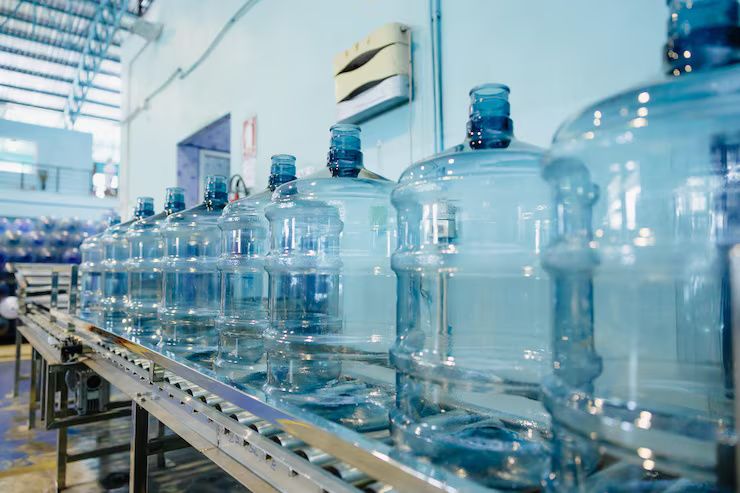
Why Water Bottling Machinery Matters
Bottled-water production requires controlled handling from treated water through final packaging. Equipment helps maintain consistent filling volumes, hygienic conditions, container handling, and production flow.
A typical water bottling line may include:
- Raw water treatment
- Filtration
- Purification
- Storage tanks
- Bottle blowing
- Bottle rinsing
- Water filling
- Cap feeding and capping
- Labeling
- Date and batch coding
- Inspection
- Shrink wrapping or carton packaging
- Palletizing
Not every plant uses every stage. The equipment arrangement depends on the water source, treatment process, bottle format, production capacity, and packaging requirements.
Water Bottling Technologies
Different technologies are used throughout the bottled-water production process.
Water Treatment and Filtration
Water treatment prepares the water before filling. Depending on the source and required quality, treatment can include filtration, activated carbon treatment, reverse osmosis, ultraviolet treatment, ozone treatment, mineral adjustment, or combinations of these technologies.
The treatment sequence should be designed around the characteristics of the incoming water and applicable drinking-water requirements.
Bottle Manufacturing
Some bottling plants manufacture PET bottles on-site using PET preforms and stretch blow molding machines.
The process generally involves heating a preform and forming it into a bottle inside a mold using controlled air pressure.
Producing bottles on-site can allow a plant to integrate bottle manufacturing with downstream rinsing and filling operations.
Bottle Rinsing
Before filling, bottles may be rinsed or otherwise treated according to the packaging system and hygiene requirements.
Rinsing equipment can be integrated directly into monoblock or triblock filling systems, reducing manual bottle handling between stages.
Water Filling
Filling machines transfer treated water into bottles at controlled volumes.
Common filling configurations include:
- Gravity filling
- Isobaric filling
- Volumetric filling
- Flow-meter-based filling
The appropriate technology depends on the product, container, production speed, and filling-system design.
Capping
After filling, bottles move to a capping system where closures are automatically positioned and tightened.
Cap feeders, cap elevators, cap sorters, and rotary capping machines can be integrated into automated production lines.
Labeling
Labeling equipment applies product labels to bottles using technologies such as pressure-sensitive labeling, roll-fed labeling, or sleeve labeling.
The selected system depends on bottle shape, label material, production speed, and packaging design.
Secondary Packaging
Filled and labeled bottles can be grouped into multipacks, cartons, trays, or shrink-wrapped bundles.
Packaging equipment can then prepare products for storage, distribution, and handling.
Major Types of Water Bottling Machinery
| Machinery Type | Main Function | Typical Application |
|---|---|---|
| Water Treatment System | Prepares water for filling | Bottled drinking water |
| RO System | Removes dissolved substances | Purified water |
| UV Treatment System | Microbial control | Water treatment |
| Ozone System | Water disinfection | Bottled-water processing |
| PET Blow Molding Machine | Produces PET bottles | On-site bottle manufacturing |
| Bottle Rinser | Rinses containers | Bottle preparation |
| Water Filling Machine | Fills bottles | Still water |
| Bottle Capper | Applies closures | Bottled water |
| Labeling Machine | Applies labels | Retail bottles |
| Coding Machine | Prints production information | Bottles and packaging |
| Inspection System | Checks bottles and fills | Quality control |
| Shrink Wrapper | Groups bottles | Secondary packaging |
| Palletizer | Arranges packaged products | Distribution handling |
Water Bottling Production Process
A generalized bottled-water production sequence can be represented as:
Water Source → Pretreatment → Filtration/Purification → Disinfection → Storage → Bottle Manufacturing or Bottle Supply → Bottle Rinsing → Filling → Capping → Labeling → Coding → Inspection → Secondary Packaging → Palletizing
The exact sequence depends on the water category, treatment technology, bottle material, and regulatory requirements.
Still Water Filling Systems
Still water is commonly filled using systems designed for non-carbonated products. Gravity and other controlled filling technologies can be used depending on machine configuration.
For high-throughput plants, rinsing, filling, and capping can be integrated into a single automated machine or interconnected system.
Carbonated Water Filling Systems
Carbonated water requires different filling conditions because dissolved carbon dioxide affects pressure and fluid behavior.
Isobaric filling systems maintain controlled pressure during filling to help preserve carbonation and reduce product losses.
Carbonated and non-carbonated water therefore require different filling configurations and process controls.
Monoblock and Triblock Systems
Monoblock Filling Machines
A monoblock system integrates multiple operations into one machine frame. Depending on the design, rinsing, filling, and capping can be combined.
This arrangement reduces intermediate bottle handling and can provide a compact production configuration.
Triblock Filling Machines
Triblock systems commonly integrate:
Rinsing → Filling → Capping
These operations occur in a coordinated machine, making triblock technology common in automated beverage bottling environments.
Automation and Process Control
Modern water bottling machinery can incorporate programmable logic controllers, sensors, servo drives, flow controls, pressure sensors, and human-machine interfaces.
Automation can monitor:
- Water flow
- Filling volume
- Bottle position
- Cap presence
- Conveyor speed
- Filling pressure
- Product temperature
- Machine speed
- Production counts
- Equipment status
Automated inspection systems can also detect missing caps, incorrect fill levels, bottle deformation, label positioning issues, and other packaging problems.
Hygienic Design and Cleaning
Water bottling systems must be designed around hygienic production requirements.
Important considerations include:
- Suitable food-contact materials
- Smooth product-contact surfaces
- Hygienic piping
- Controlled water pathways
- Appropriate seals and fittings
- Drainage
- Cleaning procedures
- Sanitization systems
- Controlled bottle handling
Stainless steel is widely used in water-processing and filling equipment because of its corrosion resistance and suitability for hygienic environments.
Global Water Bottling Machinery Manufacturers and Suppliers
The international market includes manufacturers supplying water treatment systems, filling machines, complete bottling lines, packaging equipment, and automation technologies.
Krones develops filling, packaging, processing, and automation systems used in beverage production, including bottled-water applications.
Sidel provides PET packaging, blow molding, filling, labeling, and complete line technologies for beverage applications.
KHS supplies filling, packaging, and process technology for beverage production.
SIPA provides PET container production, filling, packaging, and related beverage-processing technologies.
Other manufacturers and engineering companies supply specialized water-treatment systems, filling equipment, bottle-making machinery, labeling systems, inspection equipment, and secondary packaging solutions.
Supplier selection depends on bottle format, water type, production capacity, filling technology, automation, hygiene requirements, plant layout, and applicable regulations.
How to Select Water Bottling Machinery
1. Define the Water Product
Determine whether the plant will package purified water, mineral water, spring water, still water, carbonated water, or another water product.
2. Determine Bottle Formats
Identify the required container material, bottle volume, neck size, shape, and closure.
Common PET bottle sizes can range from small individual containers to larger household formats.
3. Establish Production Capacity
Specify the required bottles per hour. This determines the required filling speed and influences the capacity of rinsing, capping, labeling, packaging, and palletizing equipment.
4. Select the Filling Technology
Choose the filling method according to product characteristics, bottle design, production speed, and whether the water is carbonated.
5. Evaluate Water Treatment
Determine the required filtration, purification, and disinfection stages based on the incoming water quality and final product requirements.
6. Consider Automation
Assess automation requirements for bottle handling, filling, capping, labeling, inspection, packaging, and palletizing.
7. Plan the Complete Production Line
Each machine should be compatible with upstream and downstream equipment. Conveyor speeds, bottle flow, filling capacity, labeling speed, and packaging throughput should be coordinated.
Water Bottling Machinery Cost and Pricing Factors
The water bottling machinery cost varies considerably depending on line capacity, automation, filling technology, bottle format, water-treatment requirements, and packaging configuration.
Major factors include:
- Water treatment capacity
- Filling speed
- Number of filling valves
- Bottle size range
- PET blow molding requirements
- Rinsing technology
- Capping system
- Labeling technology
- Inspection equipment
- Secondary packaging
- Palletizing
- Automation and controls
- Installation and commissioning
A compact semi-automatic filling machine has a very different configuration from a fully automated bottled-water production line.
When comparing equipment costs, consider the complete line, production capacity, utilities, maintenance requirements, installation, and integration rather than evaluating one machine in isolation.
Industrial Applications
Water bottling machinery is used in several beverage-production environments, including:
- Packaged drinking water
- Purified water
- Mineral water
- Spring water
- Still water
- Carbonated water
- Flavored water
- Functional water beverages
- Institutional water packaging
- Hospitality water packaging
The required machinery varies according to the water category, bottle format, production scale, and packaging method.
Best Practices for Water Bottling Machinery
Reliable bottling operations require consistent equipment maintenance and hygienic control.
- Maintain water-treatment systems according to operating requirements.
- Monitor filtration and purification performance.
- Inspect filling valves and product-contact components.
- Verify filling accuracy regularly.
- Maintain cap feeders and capping heads.
- Check bottle and closure quality.
- Inspect labels and coding information.
- Clean and sanitize appropriate equipment surfaces.
- Monitor conveyors and transfer systems.
- Maintain sensors and control systems.
- Follow applicable drinking-water and food-packaging requirements.
Frequently Asked Questions
What is water bottling machinery?
Water bottling machinery refers to equipment used to treat, prepare, rinse, fill, cap, label, inspect, and package bottled water.
What machines are used in a water bottling plant?
A typical plant may use water-treatment systems, filtration equipment, storage tanks, bottle blow molding machines, rinsers, filling machines, cappers, labeling machines, inspection systems, packaging machines, and palletizers.
What is a water filling machine?
A water filling machine dispenses treated water into bottles or other containers at controlled volumes. Filling technology varies according to the product and packaging system.
What is a monoblock water filling machine?
A monoblock filling machine integrates multiple operations into one machine structure. Depending on its design, it can combine bottle rinsing, filling, and capping.
How do I choose water bottling machinery?
Consider water type, treatment requirements, bottle format, production capacity, filling technology, automation, hygiene requirements, packaging format, and the compatibility of all machines within the production line.
Conclusion
Water bottling machinery connects water treatment with the final packaged product. From filtration and purification to bottle production, rinsing, filling, capping, labeling, inspection, and packaging, each stage contributes to an efficient and controlled bottling process.
The appropriate system depends on water characteristics, bottle format, production capacity, filling technology, hygiene requirements, automation, and packaging needs. Evaluating the complete production line can help manufacturers develop a coordinated bottling system suited to their specific industrial application.