
Wood lamination machines are important pieces of equipment in modern woodworking and engineered wood production.
They help manufacturers join layers of wood, veneers, panels, or other wood-based materials under controlled pressure and, in many cases, heat. The resulting laminated products can provide improved dimensional stability, consistent appearance, structural performance, and efficient material utilization.
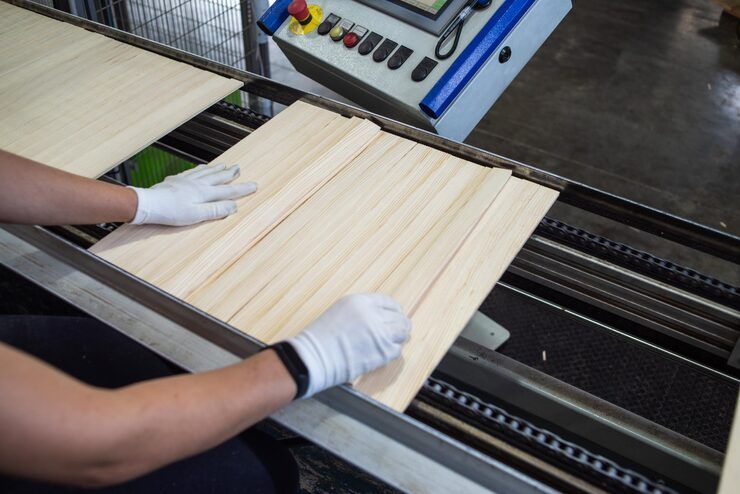
From furniture components and doors to flooring, decorative panels, and curved wooden structures, lamination technology supports a wide range of applications. Understanding how these machines work provides useful insight into modern woodworking processes and helps explain why controlled bonding has become an important part of wood manufacturing.
What Are Wood Lamination Machines?
Wood lamination machines are industrial or workshop machines designed to bond multiple layers of wood or wood-based materials into a single laminated structure. Depending on the machine design, the process may involve adhesive application, positioning, pressing, heating, curing, and controlled release.
The objective is to create a strong and uniform bond between layers while maintaining the required thickness, shape, and surface quality.
Laminated wood products can be made from materials such as:
- Natural wood veneers
- Solid wood strips
- Plywood components
- Medium-density fiberboard
- Particle-based panels
- Decorative laminates
- Engineered wood layers
The exact combination depends on the intended application and manufacturing process.
How Wood Lamination Machines Work
Although machine configurations differ, most wood lamination processes follow several fundamental stages.
Material Preparation
Wood components must first be prepared to suitable dimensions and surface conditions. Clean, properly prepared surfaces allow adhesives to distribute more consistently across the bonding area.
Moisture content is also an important consideration because excessive or uneven moisture can influence bonding performance and dimensional stability.
Adhesive Application
An adhesive is applied to one or more surfaces that will be joined. Industrial equipment may use rollers, spray systems, curtain coaters, or other application methods depending on the material and production requirements.
Uniform adhesive coverage helps reduce weak areas and supports consistent bonding across the laminated structure.
Layer Alignment
The prepared layers are positioned according to the required design. Accurate alignment is particularly important when manufacturing decorative panels, curved components, furniture parts, or products with visible wood grain.
Pressing
The assembled layers are placed into a pressing system. Pressure brings the surfaces into close contact and helps distribute the adhesive evenly.
Some machines also apply controlled heat during this stage. Heat can accelerate adhesive curing for suitable formulations and improve production consistency.
Curing and Release
After sufficient pressing and curing, the laminated component is removed from the machine. It may then undergo trimming, sanding, machining, finishing, or inspection before becoming part of the final product.
Main Types of Wood Lamination Machines
Different lamination requirements call for different machine configurations.
Hydraulic Lamination Presses
Hydraulic presses use hydraulic systems to generate controlled pressure across the workpiece. They are commonly used when strong and uniform pressure is required over large surfaces.
These machines can be configured for different panel dimensions and production environments.
Cold Press Machines
Cold pressing relies primarily on mechanical pressure rather than heated pressing. It is suitable for adhesives and materials that can cure under ambient conditions.
This approach can be useful for applications where controlled pressure is more important than accelerated curing.
Hot Press Machines
Hot press systems combine pressure with controlled heat. The added heat can shorten curing periods for compatible adhesives and support continuous manufacturing processes.
Temperature and pressure must be carefully controlled because excessive heat can affect certain wood species, adhesives, or surface finishes.
Vacuum Lamination Systems
Vacuum lamination systems use atmospheric pressure created by removing air from a sealed area. They are particularly useful for curved surfaces, veneers, decorative components, and applications where even pressure distribution is needed.
Vacuum systems can conform to complex shapes while maintaining consistent contact between layers.
Where Wood Lamination Machines Are Used
Wood lamination technology is used across several manufacturing sectors.
Furniture Manufacturing
Furniture manufacturers use laminated wood components for tabletops, cabinet parts, shelves, doors, chair components, and decorative surfaces.
Lamination allows manufacturers to create stable components while combining different wood layers or surface materials.
Door and Window Production
Laminated wood is frequently used in doors, frames, and related architectural components. Controlled bonding can help create larger or more stable sections from smaller wood pieces.
Flooring Production
Wood lamination equipment supports the manufacture of engineered flooring and multilayer wood products. Different layers can be arranged to provide dimensional stability and a desired surface appearance.
Decorative Panels
Interior wall panels, furniture surfaces, architectural elements, and other decorative products may use laminated veneers or layered wood materials.
Curved Wood Components
Lamination is particularly valuable when creating curved wooden components. Thin layers can be shaped and bonded together around molds to create forms that would be difficult to produce from a single solid piece.
Benefits of Wood Lamination Technology
One important advantage of lamination is the ability to engineer wood components for specific performance requirements.
Laminated structures can provide improved dimensional stability because individual layers can be arranged to manage movement caused by environmental changes.
The process can also support efficient material utilization. Smaller pieces, veneers, or selected wood layers can be combined into larger components while maintaining a controlled appearance.
Other potential benefits include:
- Consistent panel thickness
- Improved structural uniformity
- Greater design flexibility
- Production of curved components
- Better use of selected wood materials
- Consistent bonding across large surfaces
- Compatibility with automated production systems
The actual results depend on material selection, adhesive characteristics, machine configuration, and process control.
Factors That Influence Lamination Quality
Machine performance is only one part of the lamination process. Several production variables can influence the final product.
Wood Moisture
Wood should generally have moisture characteristics appropriate for the intended application and adhesive system. Uneven moisture can contribute to dimensional movement or bonding problems.
Surface Preparation
Surfaces should be clean, appropriately machined, and free from contaminants that could interfere with adhesive contact.
Pressure Control
Insufficient pressure may prevent proper contact between layers, while excessive pressure can create other processing problems. Appropriate pressure depends on the materials and adhesive system being used.
Temperature
When heated pressing is involved, temperature must remain within the suitable range for the wood and adhesive.
Adhesive Distribution
Uneven adhesive coverage can result in inconsistent bonding. Application systems therefore need to provide controlled and repeatable coverage.
Automation and Modern Lamination Systems
Modern wood processing increasingly incorporates automation to improve consistency and process monitoring.
Automated systems may control material positioning, adhesive application, pressing cycles, temperature, pressure, and production timing. Sensors can also monitor operating conditions and identify deviations from predetermined process parameters.
Computer-controlled equipment can improve repeatability across large production runs while reducing dependence on manual adjustments.
However, automation does not eliminate the importance of material preparation and process knowledge. Poorly prepared wood or unsuitable process settings can still affect the finished product.
Maintenance and Safe Operation
Regular machine maintenance supports reliable operation and helps preserve process consistency.
Important maintenance areas may include hydraulic systems, heating elements, pressure surfaces, vacuum equipment, adhesive application components, electrical controls, and moving mechanisms.
Operators should follow the manufacturer's operating procedures and workplace safety requirements. Particular attention is needed around heated surfaces, hydraulic pressure, electrical components, and moving machine parts.
Routine inspection can also help identify wear, leakage, contamination, or alignment problems before they interfere with production.
Choosing a Suitable Lamination System
The appropriate machine depends on the intended material and manufacturing process rather than on one universal specification.
Important considerations include:
- Material type and thickness
- Required panel dimensions
- Flat or curved product geometry
- Adhesive characteristics
- Required pressure
- Heating requirements
- Production volume
- Automation level
- Available workspace
- Maintenance requirements
A system designed for large flat panels may not be appropriate for curved furniture components, while a compact workshop machine may not provide the automation required for continuous industrial production.
The real difference appears when the machine's capabilities are matched to the specific materials, product dimensions, production sequence, and quality requirements.
Future Trends in Wood Lamination
Wood lamination technology is increasingly influenced by automation, digital monitoring, sustainable manufacturing, and improved adhesive technologies.
Manufacturers are exploring more efficient material utilization, lower-emission adhesive systems, automated quality monitoring, and data-based process control. Advanced sensors may also help monitor pressure, temperature, moisture, and curing conditions in real time.
These developments can make lamination processes more consistent while supporting greater flexibility in engineered wood production.
Frequently Asked Questions
What is a wood lamination machine?
A wood lamination machine is equipment designed to join multiple layers of wood or wood-based materials using controlled pressure, adhesive, and sometimes heat or vacuum.
What is the difference between hot and cold lamination?
Hot lamination combines pressure with controlled heat to support curing for suitable adhesives, while cold lamination generally relies on pressure and an adhesive system that cures without added heat.
Can wood lamination machines create curved components?
Yes. Certain systems, particularly vacuum and specialized pressing equipment, can laminate thin wood layers over molds to create curved components.
What affects the quality of laminated wood?
Material moisture, surface preparation, adhesive distribution, pressure, temperature, curing conditions, and machine alignment can all influence the final result.
Are wood lamination machines automated?
Some modern systems include automated controls for adhesive application, material positioning, pressure, temperature, and production cycles, while simpler equipment may require greater operator involvement.
Conclusion
Wood lamination machines provide controlled methods for joining wood layers into stable, functional, and visually consistent components. Their applications range from furniture and architectural panels to flooring, doors, and curved wooden structures.
Understanding the different machine types, pressing methods, material requirements, and quality factors makes it easier to understand how laminated wood products are manufactured. As automation, monitoring technologies, and sustainable materials continue to develop, wood lamination systems are likely to become increasingly precise and adaptable.
The most suitable approach ultimately depends on the materials being processed, product geometry, adhesive system, production requirements, and desired level of process control. By considering these factors together, manufacturers can better understand how lamination technology fits into modern woodworking and engineered wood production.