AI video generator software is a category of artificial intelligence technology that can create or modify video content from text prompts, images, scripts, audio, or existing media. These tools can automate parts of the video production process, including scene generation, narration, subtitles, animation, editing, and visual effects.
The development of AI video creation tools is closely connected with advances in generative AI, computer vision, natural language processing, and machine learning. Instead of creating every visual element manually, users can provide instructions that an AI system interprets and converts into video sequences.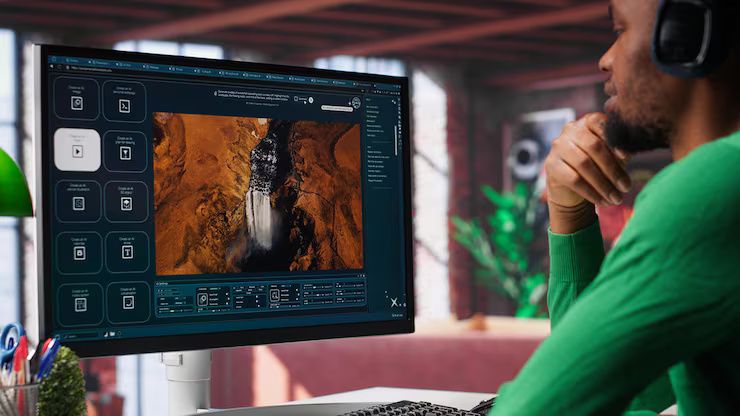
AI video generator software is increasingly being explored across marketing, education, entertainment, training, internal communication, product documentation, and social media content. The technology is developing rapidly, but questions around accuracy, copyright, privacy, transparency, and appropriate human review remain important.
Context
Understanding AI Video Generator Software
AI video generator software uses artificial intelligence models to create or transform visual content. Depending on the system, users may generate videos from written descriptions, convert images into animated scenes, create digital presenters, or modify existing footage.
Common capabilities include:
- Text-to-video generation
- Image-to-video animation
- Automated narration
- Subtitle generation
- Background creation
- Scene editing
- Script assistance
- Video translation
Different platforms support different combinations of these functions.
How AI Video Creation Tools Work
AI video creation tools generally process an input such as a text prompt, script, image, or reference video. The software then uses trained models to generate visual or audio elements based on the instructions.
A simplified workflow includes:
- The user provides a prompt, script, or source material.
- The AI system interprets the requested content.
- Visual, audio, and motion elements are generated or assembled.
- The user reviews the resulting video.
- Editing and adjustments are made where necessary.
- The final video is exported in an appropriate format.
The output can vary according to the model, instructions, source material, and available editing controls.
Main Technologies Behind AI Video Generation
| Technology | General Function |
|---|---|
| Generative AI | Creates new visual or audio content |
| Natural language processing | Interprets written instructions and scripts |
| Computer vision | Analyzes images and video information |
| Machine learning | Helps models identify patterns in training data |
| Speech synthesis | Generates artificial narration |
| Image generation | Creates visual elements for video scenes |
Types of AI Video Generation
AI video systems can be grouped according to their main purpose.
| Type | Common Application |
| Text-to-video | Creates video scenes from written prompts |
| Image-to-video | Adds movement to still images |
| AI avatar video | Generates presentations using digital characters |
| AI video editing | Automates selected editing tasks |
| Video translation | Converts spoken or written content into other languages |
| Generative effects | Creates or modifies selected visual elements |
Evolution of Automated Content Generation
Traditional video production often required separate stages for scripting, filming, editing, narration, graphics, and post-production. AI automation brings some of these activities into a single digital workflow.
Automated content generation can assist with:
- Script drafting
- Scene planning
- Caption creation
- Voice generation
- Visual editing
- Content adaptation
Human review remains important because generated content can contain factual, visual, or contextual errors.
Importance
Why AI Video Software Matters
Video has become an important format for communication, education, training, entertainment, and digital publishing. Producing video can involve multiple technical processes, which makes automation useful for organizations managing large volumes of content.
AI video generator software can assist with repetitive production tasks and help teams experiment with different formats.
Potential applications include:
- Educational explanations
- Employee training materials
- Product demonstrations
- Internal presentations
- Social media videos
- News and information formats
Business Applications of AI Video
Businesses are exploring AI video technology for communication and content development.
Marketing Content: AI tools can assist with short promotional or informational videos, visual concepts, and campaign variations.
Training and Education: Organizations can create instructional materials using generated narration, diagrams, animations, or digital presenters.
Internal Communication: Companies can use AI-generated video for announcements, process explanations, and organizational information.
Product Documentation: Video generation can help explain product features, operating procedures, or technical concepts.
Localization: AI-based voice generation and translation can help adapt existing video content for different languages.
Role of AI-Powered Video Editing
AI-powered video editing systems can automate selected editing activities rather than creating an entire video from the beginning.
They may assist with:
- Removing unwanted sections
- Generating subtitles
- Detecting scenes
- Improving audio
- Reframing footage
- Creating short versions of longer videos
These features can be combined with conventional editing tools.
Automated Content Generation and Personalization
AI systems can generate variations of content based on different audiences, languages, formats, or communication requirements.
For example, a single educational script may be adapted into:
- Short-form video
- Presentation video
- Narrated explanation
- Social media format
- Multilingual version
The accuracy and appropriateness of each version should still be reviewed before publication.
Recent Updates
Expansion of Generative Video Models
From 2024 through 2026, generative video technology continued developing toward more detailed scenes, improved motion, longer sequences, and greater control over generated content.
Developers have increasingly focused on maintaining consistency between frames and allowing users to specify elements such as:
- Camera movement
- Visual style
- Scene composition
- Character appearance
- Motion
- Duration
These developments have expanded the range of creative and business experiments possible with AI video.
Greater Integration of AI Video Editing
AI video creation is increasingly being integrated with conventional editing workflows. Instead of requiring users to generate an entire video from a single prompt, modern tools can assist with individual stages of production.
This includes:
- Automated captioning
- Voice generation
- Background modification
- Scene creation
- Video summarization
- Translation
Growth of Enterprise AI Video Applications
Businesses are increasingly exploring AI video for training, communications, education, localization, and content development. Enterprise adoption also brings additional requirements involving privacy, access controls, brand governance, and review procedures.
Organizations working with sensitive information may need to understand how uploaded content is processed and retained by a particular platform.
Increasing Attention to AI-Generated Content Transparency
As synthetic media becomes more common, questions about disclosure, authenticity, and digital identity have become more significant. Organizations may need internal policies covering when AI-generated or AI-modified content should be identified as such.
The appropriate approach can depend on the content type, audience, jurisdiction, and applicable rules.
Developments in Responsible Generative AI
The National Institute of Standards and Technology published its Generative AI Profile for the AI Risk Management Framework in 2024. The framework identifies risks associated with generative AI and provides voluntary guidance for organizations managing AI systems. NIST subsequently continued developing and updating AI risk-management resources.
Laws or Policies
Copyright Considerations
AI-generated video can raise copyright questions involving both source materials and generated outputs. The U.S. Copyright Office has been examining these issues as part of its ongoing Copyright and Artificial Intelligence initiative.
In its 2025 report on copyrightability, the Copyright Office explained that AI-assisted outputs may receive copyright protection when sufficient human creativity determines expressive elements, while a prompt alone does not generally establish human authorship.
This means businesses should distinguish between original human-created material, licensed materials, public-domain materials, and AI-generated elements when developing video content.
Digital Replicas and Synthetic Media
AI video systems can create realistic representations of people, voices, and other identifiable characteristics. The U.S. Copyright Office has separately examined digital replicas as part of its AI initiative.
Using someone's likeness or voice may involve privacy, publicity, contractual, or other legal considerations depending on the circumstances.
AI Risk Management
Organizations using AI video systems may establish internal procedures for reviewing generated content, protecting confidential information, and documenting how AI is used.
NIST's Generative AI Profile provides a voluntary framework for identifying and managing risks associated with generative AI systems.
Consumer Protection and AI Claims
AI-generated content should not be used to create deceptive representations or misleading claims. The Federal Trade Commission has emphasized that existing consumer-protection laws continue to apply when businesses use artificial intelligence.
Organizations should therefore review factual claims, endorsements, representations, and synthetic media before distributing AI-generated videos.
Tools and Resources
AI Video Generation Platforms
AI video platforms can provide functions such as text-to-video generation, image animation, digital presenters, and automated editing.
When evaluating a platform, organizations can examine:
- Supported input formats
- Output resolution
- Editing capabilities
- Data-handling practices
- Commercial-use terms
- Content restrictions
Video Editing Software
Traditional video editors remain useful for refining AI-generated material. They can be used for:
- Timeline editing
- Audio adjustment
- Color correction
- Captions
- Visual effects
AI generation and conventional editing can therefore work as complementary technologies.
Script and Storyboard Tools
Scriptwriting and storyboard tools help organize video concepts before generation begins.
They may support:
- Scene planning
- Dialogue organization
- Shot descriptions
- Narration planning
Content Verification Tools
Fact-checking and review tools can help identify inaccurate claims, inconsistent information, or inappropriate content before publication.
Human review is particularly important when videos contain:
- Medical information
- Financial information
- Legal information
- Scientific claims
- Public figures
- Sensitive personal information
AI Governance Resources
Organizations can consult resources such as the NIST AI Risk Management Framework and its Generative AI Profile when developing internal AI governance practices. These resources address areas such as risk identification, evaluation, and responsible AI management.
FAQs
What is AI video generator software?
AI video generator software uses artificial intelligence to create or modify video content from inputs such as text, images, audio, scripts, or existing footage.
How do AI video creation tools work?
AI video creation tools process user instructions or source materials through generative models and other AI technologies to create visual, audio, and motion elements.
What are common business applications of AI video?
Business applications include training materials, educational content, internal communication, product explanations, localization, and digital content development.
Is AI-generated video protected by copyright?
Copyright protection depends on the amount and nature of human creative involvement and other legal factors. The U.S. Copyright Office has stated that human authorship can support protection for sufficiently human-created expressive elements, while prompts alone generally do not establish authorship.
What should businesses consider when using AI video software?
Businesses should consider content accuracy, copyright, privacy, digital replicas, data security, platform terms, human review, and applicable AI regulations or policies.
Conclusion
AI video generator software combines generative artificial intelligence, automated content generation, computer vision, speech technology, and digital editing capabilities. AI video creation tools are being used across education, training, communication, marketing, entertainment, and other business applications. As the technology develops, copyright, privacy, transparency, content accuracy, and responsible AI management remain important considerations. Human review continues to play an important role in ensuring that generated videos are appropriate, accurate, and suitable for their intended purpose.