Automated machinery has become an important part of modern manufacturing, processing, logistics, packaging, and industrial operations.
By combining mechanical equipment with sensors, controllers, software, and communication technologies, automated systems can perform repetitive or highly coordinated tasks with greater consistency and efficiency.
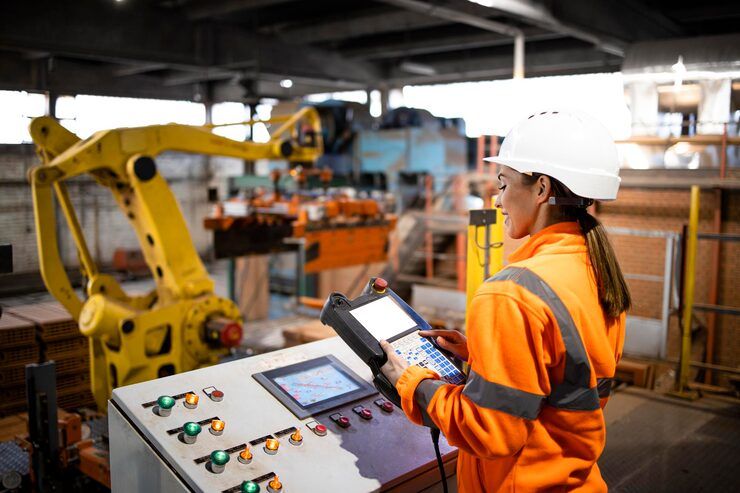
Industrial automation is not simply about replacing manual work with machines. Modern automation systems are designed to connect equipment, monitor processes, collect operational information, and respond to changing conditions. This makes automation an important part of how factories and industrial facilities manage production, quality, safety, and resource use.
Understanding the fundamentals of automated machinery provides useful insight into how modern industrial environments operate and why automation continues to develop across different sectors.
What Is Automated Machinery?
Automated machinery refers to equipment capable of performing specific tasks with limited continuous human intervention. Depending on the application, machines may handle materials, assemble components, inspect products, package goods, control processes, or move items between production stages.
Automation can range from relatively simple mechanical systems to highly integrated production cells containing robots, programmable controllers, sensors, cameras, and industrial software.
The level of automation depends on the task, operating environment, production requirements, and degree of human involvement needed.
Common examples include:
- Automated assembly equipment
- Robotic handling systems
- Conveyor systems
- Packaging machinery
- CNC machines
- Automated inspection equipment
- Material handling systems
- Process control equipment
How Industrial Automation Systems Work
An industrial automation system generally follows a cycle of sensing, processing, decision-making, and action.
Sensors collect information from the operating environment. A controller processes this information according to programmed instructions. The system then sends commands to motors, valves, actuators, robotic mechanisms, or other equipment.
For example, a sensor may detect that a component has reached a particular position. The controller interprets that information and instructs another machine to perform the next operation.
This continuous interaction allows automated machinery to coordinate multiple stages of a process while maintaining predefined operating parameters.
Main Components of Automated Machinery
Modern automated systems combine several technologies that work together.
Sensors
Sensors provide information about physical conditions such as position, temperature, pressure, speed, proximity, or product presence.
Different sensor technologies are selected according to the operating environment and measurement requirements.
Controllers
Controllers process sensor information and determine how machinery should respond. Programmable logic controllers, industrial computers, and other control platforms are commonly used for this purpose.
Actuators
Actuators convert control signals into physical movement or action. Motors, pneumatic cylinders, hydraulic systems, and electrically controlled mechanisms are examples of actuating technologies.
Human-Machine Interfaces
Human-machine interfaces allow operators to monitor equipment, view process information, adjust permitted settings, and identify system conditions.
Industrial Networks
Communication networks allow machines, controllers, sensors, and supervisory systems to exchange information. Network connectivity is increasingly important as industrial facilities become more integrated.
Types of Industrial Automation
Industrial automation can be classified according to how flexible and continuously the equipment operates.
| Automation Type | General Characteristics | Typical Application |
|---|---|---|
| Fixed Automation | Dedicated equipment for repetitive operations | High-volume production |
| Programmable Automation | Equipment can be reconfigured for different batches | Batch manufacturing |
| Flexible Automation | Rapid changes between production tasks | Mixed-product environments |
| Integrated Automation | Multiple systems connected through shared controls and software | Smart manufacturing |
The appropriate approach depends on production volume, product variation, process complexity, and required flexibility.
Automated Machinery in Manufacturing
Manufacturing is one of the largest application areas for industrial automation systems.
Automated equipment can support activities such as material preparation, machining, assembly, welding, painting, inspection, packaging, and movement between production stages.
Automation can also connect multiple operations into coordinated production cells. Instead of treating every machine as an isolated unit, connected equipment can exchange information and coordinate timing.
This approach can improve process visibility and help operators identify production interruptions more quickly.
The Role of Robotics
Industrial robots are an important category of automated machinery. They are commonly used for tasks that require repeatable movement, controlled positioning, or operation in environments that may be difficult for people.
Robotic systems can be integrated with:
- Vision systems
- Conveyors
- Sensors
- Grippers
- Controllers
- Safety systems
- Production databases
Robots may perform tasks such as material handling, assembly, machine tending, palletizing, and inspection.
The effectiveness of a robotic system depends not only on the robot itself but also on how well it is integrated with surrounding equipment.
Automation and Quality Control
Automated machinery can support consistent quality by monitoring process conditions and identifying variations during production.
Machine vision systems, measurement sensors, and automated inspection equipment can examine products against predefined specifications.
When an abnormal condition is detected, the system may alert an operator, separate an affected product, or adjust a controlled process where appropriate.
This creates a connection between production and quality management. Instead of relying exclusively on final inspection, organizations can monitor important conditions throughout the manufacturing process.
Data and Industrial Automation
Modern automation systems increasingly generate large amounts of operational data.
Information may include:
- Equipment status
- Production cycle information
- Temperature readings
- Energy consumption
- Machine operating conditions
- Maintenance indicators
- Quality measurements
Industrial software can organize this information so operators and engineers can better understand how equipment is performing.
Data-driven automation also supports predictive maintenance, where equipment information is analyzed to identify potential signs of deterioration before a major interruption occurs.
Benefits of Industrial Automation Systems
Automation can provide several operational advantages when appropriately designed and managed.
Consistent Processes
Automated machinery can repeat programmed operations with consistent timing and movement, helping reduce variations caused by repetitive manual processes.
Improved Productivity
Machines can perform certain repetitive activities continuously according to defined operating schedules, supporting higher production throughput in suitable environments.
Better Process Visibility
Connected equipment can provide information about machine status and process conditions, helping operators understand what is happening across a production system.
Improved Workplace Safety
Automation can reduce the need for people to perform certain repetitive, physically demanding, or hazardous tasks. Safety still requires appropriate system design, protective measures, training, and supervision.
Efficient Resource Management
Automated controls can help manage materials, energy, machine operation, and production timing more precisely.
Challenges of Automated Machinery
Automation also introduces technical and organizational challenges.
One major consideration is system complexity. A highly integrated production environment may involve mechanical equipment, electrical systems, software, communication networks, and safety controls that must work together.
Maintenance is another important consideration. Automated systems require qualified personnel who understand both machinery and control technologies.
Cybersecurity has also become increasingly relevant as industrial equipment becomes connected to internal networks and external information systems.
Organizations must therefore consider equipment reliability, software management, network security, operator training, and maintenance planning as part of the automation strategy.
Smart Manufacturing and Industry 4.0
Industrial automation is increasingly connected with the broader concept of smart manufacturing.
Smart manufacturing combines automation with technologies such as industrial Internet of Things devices, cloud platforms, advanced analytics, digital twins, artificial intelligence, and connected production systems.
The objective is to create greater visibility across industrial operations.
For example, data from multiple machines can be combined to identify production patterns, monitor equipment conditions, and support operational decision-making.
This represents a shift from isolated automated machines toward connected industrial ecosystems.
Factors to Consider When Planning Automation
The right automation approach depends on the specific production environment.
Important considerations include:
- Process complexity
- Production volume
- Product variation
- Available floor space
- Equipment compatibility
- Maintenance capabilities
- Operator skills
- Safety requirements
- Data and connectivity needs
- Future expansion requirements
Automation tends to work well when a process is clearly defined, repeatable, and suitable for controlled machine operation. The real difference appears when organizations evaluate the complete workflow rather than focusing on a single machine.
A successful automation strategy should consider how equipment, people, software, maintenance, and production objectives interact.
Future Trends in Automated Machinery
Industrial automation continues to evolve as computing and connectivity improve.
Important developments include greater use of collaborative robots, machine vision, artificial intelligence-assisted analysis, edge computing, digital twins, autonomous material movement, and predictive maintenance.
Another emerging direction is greater interoperability between different industrial systems. Improved communication standards can make it easier for equipment from different manufacturers and generations to exchange information.
Future automation systems are therefore likely to become more connected, adaptive, data-driven, and capable of supporting human decision-making.
Frequently Asked Questions
What is automated machinery?
Automated machinery is equipment designed to perform specific industrial tasks with limited continuous human intervention using mechanical systems, sensors, controllers, and software.
What are the main components of an automation system?
Common components include sensors, controllers, actuators, human-machine interfaces, communication networks, and safety systems.
How is automation used in manufacturing?
Automation is used for processes such as assembly, machining, material handling, inspection, packaging, welding, and production monitoring.
What is the difference between automation and robotics?
Automation describes a broader system of technologies used to control industrial processes, while robotics specifically involves programmable machines capable of performing physical movements and tasks.
What is the future of industrial automation?
Future systems are expected to place greater emphasis on connected equipment, artificial intelligence, machine vision, predictive maintenance, data analytics, collaborative robotics, and smart manufacturing.
Conclusion
Automated machinery forms the foundation of many modern industrial automation systems. By combining mechanical equipment with sensors, controllers, software, communication networks, and data analysis, automation allows industrial processes to become more coordinated, measurable, and adaptable.
The value of automation extends beyond machine operation. It can influence production consistency, quality monitoring, workplace safety, maintenance planning, and resource management. At the same time, successful implementation requires careful attention to system complexity, cybersecurity, maintenance, training, and integration.
As smart manufacturing continues to develop, automated machinery will increasingly operate as part of connected industrial environments rather than as isolated equipment. Understanding these fundamentals provides a clearer picture of how modern factories and industrial facilities are evolving toward more intelligent, flexible, and data-driven operations.