Bolts and screws may appear simple, but selecting the right fastener involves much more than choosing a suitable size.
Material composition, strength grade, thread design, corrosion resistance, installation conditions, and application requirements can all influence how a fastener performs.
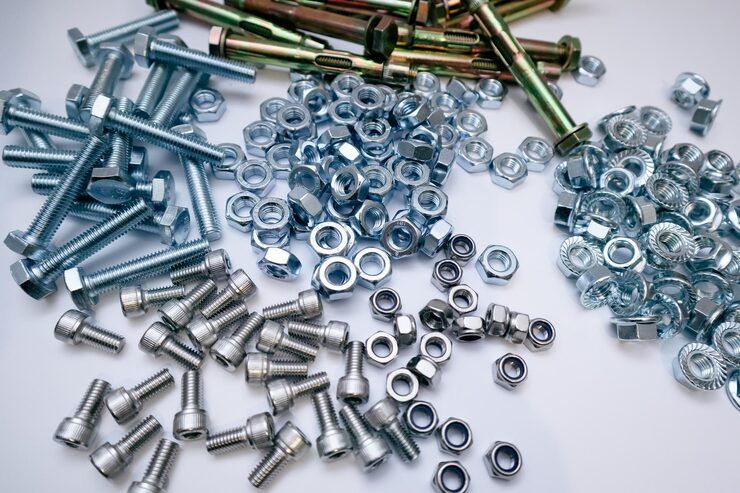
A reliable bolt and screw supplier typically works with a wide range of fastener specifications, making it important for engineers, manufacturers, contractors, and maintenance teams to understand the terminology used when evaluating fasteners. Knowing the difference between materials and grades can also help prevent problems such as thread failure, corrosion, loosening, or inadequate joint strength.
This guide explains the fundamentals of bolts and screws, explores common fastener materials and grades, and outlines the factors that should be considered when selecting fasteners for different applications.
What Are Bolts and Screws?
Bolts and screws are threaded mechanical fasteners used to join two or more components. Although their functions can overlap, they are generally distinguished by how they create and maintain a joint.
Bolts are commonly used with nuts or threaded holes and are frequently selected for assemblies that may need to be disassembled. Screws are often designed to engage directly with a threaded hole or create their own thread in certain materials.
Both types are available in numerous dimensions, head styles, thread configurations, materials, and strength classifications.
The correct selection depends on the joint design, environmental conditions, loading requirements, and installation method.
Why Fastener Material Matters
The material of a fastener directly influences its mechanical and environmental performance.
A fastener used inside a controlled indoor environment may have very different requirements from one exposed to moisture, chemicals, salt, vibration, or elevated temperatures.
Common fastener materials include:
- Carbon steel
- Alloy steel
- Stainless steel
- Brass
- Aluminum
- Titanium
- Specialized corrosion-resistant alloys
Each material has different characteristics relating to strength, hardness, corrosion resistance, weight, temperature tolerance, and compatibility with surrounding materials.
Carbon Steel Fasteners
Carbon steel is widely used for general mechanical fastening because it provides a useful combination of strength and manufacturability.
Different carbon steel compositions and treatments can produce fasteners with varying mechanical properties. Protective coatings may also be applied to improve resistance against environmental exposure.
Carbon steel fasteners are commonly encountered in machinery, construction assemblies, structural applications, equipment, and general industrial systems.
However, unprotected carbon steel can be susceptible to corrosion when exposed to moisture and aggressive environments.
Alloy Steel Fasteners
Alloy steel contains additional elements that can improve specific mechanical characteristics.
These fasteners are often selected when an application requires greater tensile strength, hardness, fatigue resistance, or performance under demanding mechanical loads.
Heat treatment plays an important role in achieving the intended properties of many alloy steel fasteners. The resulting grade and mechanical classification should always be matched to the requirements of the joint.
Stainless Steel Fasteners
Stainless steel fasteners are widely recognized for their corrosion resistance and clean appearance.
Different stainless steel families provide different combinations of corrosion resistance, strength, magnetic characteristics, and temperature performance.
Common stainless steel fastener families include austenitic, ferritic, and martensitic grades. Austenitic stainless steels are frequently used in environments where corrosion resistance is important, while other families may be selected when greater hardness or mechanical strength is required.
Material selection should consider the specific environment rather than assuming that every stainless steel fastener provides identical protection.
Understanding Fastener Grades
Fastener grades communicate important information about mechanical performance. However, grading systems vary depending on the material and applicable standard.
For example, metric steel fasteners commonly use property classes such as 8.8, 10.9, and 12.9. These classifications provide information about mechanical characteristics such as tensile strength and yield behavior.
In inch-based systems, steel bolts may use markings associated with classifications such as Grade 2, Grade 5, or Grade 8.
Stainless steel fasteners may use designations that identify the material family and mechanical characteristics.
Because these systems are not interchangeable, the grade marking should always be interpreted according to the relevant standard.
How Fastener Grades Affect Selection
A higher strength classification is not automatically the correct choice for every application.
Fastener selection must consider the complete joint because the bolt, screw, nut, washer, and connected materials work together.
Important considerations include:
Tensile Loading
Tensile loading attempts to pull a fastener apart along its length. Fastener strength must be appropriate for the expected load.
Shear Loading
Shear forces act across the fastener. Joint design determines how these forces are transferred through the fastener and connected components.
Fatigue
Repeated loading can cause fatigue even when individual loads remain below the fastener's maximum strength. Applications involving vibration or cyclic loading therefore require careful engineering assessment.
Clamping Force
Correct tightening creates the intended clamping force between joined components. Excessive tightening can damage threads or stretch the fastener, while insufficient tightening can allow joint movement.
Thread Types and Their Importance
Threads determine how a fastener engages with a mating component.
Common considerations include:
- Thread diameter
- Thread pitch
- Coarse or fine thread
- Thread form
- Thread direction
- Thread tolerance
Coarse threads are often useful for general applications and materials where rapid engagement is desirable. Fine threads can provide greater adjustment precision and may be useful in specific mechanical assemblies.
The bolt or screw thread must match the corresponding nut or threaded hole correctly. Mixing incompatible thread standards can result in poor engagement and joint failure.
Surface Finishes and Corrosion Protection
Surface treatments can significantly influence fastener durability.
Common finishes include zinc-based coatings, oxide treatments, plating systems, and specialized protective coatings. Their purpose may include improving corrosion resistance, surface durability, appearance, or installation characteristics.
Environmental exposure should guide finish selection.
For example, outdoor environments, humid conditions, marine atmospheres, and industrial facilities may impose greater corrosion challenges than dry indoor applications.
Matching Fasteners With the Application
The best fastener selection depends on the conditions in which the joint will operate.
| Application Environment | Important Considerations |
|---|---|
| Indoor machinery | Strength, dimensions, thread compatibility |
| Outdoor equipment | Corrosion resistance and protective finish |
| Marine environments | High resistance to moisture and salt exposure |
| Heavy machinery | Strength, fatigue resistance, vibration |
| Food-related equipment | Material compatibility and hygiene requirements |
| High-temperature systems | Temperature stability and material behavior |
| Lightweight assemblies | Strength-to-weight considerations |
This application-based approach helps prevent the common mistake of selecting fasteners based solely on appearance or size.
Choosing a Bolt and Screw Supplier
When evaluating a bolt and screw supplier, technical information is often more important than simply looking at the fastener itself.
Useful information to review includes:
- Material specification
- Strength grade or property class
- Dimensional standards
- Thread specification
- Surface finish
- Corrosion characteristics
- Applicable technical standards
- Product traceability
- Quality documentation
- Packaging and identification practices
Clear documentation makes it easier for engineers and procurement teams to verify whether a fastener is suitable for a particular application.
Common Fastener Selection Mistakes
Several avoidable mistakes can affect joint reliability.
Selecting Only by Diameter
Diameter is important, but it does not describe the complete mechanical capability of a fastener. Grade, material, thread engagement, and joint design also matter.
Mixing Materials Without Evaluation
Different metals can interact in ways that accelerate galvanic corrosion under certain environmental conditions.
Ignoring Temperature
Mechanical properties can change when fasteners operate at elevated or very low temperatures.
Using an Incorrect Grade
A fastener with an unsuitable strength classification may fail to provide the required mechanical performance.
Overlooking Installation Requirements
The correct fastener can still perform poorly if installation practices produce inadequate or excessive clamping force.
Standards and Identification
Fastener standards provide consistent requirements for dimensions, materials, mechanical properties, testing, and identification.
Depending on the application and region, specifications may reference systems such as ISO, ASTM, ASME, DIN, or other recognized standards.
Standard markings on fastener heads can help identify certain material or strength classifications. However, markings should be interpreted using the applicable standard rather than relying on visual assumptions.
For critical applications, technical documentation and certification provide additional assurance that the fastener corresponds to the specified requirements.
Future Developments in Fastener Technology
Fastener development continues to respond to changing engineering requirements.
Areas of ongoing interest include stronger lightweight materials, improved corrosion-resistant coatings, advanced stainless steel grades, enhanced manufacturing precision, and improved traceability.
Manufacturers are also increasingly focused on consistency and quality control throughout production. Digital identification and data management can make it easier to track specifications and maintain accurate records across complex supply chains.
As machinery becomes lighter, more efficient, and more technologically advanced, fasteners will continue to play a fundamental role in maintaining reliable mechanical connections.
Frequently Asked Questions
What should I check when selecting a bolt or screw?
Consider the material, diameter, length, thread specification, strength classification, environmental conditions, installation method, and applicable technical standard.
Are stainless steel fasteners always stronger than carbon steel fasteners?
No. Strength depends on the specific material grade and mechanical classification. Stainless steel is often selected primarily for its corrosion resistance, although particular stainless grades can also provide substantial mechanical strength.
What do numbers such as 8.8 and 10.9 mean on metric fasteners?
These numbers identify metric steel fastener property classes and provide information about mechanical characteristics. They should be interpreted according to the applicable fastener standard.
Why is thread compatibility important?
A bolt, screw, nut, and threaded hole must have compatible thread dimensions and specifications to achieve proper engagement and reliable load transfer.
How does the environment influence fastener selection?
Moisture, salt, chemicals, temperature, vibration, and exposure to other materials can affect fastener performance. Material and surface finish should therefore be selected according to the operating environment.
Conclusion
Bolts and screws are fundamental components in mechanical assemblies, but their performance depends on careful selection rather than size alone. Material, grade, thread design, surface treatment, environmental exposure, and installation requirements all contribute to the reliability of a fastened joint.
Understanding these factors makes it easier to communicate technical requirements with a bolt and screw supplier and evaluate whether a particular fastener is appropriate for an intended application. Whether working with industrial machinery, construction assemblies, automotive components, equipment, or everyday mechanical systems, a structured approach to fastener selection helps support stronger, more reliable, and better-engineered connections.