Industrial petrochemicals play a vital role in modern manufacturing by providing the essential building blocks used to produce thousands of everyday products.
From packaging materials and automotive components to medical devices, textiles, electronics, and construction materials, petrochemical-derived substances support numerous industries around the world. Although many people associate petrochemicals only with fuels, the petrochemical industry extends far beyond energy production and focuses heavily on transforming raw hydrocarbon resources into valuable chemical products.
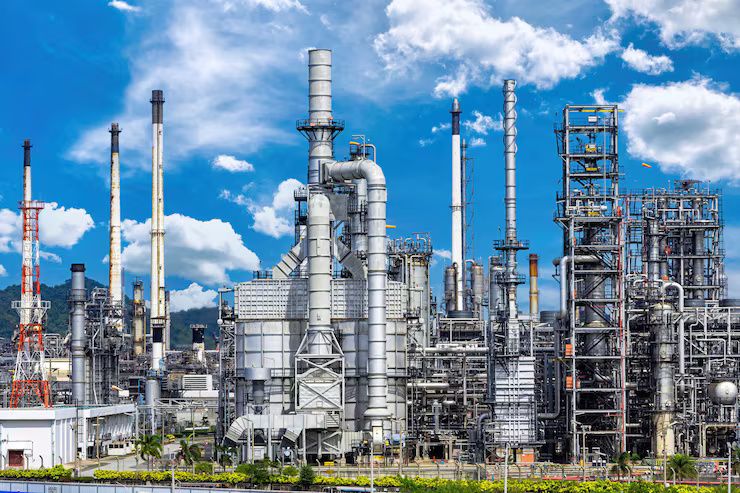
Understanding how industrial petrochemicals are produced helps explain the complex journey from natural resources to finished industrial materials. This guide explores petrochemical feedstocks, refining processes, chemical processing workflows, common plant equipment, and the role of industrial chemical manufacturing in today's global economy.
What Are Industrial Petrochemicals?
Industrial petrochemicals are chemical products manufactured from hydrocarbons obtained primarily from crude oil and natural gas. These materials serve as raw ingredients for producing plastics, synthetic fibers, solvents, detergents, adhesives, coatings, fertilizers, pharmaceuticals, and many other industrial products.
Rather than being final consumer goods, petrochemicals are often intermediate materials that undergo additional processing before becoming finished products used across multiple industries.
The petrochemical industry combines chemical engineering, refining technology, process control, and advanced manufacturing techniques to convert hydrocarbon feedstocks into useful chemical compounds.
Why Industrial Petrochemicals Are Important
Modern manufacturing depends on petrochemical materials because they provide consistent properties, large-scale production capabilities, and versatility across numerous applications.
Industrial petrochemicals contribute to sectors such as:
- Automotive manufacturing
- Construction materials
- Consumer packaging
- Electronics production
- Medical equipment
- Agriculture
- Textile manufacturing
- Aerospace engineering
- Water treatment
- Renewable energy technologies
Without petrochemical manufacturing, many products commonly used in homes, hospitals, transportation, and industrial facilities would require entirely different production methods.
Understanding Petrochemical Feedstocks
Every petrochemical manufacturing process begins with feedstocks, which are the primary raw materials used to produce chemical compounds.
The most common petrochemical feedstocks include:
Crude Oil
Crude oil contains a mixture of hydrocarbons that are separated during refining into different fractions. Several of these fractions become valuable starting materials for chemical manufacturing.
Natural Gas
Natural gas provides light hydrocarbons that are widely used in petrochemical production. It is an important source for manufacturing various base chemicals used throughout industrial chemical manufacturing.
Natural Gas Liquids
Natural gas processing also produces liquids containing hydrocarbons that serve as efficient feedstocks for numerous chemical processes.
Refinery Streams
Certain products generated during petroleum refining become feedstocks for additional petrochemical processing rather than being used directly as fuels.
Selecting the appropriate feedstock depends on product requirements, available infrastructure, and manufacturing objectives.
From Feedstock to Finished Chemical
Petrochemical manufacturing involves multiple processing stages rather than a single production step.
The general workflow includes:
| Stage | Purpose |
|---|---|
| Feedstock preparation | Removes impurities and prepares raw materials |
| Refining | Separates hydrocarbon components |
| Chemical conversion | Produces primary chemical building blocks |
| Intermediate processing | Forms additional chemical compounds |
| Product finishing | Improves purity and consistency |
| Distribution | Supplies industrial manufacturers |
Each stage contributes to product quality, process efficiency, and manufacturing reliability.
The Role of Refining in Petrochemical Manufacturing
Refining is one of the most important stages in the petrochemical industry because it separates crude hydrocarbons into usable fractions.
During refining, physical and chemical processes isolate different hydrocarbon groups according to their properties.
These refined streams become starting materials for producing:
- Olefins
- Aromatics
- Solvents
- Lubricant base materials
- Industrial intermediates
Refining allows manufacturers to maximize the usefulness of each barrel of crude oil by supplying both fuel production and chemical manufacturing operations.
Chemical Processing Workflows Explained
After refining, selected feedstocks enter chemical processing systems where they undergo carefully controlled reactions.
Although workflows differ depending on the desired product, most industrial chemical manufacturing follows several common stages.
Feed Preparation
Before entering reactors, raw materials are cleaned, filtered, and conditioned to meet process specifications.
Preparation may include:
- Removing contaminants
- Adjusting pressure
- Controlling temperature
- Mixing process streams
Proper preparation improves both efficiency and product consistency.
Chemical Reaction
Reactors create conditions that allow hydrocarbons to transform into new chemical compounds.
Engineers carefully monitor variables such as:
- Temperature
- Pressure
- Reaction time
- Catalyst performance
- Flow rates
Maintaining stable operating conditions supports reliable production quality.
Product Separation
Once reactions are complete, desired products must be separated from by-products and unreacted materials.
Common separation techniques include:
- Distillation
- Condensation
- Filtration
- Absorption
- Fractionation
These processes improve product purity before additional manufacturing steps.
Product Finishing
The final stage prepares chemicals for industrial use through additional purification, blending, testing, and packaging for transportation to downstream manufacturers.
Major Products of the Petrochemical Industry
Industrial petrochemicals support the production of thousands of commercial materials.
Examples include:
- Plastic resins
- Synthetic rubber
- Industrial solvents
- Chemical intermediates
- Synthetic fibers
- Paint ingredients
- Adhesive components
- Detergent ingredients
- Fertilizer materials
- Pharmaceutical intermediates
Most consumer products contain several petrochemical-derived materials working together.
Petrochemical Plant Equipment
Modern petrochemical manufacturing depends on highly specialized industrial equipment operating under carefully controlled conditions.
Common petrochemical plant equipment includes:
| Equipment | Primary Function |
|---|---|
| Storage tanks | Store feedstocks and finished products |
| Heat exchangers | Transfer thermal energy efficiently |
| Distillation columns | Separate chemical components |
| Reactors | Carry out chemical reactions |
| Pumps | Move liquids through the process |
| Compressors | Handle gas movement and pressure |
| Piping systems | Connect processing units |
| Control systems | Monitor and regulate operations |
| Cooling systems | Maintain safe operating temperatures |
| Safety equipment | Protect personnel and facilities |
Each piece of equipment contributes to maintaining continuous industrial operations.
Automation in Industrial Chemical Manufacturing
Automation has transformed the petrochemical industry by improving operational consistency and process monitoring.
Modern facilities frequently use:
- Digital sensors
- Automated control systems
- Distributed control systems
- Process monitoring software
- Predictive maintenance tools
- Real-time operational analytics
Automation supports stable production while allowing engineers to identify process variations more quickly.
Quality Control Throughout Production
Quality assurance is integrated into every stage of petrochemical manufacturing rather than being performed only at the end of production.
Quality control typically includes:
- Feedstock analysis
- Process monitoring
- Laboratory testing
- Equipment inspection
- Product sampling
- Documentation and traceability
Continuous monitoring helps maintain consistent chemical specifications required by downstream industries.
Environmental Considerations
Environmental responsibility has become an important focus across industrial petrochemicals.
Many facilities work toward improving sustainability through:
- Energy-efficient processing
- Water recycling systems
- Emission monitoring
- Waste reduction initiatives
- Resource optimization
- Improved process efficiency
Advances in technology continue supporting cleaner industrial operations while maintaining manufacturing performance.
Safety in Petrochemical Operations
Petrochemical manufacturing involves high temperatures, pressurized systems, and complex chemical processes, making safety an essential part of daily operations.
Facilities generally emphasize:
- Equipment inspections
- Emergency response planning
- Continuous monitoring
- Process safety management
- Operator training
- Preventive maintenance
Strong safety practices help protect workers, nearby communities, and manufacturing assets.
Industries That Depend on Petrochemical Manufacturing
Many sectors rely on industrial chemical manufacturing for essential materials.
Examples include:
- Automotive production
- Healthcare
- Construction
- Consumer goods
- Agriculture
- Electronics
- Renewable energy
- Packaging
- Telecommunications
- Industrial machinery
This broad range of applications demonstrates the central role of petrochemical manufacturing in modern industrial supply chains.
Emerging Trends in the Petrochemical Industry
The petrochemical industry continues evolving through technological innovation and changing sustainability priorities.
Current developments include:
- Advanced process automation
- Digital manufacturing technologies
- Improved catalyst development
- Energy optimization systems
- Carbon management initiatives
- Circular material recovery
- Greater feedstock efficiency
- Smart maintenance technologies
These trends aim to improve operational performance while supporting long-term environmental objectives.
Frequently Asked Questions
What are industrial petrochemicals?
Industrial petrochemicals are chemical products manufactured primarily from hydrocarbons obtained from crude oil and natural gas. They serve as essential raw materials for producing plastics, fibers, solvents, coatings, pharmaceuticals, and numerous industrial products.
What are petrochemical feedstocks?
Petrochemical feedstocks are the raw hydrocarbon materials used to manufacture chemical products. Common feedstocks include crude oil, natural gas, natural gas liquids, and refinery-derived hydrocarbon streams.
How does refining support petrochemical manufacturing?
Refining separates crude hydrocarbons into different fractions that become starting materials for producing valuable chemical compounds used throughout industrial manufacturing.
What equipment is commonly found in petrochemical plants?
Typical petrochemical plant equipment includes reactors, distillation columns, storage tanks, heat exchangers, pumps, compressors, piping systems, cooling equipment, automated control systems, and safety systems.
How is automation improving the petrochemical industry?
Automation improves process monitoring, operational consistency, equipment reliability, predictive maintenance, product quality, and overall manufacturing efficiency through advanced digital technologies.
Conclusion
Industrial petrochemicals form the foundation of countless manufacturing industries by transforming hydrocarbon feedstocks into versatile chemical building blocks. Through carefully managed refining operations, chemical processing workflows, specialized petrochemical plant equipment, and advanced industrial chemical manufacturing techniques, raw materials are converted into products that support everyday life and industrial innovation.
Understanding petrochemical feedstocks, refining processes, production workflows, quality control systems, safety practices, and emerging technologies provides valuable insight into how the petrochemical industry operates. As manufacturing continues to evolve through automation, digital monitoring, improved resource efficiency, and environmental innovation, industrial petrochemicals will remain an essential part of global production systems while adapting to the changing needs of modern industry.