Canyoning adventures involve travelling through a canyon or gorge by following the natural route of a stream or river.
Depending on the terrain, participants may walk across rocks, wade through shallow water, swim through pools, climb over obstacles, descend waterfalls using ropes, or slide down smooth rock formations.
The activity is also known as canyoneering in some countries. It combines elements of hiking, scrambling, swimming, and technical rope work. Each route has its own physical demands, water conditions, and environmental challenges.
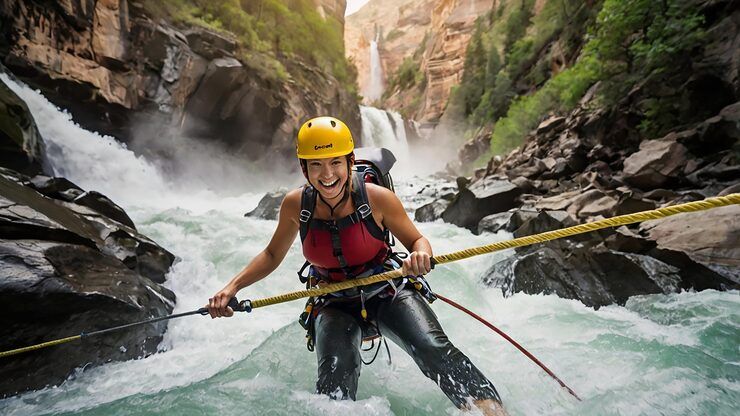
Canyons develop over long periods as flowing water gradually erodes rock. These processes create steep walls, narrow passages, waterfalls, pools, and unusual geological formations. Canyoning provides an opportunity to experience these landscapes from within rather than observing them from a distant viewpoint.
Some routes are suitable for beginners under professional supervision, while others require advanced technical skills. The difficulty depends on factors such as water depth, current strength, vertical drops, slippery surfaces, route length, and the availability of safe exit points.
How Canyoning Adventures Work
A typical canyoning trip begins with a route briefing and equipment inspection. Participants learn about the planned route, expected conditions, communication signals, and emergency procedures before entering the canyon.
The group then follows a sequence of natural obstacles. A route might involve walking through a forest, descending a short rock face, crossing pools, and using a rope system to pass a waterfall. The exact sequence depends on the canyon's geography and current water levels.
Common activities include:
- Hiking and scrambling: Moving over uneven ground and rocky surfaces.
- Water crossings: Walking or swimming through pools and streams.
- Rappelling: Descending a steep surface with a rope and suitable safety equipment.
- Natural slides: Moving down smooth rock channels where conditions and route assessments permit.
- Controlled jumps: Entering deep pools only after trained leaders verify depth, underwater hazards, and a safe landing area.
Not every canyon includes all these activities. Some routes do not require ropes, while technical canyons may involve several vertical descents and complex water obstacles.
Why Canyoning Matters in Adventure Tourism
Canyoning contributes to outdoor recreation, nature education, and tourism in mountainous or water-rich regions. It introduces visitors to geological features, freshwater environments, and landscapes that may be difficult to experience through conventional sightseeing.
The activity also encourages participants to develop practical skills. Route awareness, teamwork, communication, physical coordination, and decision-making become important when the group encounters changing terrain.
Canyoning can support local economies in areas where outdoor recreation is an established part of tourism. Guides, accommodation providers, transport operators, and nearby communities may benefit from responsible visitor activity. However, these benefits depend on protecting natural environments and managing visitor numbers appropriately.
Environmental awareness is another important aspect. Canyon walls, aquatic habitats, and stream ecosystems can be sensitive to litter, disturbance, and excessive foot traffic. Responsible visitors follow designated access arrangements, avoid damaging vegetation, and carry their waste out of the canyon.
Safety Risks and Preparation
Canyoning takes place in environments where conditions can change quickly. A route that appears manageable in dry weather may become dangerous following heavy rainfall or an upstream release of water.
Flash flooding is one of the most serious hazards. Water levels can rise rapidly, sometimes before rainfall becomes visible at the canyon itself. Strong currents, submerged rocks, cold water, falling debris, and slippery surfaces can create additional risks.
Participants should understand that helmets and ropes reduce certain risks but cannot eliminate them. Swimming ability alone is not sufficient preparation for technical canyoning, because narrow channels, turbulent water, and restricted escape routes require specialized judgment.
Important preparation steps include:
- Check local weather forecasts and upstream rainfall conditions.
- Choose a route that matches the group's fitness, swimming ability, and experience.
- Review the guide's technical qualifications, emergency arrangements, and familiarity with the route.
- Confirm that helmets, harnesses, ropes, and other equipment are appropriate and inspected.
- Follow instructions about safe movement, rope systems, and water entry.
- Disclose relevant physical limitations to the trip leader before departure.
- Cancel or postpone the trip when conditions exceed the group's capabilities.
Participants should never jump into an unfamiliar pool or attempt a rope descent without appropriate training and supervision.
Recent Updates in Adventure Tourism
During 2025 and 2026, India continued to emphasize standardized safety practices in adventure tourism. On 24 July 2025, the Ministry of Tourism reported that it had developed Model Adventure Safety Guidelines in association with the Adventure Tour Operators Association of India (ATOAI). The guidelines were circulated to States and Union Territories for adoption or adaptation of local safety protocols. The government reiterated this framework in a statement dated 16 March 2026. These developments are relevant to adventure activities generally, although they do not establish that every canyoning location follows an identical procedure.
Several broader developments are also shaping canyoning preparation and management:
- Digital weather information: Forecasting tools and rainfall monitoring help trip leaders evaluate changing conditions, although forecasts cannot guarantee that a canyon is safe.
- Improved safety planning: Adventure tourism guidance increasingly emphasizes risk assessment, equipment checks, emergency planning, and participant briefings.
- Environmental responsibility: Outdoor recreation planning places greater emphasis on protecting fragile habitats and managing waste.
- Skills development: Structured guide education and standardized operating procedures can help improve consistency across adventure activities.
These developments do not remove the natural hazards associated with canyoning. Travellers should verify the latest local restrictions, weather information, and route status before departure.
Laws and Policies Affecting Canyoning in India
India does not have one universally applicable canyoning permit that automatically covers every location. Access and operating requirements can depend on the state, district, forest authority, protected-area administration, and the type of activity involved.
The Ministry of Tourism's National Strategy for Adventure Tourism and its published adventure tourism guidelines provide a national framework for promoting responsible activities and improving safety practices. Model guidelines developed with ATOAI are intended to help states and territories establish or update their own procedures. Their practical implementation can vary by jurisdiction.
Relevant requirements may include:
- Local permissions: Authorities may restrict access to particular gorges, waterfalls, forests, or protected areas.
- Operator requirements: Applicable state rules may govern registration, recognition, insurance, safety procedures, and operating permissions.
- Environmental protection: Wildlife sanctuaries, national parks, forests, and other protected locations may have separate access and conservation rules.
- Participant restrictions: Minimum ages, supervision arrangements, and physical requirements may vary by activity and local policy.
- Emergency arrangements: Local authorities or operating guidelines may specify communication, rescue planning, equipment, and incident procedures.
The Ministry of Tourism stated on 2 February 2026 that adventure tourism development and site-level safety responsibilities primarily rest with State Governments and Union Territory Administrations. It also identified guide training and the national safety framework as parts of its broader approach.
Before visiting a canyon, consult the relevant state tourism department, forest department, district administration, and local authorities. Do not assume that permission for trekking or river rafting automatically authorizes technical canyoning.
Technical equipment should be selected and used according to the route, the manufacturer's instructions, and guidance from a qualified canyoning professional. Ordinary hiking equipment may not be suitable for water-filled gorges or rope descents.
Frequently Asked Questions
What are canyoning adventures?
Canyoning adventures involve travelling through natural gorges using a combination of walking, scrambling, swimming, climbing, and sometimes rope descents. The activities depend on the route and its environmental conditions.
Can beginners participate in canyoning?
Yes, some routes are designed for beginners. Participants should choose an appropriate difficulty level and follow a qualified guide's instructions. Technical routes involving complex rope work or powerful water currents require specialized skills.
What equipment is needed for canyoning?
Typical equipment includes a suitable helmet, harness when required, appropriate ropes and connectors, canyoning footwear, and clothing suited to the water temperature. Exact requirements depend on the route and should be determined by a qualified leader.
Is canyoning dangerous?
Canyoning carries risks, including flash flooding, drowning, falls, cold exposure, and injuries from rocks. Route selection, weather assessment, suitable equipment, trained supervision, and emergency planning help reduce risks but cannot eliminate them.
When is the right time for canyoning in India?
The appropriate season varies by region, rainfall, water flow, and local restrictions. Monsoon conditions can make many canyons particularly hazardous. Check local forecasts and seek advice from experienced local professionals rather than relying on a general seasonal calendar.
Conclusion
Canyoning adventures provide a distinctive way to explore natural waterways, rock formations, and narrow mountain gorges. The activity combines physical movement, environmental learning, and technical challenges, making preparation an essential part of the experience.
Understanding canyoning techniques, equipment requirements, weather hazards, and local regulations helps travellers make informed decisions. Responsible route selection, respect for conservation rules, and guidance from qualified professionals are particularly important in remote locations.