
The cement and mining industry supports many of the materials and infrastructure systems used in modern life.
From roads and bridges to buildings, energy projects, and manufacturing facilities, these industries depend on large-scale operations that require reliable machinery, carefully managed processes, and strong safety practices.
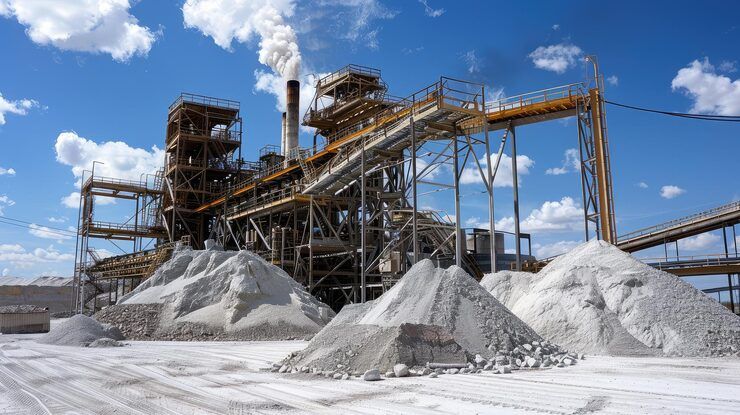
Although cement manufacturing and mining are separate industrial activities, they share many operational challenges. Both involve demanding environments, heavy equipment, abrasive materials, dust, high temperatures, and continuous production requirements. Equipment reliability and preventive maintenance therefore play an important role in maintaining productivity and protecting workers.
This guide explains the fundamentals of the cement and mining industry, explores commonly used machinery and equipment, discusses maintenance strategies, and examines the safety and environmental considerations shaping modern industrial operations.
Understanding the Cement and Mining Industry
The cement and mining industry includes a broad range of activities related to extracting raw materials and transforming them into useful products.
Mining operations may extract materials such as limestone, coal, iron ore, copper, and other minerals. Cement manufacturing commonly relies on raw materials including limestone, clay, and other mineral components that are processed into cement.
The overall industrial chain may involve:
- Exploration and resource assessment
- Extraction of raw materials
- Material transportation
- Crushing and size reduction
- Grinding and processing
- Material blending
- Thermal treatment
- Product storage
- Packaging and distribution
Each stage depends on specialized equipment designed to operate under demanding conditions.
Key Machinery Used in Mining Operations
Mining equipment varies depending on the type of material being extracted and the characteristics of the site.
Common machinery includes:
Excavators
Large excavators remove overburden and extract materials from mining areas. Their size and configuration depend on the geological conditions and operational requirements.
Haul Trucks
Heavy-duty haul trucks transport extracted materials between mining areas and processing facilities. Their performance directly affects material movement throughout the operation.
Drilling Equipment
Drilling machinery is used for exploration, geological investigation, and controlled rock fragmentation processes. Equipment selection depends on the material, depth, and site conditions.
Crushers
Crushing equipment reduces large rocks into smaller pieces for further processing. Different crusher designs are selected according to material characteristics and required output sizes.
Conveyors
Conveyor systems transport materials continuously across mining and processing facilities. They can reduce the need for repeated vehicle movement and support consistent material flow.
Cement Manufacturing Equipment
The cement manufacturing industry relies on a sequence of processes that transform raw materials into finished cement.
Important cement manufacturing equipment includes:
- Crushers
- Raw material mills
- Kilns
- Preheaters
- Clinker coolers
- Cement mills
- Material separators
- Conveyors
- Storage silos
- Packing systems
Each piece of equipment performs a specific function within the manufacturing process.
Crushing and Raw Material Preparation
Raw materials are initially reduced in size before being processed further. Crushing systems must handle large quantities of material while maintaining consistent particle sizes.
Grinding Systems
Raw materials are ground into a fine mixture before entering subsequent processing stages. Grinding systems require careful monitoring because energy consumption and equipment wear can significantly influence plant performance.
Rotary Kilns
The kiln is one of the most important components of cement production. It uses controlled high-temperature processing to transform prepared raw materials into clinker.
Clinker Cooling
After leaving the kiln, clinker must be cooled in a controlled manner. Efficient cooling systems can recover heat and contribute to overall plant energy management.
Cement Grinding
Clinker is finely ground with additional materials to produce cement with specific performance characteristics.
How Cement and Mining Operations Differ
Although these industries often share machinery and maintenance principles, their operational objectives differ.
| Area | Mining Operations | Cement Manufacturing |
|---|---|---|
| Primary Activity | Resource extraction | Material processing |
| Main Materials | Ores, minerals, rock | Limestone, clinker, additives |
| Key Equipment | Excavators, trucks, drills | Kilns, mills, crushers |
| Main Challenges | Geology and material movement | Process control and energy management |
| Maintenance Focus | Mobile and fixed equipment | Continuous production systems |
Understanding these differences helps organizations develop more appropriate equipment strategies and maintenance programs.
The Importance of Equipment Maintenance
Equipment maintenance is essential across both the cement and mining industries.
Heavy machinery operates under conditions involving:
- Abrasive materials
- High temperatures
- Dust
- Vibration
- Heavy loads
- Continuous operation
- Mechanical stress
Without appropriate maintenance, these conditions can accelerate component wear and increase the likelihood of unexpected equipment interruptions.
A structured maintenance program typically includes preventive, predictive, and corrective maintenance.
Preventive Maintenance
Preventive maintenance involves scheduled inspections, lubrication, component replacement, and servicing based on established operating intervals.
Predictive Maintenance
Predictive maintenance uses equipment data and condition-monitoring technologies to identify potential problems before significant failures occur.
Common monitoring techniques include:
- Vibration analysis
- Thermal monitoring
- Oil analysis
- Acoustic monitoring
- Equipment performance tracking
Corrective Maintenance
Corrective maintenance addresses equipment issues after a problem has been identified. Effective maintenance planning aims to reduce the need for emergency repairs by detecting issues earlier.
Improving Operational Efficiency
Efficiency in the cement and mining industry depends on the interaction of people, equipment, processes, and technology.
Several approaches can improve overall performance.
Equipment Monitoring
Real-time monitoring provides information about equipment condition and production performance, helping operators identify unusual operating patterns.
Automation
Automation can support consistent material handling, process control, and equipment coordination while reducing manual intervention in certain operations.
Data-Based Decision-Making
Industrial data can help organizations identify maintenance patterns, monitor equipment performance, and understand production bottlenecks.
Energy Management
Cement production is energy-intensive, making energy efficiency an important operational consideration. Efficient grinding, heat recovery, process optimization, and equipment upgrades can contribute to improved energy performance.
Safety in the Cement and Mining Industry
Safety is a fundamental part of industrial operations.
Workers may encounter hazards related to heavy machinery, moving equipment, dust, noise, elevated temperatures, confined spaces, and material handling.
Important safety practices include:
- Equipment inspection
- Operator training
- Personal protective equipment
- Lockout and isolation procedures
- Safe vehicle movement
- Dust control
- Emergency response planning
- Regular safety audits
Effective safety management combines engineering controls, clear procedures, workforce training, and continuous monitoring.
Dust and Environmental Management
Dust is a significant concern in both mining and cement manufacturing.
Sources may include:
- Material crushing
- Grinding
- Transportation
- Stockpiling
- Loading and unloading
Modern facilities may use enclosed conveyors, dust collection systems, water management, filtration technologies, and improved process controls to reduce airborne particulate matter.
Environmental management may also address noise, land use, water consumption, energy efficiency, and emissions.
Technology Trends in Cement and Mining
Digital technologies are transforming both industries.
Important developments include:
- Industrial Internet of Things sensors
- Artificial intelligence-assisted monitoring
- Autonomous equipment
- Remote equipment operation
- Digital twins
- Predictive maintenance
- Advanced process control
- Automated material tracking
Autonomous and remotely operated equipment can help reduce worker exposure to certain hazardous environments while improving operational consistency.
Digital twins can also create virtual representations of industrial assets, allowing organizations to analyze equipment behavior and test process improvements.
Common Challenges and How Industry Addresses Them
The cement and mining industry faces several ongoing challenges.
Equipment Wear
Abrasive materials can accelerate component degradation. Regular inspections and condition monitoring help identify wear before it becomes a major operational problem.
Unplanned Downtime
Unexpected equipment failures can interrupt production. Predictive maintenance and spare-part planning help improve operational preparedness.
Skilled Workforce Requirements
Modern equipment requires workers with mechanical, electrical, automation, and digital skills. Ongoing training is increasingly important as industrial technologies evolve.
Environmental Expectations
Companies face growing expectations to reduce emissions, manage resources responsibly, and improve environmental performance.
Future of Cement and Mining Industries
The future of Cement And Mining Industries is likely to involve greater automation, digital integration, and sustainability-focused operations.
Cement Manufacturing Industry operations are increasingly exploring technologies that improve energy efficiency and reduce environmental impact. Meanwhile, mining operations are adopting automation and remote monitoring to improve safety and productivity.
Future developments may include:
- More autonomous machinery
- Advanced robotics
- AI-supported maintenance
- Greater electrification
- Improved energy efficiency
- Digital process optimization
- Enhanced environmental monitoring
These changes are expected to create more connected and data-driven industrial environments.
Frequently Asked Questions
What machinery is commonly used in the cement and mining industry?
Mining commonly uses excavators, haul trucks, drilling equipment, crushers, and conveyors. Cement manufacturing relies on crushers, mills, kilns, coolers, separators, silos, and packing systems.
Why is maintenance important in cement manufacturing?
Cement manufacturing equipment operates continuously under demanding conditions. Regular maintenance helps identify wear, support reliable operation, and reduce unexpected equipment interruptions.
What is the role of automation in mining?
Automation can support remote operation, equipment monitoring, material handling, and process control while helping reduce worker exposure to certain hazardous environments.
How does the cement manufacturing industry manage dust?
Facilities may use enclosed material handling systems, dust collectors, filtration equipment, and process controls to reduce airborne particulate emissions.
What are the major future trends in these industries?
Major trends include automation, predictive maintenance, artificial intelligence, digital twins, remote operations, energy efficiency, and improved environmental management.
Conclusion
The cement and mining industry depends on complex machinery, reliable equipment, skilled workers, and carefully managed processes. From mining excavators and haul trucks to cement manufacturing equipment such as crushers, mills, and kilns, every system contributes to the movement and transformation of essential raw materials.
As the Cement Manufacturing Industry and mining operations continue to adopt automation, predictive maintenance, data analytics, and advanced monitoring, equipment management is becoming increasingly proactive and technology-driven. At the same time, safety and environmental responsibility remain central priorities.
Understanding the relationship between machinery, maintenance, operational efficiency, and safety provides a useful foundation for anyone seeking to learn how modern Cement And Mining Industries operate and how technology is shaping their future.