
Industrial chemicals are essential to modern manufacturing, infrastructure, healthcare, agriculture, energy production, and countless everyday products.
From producing construction materials and electronics to supporting water treatment and food processing, these chemicals help industries improve efficiency, maintain quality, and enable large-scale production. Although many industrial chemicals are never seen by consumers, they play a critical role throughout global supply chains.
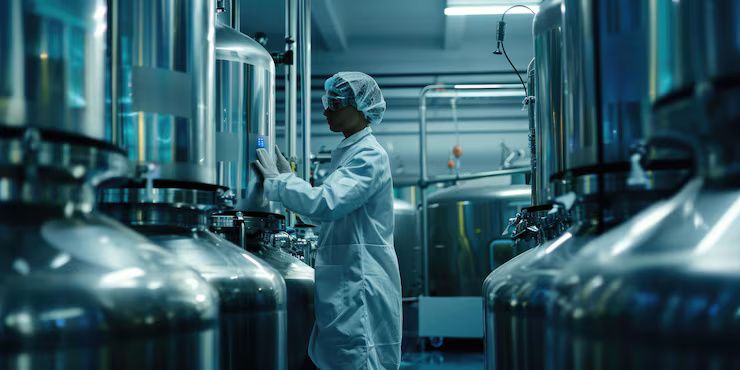
As industrial processes become more advanced, the demand for high-performance materials, precision manufacturing, and sustainable production continues to grow. This has led to ongoing innovation in specialty chemicals, chemical processing technologies, and industrial safety standards. Understanding the different types of industrial chemicals, their applications, and the importance of responsible handling provides valuable knowledge for students, professionals, and anyone interested in modern industrial operations.
This guide explains the fundamentals of industrial chemicals, explores their major categories, discusses chemical processing methods, and highlights essential safety and environmental practices.
What Are Industrial Chemicals?
Industrial chemicals are substances manufactured or processed for use in commercial and industrial applications. Rather than serving as finished consumer products, they often function as raw materials, processing agents, catalysts, cleaning solutions, additives, or components used during manufacturing.
Industrial chemicals support production across numerous industries, including:
- Manufacturing
- Construction
- Automotive
- Aerospace
- Agriculture
- Pharmaceuticals
- Electronics
- Water treatment
- Energy
- Food processing
Each industry uses chemicals with specific physical and chemical properties designed to meet particular operational requirements.
Why Industrial Chemicals Are Important
Modern industries depend on industrial chemicals to improve productivity, product quality, and manufacturing consistency.
Their importance includes:
- Supporting efficient production processes
- Improving material performance
- Enhancing product durability
- Assisting quality control
- Enabling advanced manufacturing technologies
- Supporting infrastructure development
- Improving water treatment processes
- Contributing to energy production
Without industrial chemicals, many products and manufacturing systems used every day would not be possible.
Major Types of Industrial Chemicals
Industrial chemicals are generally classified according to their composition, function, or intended application.
Basic Chemicals
Basic chemicals are produced in large volumes and serve as building blocks for numerous industrial products. These chemicals often become raw materials for other manufacturing processes.
Examples of applications include plastics, fertilizers, detergents, and synthetic materials.
Specialty Chemicals
Specialty chemicals are developed for specific performance characteristics rather than large-scale commodity production.
These products may provide:
- Surface protection
- Adhesion improvement
- Corrosion resistance
- Water treatment support
- Lubrication
- Coating performance
- Precision manufacturing assistance
Specialty chemicals often require advanced research and formulation to meet highly specialized industrial needs.
Performance Chemicals
Performance chemicals are designed to improve how products function during manufacturing or throughout their service life.
They are commonly used to enhance efficiency, durability, stability, or operational performance in various industrial environments.
Fine Chemicals
Fine chemicals are produced with high purity and precise composition. They are often used in industries requiring strict quality standards, including pharmaceuticals, electronics, and scientific research.
Applications of Industrial Chemicals
Industrial chemicals contribute to numerous sectors of the global economy.
Manufacturing
Manufacturing facilities use industrial chemicals during material production, equipment cleaning, surface preparation, lubrication, and finishing operations.
Construction
Construction projects rely on chemical products for concrete additives, waterproofing materials, protective coatings, sealants, insulation, and adhesives.
Water Treatment
Water treatment facilities use specialized chemicals to improve water quality, support purification, and assist with wastewater management.
Agriculture
Agricultural operations utilize various chemical products to support crop production, soil management, irrigation systems, and plant protection under regulated practices.
Electronics
Electronics manufacturing requires highly specialized chemicals for semiconductor production, precision cleaning, circuit board fabrication, and component assembly.
Understanding Chemical Processing
Chemical processing refers to the industrial methods used to manufacture, refine, transform, or combine chemical substances into usable products.
Modern chemical processing involves carefully controlled systems designed to maintain product consistency while supporting efficient production.
Typical processing stages may include:
- Raw material handling
- Mixing
- Heating or cooling
- Chemical reactions
- Separation
- Filtration
- Drying
- Packaging
- Quality testing
Automation and process monitoring have significantly improved the efficiency and reliability of modern chemical processing operations.
Chemical Processing Equipment
Chemical processing equipment enables manufacturers to safely and efficiently carry out industrial production.
Common equipment includes:
- Storage tanks
- Reactors
- Mixers
- Heat exchangers
- Pumps
- Compressors
- Filtration systems
- Distillation columns
- Drying equipment
- Process control systems
Each piece of equipment performs a specific function within the overall production process, helping maintain quality, consistency, and operational efficiency.
Comparing Major Chemical Categories
| Chemical Category | Primary Purpose | Common Industrial Applications |
|---|---|---|
| Basic Chemicals | Raw materials for manufacturing | Plastics, fertilizers, detergents |
| Specialty Chemicals | Targeted performance improvements | Coatings, adhesives, water treatment |
| Performance Chemicals | Product enhancement | Manufacturing, automotive, construction |
| Fine Chemicals | High-purity production | Pharmaceuticals, electronics, laboratories |
Each category serves different industries depending on production goals and technical requirements.
Safety Practices When Working With Industrial Chemicals
Safe handling is one of the most important aspects of chemical use in industrial environments.
Organizations typically implement comprehensive safety programs that include:
- Employee training
- Hazard identification
- Proper labeling
- Safe storage procedures
- Ventilation systems
- Spill response planning
- Personal protective equipment
- Routine equipment inspections
Following established safety procedures helps reduce workplace risks while supporting responsible chemical management.
Storage and Handling Considerations
Proper storage helps maintain chemical stability and protects workers and the environment.
Important considerations include:
- Appropriate container selection
- Temperature control where required
- Moisture protection
- Segregation of incompatible substances
- Clear identification labels
- Secure storage areas
- Regular inventory inspections
Well-organized storage systems improve both operational efficiency and workplace safety.
Environmental Responsibility in Chemical Processing
Modern industries increasingly focus on minimizing environmental impact while maintaining production efficiency.
Responsible practices may include:
- Waste reduction
- Recycling initiatives
- Emission control technologies
- Water conservation
- Energy-efficient production
- Responsible chemical disposal
- Environmental monitoring
- Sustainable manufacturing improvements
These efforts support long-term environmental stewardship while helping industries meet evolving regulatory expectations.
Choosing Industrial Chemical Suppliers
Industrial chemical suppliers play an important role in maintaining reliable manufacturing operations.
Organizations often evaluate suppliers based on several factors, including:
- Product consistency
- Quality management
- Technical documentation
- Regulatory compliance
- Reliable logistics
- Supply continuity
- Technical support
- Environmental and safety practices
Selecting suppliers that maintain strong quality standards contributes to consistent production and operational reliability.
Emerging Trends in the Chemical Industry
Technological innovation continues to shape the future of industrial chemicals and chemical processing.
Several important trends include:
- Sustainable chemistry
- Bio-based chemical development
- Digital process monitoring
- Artificial intelligence in manufacturing
- Predictive maintenance
- Advanced specialty chemicals
- Smart manufacturing systems
- Automation and robotics
- Improved recycling technologies
These developments aim to improve production efficiency while supporting environmental responsibility and product innovation.
Common Challenges in Chemical Processing
Despite significant technological advances, chemical manufacturing continues to face several operational challenges.
Process Consistency
Maintaining consistent product quality requires careful monitoring throughout every stage of production.
Equipment Maintenance
Chemical processing equipment operates under demanding conditions and requires regular inspection and preventive maintenance.
Regulatory Compliance
Chemical manufacturers must follow applicable regulations covering safety, environmental protection, transportation, and product quality.
Workforce Training
Employees require continuous education to understand equipment operation, hazard awareness, emergency procedures, and evolving technologies.
Sustainability Goals
Industries continue working toward reducing waste, improving resource efficiency, and minimizing environmental impact while maintaining production performance.
The Future of Industrial Chemicals
The industrial chemical sector is expected to continue evolving through greater automation, digital technologies, and environmentally responsible manufacturing practices.
Future developments may include:
- Smarter process control systems
- Advanced specialty chemical formulations
- Improved recycling technologies
- Enhanced material performance
- Greater use of renewable raw materials
- Digital quality monitoring
- Predictive manufacturing analytics
- More efficient chemical processing equipment
These innovations will support industries seeking greater productivity, improved product quality, and sustainable long-term operations.
Frequently Asked Questions
What are industrial chemicals?
Industrial chemicals are substances used during manufacturing, processing, construction, agriculture, water treatment, healthcare, and many other industrial applications rather than as finished consumer products.
What is the difference between basic chemicals and specialty chemicals?
Basic chemicals are generally produced in large volumes as raw materials for manufacturing, while specialty chemicals are formulated to provide specific performance characteristics for targeted industrial applications.
What is chemical processing?
Chemical processing involves transforming raw materials into usable chemical products through controlled industrial operations such as mixing, heating, reacting, separating, filtering, and quality testing.
What equipment is commonly used in chemical processing?
Chemical processing equipment includes reactors, storage tanks, pumps, mixers, heat exchangers, filtration systems, distillation units, drying equipment, and automated process control systems.
Why are safety practices important when working with industrial chemicals?
Proper safety practices help protect workers, maintain product quality, reduce operational risks, support environmental responsibility, and ensure chemicals are handled according to established industrial standards.
Conclusion
Industrial chemicals form the foundation of countless manufacturing and industrial activities that support modern life. From basic chemicals and advanced specialty chemicals to sophisticated chemical processing technologies, these materials contribute to industries ranging from construction and healthcare to electronics and water treatment.
Understanding the different types of industrial chemicals, the role of chemical processing equipment, the importance of responsible handling, and the value of reliable industrial chemical suppliers provides a clearer picture of how today's industrial systems operate. As technology continues to advance, the future of industrial chemistry will increasingly emphasize innovation, sustainability, efficiency, and safety, ensuring that chemical manufacturing remains an essential part of global industrial development.